
Quick Guide: Getting Started in Germany
This quick guide is designed to help you navigate key steps for getting off to a successful start at Hochschule Geisenheim University.
If this is your first time working in Germany, gathering the documents for the onboarding process might seem overwhelming at first. The accordion menu below will explain which documents you need and how to obtain them, as well as highlight a few aspects of German bureaucracy that may be unfamiliar.
This guide unfortunately can't cover everything – please contact the HR Department if you have any questions or run into any difficulties!
Registering and Gathering Your Documents
One of the first steps you need to take in Germany is registering your residential address with the local Bürgerbüro or Einwohnermeldeamt.
This isn’t just a formality: you’ll need a registered address to receive a German tax ID number, sign up for health insurance, and open a bank account, among other things. Once you’re a resident in Germany, you will need to re-register your new address each time you move, and de-register if you decide to move outside of Germany.
Registering your address usually requires going to the Bürgerbüro in person. If you have moved to a smaller town, e.g. Geisenheim, you likely don’t need to book an appointment – just turn up during opening hours and wait to be seen. However, if you move to a larger city, e.g. Wiesbaden or Mainz, you’ll need to make an appointment online in advance.
You will need to bring certain documents with you to the registration, including:
- a complete registration form (Meldeschein)
- a tenancy confirmation (Wohnungsgeberbestätigung) signed by your landlord
- valid photo ID
Other documents may also be required; please check with your local Bürgerbüro.
After registering, you’ll receive an official certificate of residence (Anmeldebestätigung). Your information will also automatically be forwarded to the Federal Central Tax Office, which will then send your tax identification number (Steuer-ID) to your registered address by post.
As registering your address is such an important step, we would advise planning your visit to the Bürgerbüro before arriving in Germany, especially since appointments in larger cities can get booked out in advance.
You will need to provide a German tax identification number, called a Steuer-ID, to the HR department when starting work at the university. It is an 11-digit number that is issued once and never changes, and is used by the government to track your income, taxes, and benefits throughout your life in Germany.
If this is your first time living in Germany, you will receive a Steuer-ID number automatically after you officially register your address. It will be sent to you by the Federal Central Tax Office, which has more information available on its website.
Health insurance is mandatory for everyone who lives in Germany. Both public and private health insurance coverage is available. The majority of residents in Germany are covered by statutory health insurance plans (around 90%), meaning public health insurance is the most common.
If you plan to sign up for public health insurance, you can pick any statutory provider in Germany. A list of providers is available here. They generally offer similar core coverage, but may offer different levels of English-speaking support, digital services, or additional benefits.
The provider you choose will offer exact details on how to register, but you can usually start the process before moving to Germany. Generally, you should be prepared to provide a form of photo ID, your proof of address (Anmeldebestätigung) and potentially your employment contract or a proof of income when making your application, or soon after.
Once you have applied, you’ll receive a membership confirmation (Mitgliedsbescheinigung). You’ll also receive a physical insurance card for you to use when visiting the doctor or pharmacies.
A social security ID document (Sozialversicherungsausweis) is issued to individuals automatically once they start their first job in Germany. This document contains your social security number, or Sozialversicherungsnummer. If you’ve not worked in Germany before, you won’t yet have this number.
Once your employment begins, the university will forward your employment details to your health insurance provider, which will then request a social security number from the German Pension Insurance (Deutsche Rentenversicherung). You will then receive your social security ID by post, which will contain your social security number. You will need to provide the university with this number.
A certificate of good conduct (Führungszeugnis) is a document you need to provide to the university when you start your employment to certify whether or not you have a criminal record. It is issued by the Bundesamt für Justiz and can be sent directly to the university upon request.
If you have already arrived in Germany and have registered your address, you can apply for a certificate of good conduct at your local Bürgerbüro. They can inform you directly which documents you need in order to make the application. If you have an electronic residence permit (eAT), you can also apply online here.
When making your application, you need to ask for a ‘certificate of conduct for submission to a public authority’ (Führungszeugnis zur Vorlage bei einer Behörde), which is occasionally referred to as a ‘type O’ (Belegart O) certificate. You will need to provide them with the address of the university so that they can send the certificate directly to the HR Department:
Hochschule Geisenheim University
Abteilung Personal/Personalentwicklung
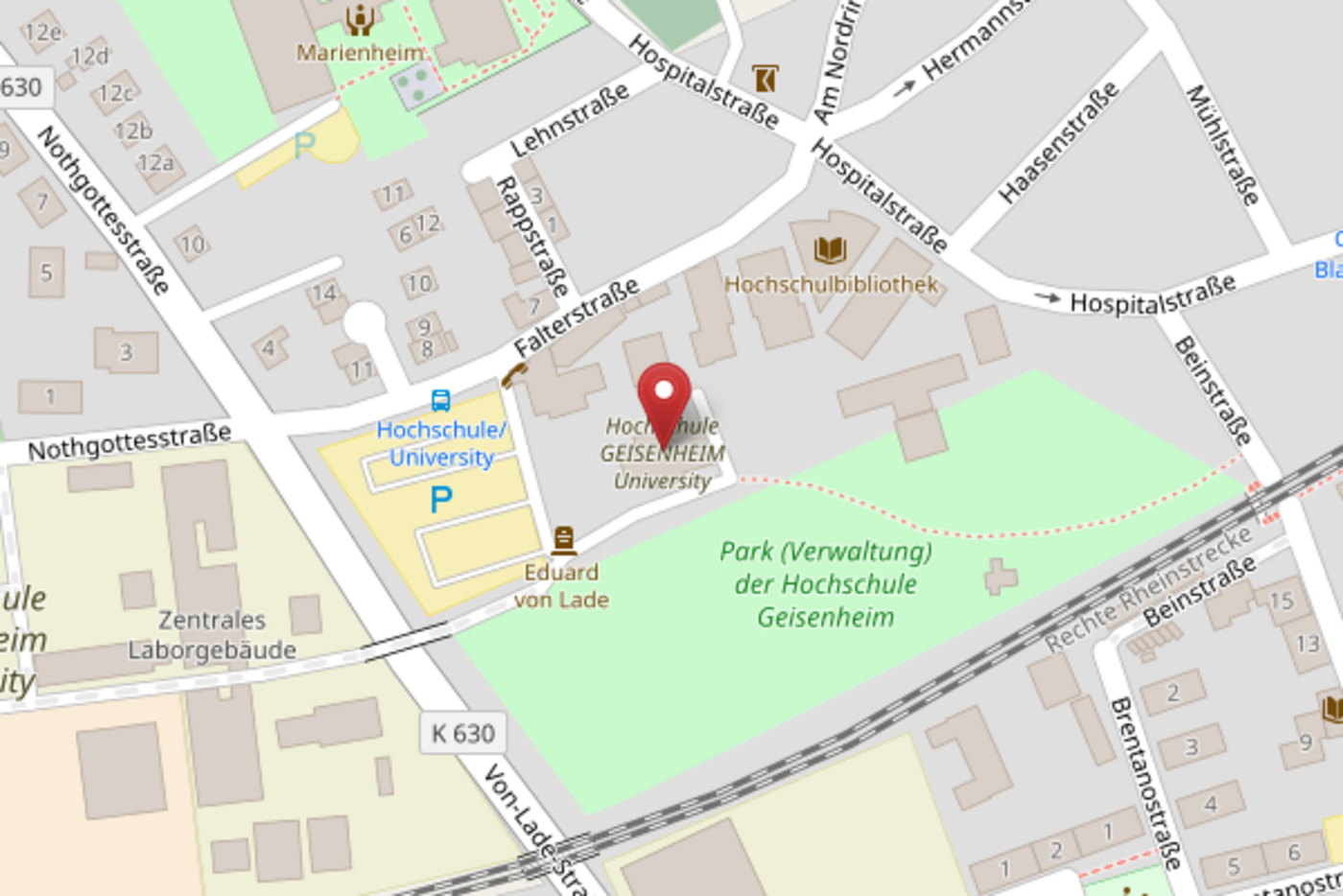
Von-Lade-Straße 1
65366 Geisenheim
A certificate of good conduct costs €13 (as of October 23, 2025), which unfortunately cannot be reimbursed by the university.
For more information, please visit the website of the Bundesamt für Justiz.
The Rundfunkbeitrag – previously known as the GEZ – is a mandatory fee that funds Germany’s public TV and radio broadcasters. Everyone who lives in a private residence in Germany has to pay it, though only one fee needs to be paid per household.
You will usually receive a letter from the ARD ZDF Deutschlandradio Beitragsservice after officially registering your German address. The letter will ask you to provide your name and address, the date you moved in, and your bank details (for automatic payments). If you live in a flatshare, make sure to talk to your roommate(s) to check if the fee is already being paid. This will help you avoid paying twice for the same household.
In Germany, registered members of Catholic, Protestant and Jewish churches are subject to Kirchensteuer, or church tax. This amounts to 9% of your income tax (or 8% in the states of Baden Württemberg and Bavaria). Other faiths are not subject to a religious tax in Germany.
When you register your address at the Bürgerbüro, you will be asked if you belong to a particular religious denomination. If you answer that you belong to one of the following churches, you will have to pay church tax:
- Evangelical (Evangelisch-lutherische)
- Reformed (Reformierte Kirche)
- Roman Catholic (Römisch-katholische)
- Old Catholic (Altkatholische)
- Jewish (Jüdische Gemeinde)
If you belong to a different religion or state that you do not have a religion, you will not need to pay this tax.



Anfahrt
duales Studium Gartenbau | Gartenbau Studium | Lebensmittelrecht Studium | Lebensmittelsicherheit Studium | Naturschutz Studium | Oenologie Studium | Studiengang Logistik | Studiengänge Lebensmittel | Studiengänge Natur | Studiengänge Umweltschutz | Studium angewandte Biologie | Studium Hessen | Studium Landschaftsarchitektur | Studium Lebensmittel | Studium Lebensmittelsicherheit | Studium Logistik | Studium Natur | Studium Naturschutz | Studium Umweltschutz | Studium Wiesbaden |