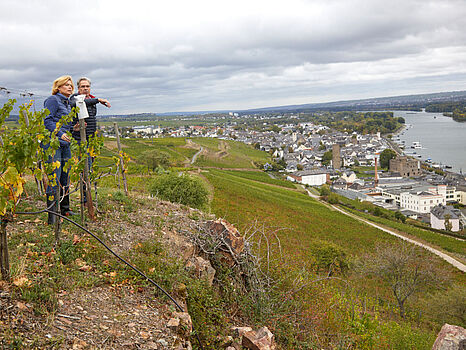
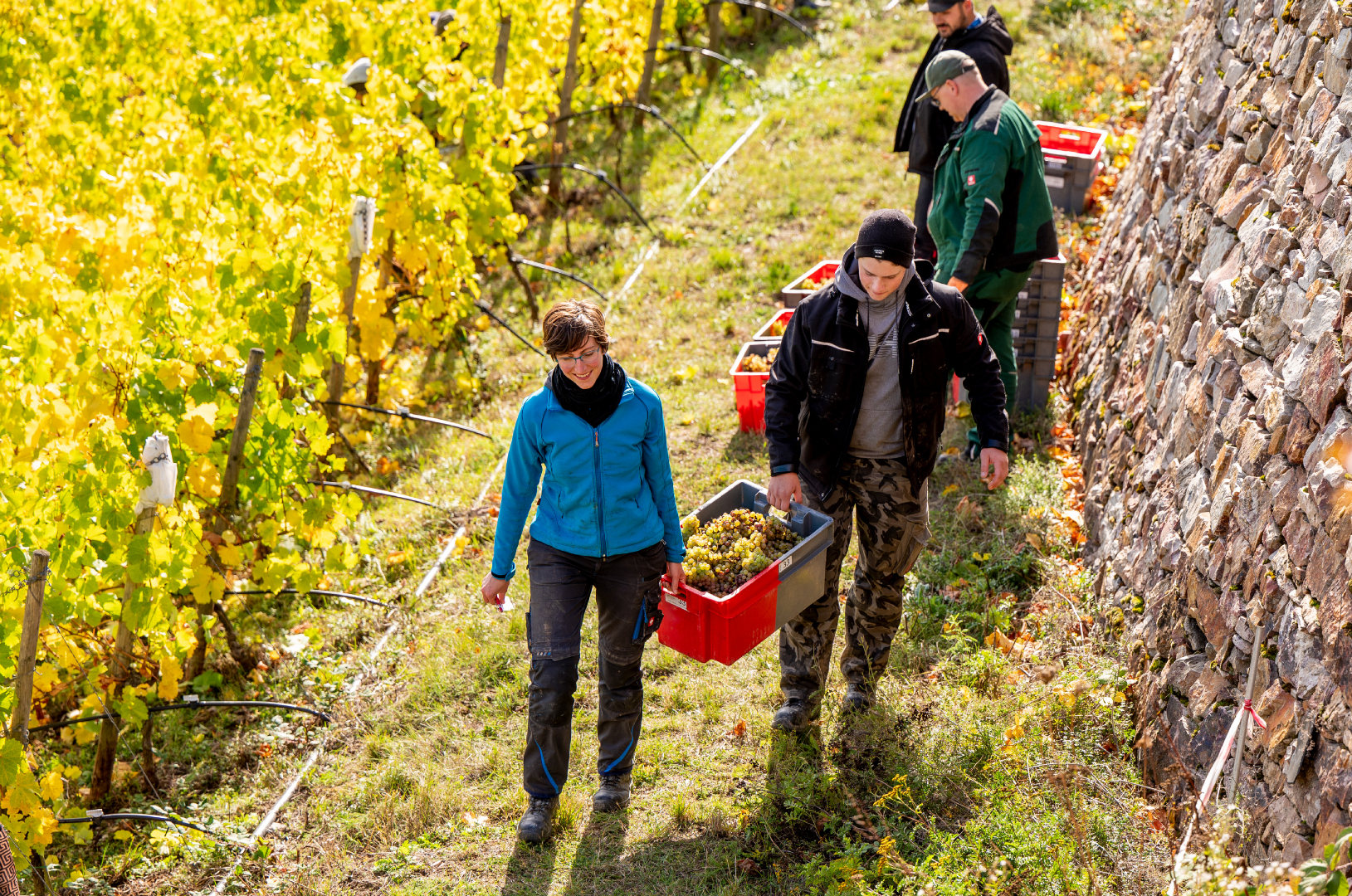
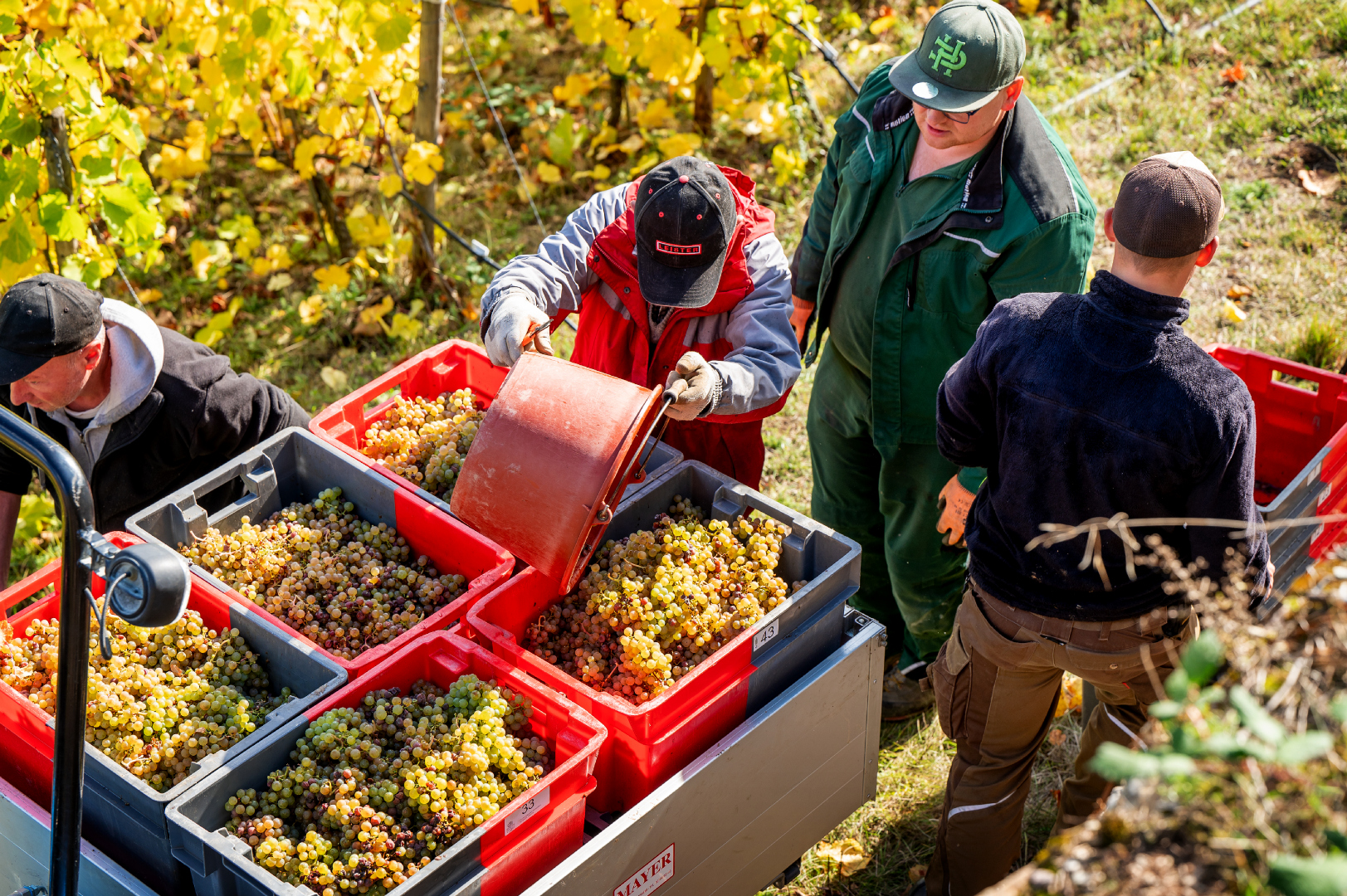
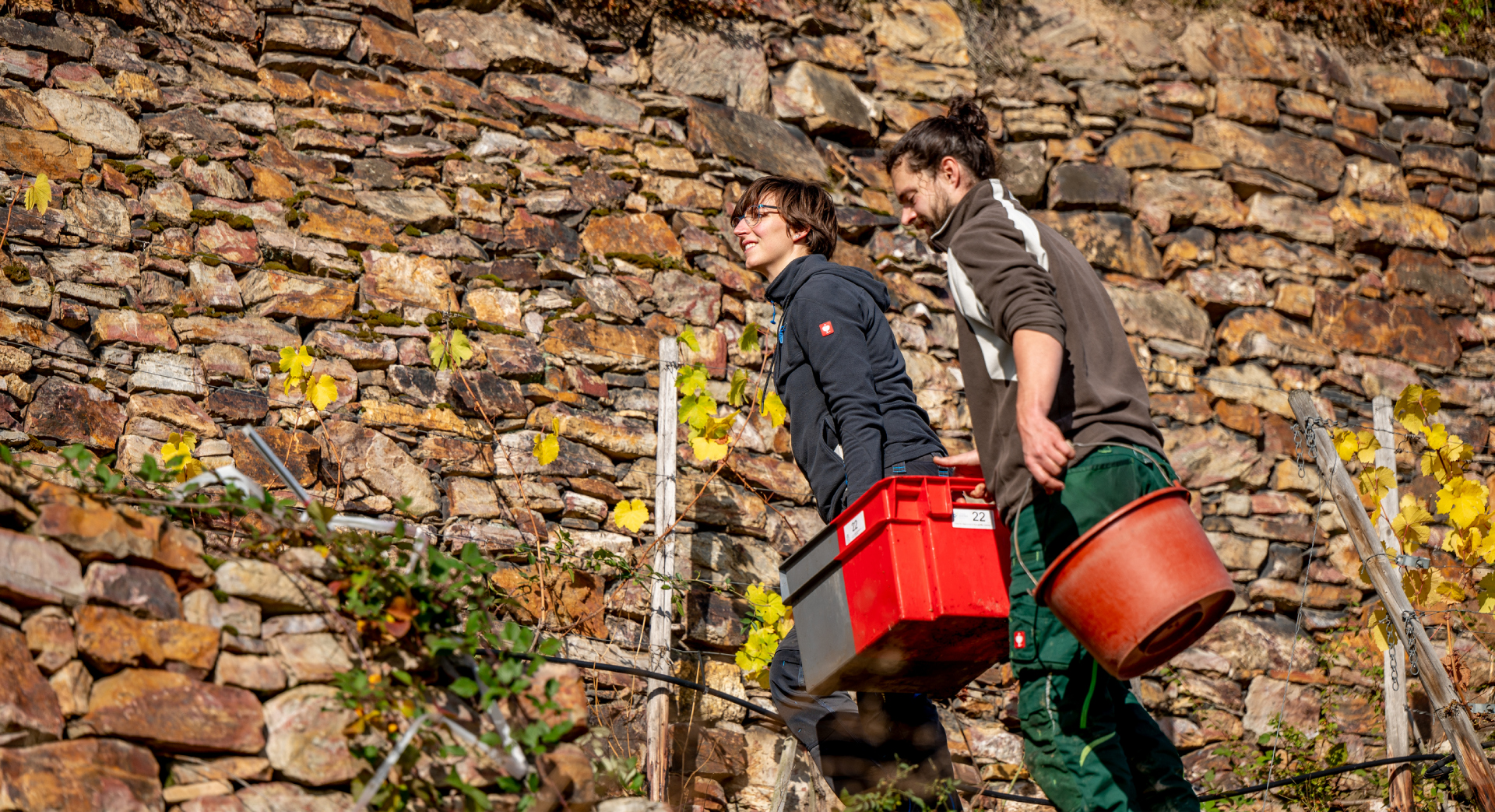
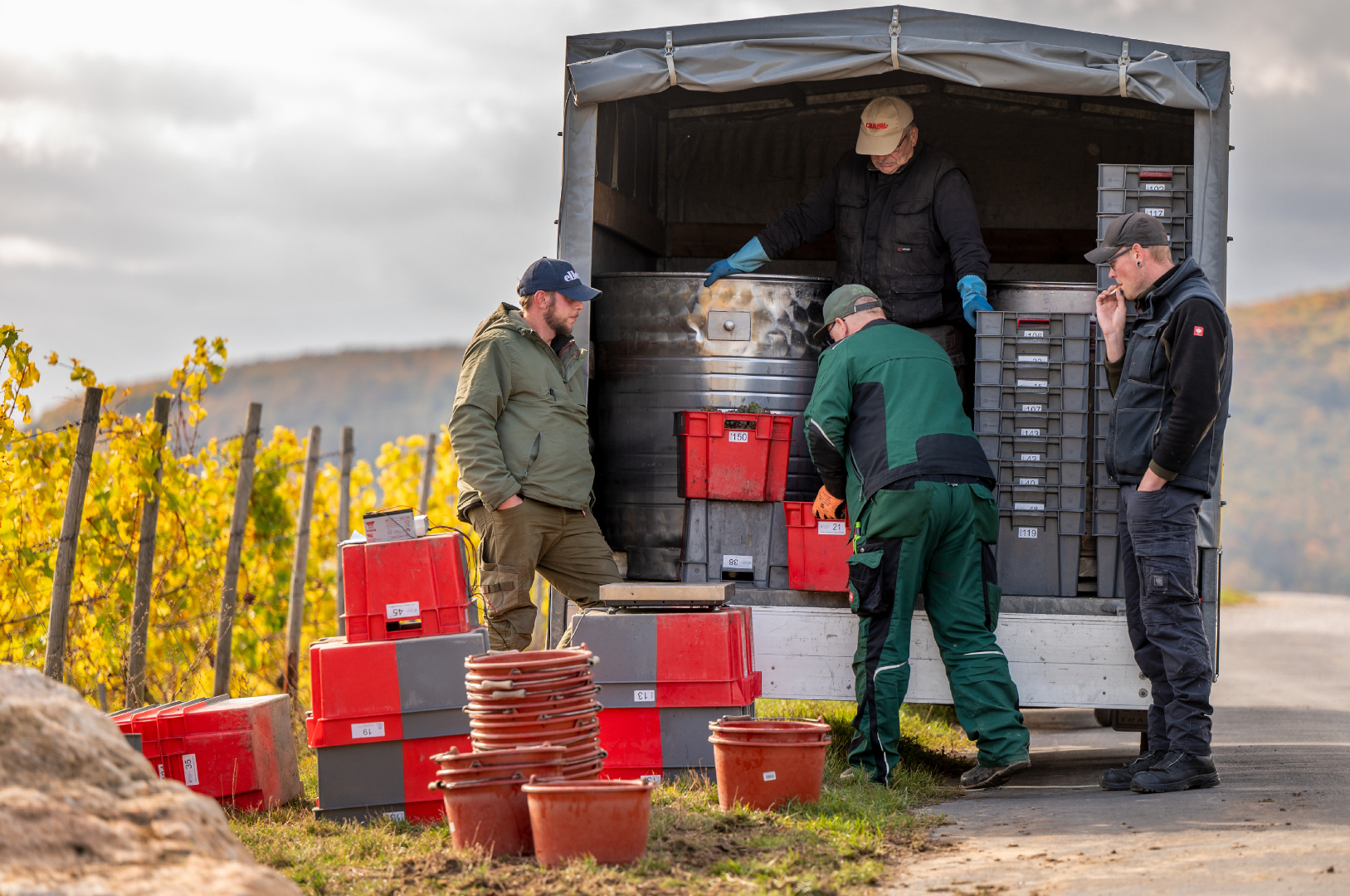
Geisenheimer Krähennest – 14 Terraces Covering Almost 2,800 Square Meters
Geisenheimer Krähennest – from Students for Students
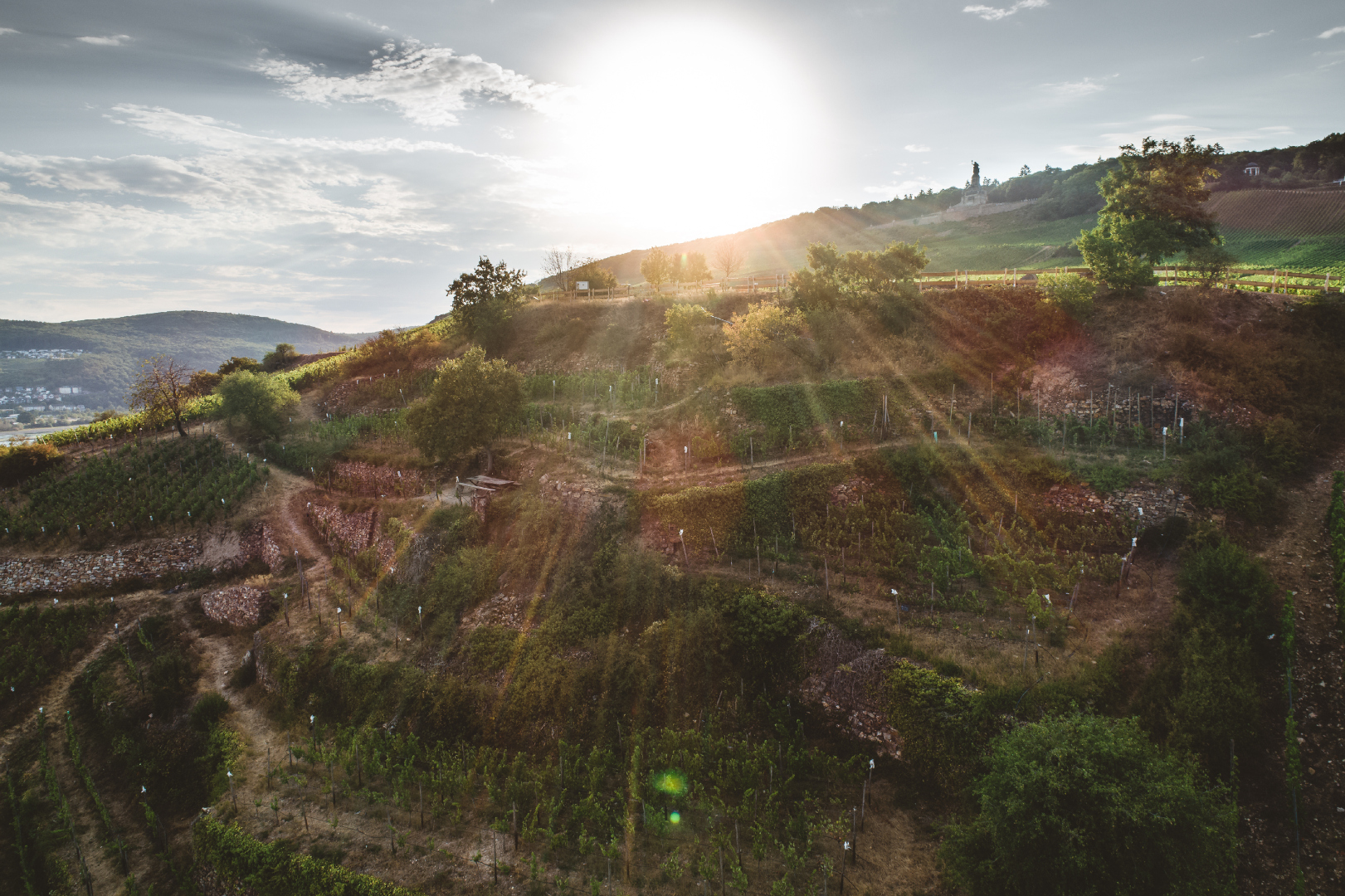
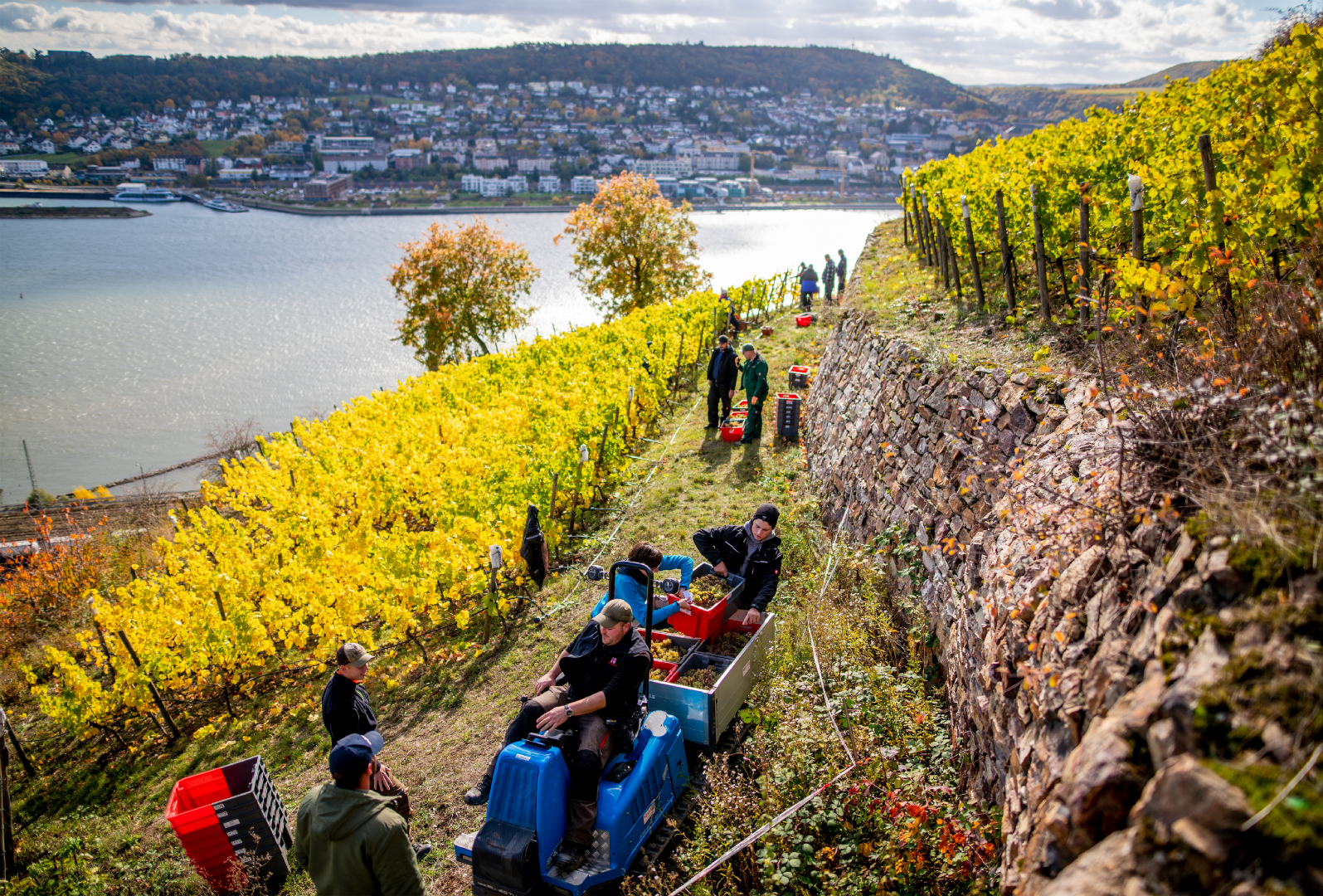
Geisenheimer Krähennest – ancient terraces and dry-stone walls

'Krähennest' Student Project: Organic Cultivation and Biodiversity of Riesling on Recultivated Old Terraces

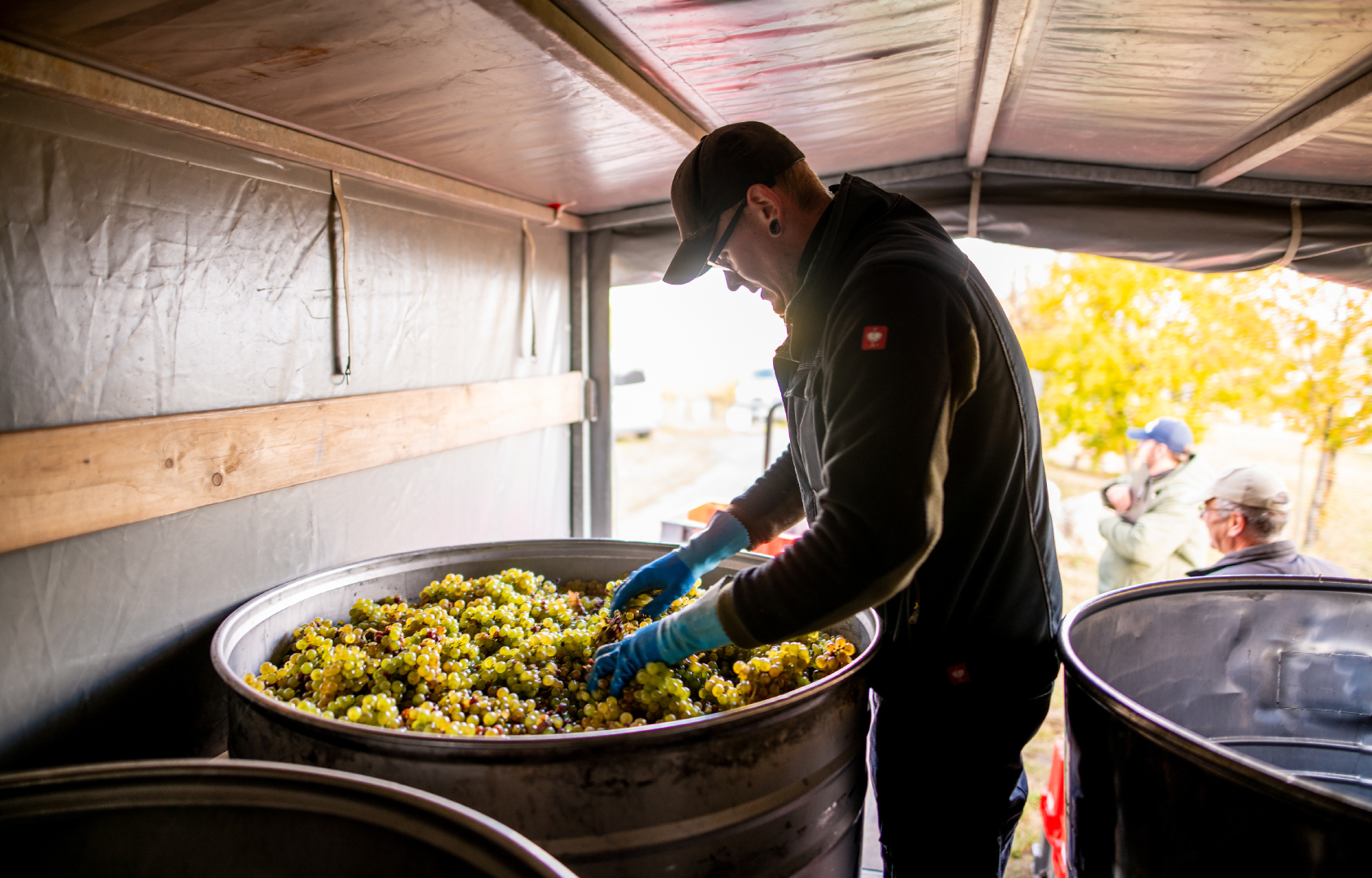
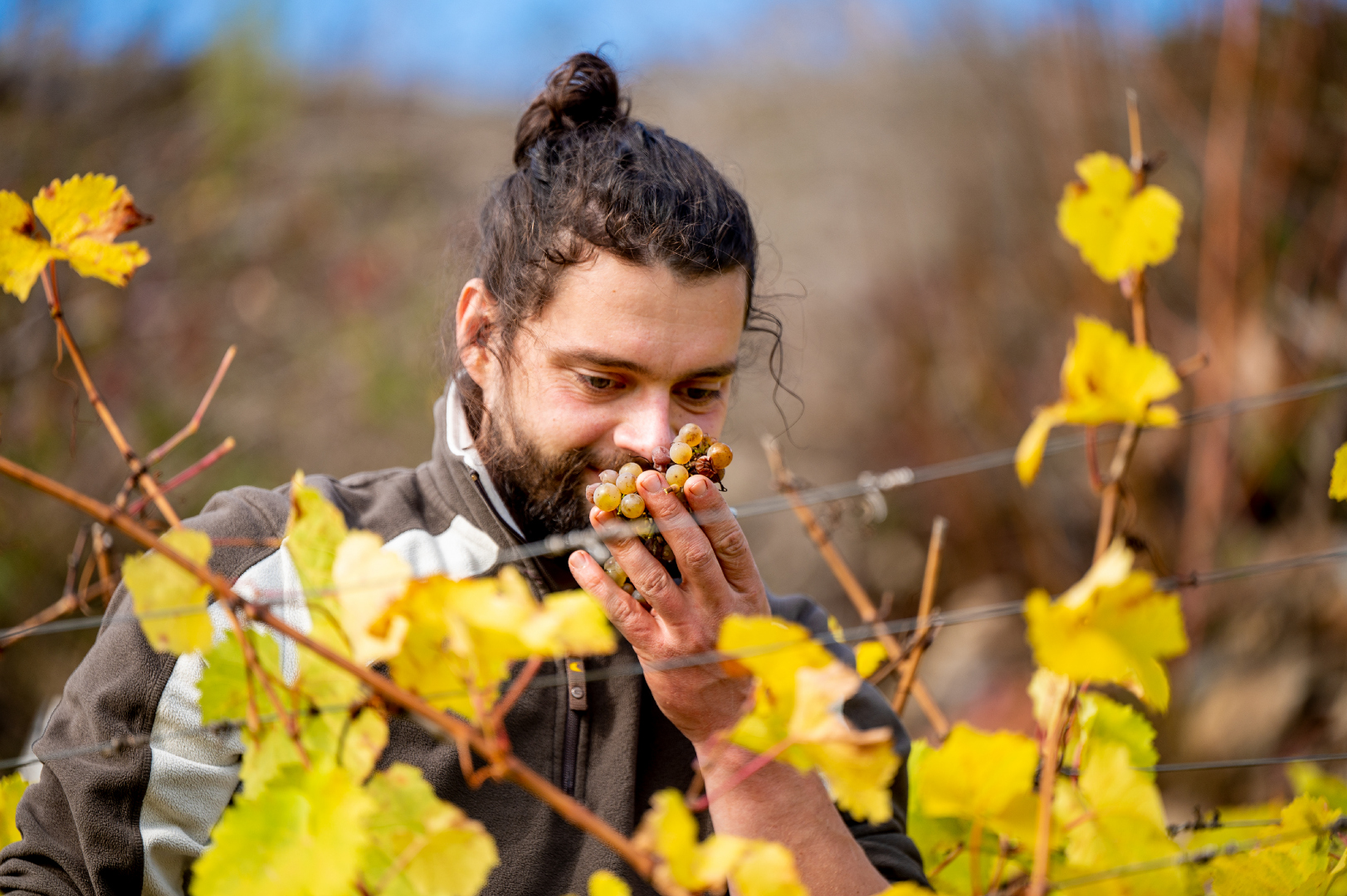
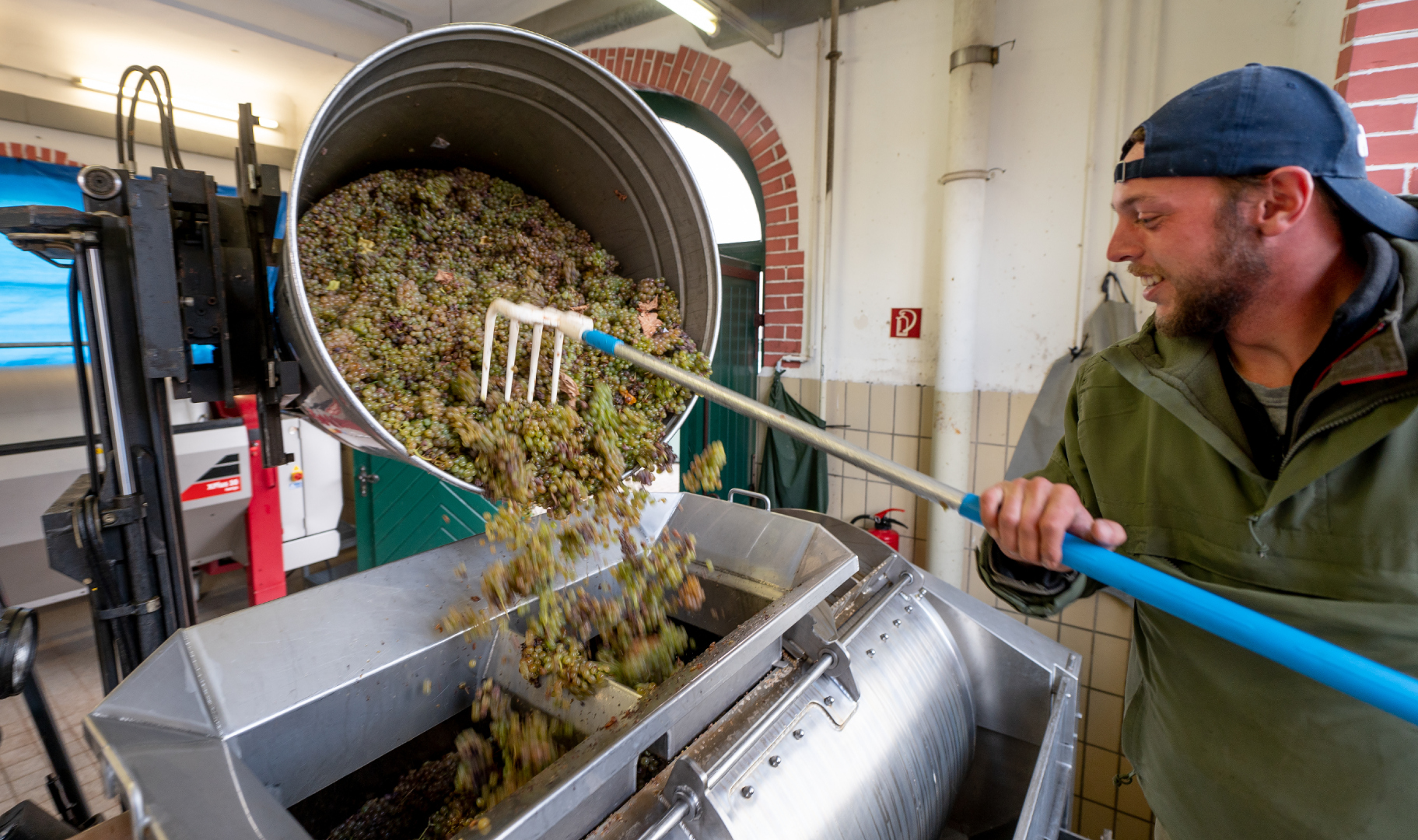
Hands-on experience in the vineyard, old terraces and dry-stone walls, organic cultivation and a rich biodiversity – our ‘Krähennest’ project is a true student project as 100 % of the proceeds will go back into teaching.

History and Site
Credits: Woody T. Herner
  • Ancient terraces and dry-stone walls
  • 14 terraces stretching out on nearly 2,800 square meters (2,744 m2 to be exact) with 1,266 square meters reserved for enhancing biodiversity (not used for wine-growing)   
  • Last remaining terraced vineyard in the core area of the “Rüdesheimer Berg” vineyard site 
  • Recultivated in 2005 after lying fallow for almost 80 years
  • First terraces were planted in 2006
  • Real student project right from the start
  • Name is taken from the Middle High German word ‘Kronnest’
Organic Cultivation and Biodiversity
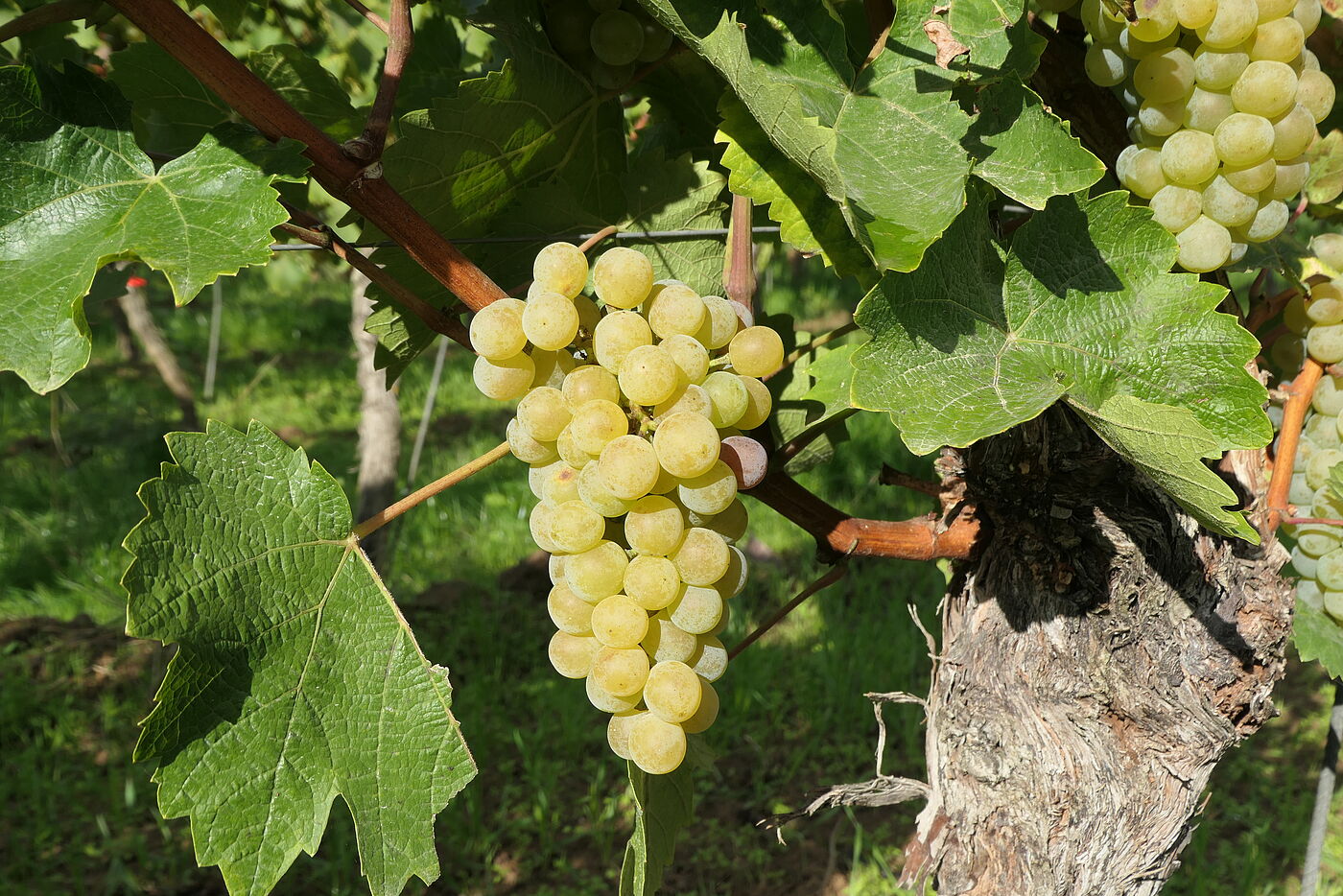
Yellow Orleans; credits: Prof. Dr. Joachim Schmid

Our goal was to ensure a high level of biodiversity, so we planted 20 different Riesling clones from various regions on seven different rootstocks to increase the vineyard’s resilience to extreme weather and boost biodiversity.

During the recultivation process, an old vine of the “Yellow Orleans” variety, planted in the Middle Ages, was found. The exact age of the vine is unknown.

The vineyard boasts a unique flora and fauna (e.g. orchids) and a very high number of different species.

Practice-oriented Education
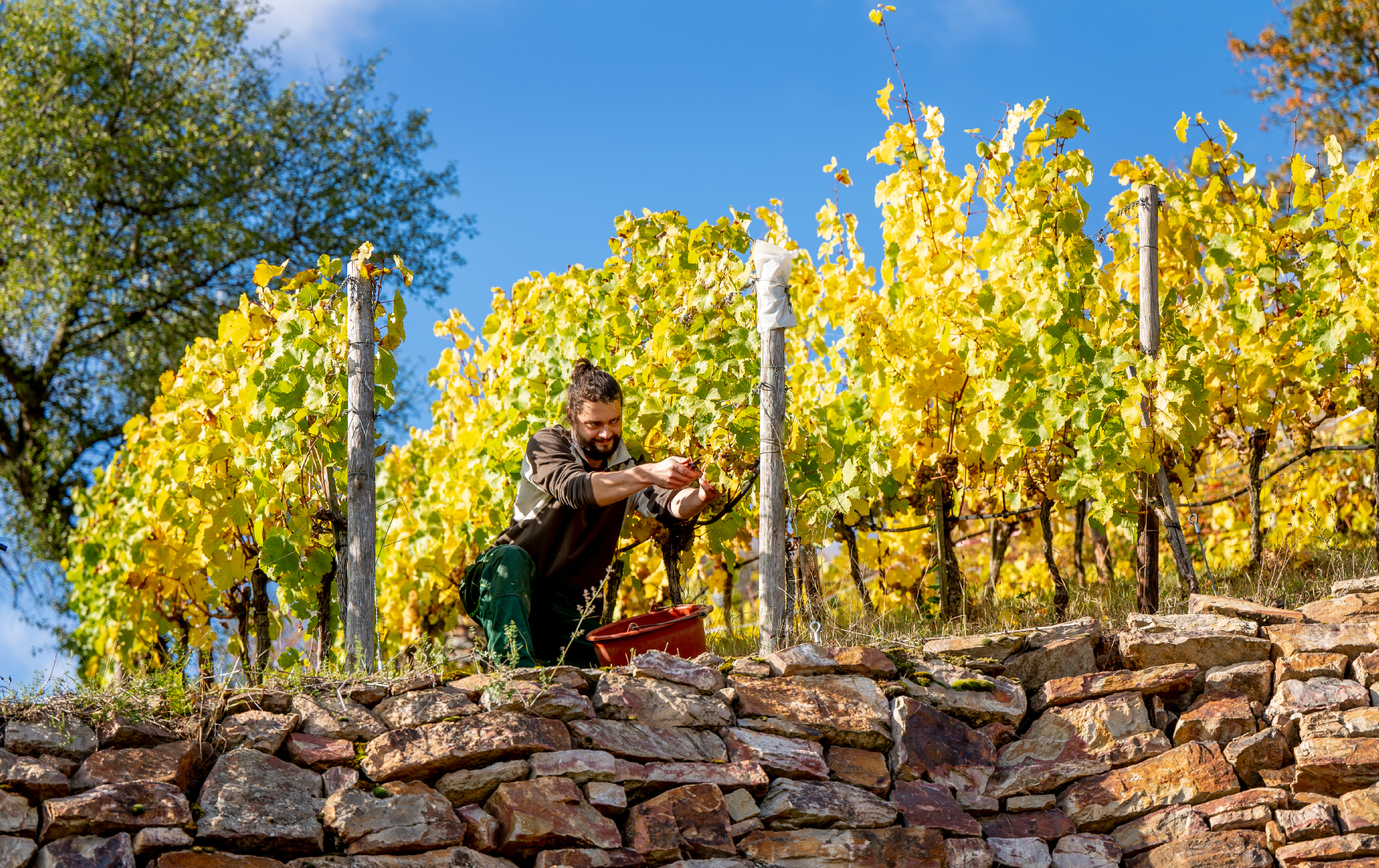
Credits: Torsten Silz

From students for students

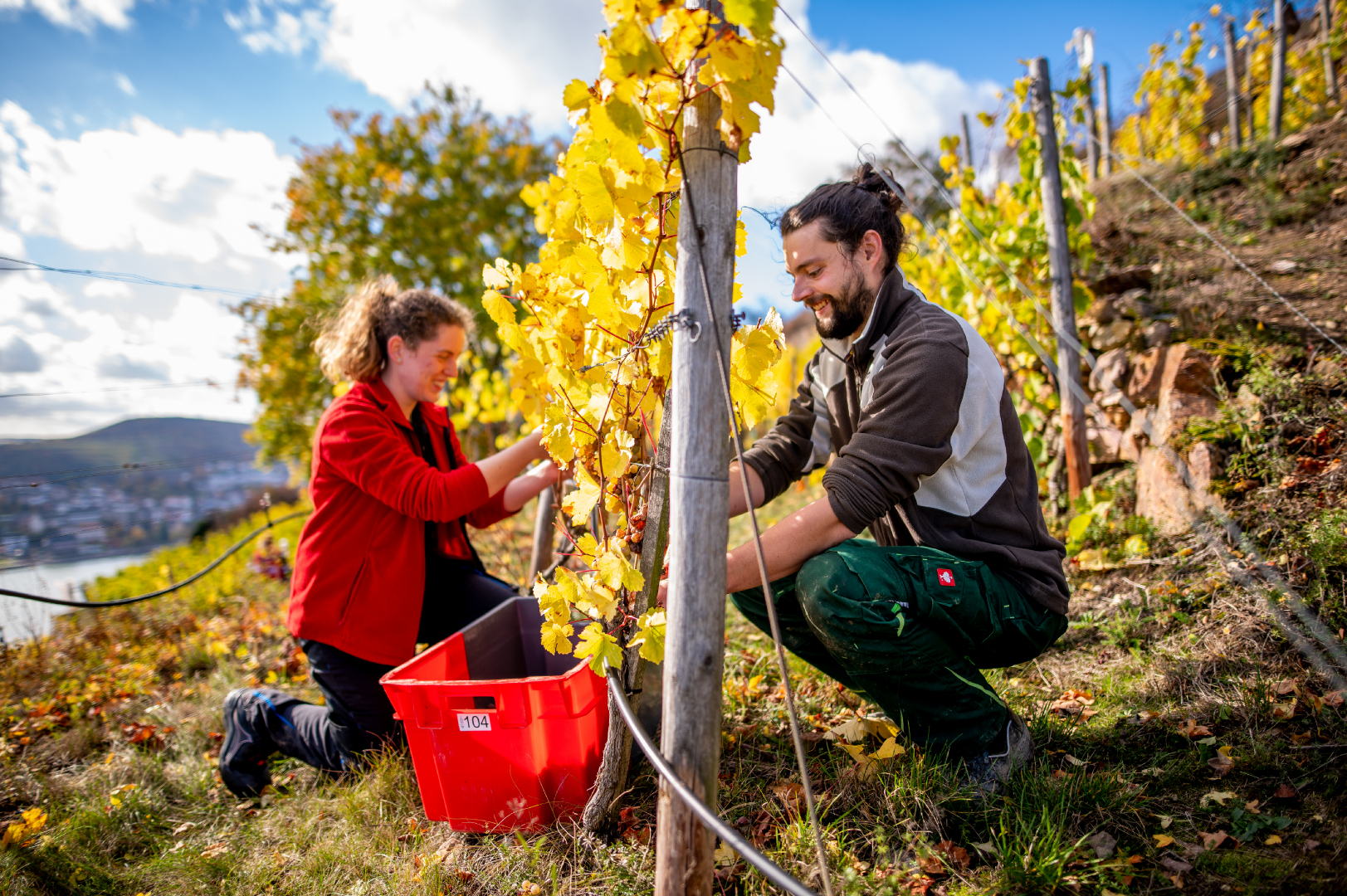
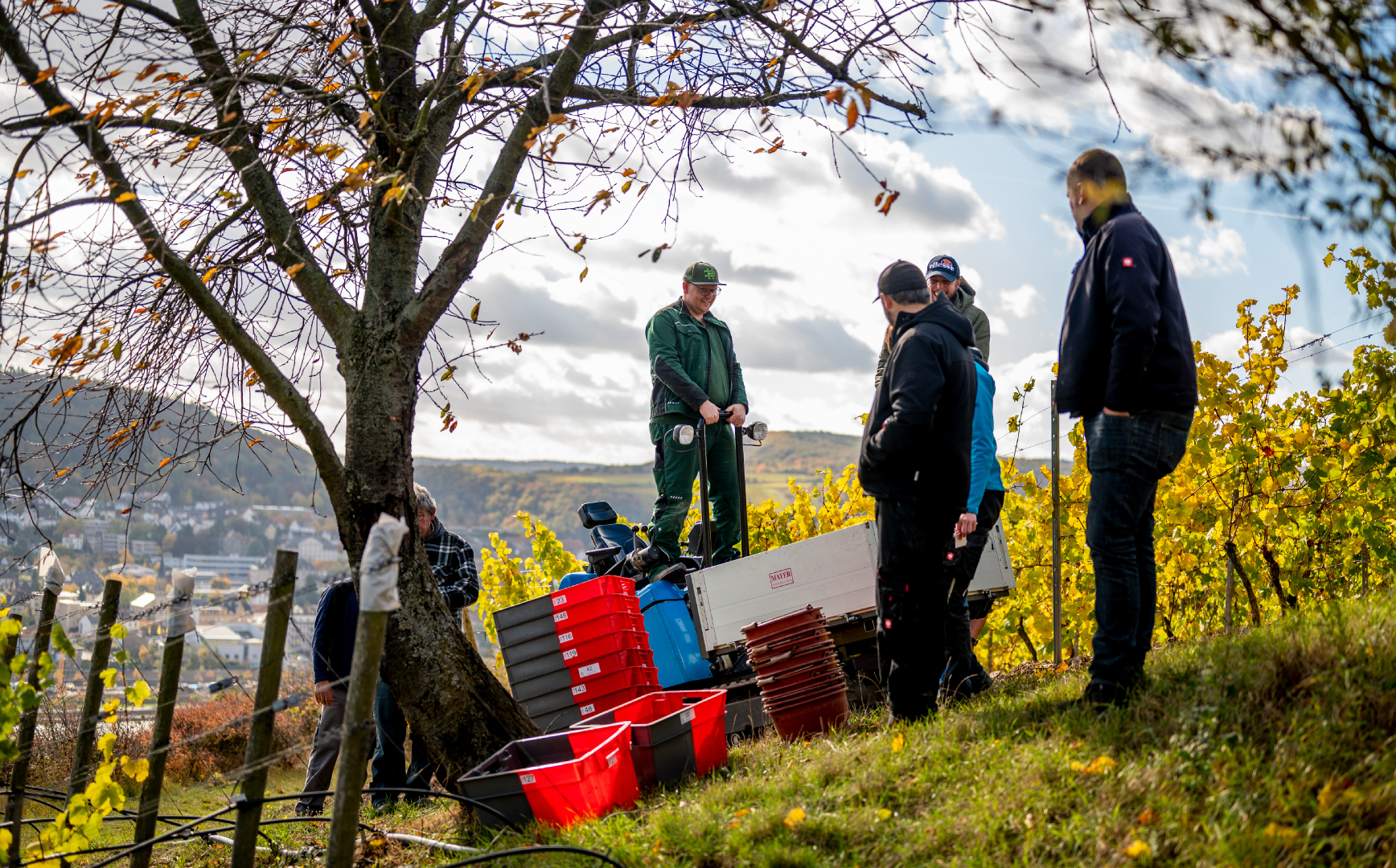
Our goal was/is to give students a better understanding of the terroir and to show them the benefits of steep slopes and terraced vineyards. We also wanted them to experience the role of manual work in a unique and diverse environment, and try to reflect this diversity in the wine. How to work with dry-stone walls is also demonstrated in this vineyard.

The vineyard is managed by students as part of their student project, which is then continued in the Department of Enology.


Images

Credits: Torsten Silz
The Wine
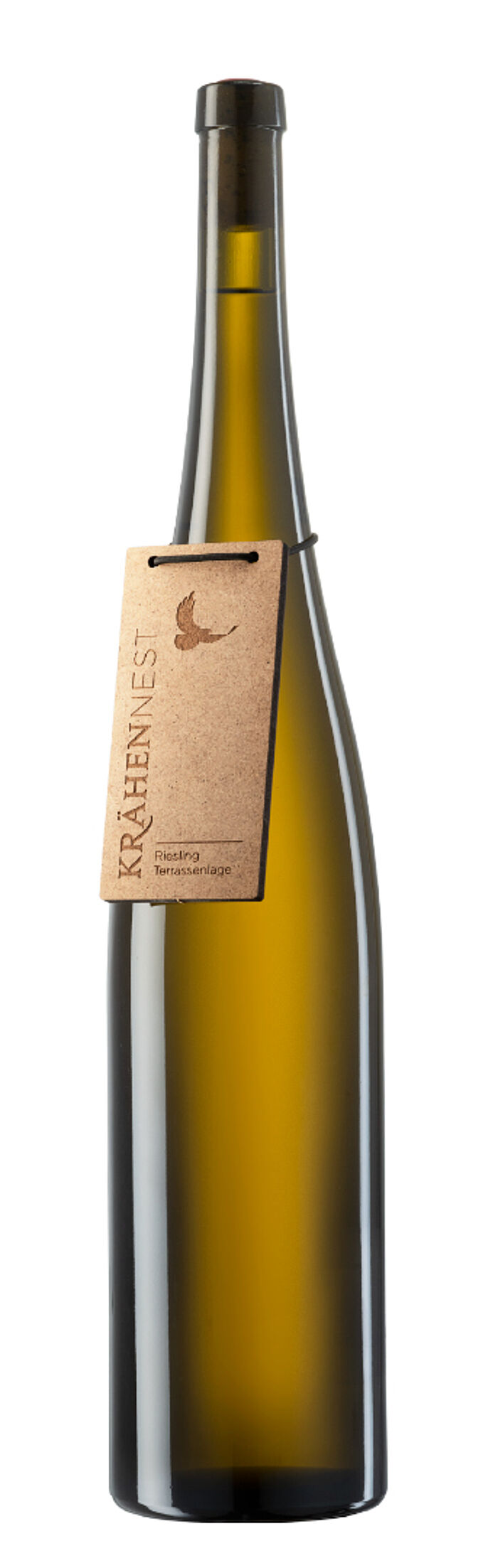
  • Limited Magnum edition
  • Terroir: Taunus quartzite, mineral impact, great aging potential

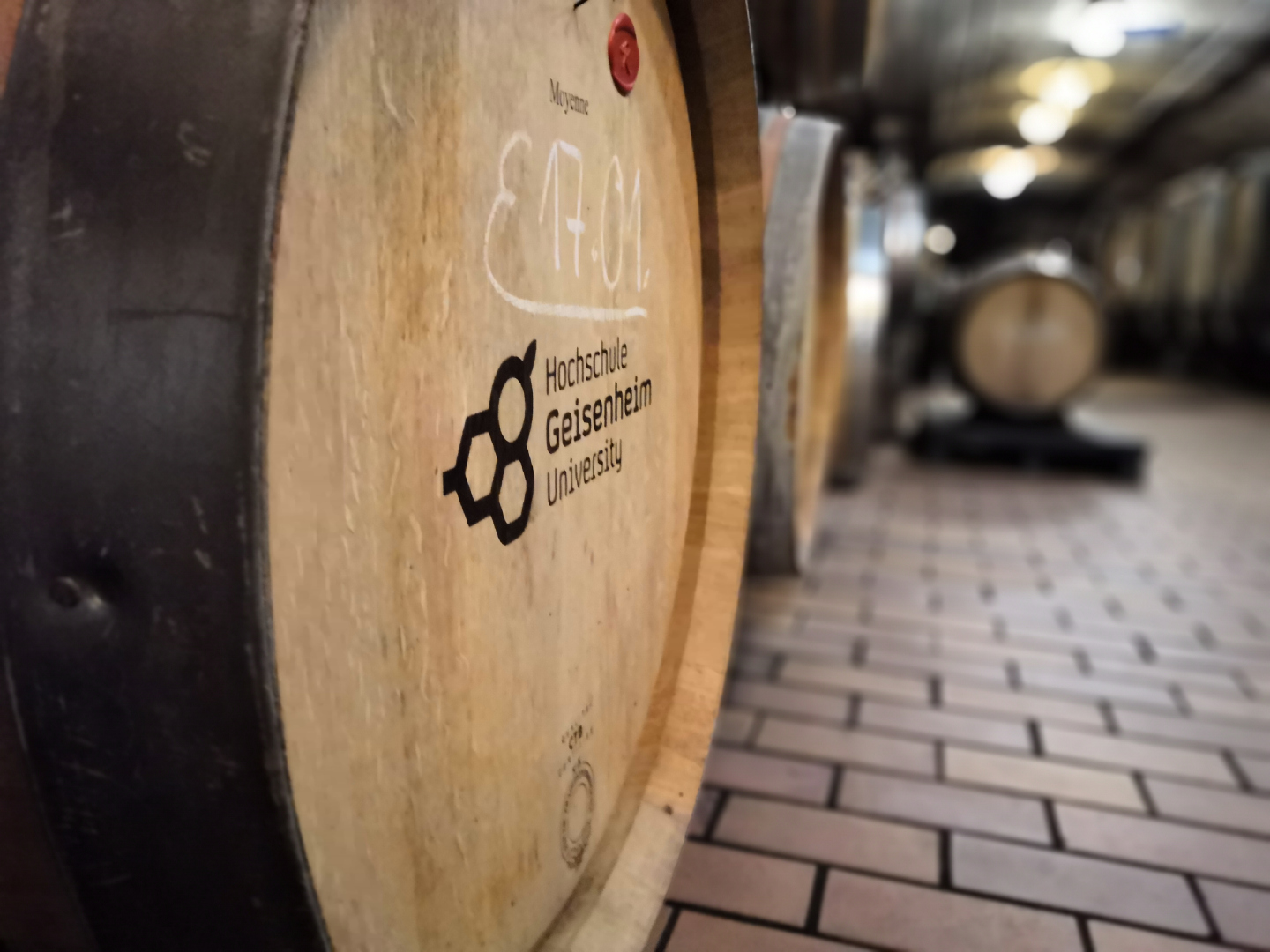
Our Campus Winery

Credits: Alina-Louise Kramer, M.A.

The campus winery, which dates back to the beginning of the former research institute, links the three departments of Grapevine Breeding, General and Organic Viticulture, and Enology, and enables us to translate basic and application-oriented research into practical solutions. The winery covers the entire value chain from grapevine breeding to grape production, and from winemaking to marketing. Improving and safeguarding the quality of wine is the cornerstone of our research activities. Since 1996, we have been a member of the Verband Deutscher Prädikatsweingüter (VDP) – the Association of German Prädikat Wine Estates – that proves the high quality of our wines.

Our winery covers approximately 24.5 hectares of vineyards, including outstanding sites in the sub-districts of Geisenheim, Rüdesheim and – given our research focus on steep slope viticulture – the sub-district of Kaub. As the Rheingau area is mostly dominated by Riesling, our vine varieties might come as a surprise: although Riesling and Pinot Noir are still taking center stage, they have become increasingly flanked by other national and international vine varieties.               

Other departments also benefit from the infrastructure of our winery. Grapes, must and wines that are not used for research and teaching are matured and sold to customers. Various trial wines from our new product line “Wissensdurst” (“Thirst for Knowledge”) are also on offer.

News

Successful Presentation of the Vipoll ‘Small-in-One’ Beverage Filling System at BrauBeviale

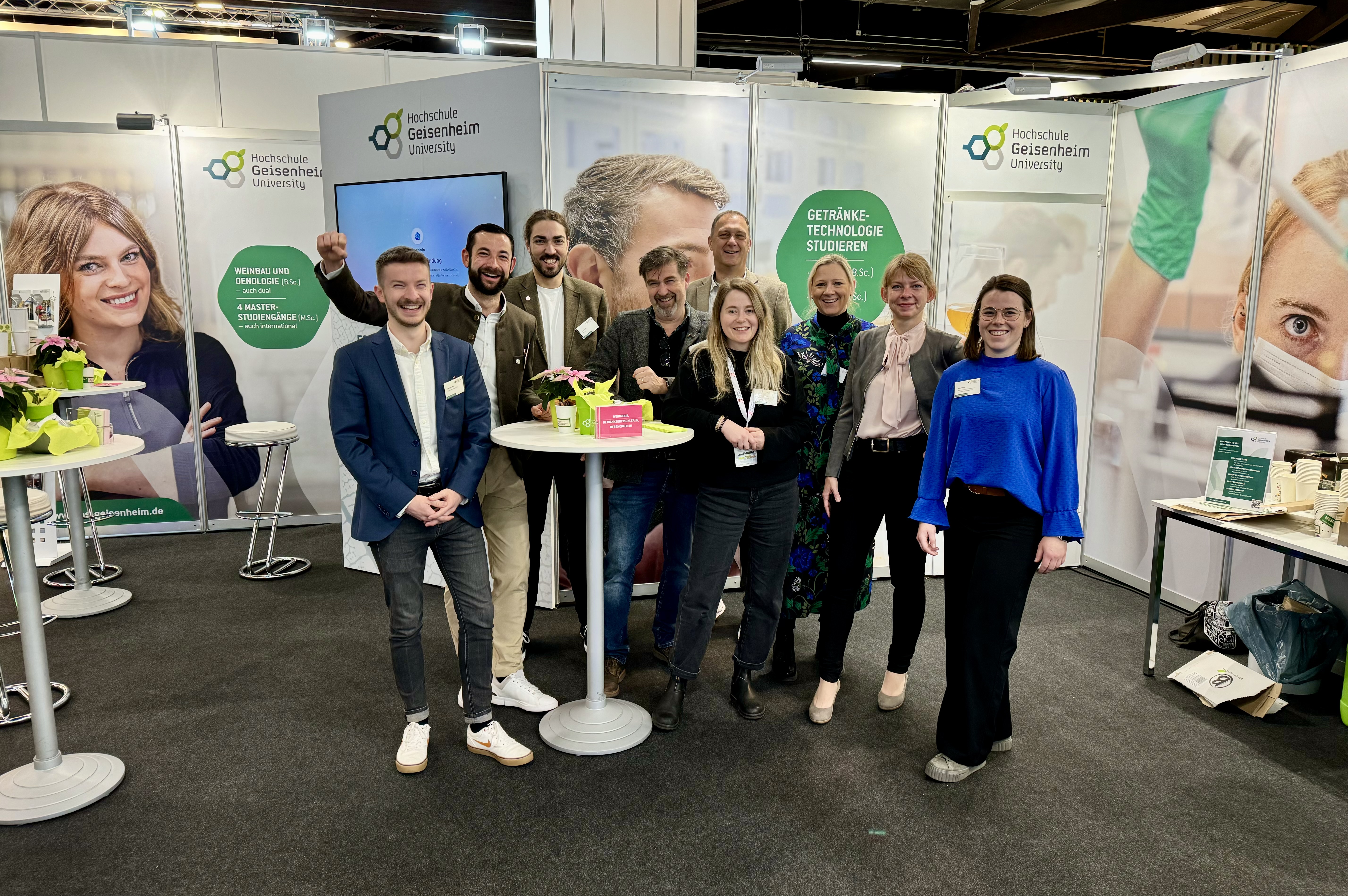
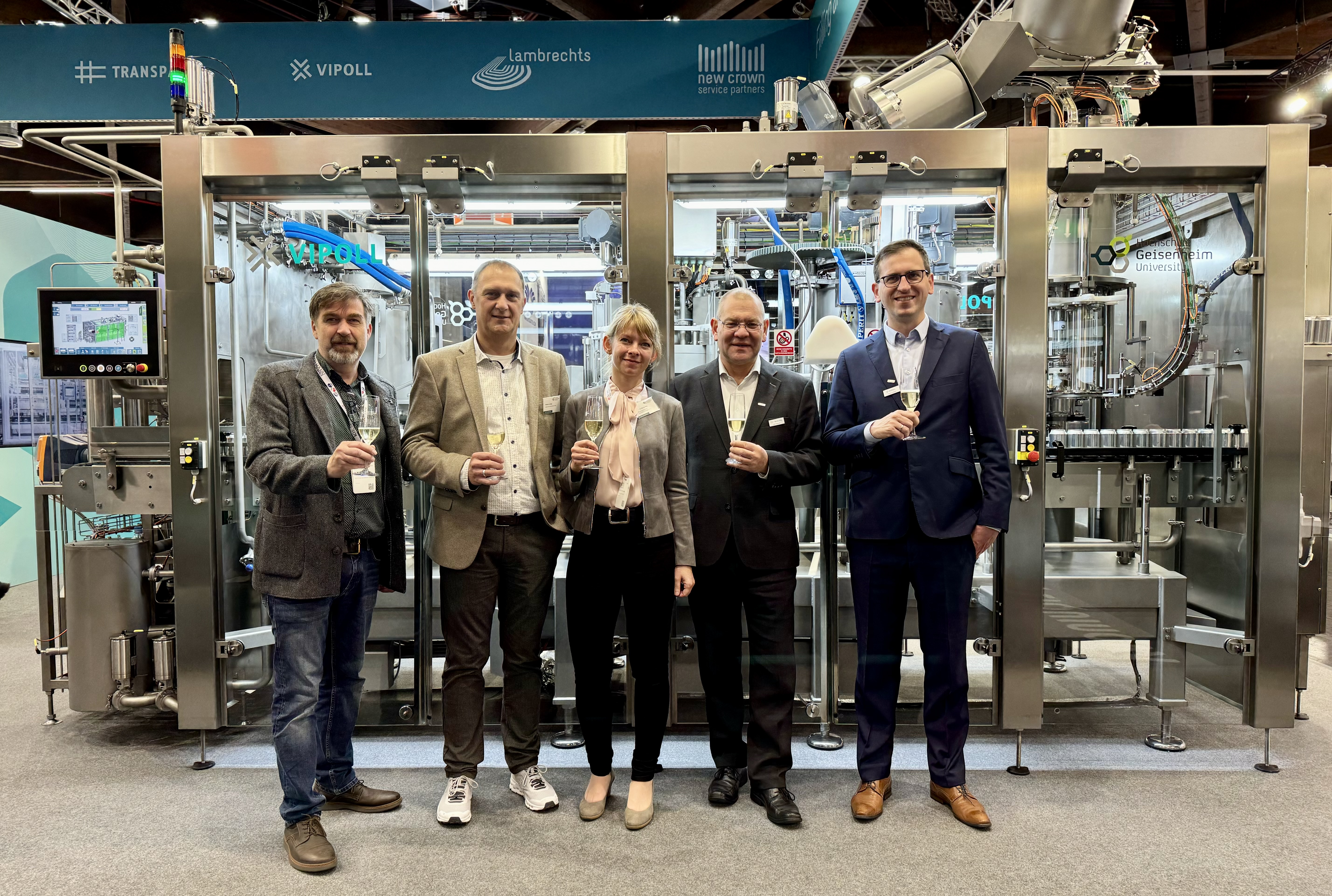
From left to right: Dr Christian von Wallbrunn, head of the Beverage Technology M.Sc. program; Dipl.-Ing. Michael Ludwig, Department of Beverage Research; Professor Bianca May, head of the Beverage Technology B.Sc. program; Jens Neidhardt and Patrick Scheerer, Vipoll. Photo: Tina Kissinger

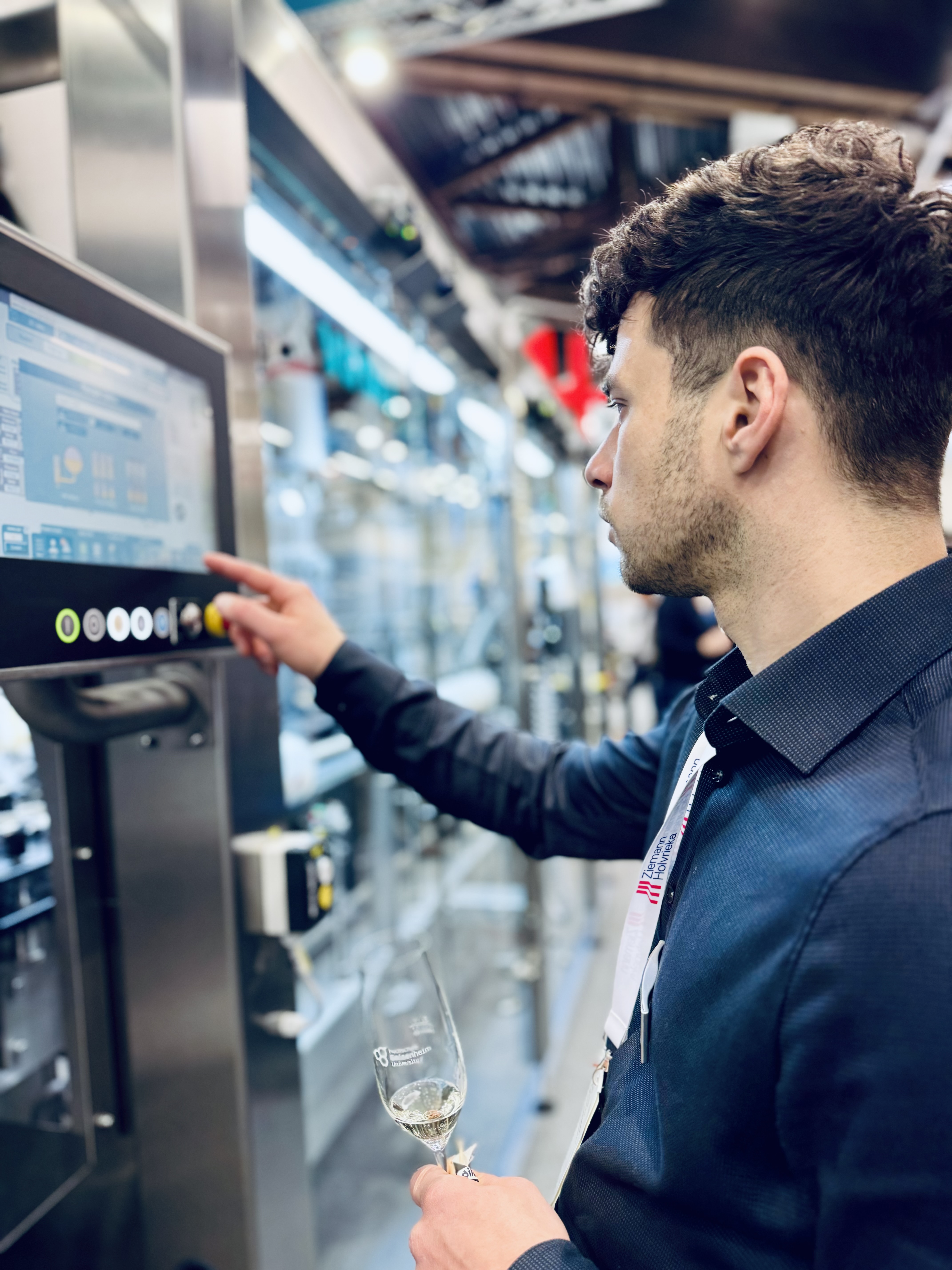
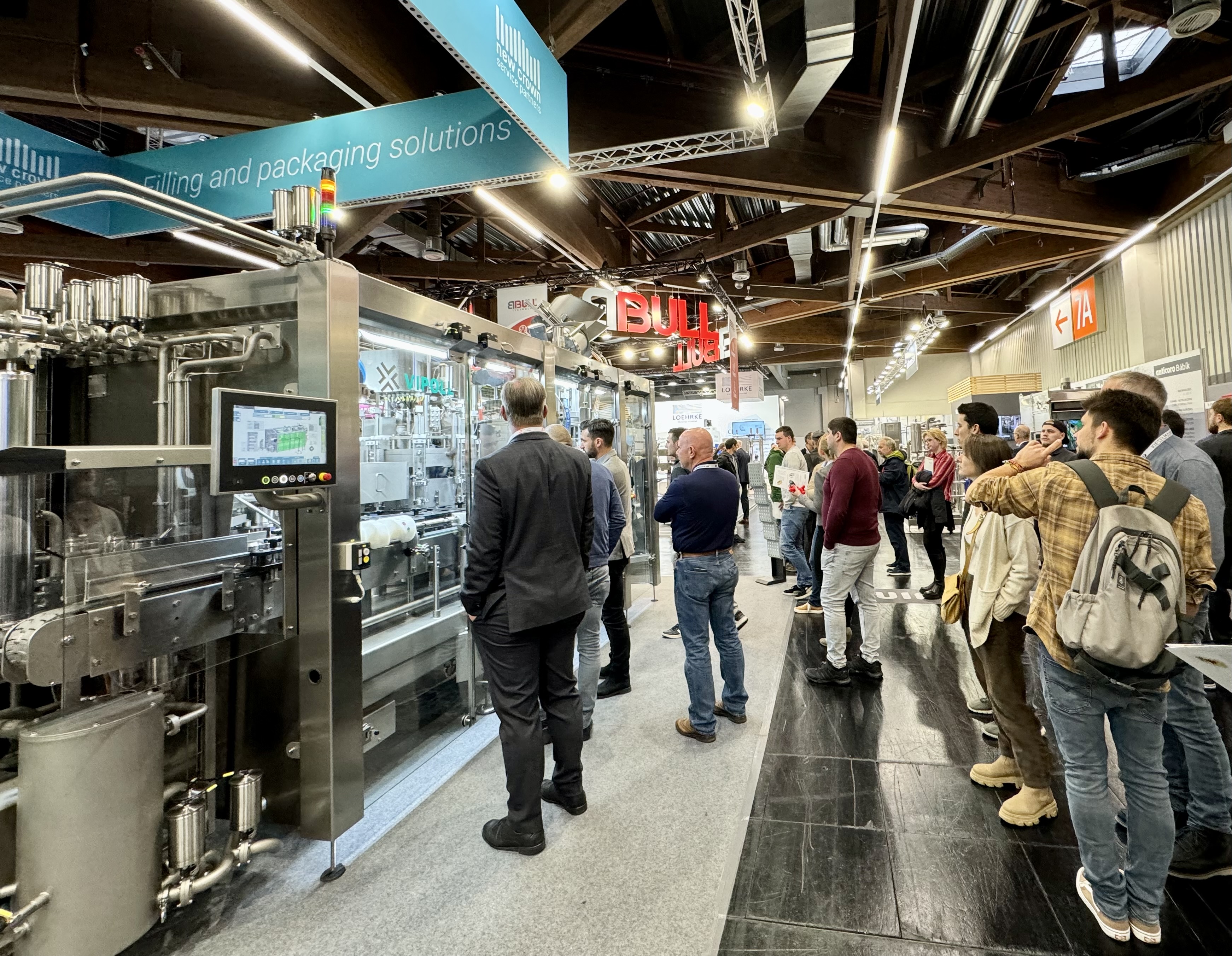
The BrauBeviale trade fair, which took place in Nuremberg at the end of November, provided the perfect stage for presenting Vipoll’s new ‘Small-in-One’ beverage filling system. Numerous industry experts, partners, alumni, and interested visitors had the chance to learn about this innovative bottling system, which will soon be available to students at Hochschule Geisenheim University in the new Beverage Technology Center (Getränketechnologisches Zentrum; GTZ).

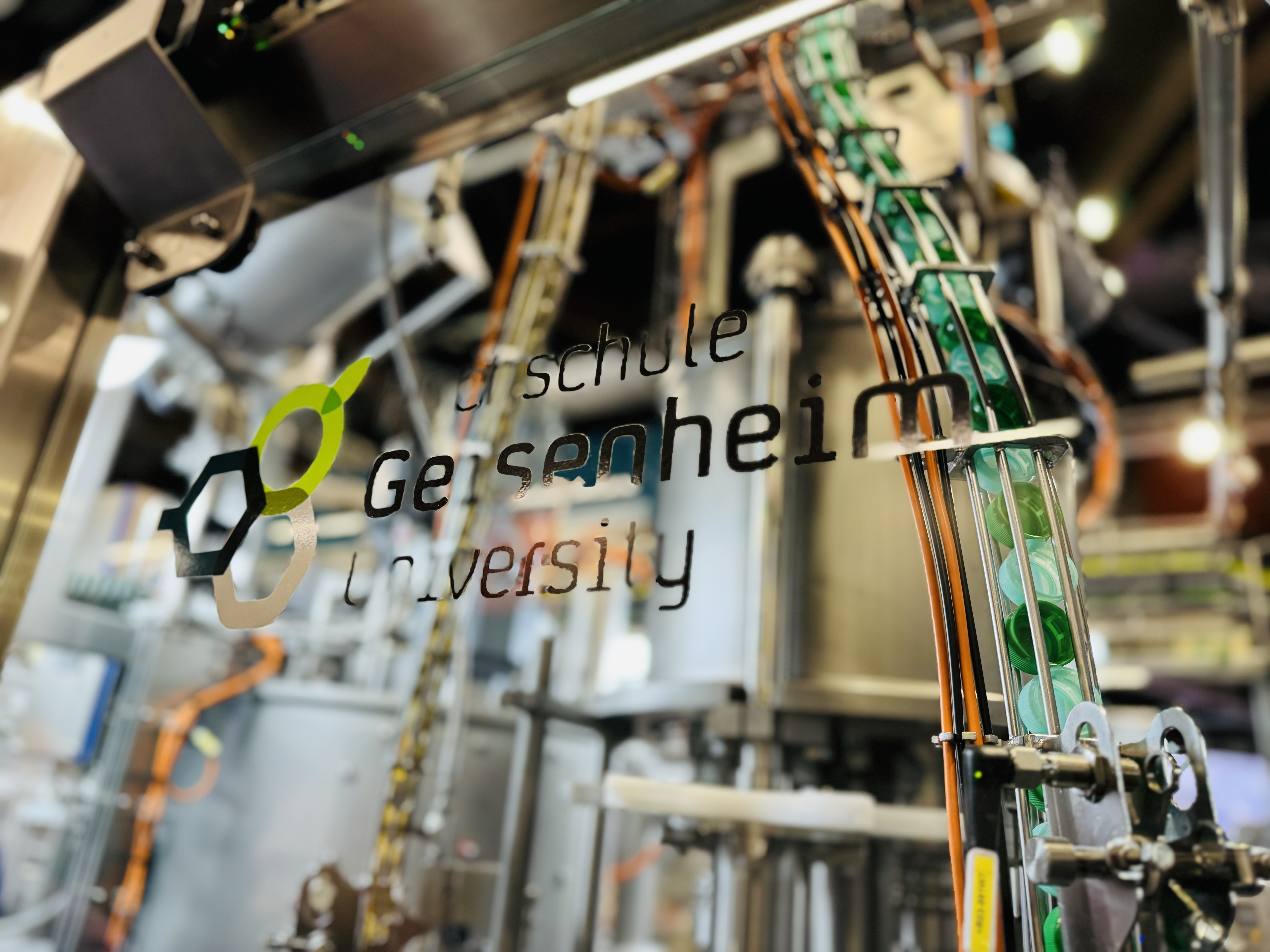
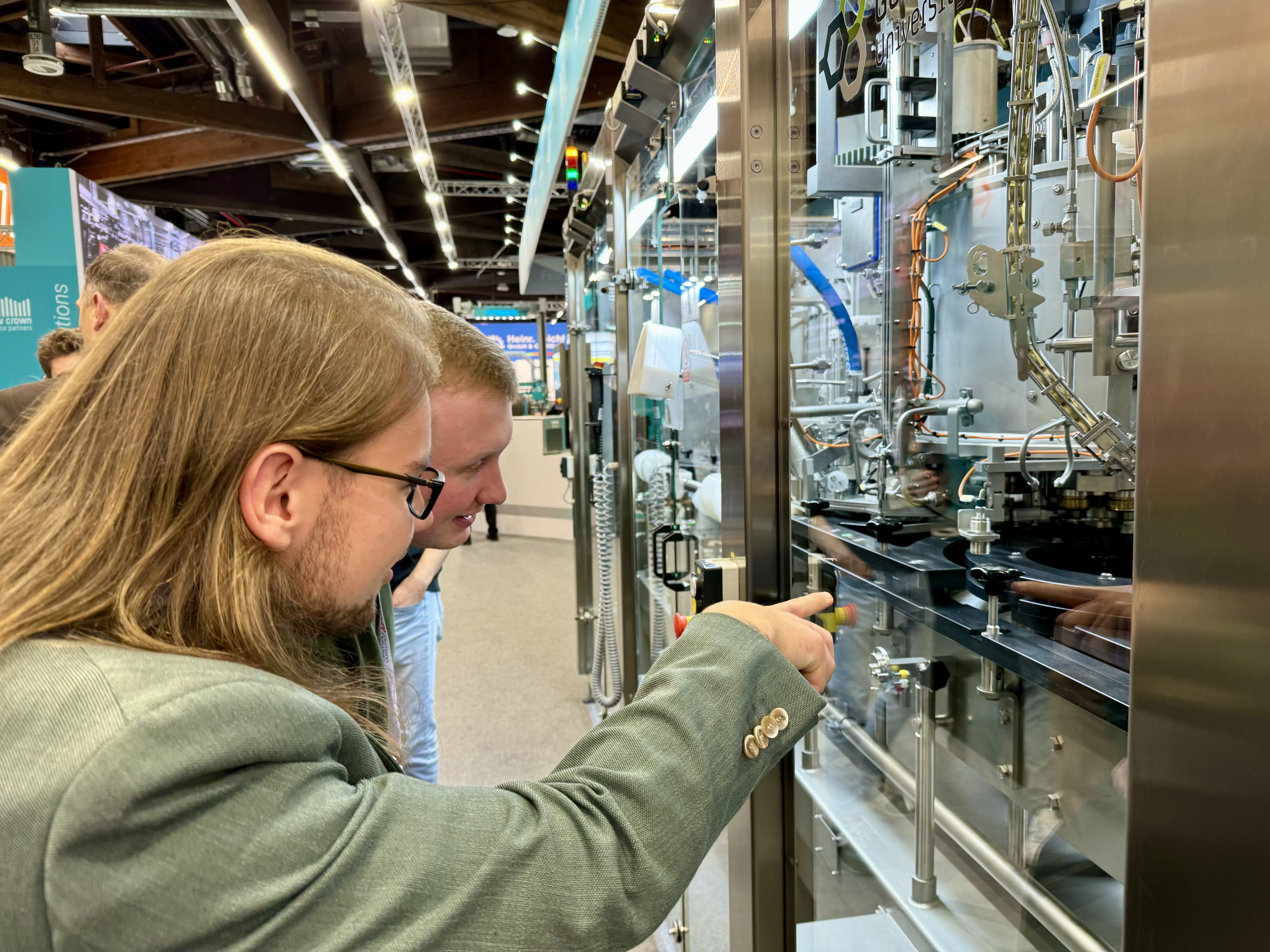
Together, representatives from the Slovenian company Vipoll and Hochschule Geisenheim University introduced attendees of the BrauBeviale trade fair to the full potential of the Small-in-One filling system. This state-of-the-art filling system offers impressive flexibility and efficiency in filling beverage containers, whether glass bottles, cans, or PET, and thus sets new standards for research and education in the field of Beverage Technology.

The official presentation was accompanied by a welcome address from Michael Ludwig, from Geisenheim's Department of Beverage Research, and Vipoll’s Jens Neidhardt and Andreja Markoja, who emphasized the importance of the new system for training and beverage research. According to Ludwig, the system will become “the heart of the Beverage Technology Center”. Attendees then had the chance to experience the Small-in-One filling system in action and see its versatility and efficiency for themselves. The event concluded with a get-together, where attendees had the opportunity to sample beverages, exchange ideas, and network with other professionals in a relaxed atmosphere.

 Vipoll is a company specializing in the integration of complex packaging systems, ranging from project management to packaging line audits and automation. For more information, please visit:

https://www.vipoll.si/

About the new Beverage Technology Center (GTZ)

With the new GTZ, Hochschule Geisenheim University is creating a unique facility for research, development, and praxis-oriented teaching. The center comprises:

  • a production hall, classrooms, and practical training rooms;
  • a Sekt production facility for practice-oriented degree programs; and
  • state-of-the-art filling technology, including the Small-in-One filling system from Vipoll.

“This new technology makes Hochschule Geisenheim University a forerunner in modern beverage technology and emphasizes the importance of innovation in the industry,”  says Michael Ludwig from the Department of Beverage Research.


Insights from Geisenheim Scientists at the Trade Fair

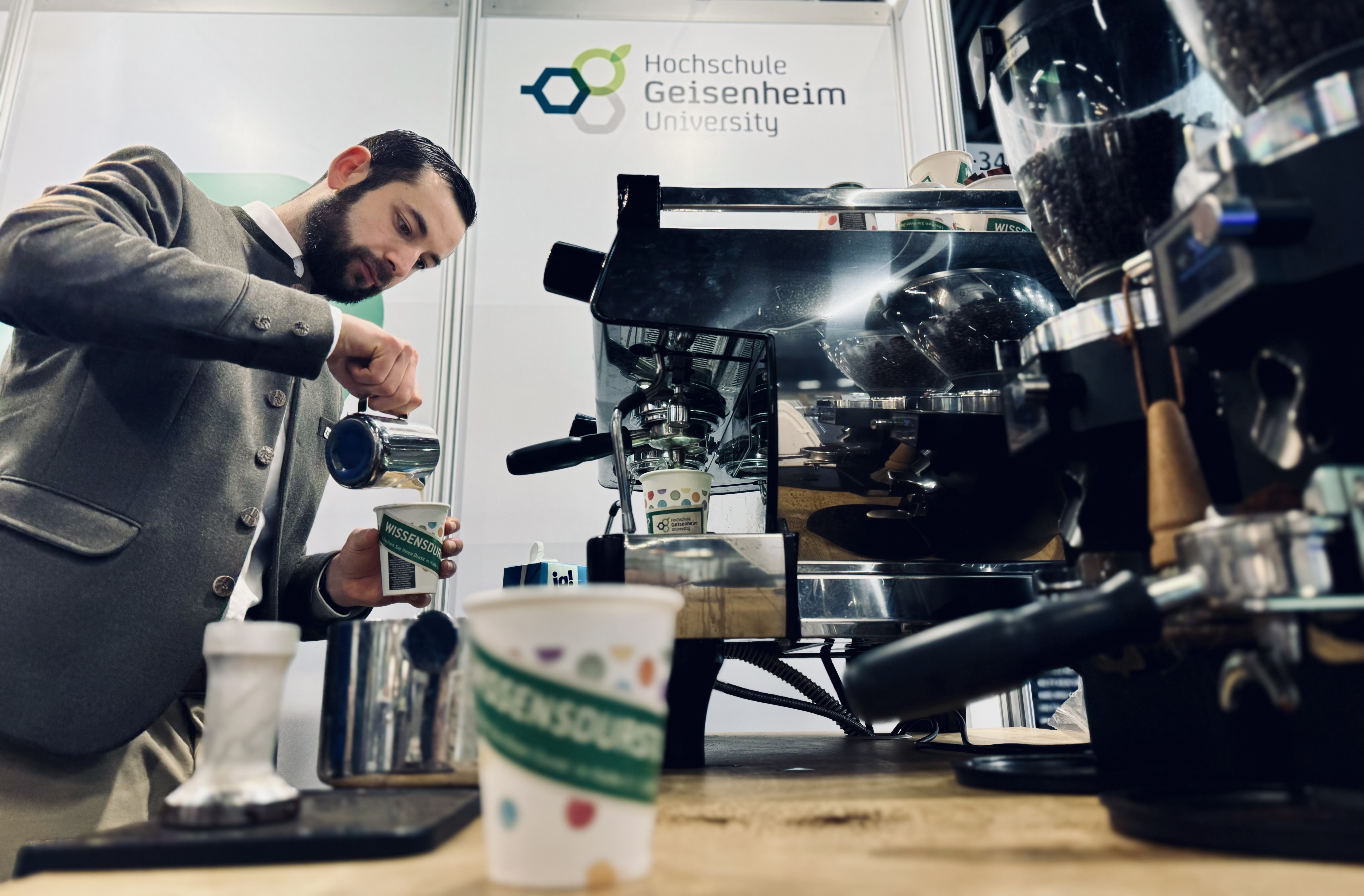
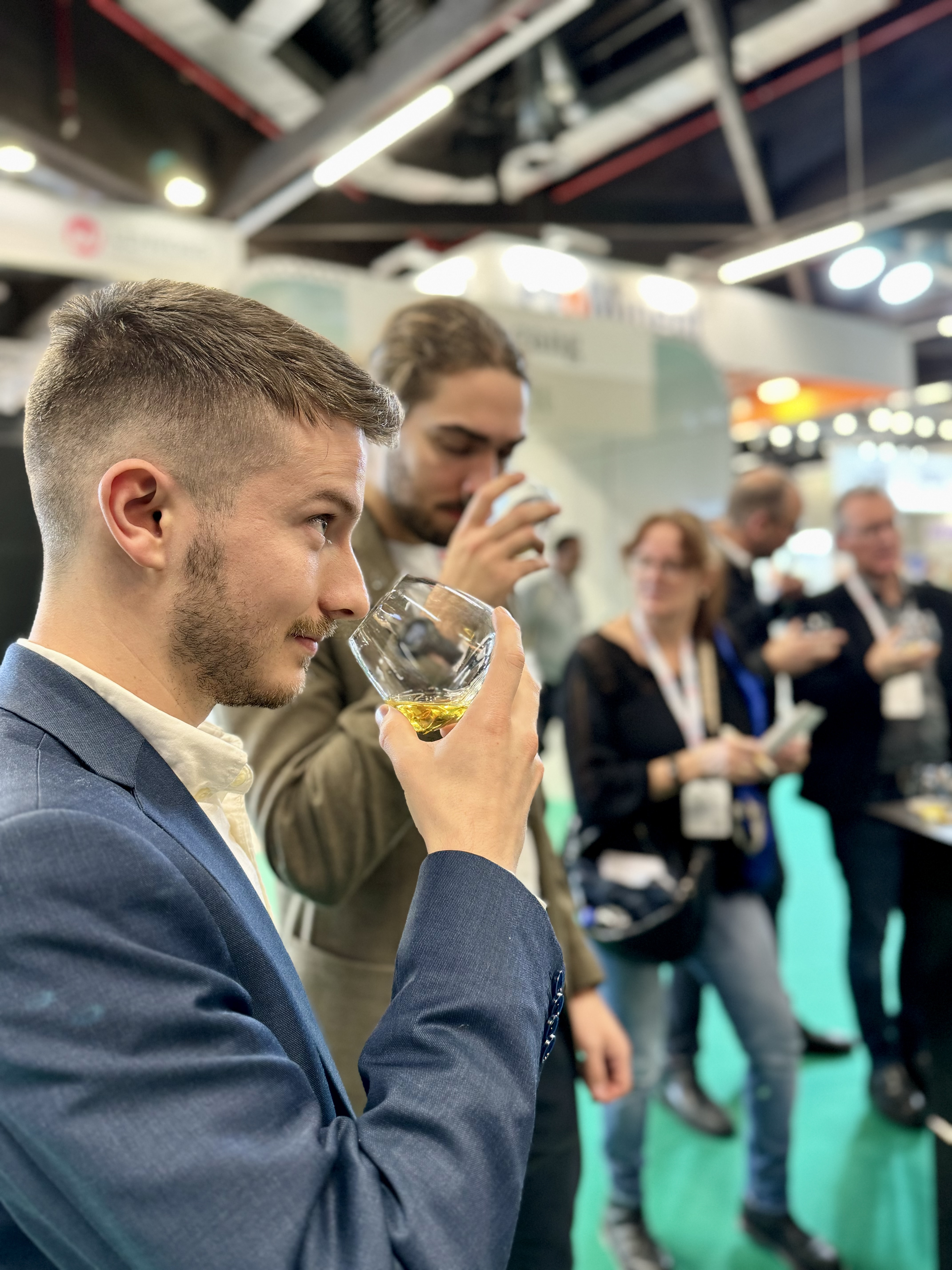
From their stand at the BrauBeviale trade fair, representatives from Hochschule Geisenheim University provided interested guests with information on its various degree programs and current research projects. Attendees also had the chance to try coffee and low-alcohol Sekt produced by the university.

BrauBeviale 2024 once again provided an excellent stage for innovative ideas from the beverage industry. Hochschule Geisenheim University, with its broad range of focus areas and expertise, garnered plenty of attention.


Special Exhibition: Wein@BrauBeviale – Hall 4A


Geisenheim scientists presented on current research findings in the field of viticulture and enology through the medium of their ‘Wissensdurst – or ‘thirst for knowledge’ – wines. Visitors to stand 4A-521 therefore had the chance to learn about topics such as the influence of the vine’s age on the quality of the wine or the measures that are best suited for reducing alcohol levels in wine.

The following presentations held at stand 4A-413 attracted plenty of visitors:

  • Dr. Matthias Schmitt: the latest developments and challenges in producing non-alcoholic wine
  • Lucía Garstka: the interplay between generating green energy and Riesling production
  • Prof. Dr. Gergely Szolnoki: how wine tourism can be a particularly successful marketing strategy
  • Prof. Dr. Jon Hanf: panel discussion on the analysis of the market for non-alcoholic wines 

Craft Drinks Area – Hall 6

In this section of the trade fair, researchers presented on innovative beverages and maturation processes:

  • Dr. Matthias Schmitt: ways to optimize the sensory properties of No & Low wine.
  • Dr. Christian von Wallbrunn: new approaches to fermented beverages, ‘Kombucha and Water – Kefir 2.0’.
  • Michael Ludwig: experiments on extreme aging methods for Apfelwein.

#YoungTalentsCamp – Hall 6

The Young Talents Camp offered young professionals a platform for career opportunities and networking. In presentations such as ‘Level Up – Personal Branding’, held by Simone Böhm, vistors could receive valuable tips for starting a career. Another highlight was a talk titled ‘Enjoy with Soy’ held by Dirk Klinner, which aimed to inspire young people with entrepreneurial ideas to make the transition from a concept to a successful start-up.
Categories: MyHGU-App, Mein-Netzwerk, Veranstaltungen, Messe, Fachmesse, Presse und Kommunikation, FORSCHUNG, Projekte, Wissensdurst, Wein- und Getränkewirtschaft, Oenologie, Mikrobiologie und Biochemie, Getränkeforschung, Allgemeiner und ökologischer Weinbau, Nachrichten

Images

Presentation of the Vipoll Small-in-One filling system at BrauBeviale. Photo: Tina Kissinger
Interested visitors at the Vipoll Small-in-One filling system presentation. Photo: Tina Kissinger
Presentation of the Vipoll Small-in-One filling system at BrauBeviale. Photo: Tina Kissinger
Coffee produced by the university at Hochschule Geisenheim University’s stand. Photo: Tina Kissinger
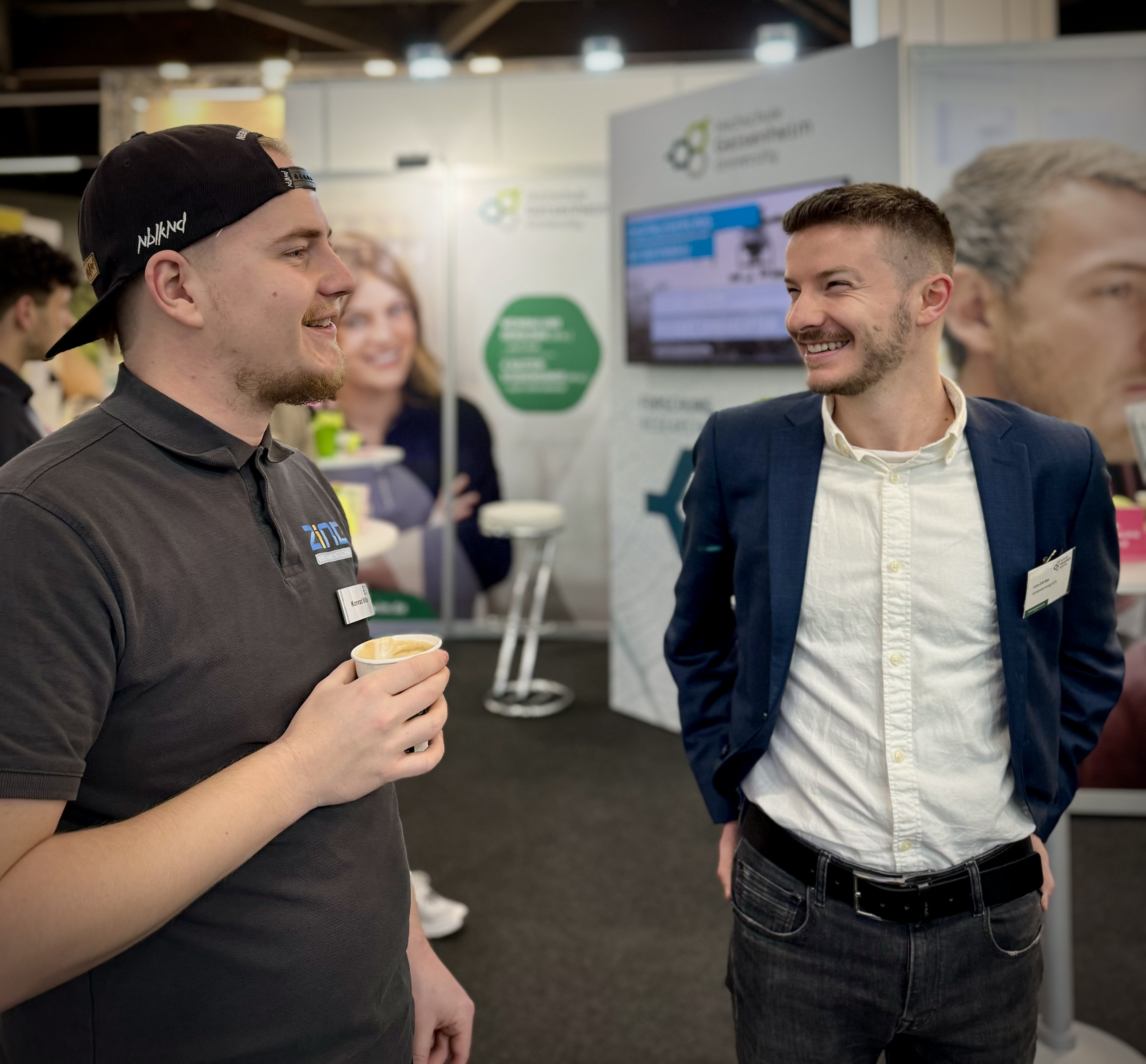
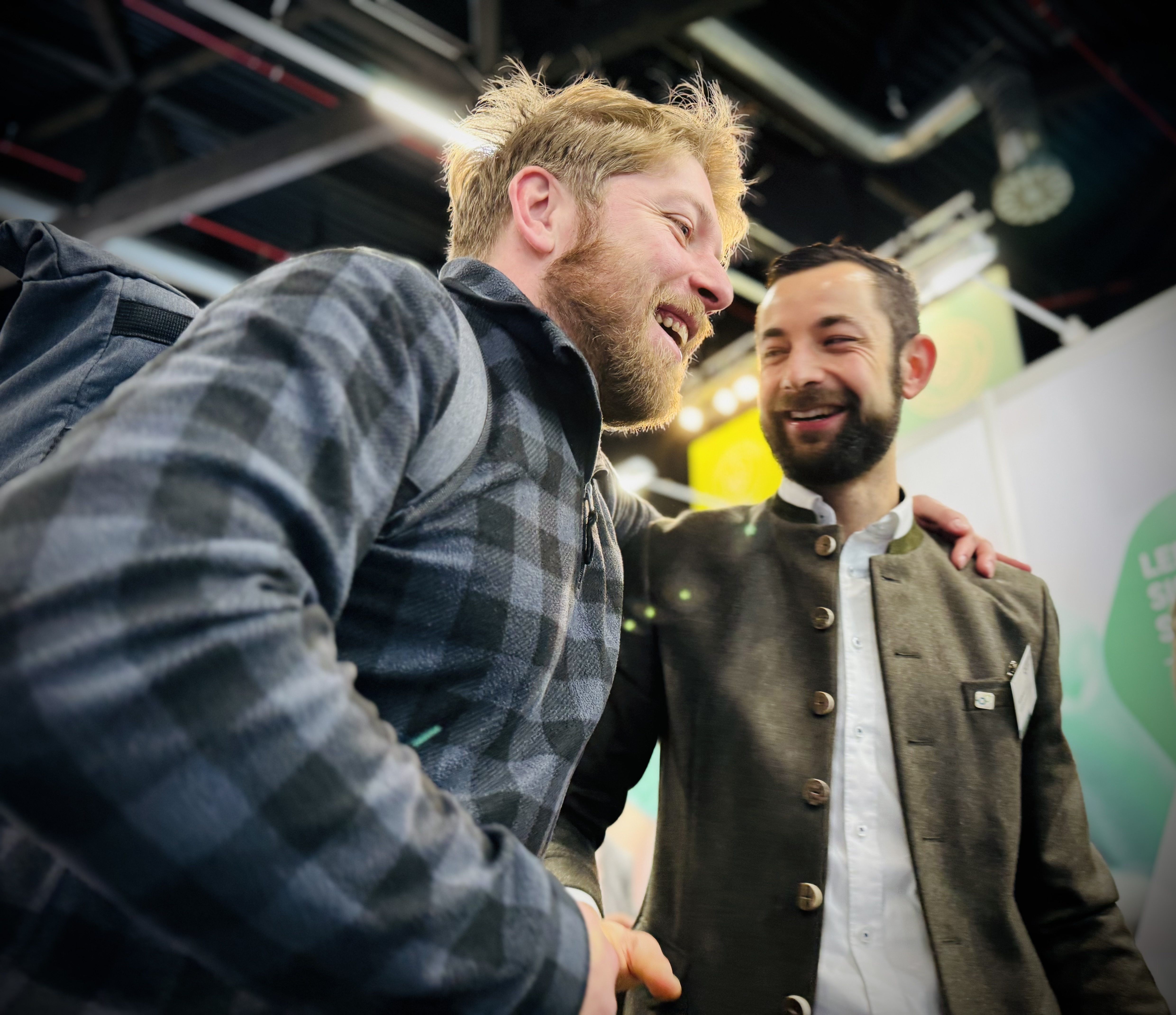
Networking at the university’s stand. Photo: Tina Kissinger
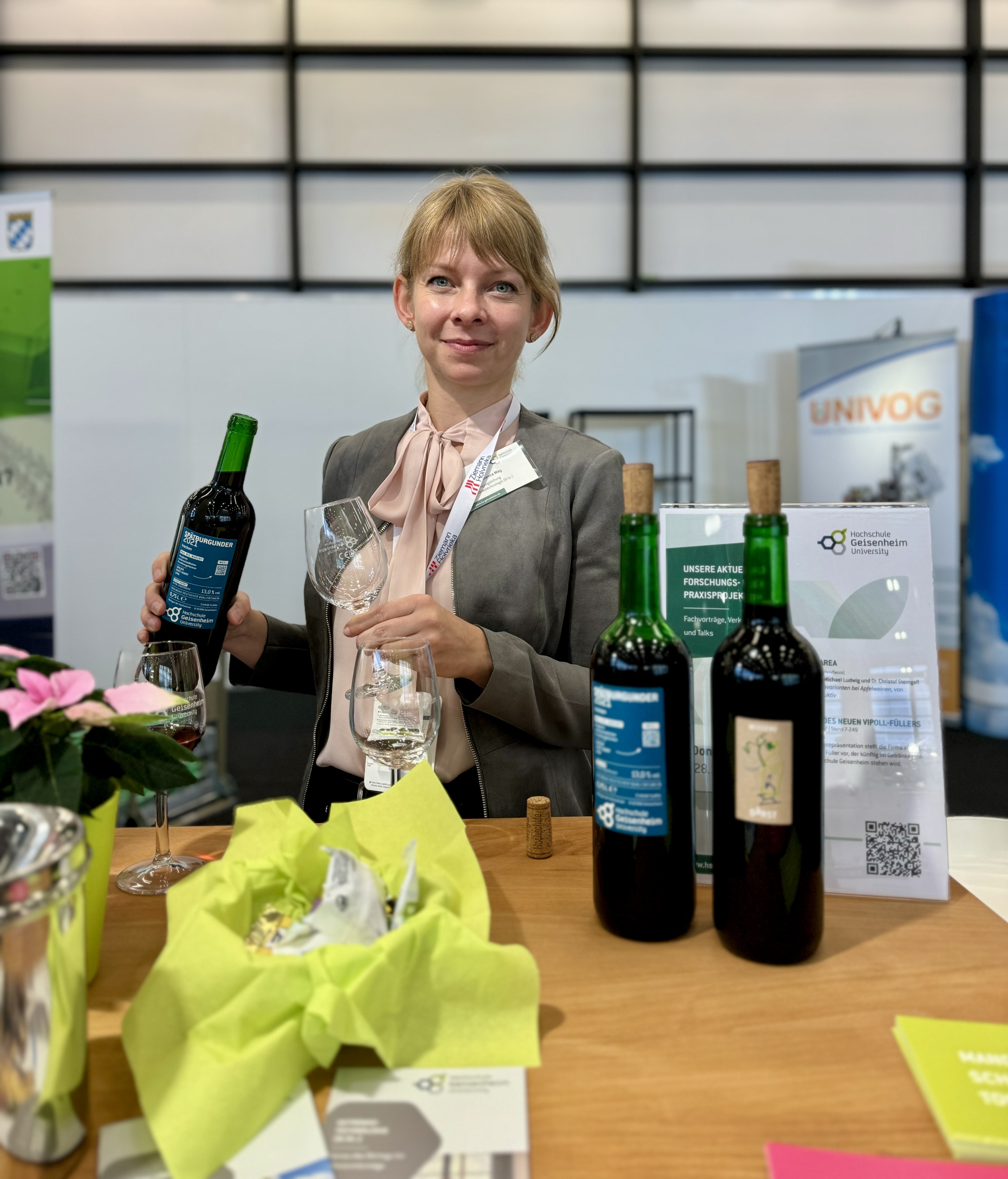
Professor Bianca May presenting the ‘Wissensdurst’ wine. Photo: Tina Kissinger
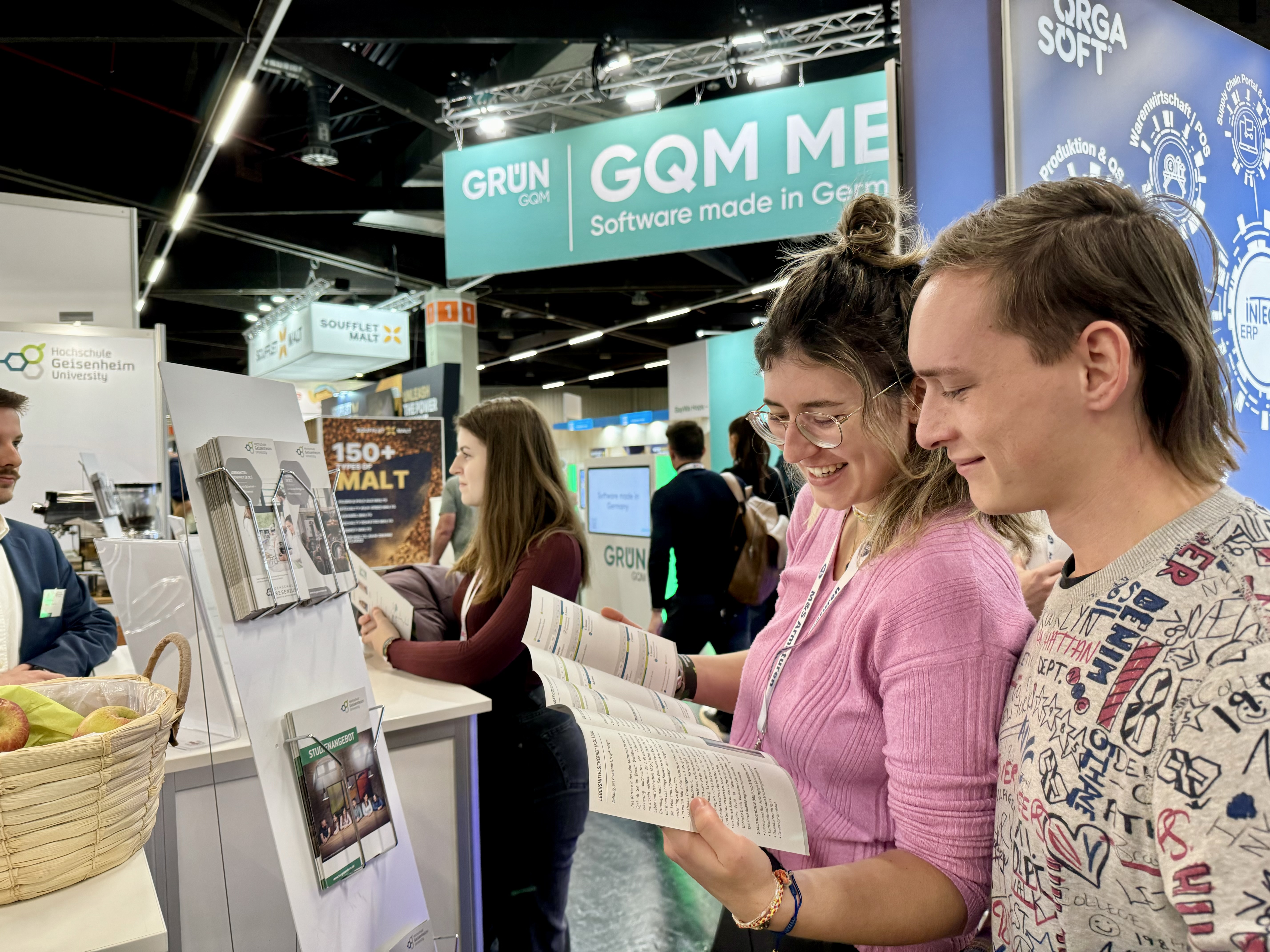
Interested visitors at the university’s stand. Photo: Tina Kissinger
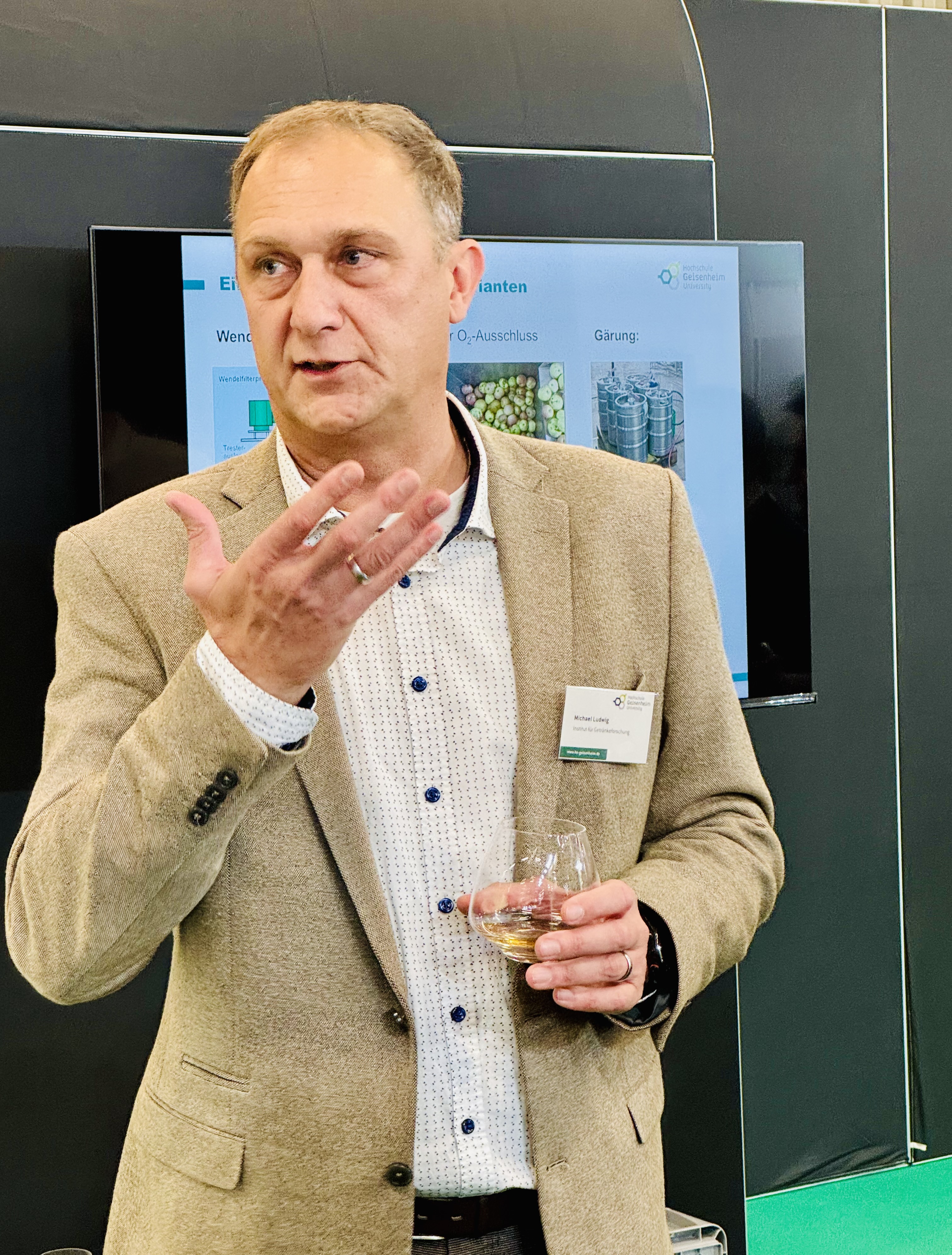
Dipl.-Ing. Michael Ludwig from the Department of Beverage Research during his presentation about experiments on extreme Apfelwein maturation processes. Photo: Tina Kissinger
Apfelwein tasting during the presentation on maturation processes. Photo: Tina Kissinger
Part of the Hochschule Geisenheim University trade fair team. Photo: Tina Kissinger

When you study natural sciences and the miracles of creation and you don't turn into a mystic, you are not a natural scientist Albert Hofmann

VIP

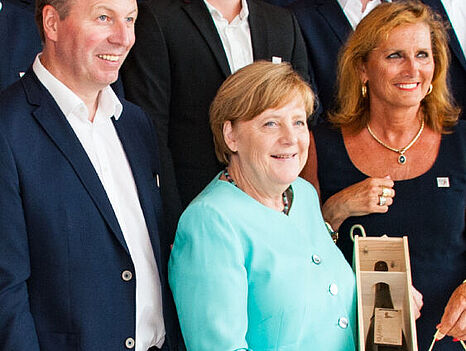
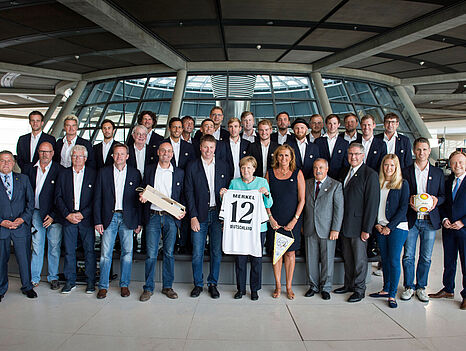
For more information please click on the image; June 2017: The German national football team of winemakers ("Weinelf") with Chancellor Angela Merkel; credits: Bernhard Herzer
For more information please click on the image; June 2017: The German national football team of winemakers ("Weinelf") with Chancellor Angela Merkel; credits: German Federal Government/Guido Bergmann
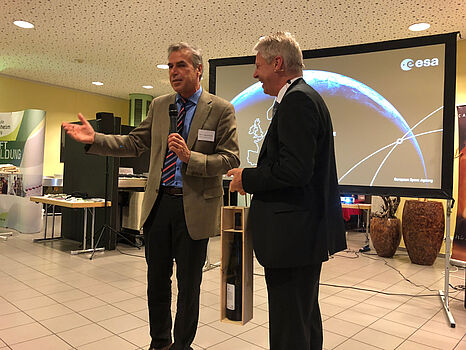
For more information please click on the image; April 2018: Brigadier General Thomas Reiter, Astronaut and ESA Interagency Coordinator; credits: Hochschule Geisenheim University
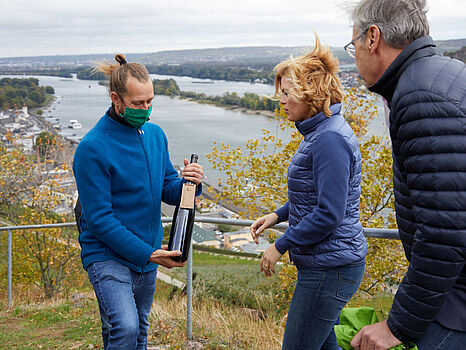
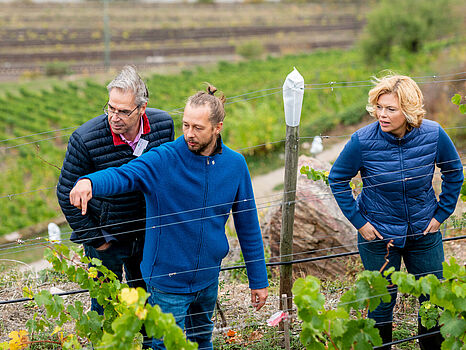
For more information please click on the image; Oktober 2020: Julia Klöckner, German Federal Minister of Food and Agriculture, visited our FACE research facility and our 'Krähennest' student project; credits: Winfried Schönbach
For more information please click on the image; Oktober 2020: Julia Klöckner, German Federal Minister of Food and Agriculture, visited our FACE research facility and our 'Krähennest' student project; credits: BMEL, Torsten Silz
For more information please click on the image; Oktober 2020: Julia Klöckner, German Federal Minister of Food and Agriculture, visited our FACE research facility and our 'Krähennest' student project; credits: Winfried Schönbach

Contact

University President and Project Founder

Hans Reiner Schultz
Prof. Dr. Hans Reiner Schultz
Building 5901
Room 117
Phone +49 6722 502 201
Hans.Reiner.Schultz(at)hs-gm.de Details

Communication

Tina Kissinger
Tina Kissinger, B.Sc.
Building 5901
Room 02
Phone +49 6722 502 6202
Tina.Kissinger(at)hs-gm.de Details

Rudolf Hermanns Foundation

For more information please click on the image