Why Does the University Need a Heat Action Plan?
To help protect our employees and students during heatwaves!
The goal of the Heat Action Plan is to effectively communicate the health impacts of climate change (especially extreme temperatures) as well as to promote situation-appropriate behavior, and to establish preventive courses of action.
The measures that can be made are broadly grouped into two: relational preventative measures include changes to the work environment, while behavioral preventative measures include any changes that individuals can make independently.
The Heat Action Plan covers short-term measures that can be implemented straight away without needing much investment, as well as more long-term measures that will be accounted for in the continued planning and development of the campus.

Background
Global warming caused by climate change has led to an increase in the frequency and duration of heat waves in many regions of the world, including Germany. Heat can have a severe impact on human health, especially in vulnerable groups such as children, the elderly, and people with cardiovascular disease. Heat waves can also pose a problem for the healthcare system, as an increase in the frequency of heat waves is accompanied by an increase in heat-related deaths.
In addition to climate protection measures, joint efforts to prevent the effects of heat on people can also help.
Measures
You can find information on the implementation of the measures set out in the Heat Action Plan below. The site will continue to be updated on an ongoing basis.
Ongoing Measures
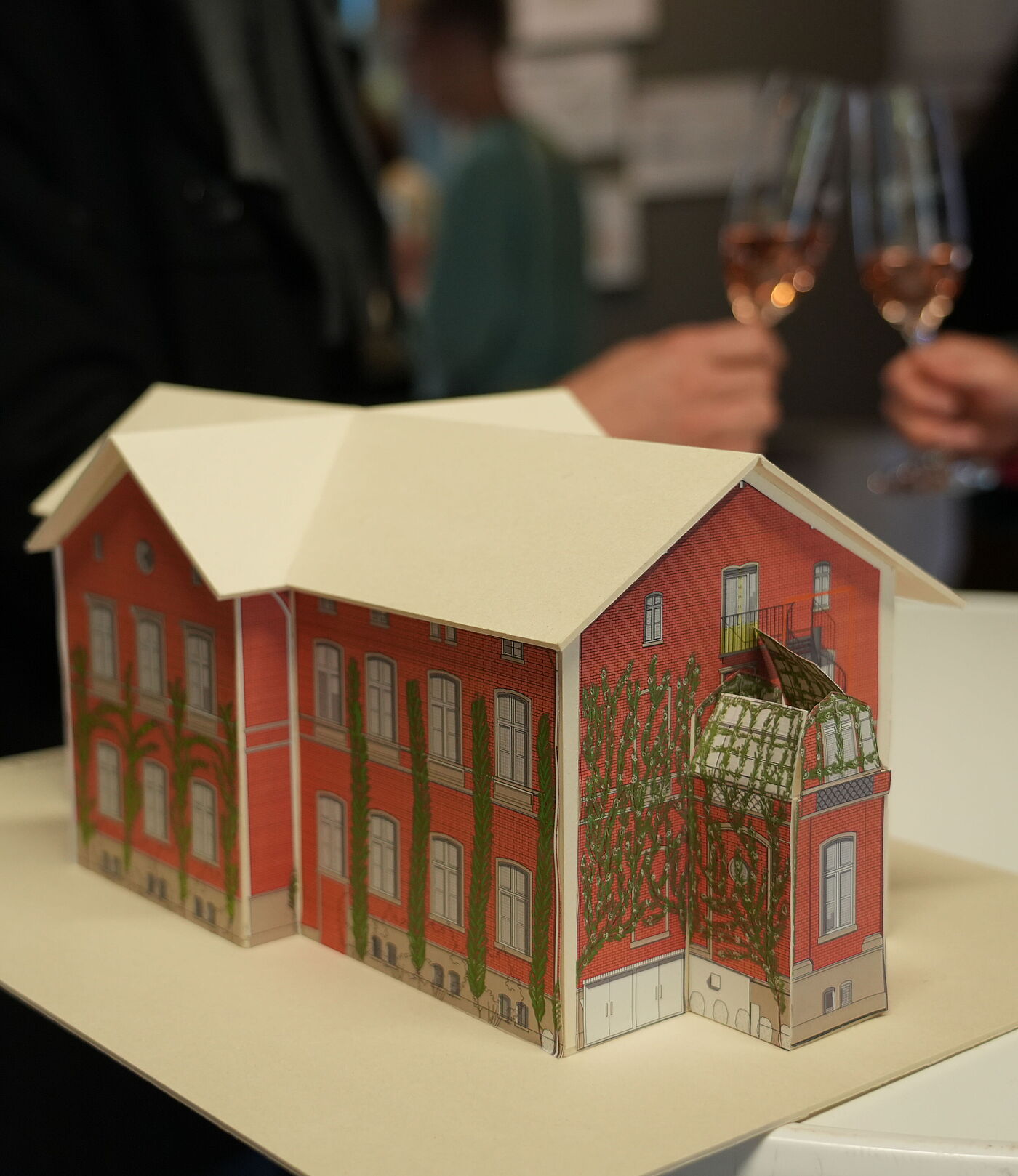
Greening façades and roofs not only enhances the aesthetic appeal of a building, but also helps cool indoor spaces during heatwaves. It also indirectly contributes to climate protection, as greened buildings, especially older buildings with insulation that no longer meets modern standards, consume less energy because they require less heating in winter.
In short: in summer the heat stays outside, and in winter the warmth stays inside.
There are plenty of older buildings at the university that would benefit from a new green exterior, including the administration building and the Müller-Thurgau House. Who better to design their new green look than the students that see these buildings every day?
This idea was the impetus for the Summer School for Green Roofing and Façades. Interdisciplinary teams made up of horticulture and landscape architecture students from Geisenheim and students of climate and environmental protection at Bingen Technical University of Applied Sciences worked together for a week to develop greening concepts for the roofs and façades of the administration building and the Müller-Thurgau House.
The concepts were later presented and evaluated by a jury consisting of experts from the university's Urban Horticulture and Planting Design and Landscaping and Vegetation Technology departments, as well as representatives of the occupational safety group, building users, and the student body. The three best concepts were then honored at an awards ceremony.
The winning concept will now be further refined by specialists and implemented by professional contractors.
The award-winning concepts were:
1st place:“Biodiversity in progress – Making research visible” by Anna-Katharina Geiß, Jaqueline Maurer, and Philipp Müller
2nd place:“Show your grow” by Sabrina Köpke, Lara Lang, Marie Schlotmann, and Flora Striefler
3rd place:“Old walls, new leaves” by Felicitas Hanekrad, Johanna Sologuren, Kira Steinhauer, and Louise Weisbrod
Completed Measures
Contacts
The heat action plan was developed by the Occupational Safety and Health Protection Department in cooperation with the Strategic University Development and Sustainability Department and approved by the Occupational Safety Committee (ASA). If you have any questions about the heat action plan and specific implementation measures, please contact: