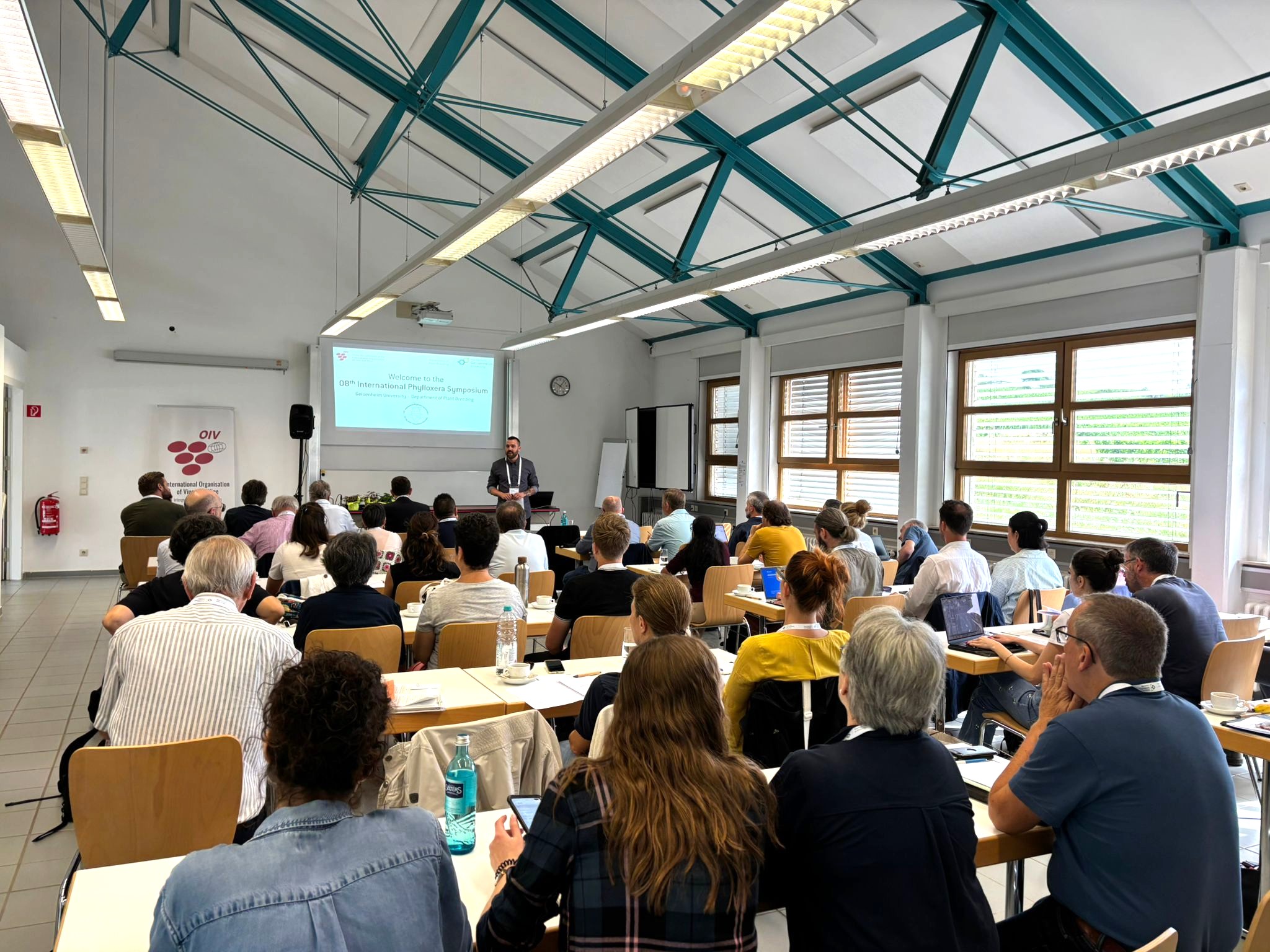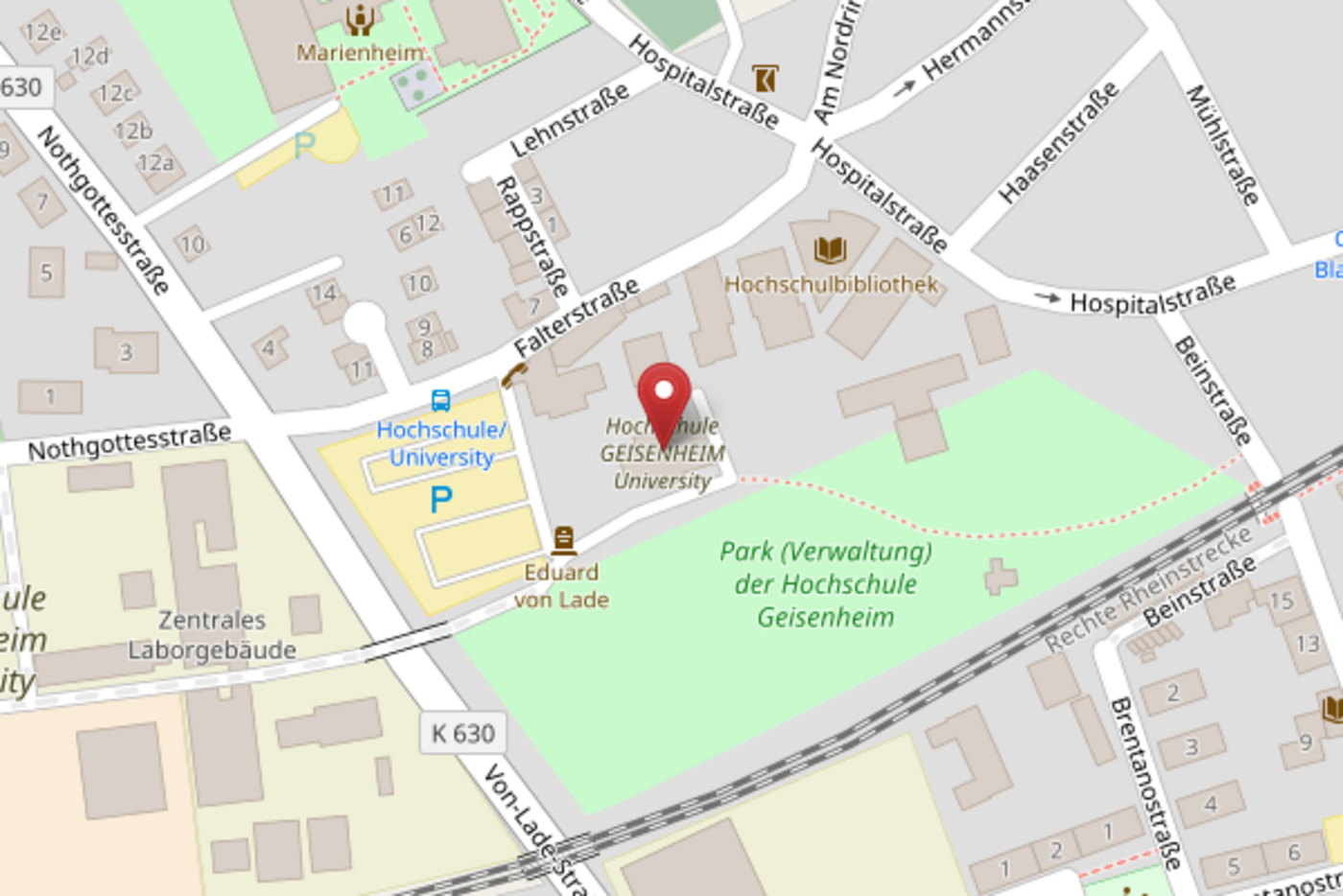

This was the central theme of an international symposium hosted by the Department of Plant Breeding at Hochschule Geisenheim University on July 26, 2025. Leading academic and industry experts gathered in Geisenheim to present the latest research on the biology and control of phylloxera, delivered through more than ten scientific talks and accompanying poster presentations. Additional topics included the significance of genetic variation, the application of modern genomic breeding methods, and the potential of rootstock varieties to mitigate abiotic stress factors such as drought and high temperatures.
Around 50 participants from diverse professional backgrounds took part, including scientists, nursery and viticulture industry representatives, association members, and students. The event also attracted a broad international audience, with attendees traveling from Australia, New Zealand, North and South America, and European countries such as Italy, France, and Türkiye.
Shared Endeavors in the Face of Global Challenges
The 8th International Phylloxera Symposium was held under the aegis of the International Organization for Vine and Wine (OIV). Dr. John Barker, Director General of the OIV, emphasized the relevance of the symposium in his welcome address: “Phylloxera was the first large, global challenge for viticulture that demanded coordinated, scientific collaboration to overcome. However, it won't be the last. Only through shared efforts will we be able to find solutions for the global challenges currently facing our industry." University President Professor Hans Reiner Schultz, Vice-President Professor Annette Reineke, and Head of Department Dr. Kai Voss-Fels also welcomed the attendees on behalf of Hochschule Geisenheim University.
The high level of participation and the engaging expert discussions at the conference underscored that breeding robust, future-proof rootstock varieties is central to addressing the current and emerging challenges facing global viticulture. Dr. Timo Strack, one of the symposium's organizers, summarized this in his closing remarks: “The current and emerging challenges facing viticulture are tremendous. But the possibilities before us – modern technology, a rich treasure trove of genetic resources, and especially a well-established international network – offer us a promising foundation for future success in the field of plant breeding.”
The International Phylloxera Expert Group was also reformed during the symposium. Taking a globally networked approach, it will work on effective strategies for combating phylloxera and sustainably improving the resilience of rootstock varieties.