
Prof. Dr. Kai Peter Voss-Fels
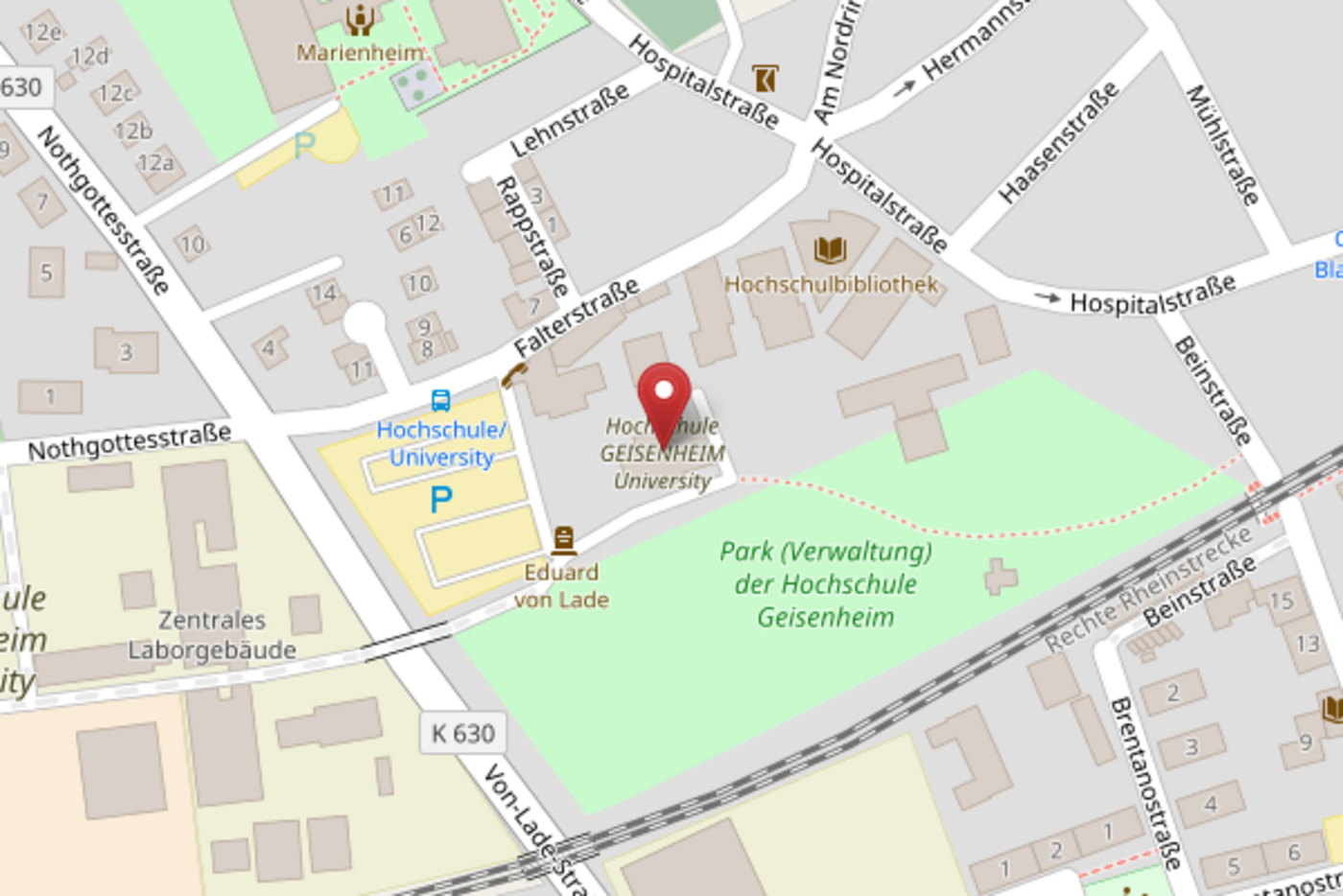
D-65366 Geisenheim
Room 2
Eibinger-Weg 1
65366 Geisenheim
Project start: 01.01.2026
Project end: 31.12.2029
Sponsor: European Union
The BluWine project will encompass the entire wine production chain through a Blue Economy approach, where the vineyard, winemaking process, winery, and its residuals will be interactively linked and strengthened as part of a sustainable strategy. The wine industry is an important sector contributing to the economies of many countries, especially in Europe, which has a long history of wine production, as well as in emerging wine-producing regions in Africa, Asia, South America, and Oceania. From a global perspective, the collaboration of productive forces from different countries can be mutually beneficial. With a strong focus on environmental respect and sustainability, the BluWine project will be a collective effort to drive innovation in viticulture, winemaking, and winery operations, as well as in the management of its residuals. This will include improving grape resistance, managing wine ethanol content, recovering carbon dioxide, optimizing water usage, and recycling grape pomace, among other initiatives. The project will evaluate both the economic and environmental impacts, conducting a thorough analysis of barriers and socioeconomic drivers for successful implementation. The ultimate goal of the BluWine project is to ensure the control and maintenance of wine quality, which will be achieved by creating a new network dedicated to applying the Blue Economy in the wine industry. This will be supported through a strategic staff exchange program, bringing together both early-career and experienced researchers with expertise relevant to the BluWine project. Through this exchange, skills and knowledge will be shared across the Consortium. The project is organized into nine work packages, to be completed over four years, involving 13 ESRs (8 ESRs to be enrolled) and 50 ERs, for a total of 140 months of staff secondments. This will provide training in an international setting, further enhancing the skills and expertise of the participants.
Project start: 01.04.2024
Project end: 31.03.2027
Sponsor: Forschungsring des Deutschen Weinbaus
The main objective of the project is to understand the positive role of AMF in improving the fitness of Riesling and Pinot Blanc vines under drought conditions. Initially, a pot trial will be conducted to test the efficiency and positive effect of three AMF bioproducts on three vines under low-water conditions and using two different soils from two vineyards in the Rheingau (WP1). Parallel to WP1, the Institute for Grapevine Breeding at Hochschule Geisenheim University will graft the three rootstocks used in WP1 with the Riesling and Pinot Blanc scions (WP2). This will allow us to select from the pool of grafted plants those with the best performing and AMF-compatible rootstocks to be used in the subsequent field (WP3) and greenhouse (WP4) trials. The field trial will be conducted in two different vineyards in the Rheingau, which are characterized by different soil types and topography. WP3 will give us the opportunity to test under real field conditions the compatibility and effectiveness of AMF on Riesling and Pinot Blanc grafted plants in two different vineyard ecosystems. The additional greenhouse experiment (WP4) will be conducted in rhizoboxes to evaluate in detail the AMF compatibility and the positive effect of the AMF inoculum and the type of grafted plants not only on plant fitness and development, but also on various soil/plant properties, such as soil microbiome structure, root exudates, root architecture and edaphic properties.