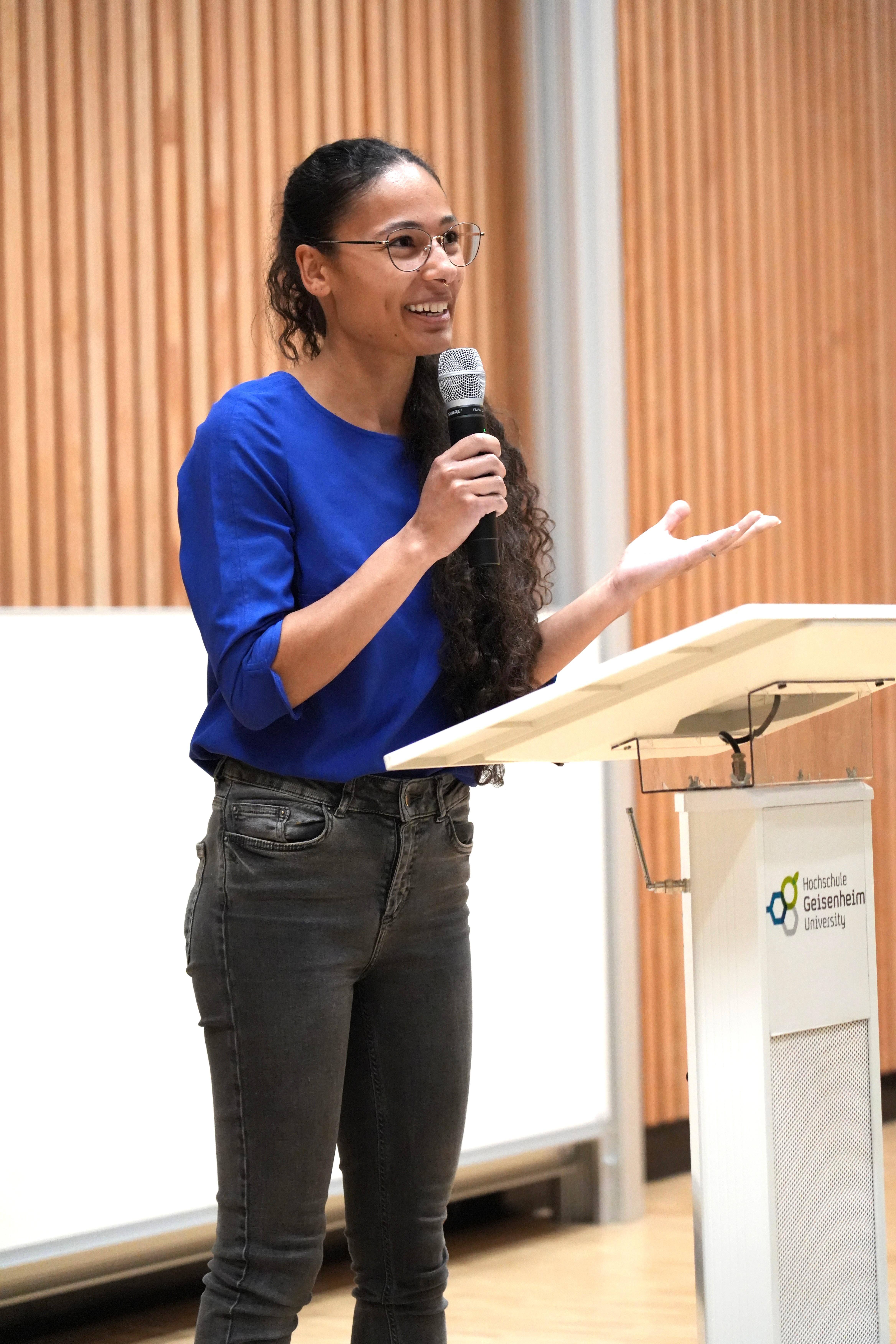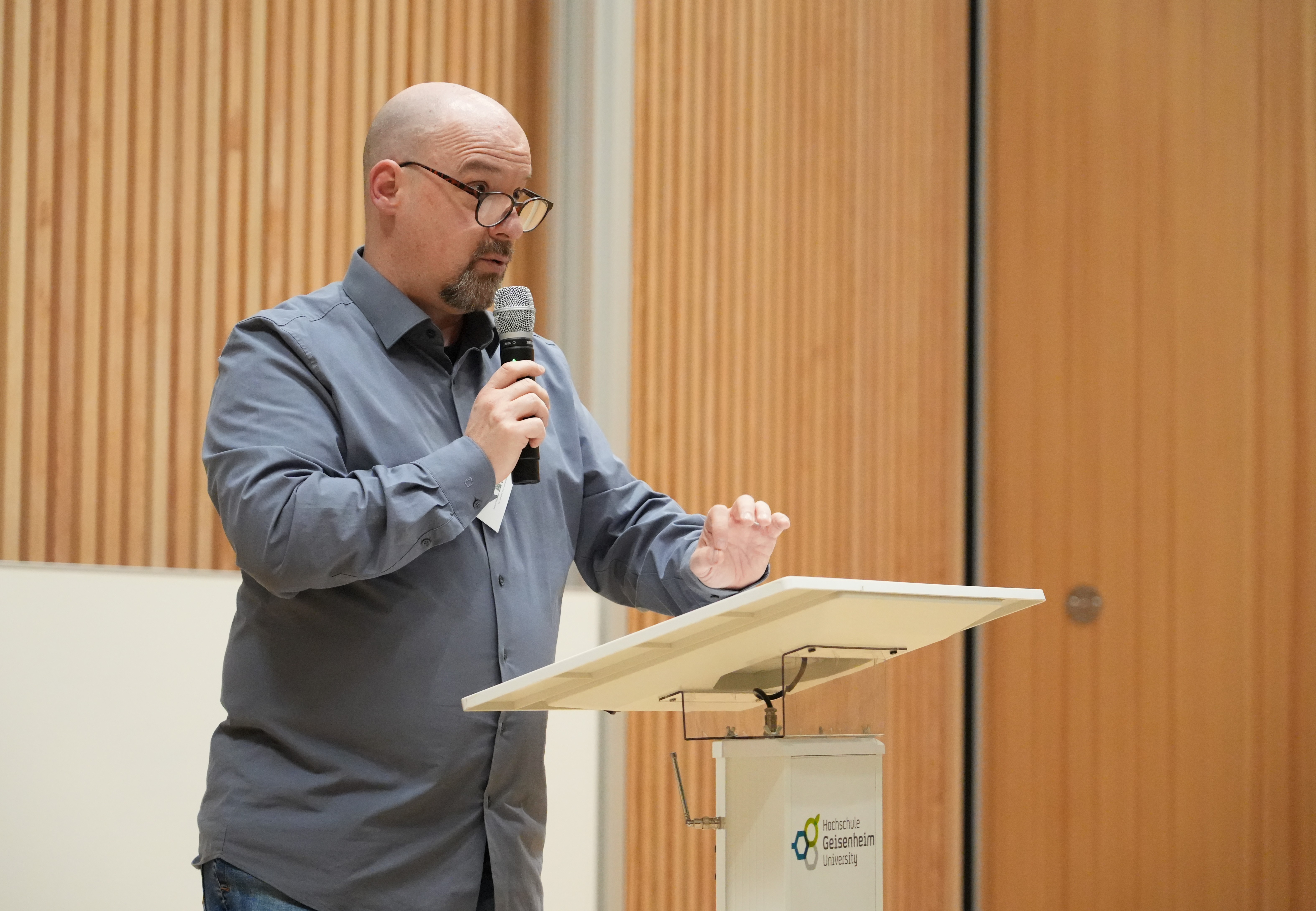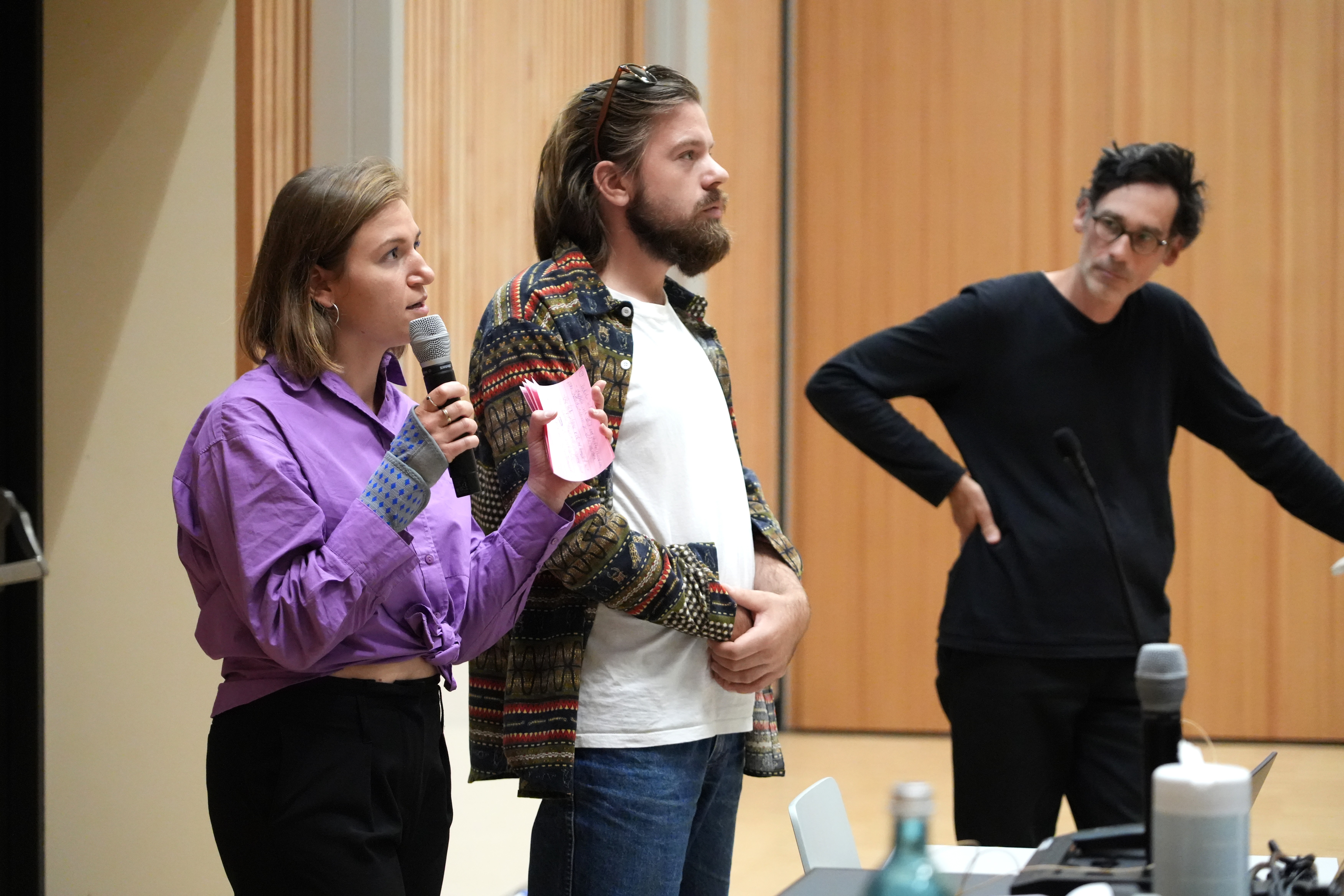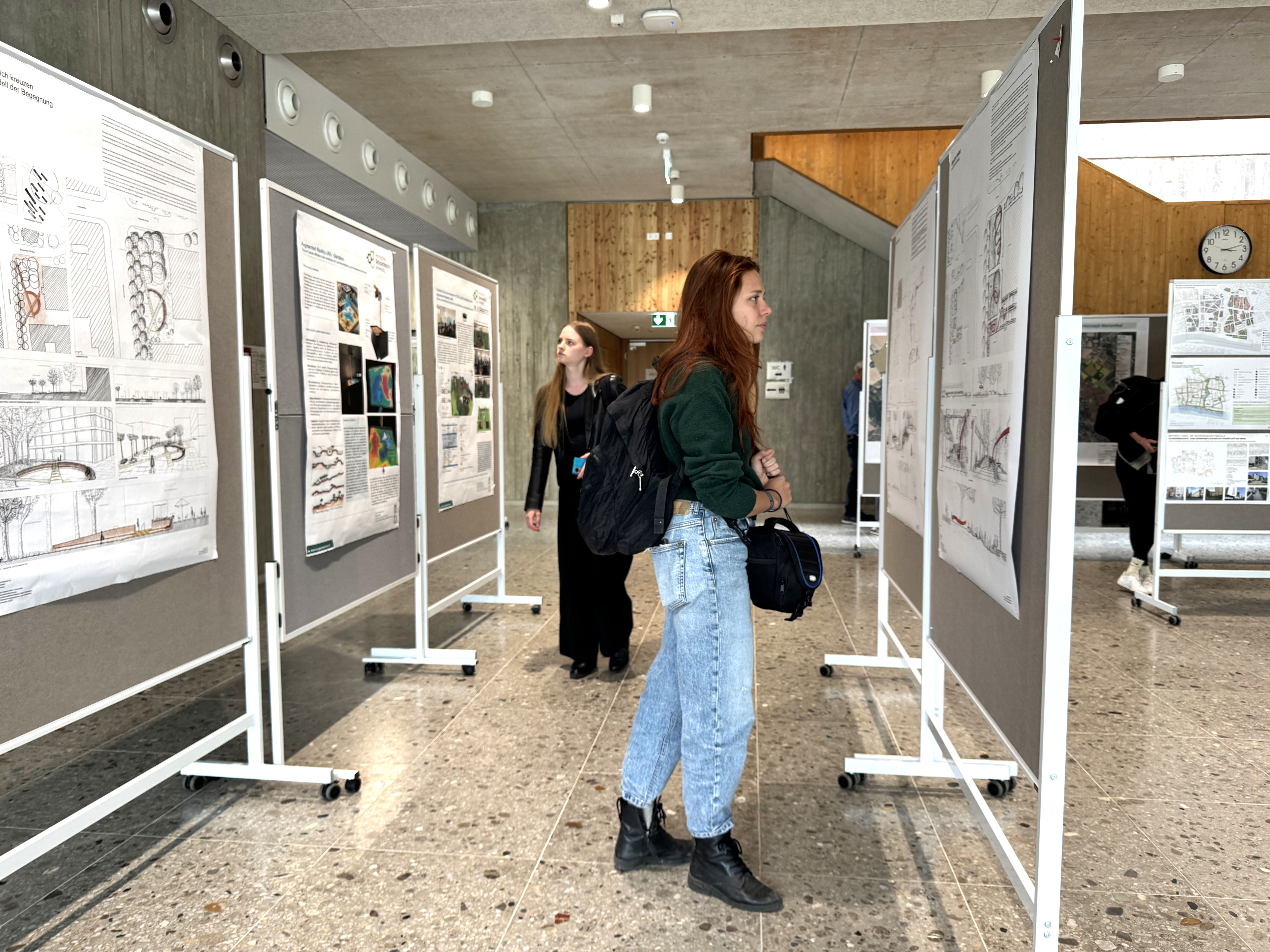
From 10 a.m. to 3 p.m., students from all stages of the program showcased the full scope of their work in eight short presentations, covering topics such as open space analysis and design, ideas for new nature conservation schemes, and the construction of paths and buildings. In the meantime, the foyer of the new Lecture Hall Building was transformed into a gallery where guests could admire the creative plans of the next generation of landscape architects.
Exceptional Thesis Award
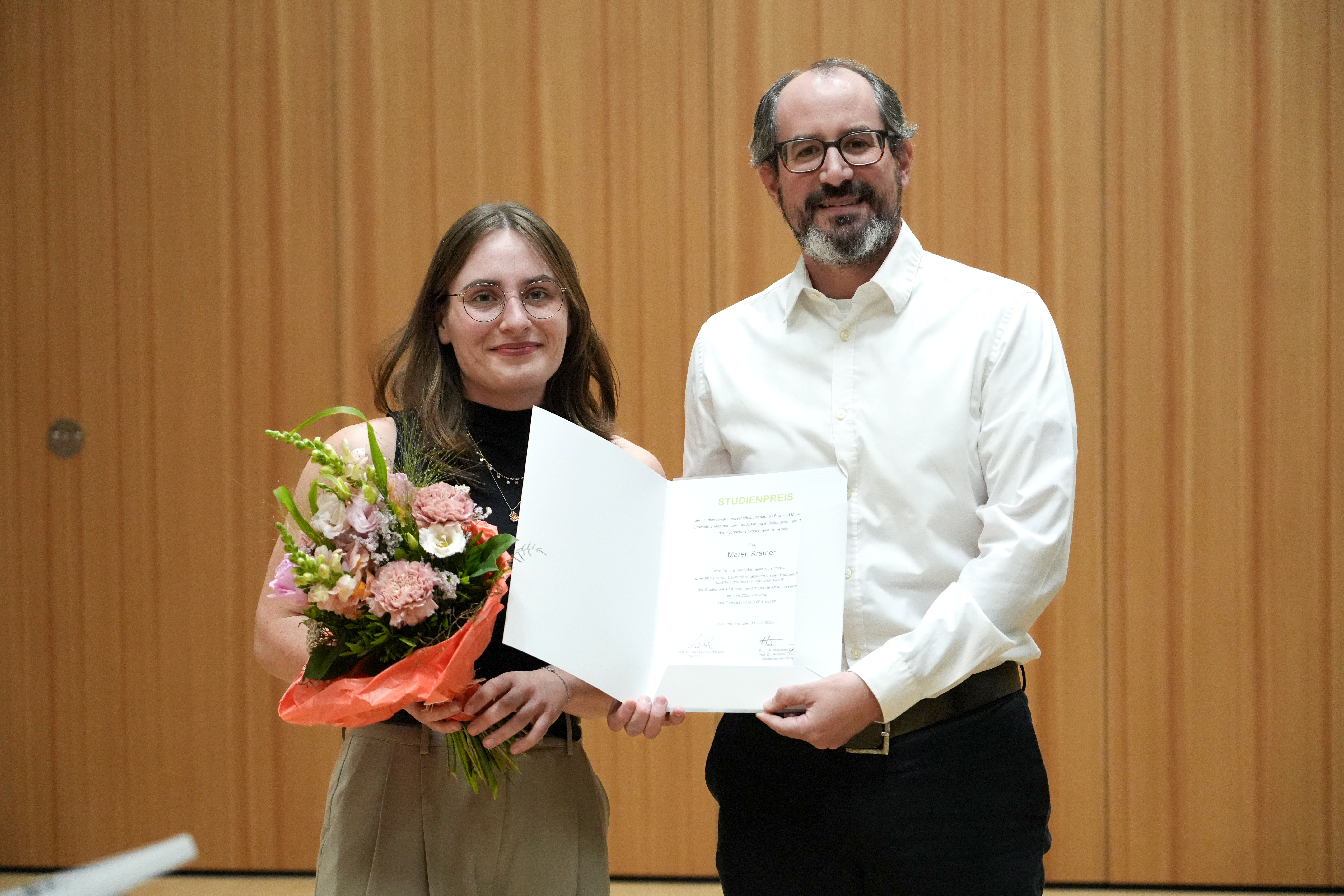
A highlight of the event was the presentation of the annual Landscape Architecture Student Award, worth a total of €1,000, which recognizes outstanding final theses. This year’s recipients were Maren Krämer and Sabine Richie.
Maren Krämer won over the jury with her bachelor’s thesis on tree-related microhabitats found on sessile oaks located in industrial forests. Her analysis revealed that older trees boast a higher amount of habitat diversity – a key finding for nature-conscious forest management. Krämer completed her thesis in close collaboration with the Rüdesheim’s Forestry Office.
For her bachelor’s thesis, Sabine Richie built and programmed an augmented reality sandbox that students can use to interactively create topography models. The tool uses real-time projections of contour lines and watercourses, turning sand into a dynamic and intuitive learning tool. The AR sandbox is already being used in class, meaning Richie’s bachelor’s thesis has made a lasting contribution to the education of her peers.
The prize money was donated by four professional associations: the Fachverband Garten-, Landschafts- und Sportplatzbau Hessen-Thüringen, the Bund Deutscher Landschaftsarchitekt:innen Hessen, the Hessische Vereinigung für Naturschutz und Landschaftspflege, and the Deutsche Gesellschaft für Gartenkunst und Landschaftsarchitektur Hessen.
In his laudatory speech, Sven Beling, deputy chair of the Deutsche Gesellschaft für Gartenkunst und Landschaftsarchitektur Hessen, praised the palpable passion behind theses: ‘Passion is a landscape architect’s most important trait: it makes projects special. I hope you both never lose that passion.’
Design Award for the Inclusive Playground Competition
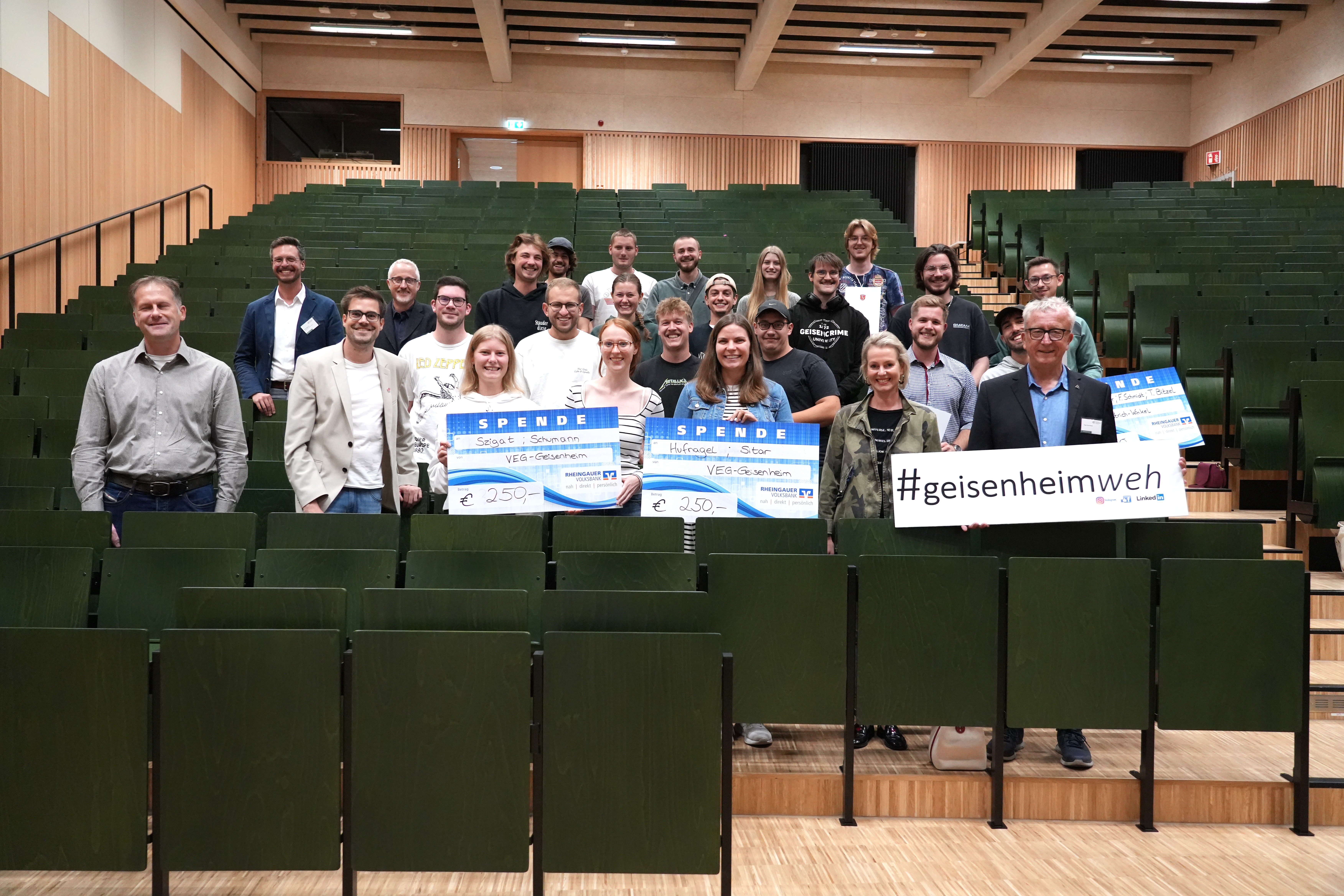
Later in the day, awards were presented for the best proposals in a (non-public) design competition for an inclusive playground in Oestrich-Winkel. Mayor Carsten Sinß personally handed out the prizes to the winning students. A total €3000 – funded by the town of Oestrich-Winkel and Geisenheim’s alumni association – was awarded for the seven analyses and possible solutions as well as the three impromptu designs. The town is now aiming to commission a planning office to realize the project, marking a meaningful step towards more inclusion in the Rheingau region.
This year’s celebration of the end of the semester was held for the first time in the university’s new Lecture Hall Building. As always, this event highlighted how Hochschule Geisenheim University actively fosters the connection between education, praxis, and social relevance.