
Parks & Open Spaces

Green campus Geisenheim

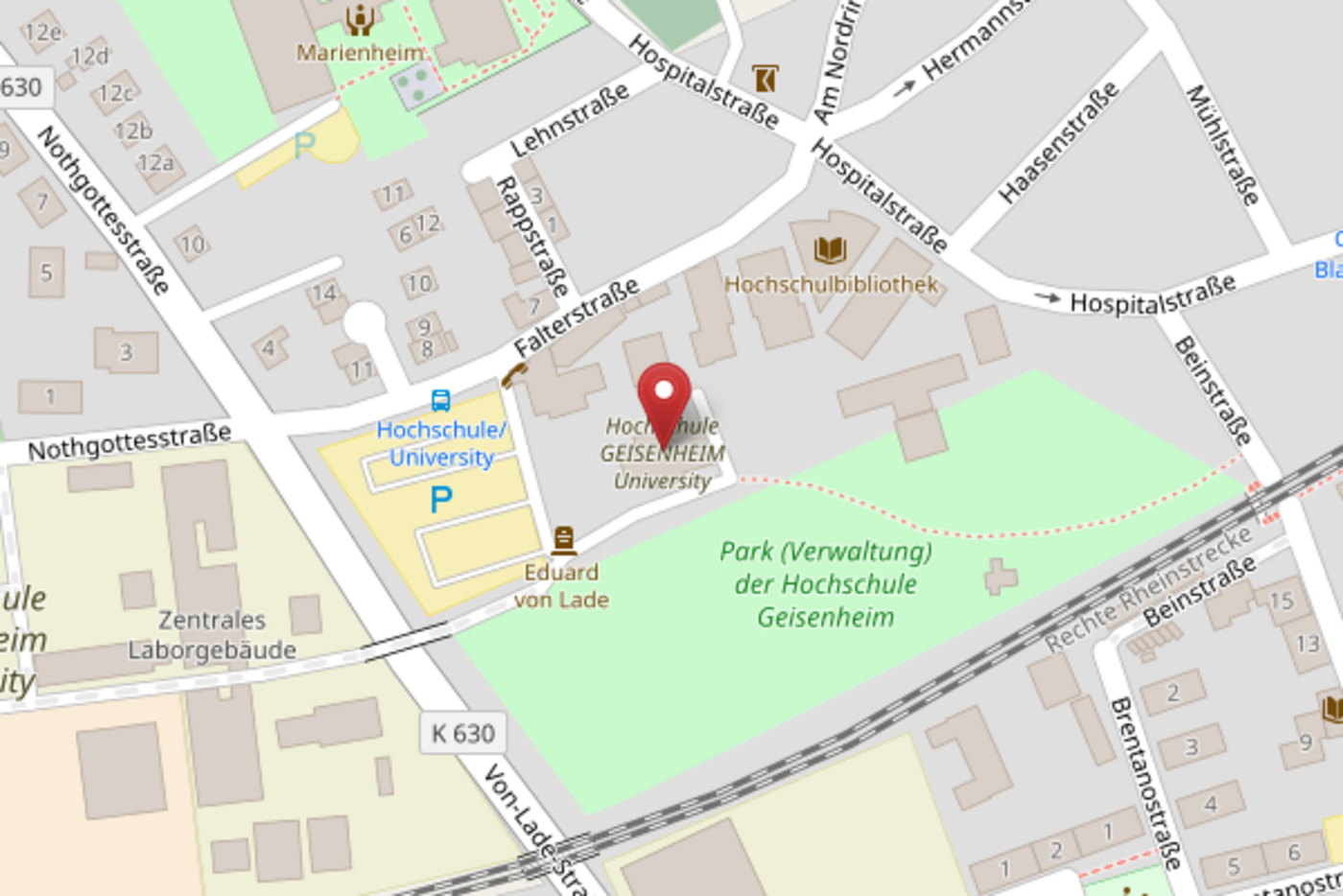
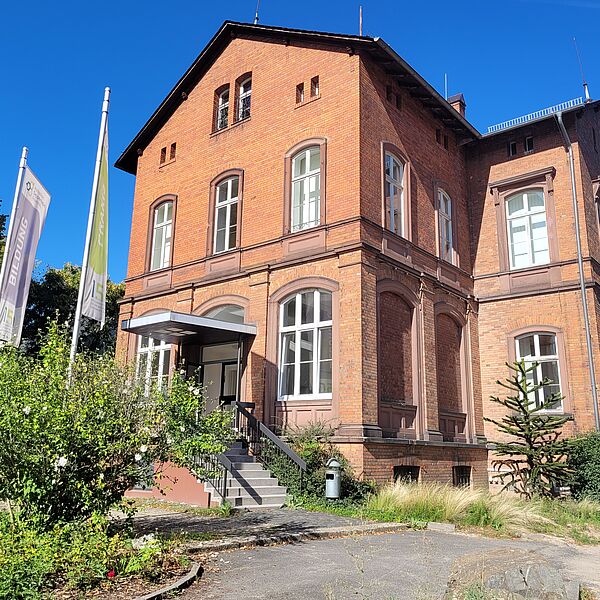
The Geisenheim university location has a lot to offer when it comes to greenery. In addition to the numerous courses on the subject of plants and green structures, the campus offers a wide range of green topics with its two historical parks and many planted areas.

Planning, development and maintenance of the outdoor facilities

The outdoor facilities at Geisenheim University are subject to different areas of competence. The management of park maintenance from the area of ​​competence of the Plant Use Professorship has an overview of most of the green areas and the parks. It surveys the green developments on the university campus and tries to bring them together in a meaningful way. Individual projects and general maintenance are then taken over by the park maintenance team, provided capacity permits. Larger projects or more specialist tasks, such as regular tree inspections and tree care measures, are also outsourced. In addition to these general topics, the various study areas also manage some of their own projects, research areas and areas of competence on the topic of green.

Head of park maintenance team

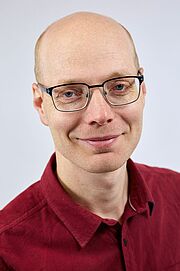
Manfred Müller
Manfred Müller
Building 6701
Room 019
Phone +49 6722 502 543
Manfred.Mueller(at)hs-gm.de Details

Park maintenance team

Martina Brendel
Martina Brendel
Building 6701
Room 019
Phone +49 6722 502 543
Martina.Brendel(at)hs-gm.de Details
Jochen Lüdcke
Jochen Lüdcke
Building 6701
Room 019
Phone +49 6722 502 543
Jochen.Luedcke(at)hs-gm.de Details

management of park maintenance

Alexander von Birgelen
Prof. Dr. Alexander von Birgelen
Building 6701
Room 107
Phone +49 6722 502 773
Alexander.Birgelen(at)hs-gm.de Details
Campus with history

The historic parks Monrepospark on the South Campus and Rudolf-Goethe-Park on the North Campus are defining elements and deeply linked to the roots of the Geisenheim university location. Over time, a diverse and old tree population has developed there. The park and the trees it contains, like many of the university's buildings, are listed buildings. But here too, the effects of climate change are increasingly becoming apparent. Once very favorable in terms of climate, the mild warmth develops into summer heat. The Mediterranean-like climate develops persistent dry phases. The future of the university parks must now be well thought out and precisely planned so that the old trees can be largely preserved, renovated in a way that is compatible with monuments and the climate, and developed in a resilient manner.


An exciting task.


More about the history of the parks can be found on the following pages.

Beds & Plantings

There are beds and plantings of various ages throughout campus. As diverse as the choice of plants can be, the function of green elements is just as diverse. Plantings can separate or connect the room through their spatial effect. A certain character or atmosphere can be created with flowers, colors, structures and textures. Plants shape the space with their liveliness and also with their ecological benefits when people and animals benefit from them.


The skills of planning with plants are discussed and addressed in various subjects. The Plant Use Professorship has fully embraced this topic. She develops existing and designs new green elements on the grounds of Geisenheim University. Many beds are also used for teaching and are designed as display beds.

Professorship of Planting Design

Alexander von Birgelen
Prof. Dr. Alexander von Birgelen
Building 6701
Room 107
Phone +49 6722 502 773
Alexander.Birgelen(at)hs-gm.de Details
Habitat trees - old wood, new life

The university location is committed to preserving old, special habitat trees. Of course, parks should be attractive, vital and well maintained. Dying or already dead trees apparently do not belong in the picture. But these old "habitat trees" offer a particularly large amount of living space for a wide variety of creatures - from birds and bats that nest in tree hollows to special species of beetles that appropriate the wood. The decomposition processes may limit the stability of habitat trees and dead wood and are therefore particularly carefully monitored and checked. But not all habitat trees are dying or are already dead wood.


Healthy trees can also provide special habitats - which is why there are habitat trees in the park that have been awarded a plaque. The most important examples are explained here.

Competence Area Tree Nursery & Woody Physiology

Jörg Kunz
Dr. Jörg Kunz
Building 1000
Room 318
Phone +49 6722 502 538
Joerg.Kunz(at)hs-gm.de Details

PLANTINGS

The central campus is located to the east above the railway line. In addition to the historic Rudolf Goethe Park, important green structures here are often representative beds and edge plants.

The southern campus is below the railway line and is essentially characterized by the historic Monrepospark and its beds.


More about the Professorship for Planting Design

News

Green Interiors – Smart and Sustainable

Photo: Hochschule RheinMain

Cross-university project successfully completed


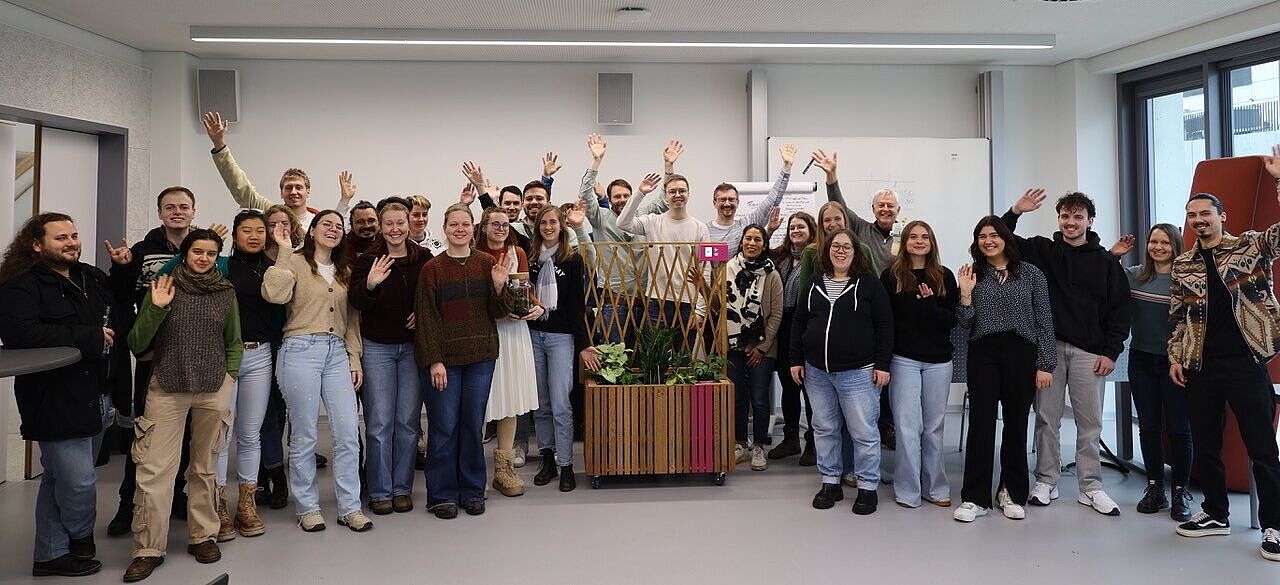
Three programs, two universities, one goal: smart, sustainable, AI-supported indoor greening. The SNIB project – a collaboration between the Media Management and Business Informatics programs (Hochschule RheinMain) and Geisenheim's Crop and Horticultural Science and Horticulture programs – has been successfully concluded after two semesters. The results were presented in a workshop held at the TeachingLearningCenter (LLZ) of Hochschule RheinMain (HSRM). As part of the workshop, students from Hochschule Geisenheim University presented future concepts for indoor greening.

“In the first project semester, selected plants from Hochschule Geisenheim University were installed in large containers in the informatics building on Hochschule RheinMain’s Unter den Eichen campus. Equipped with a camera and sensors, the project’s aim was to record environmental parameters such as soil moisture, light and temperature, and use this information to develop a data-based irrigation and care concept”, explains Dr. Maren Stollberg from Hochschule Geisenheim University. The collected data was processed using a data management system that was specifically designed for this purpose, and formed the basis for a smart plant installation. A microcontroller recorded the sensor data and transmitted it to the HSRM server. For better visualization, all information was displayed on an e-paper and on a project website developed by Media Management students. 

In a next step, the sustainable plant container was fine-tuned both conceptually and technically. "The sensor data flows into an AI model based on open-source technology that evaluates the plants’ condition and recommends necessary steps," outlines Professor Holger Hünemohr from HSRM’s Business Informatics program. 

Meanwhile, the plant container is installed in the L Building on Kurt-Schumacher-Ring Campus, where it improves the microclimate and quality of time spent in the building. The Media Management students are responsible for project communication, developing a project website with live data and AI visualization, and documenting the project on film and social media with the aim to spark interest in sustainable, technology-driven solutions that align with global sustainability goals.

Smart division of tasks for joint success 


Throughout project, the two universities have cooperated closely, with each adding its individual strengths to the project: Hochschule Geisenheim University was responsible for developing horticultural concepts while Computer Science students took care of the IT infrastructure for data collection and analysis. The Media Management students designed the communication and multimedia presentation of the project. “This project is a prime example of how technological solutions and scientific analysis can be combined with creative communication to develop sustainable studying and working environments”, explains Prof. Dr. Johannes Luderschmidt from the Media Management program. 


Future of the project in interior architecture


In the upcoming summer semester, the results of the SNIB project will be taken up in the living materials lab of HSRM’s Interior Architecture program and integrated into an experiential materials library for regenerative interior design. In this context, material and plant systems will be optimized with sensor technology and AI-powered monitoring systems with the aim to measure the quality of indoor areas and to use the plant system as a basis for green design approaches. 


More information: snib-hsrm-hgu.de

Categories: MyHGU-App, Mein-Netzwerk, STUDIUM, Gartenbauwissenschaft (M.Sc.), Gartenbau (B.Sc.), Presse und Kommunikation, FORSCHUNG, Urbanen Gartenbau, Nachrichten

Archive

Green Interiors – Smart and Sustainable

Photo: Hochschule RheinMain

Cross-university project successfully completed


Three programs, two universities, one goal: smart, sustainable, AI-supported indoor greening. The SNIB project – a collaboration between the Media Management and Business Informatics programs (Hochschule RheinMain) and Geisenheim's Crop and Horticultural Science and Horticulture programs – has been successfully concluded after two semesters. The results were presented in a workshop held at the TeachingLearningCenter (LLZ) of Hochschule RheinMain (HSRM). As part of the workshop, students from Hochschule Geisenheim University presented future concepts for indoor greening.

“In the first project semester, selected plants from Hochschule Geisenheim University were installed in large containers in the informatics building on Hochschule RheinMain’s Unter den Eichen campus. Equipped with a camera and sensors, the project’s aim was to record environmental parameters such as soil moisture, light and temperature, and use this information to develop a data-based irrigation and care concept”, explains Dr. Maren Stollberg from Hochschule Geisenheim University. The collected data was processed using a data management system that was specifically designed for this purpose, and formed the basis for a smart plant installation. A microcontroller recorded the sensor data and transmitted it to the HSRM server. For better visualization, all information was displayed on an e-paper and on a project website developed by Media Management students. 

In a next step, the sustainable plant container was fine-tuned both conceptually and technically. "The sensor data flows into an AI model based on open-source technology that evaluates the plants’ condition and recommends necessary steps," outlines Professor Holger Hünemohr from HSRM’s Business Informatics program. 

Meanwhile, the plant container is installed in the L Building on Kurt-Schumacher-Ring Campus, where it improves the microclimate and quality of time spent in the building. The Media Management students are responsible for project communication, developing a project website with live data and AI visualization, and documenting the project on film and social media with the aim to spark interest in sustainable, technology-driven solutions that align with global sustainability goals.

Smart division of tasks for joint success 


Throughout project, the two universities have cooperated closely, with each adding its individual strengths to the project: Hochschule Geisenheim University was responsible for developing horticultural concepts while Computer Science students took care of the IT infrastructure for data collection and analysis. The Media Management students designed the communication and multimedia presentation of the project. “This project is a prime example of how technological solutions and scientific analysis can be combined with creative communication to develop sustainable studying and working environments”, explains Prof. Dr. Johannes Luderschmidt from the Media Management program. 


Future of the project in interior architecture


In the upcoming summer semester, the results of the SNIB project will be taken up in the living materials lab of HSRM’s Interior Architecture program and integrated into an experiential materials library for regenerative interior design. In this context, material and plant systems will be optimized with sensor technology and AI-powered monitoring systems with the aim to measure the quality of indoor areas and to use the plant system as a basis for green design approaches. 


More information: snib-hsrm-hgu.de

Categories: MyHGU-App, Mein-Netzwerk, STUDIUM, Gartenbauwissenschaft (M.Sc.), Gartenbau (B.Sc.), Presse und Kommunikation, FORSCHUNG, Urbanen Gartenbau, Nachrichten

Do you already know PLANT.ed?

PLANT.ed is a learning platform of the Professorship for planting design and represents a first point of contact for students who want to deal with planting design and planning. When looking for suitable information on these topics, one can quickly "get lost" in the "shoals" of an as yet undefined quantity and variety. On the one hand, PLANT.ed is intended to help with orientation in the subject area and, on the other hand, to support the teaching content of the various lectures and seminars. PLANT.ed is located on the ILIAS learning platform of Hochschule Geisenheim University and can be viewed by students and employees of HGU at any time.