
Research at Hochschule Geisenheim University

Creating Strategies for a Sustainable and Livable Future

Climate Change, Biodiversity Loss, Sustainability Targets – We're Meeting the Planet's Most Urgent Challenges

Our mission is to develop resource-efficient, innovative, and sustainable solutions in the area of agriculture and food. Our work spans a broad range of key issues: advancing organic, climate-resilient cultivation strategies for specialty crops, developing sustainable production and marketing methods, and designing livable cultural landscapes and urban regions. By uniting ecology, profitability, and a focus on quality of life, we aim to create a sustainable future in which society and nature can flourish together.

Our Focus Areas

Sustainable Cultivation Systems for Specialty Crops

Cultivating grapevines, fruit, vegetables, and ornamentals is particularly resource intensive – as such, a careful balance between producing the highest quality products possible and ensuring sustainable practices needs to be struck.

Through our research, we are developing innovative, ecofriendly strategies that ensure healthy harvests and preserve resources. We breed varieties and growth forms that are optimally adapted to climate change, environmental factors, and potential pests and pathogens. Modern sensor systems help control water and nutrient supply with pinpoint accuracy, alternative plant protection strategies – such as the use of antagonists – strengthen plants and their environments, and new digital techniques make precise management measures possible. Together with our partners, we are establishing diverse cultivation strategies that promote biodiversity and preserve ecosystem functions, creating an economically and ecologically sustainable future for viticulture and horticulture.

Innovative and Safe Processing and Marketing for Plant Products

Sustainability in food production spans the entire journey, from cultivation and processing to the moment the product reaches the customer. At every stage, product quality and safety needs to be guaranteed. The bioeconomy plays a key role in this context, enabling the more efficient use of resources, processes, and systems, while supporting the livelihood of the businesses that produce them. 

Through our research, we develop energy and resource-efficient methodologies for processing plant products and extracting valuable ingredients from crops and by-products. We examine microorganisms as natural protective cultures, evaluate the health effects of plant-based ingredients, and conduct sensory tests with our university panel. Market research, consumer behavior analyses, and industry data deliver essential insights for sustainable marketing strategies, particularly in the wine industry. We also analyze the logistical processes, from packing to distribution, and boost the efficiency and sustainability of the entire value chain with the help of modern, digital technologies.

Livable Cultural Landscapes and Urban Regions

Intensified land use has reduced valuable landscape features and biodiversity in many areas. Urban regions are also under pressure to maintain quality of life through green infrastructure such as parks and green belts.

Through our research, we develop methods to optimize and assess urban open spaces and enhance their social sustainability. We create techniques for greening sites with limited soil and for using plants in urban areas in a targeted manner, particularly in the context of climate change. For viticultural landscapes, we design strategies to adapt to climate change and preserve rare species. Additionally, we develop concepts for multifunctional, ecologically valuable, and attractive landscapes that enable new, sustainable production scenarios.

Questions about Our Research?

Please get in touch!

Christiane Jost
Dr. Christiane Jost
Building 5924
Room 01.01
Phone +49 6722 502 6334
Christiane.Jost(at)hs-gm.de Details

News & Latest Projects

Dry-Stone Wall Course Takes Place in the ‘Krähennest’

The instructor and students working on the wall. Photo: Lara Pschorn

University course gives students hands-on experience in building and preserving historic dry-stone walls.

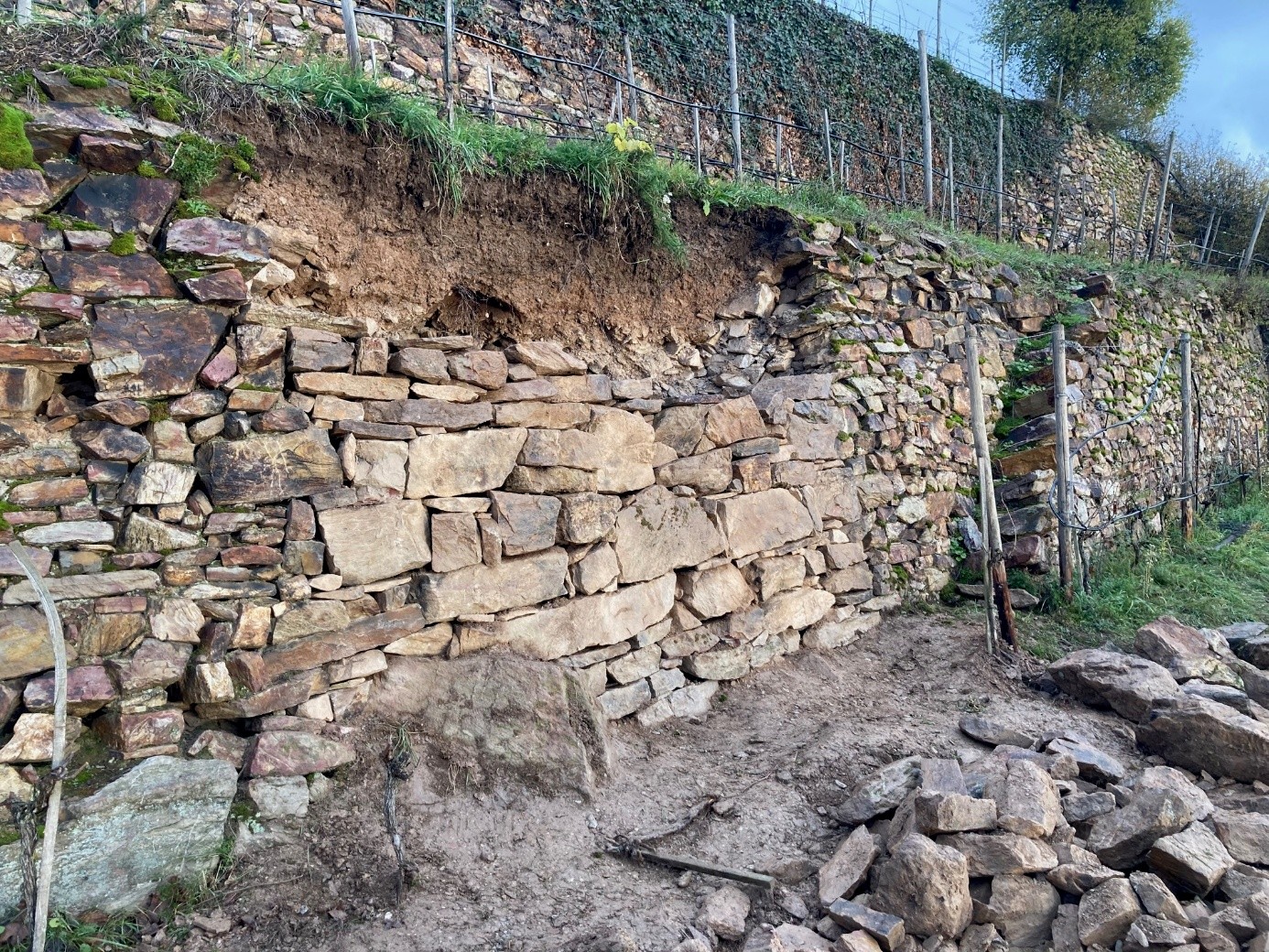
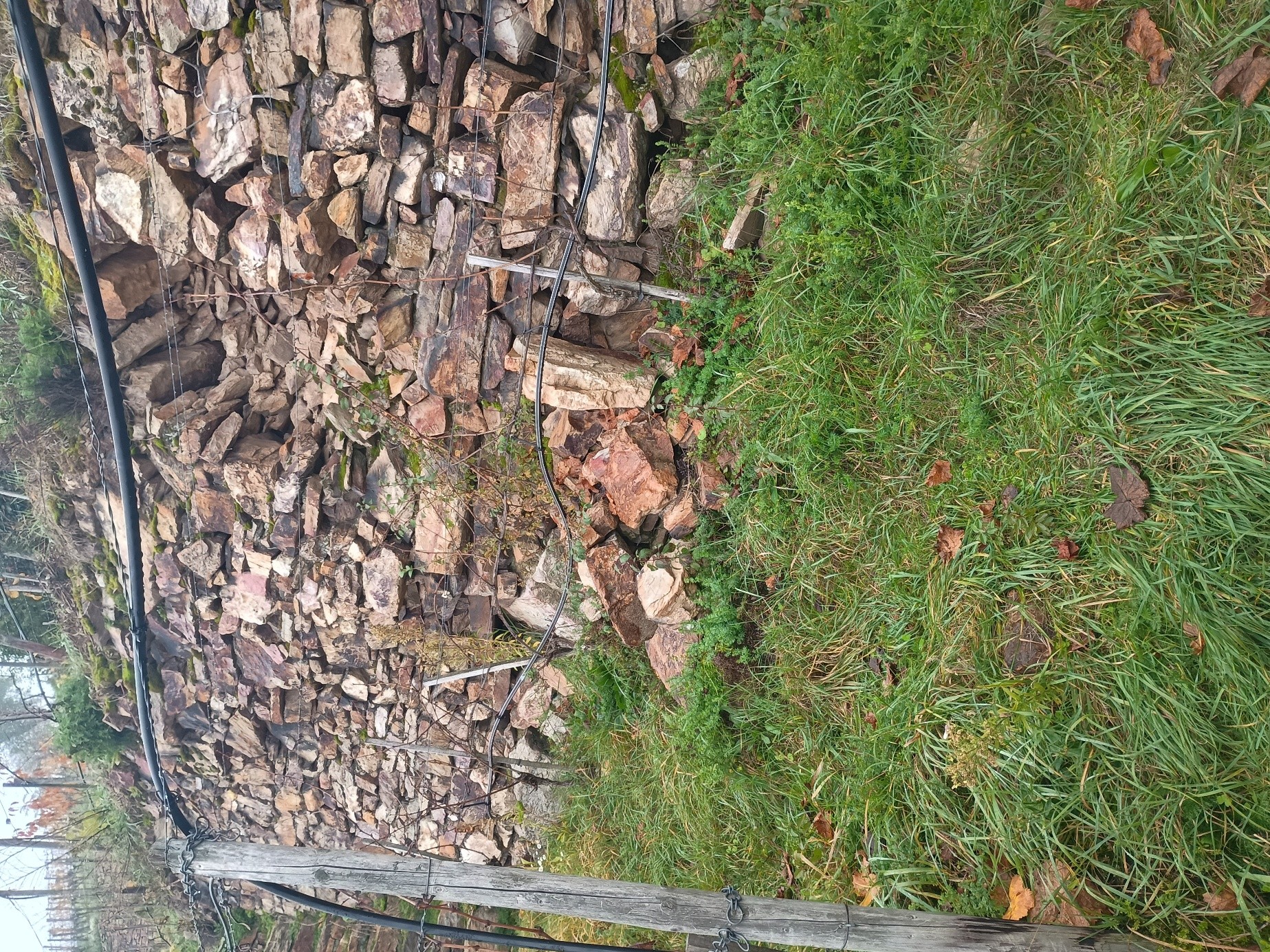
For the fourth time, a dry-stone wall course for students took place from November 7 to 9, 2025, on the university’s own vineyard terrace, known as the ‘Krähennest’, in Rüdesheim. This three-day seminar was again held in cooperation with the Rüdesheim Forestry Office and the Upper Middle Rhine Valley World Heritage Association. The course was led by winemaker Helge Ehmann from Obernhof an der Lahn. Ten students from the departments of Landscape Architecture, Horticulture, Viticulture and Enology, and International Wine Business formed the interdisciplinary team tasked with rebuilding a collapsed section of wall in the Krähennest. The course is one of the university’s offerings designed to bridge theory and practice in teaching.

Dry-stone walls are a distinctive part of the cultural landscape of the Rheingau and the Upper Middle Rhine and provide a habitat for a wide range of plants and animals. Many of the small terraces traditionally separated by these walls have been lost due to land consolidation and mechanization. By participating in the course, students can actively contribute to maintaining and preserving this historic cultural landscape.

After an introduction and a theoretical overview, the students got to work employing the traditional craft of dry-stone walling. To begin the restoration, they carefully dismantled stones down to a stable point where the new structure could be seamlessly reattached. This year’s main challenge was incorporating several large boulders that had to be integrated using precise stonework that would not compromise long-term stability. The students experienced firsthand how, as a team, they could gradually move several tons of stone. Even the cold, wet weather did nothing to dampen their motivation.

Because the section of wall turned out to be more complex than expected, the work could not be fully completed; the remaining tasks will be carried over to next year's course. Special thanks go to the Rüdesheim Forestry Office, which provides funding from the state of Hesse for conservation measures within the World Heritage site, making the course possible in the first place. Thanks are also due to the highly motivated participants, who are eager to deepen their knowledge in their own projects. ‘This craft is increasingly in demand in landscape management and garden construction. I’m glad to be learning the practical foundation in this course,’ the students agreed. The exchange among one another and across disciplines was greatly enriching and will continue to support collaborative efforts to preserve historic cultural landscapes.

The university plans to keep passing on knowledge about the traditional craft of dry-stone walling. Next year’s course will focus on restoring an additional section of wall.

Categories: MyHGU-App, Mein-Netzwerk, STUDIUM, International Wine Business (B.Sc.), Internationale Weinwirtschaft (B.Sc.), Gartenbau (B.Sc.), Landschaftsarchitektur (B.Eng.), Weinbau und Oenologie (B.Sc.), Landschaftsplanung und Naturschutz, Landschaftsbau und Vegetationstechnik, Allgemeiner und ökologischer Weinbau, Nachrichten

Images

Repairing a smaller wall on the first day. Photo: Lara Pschorn
Damage to the wall before work got started; Photo: Lara Pschorn
The wall after the course ended. Further construction will be carried over into next year. Photo: Mathias Scheidweiler

Research brochure (click to enlarge)

Our University has unique opportunities to conduct scientifically recognized and applied research along the entire value chain of special crops. In doing so, we benefit both from a strong network of national and international partners and our own excellent research infrastructure at Geisenheim. Vice-President of Research Professor Annette Reineke