

Research at Hochschule Geisenheim University

Creating Strategies for a Sustainable and Livable Future

Climate Change, Biodiversity Loss, Sustainability Targets – We're Meeting the Planet's Most Urgent Challenges

Our mission is to develop resource-efficient, innovative, and sustainable solutions in the area of agriculture and food. Our work spans a broad range of key issues: advancing organic, climate-resilient cultivation strategies for specialty crops, developing sustainable production and marketing methods, and designing livable cultural landscapes and urban regions. By uniting ecology, profitability, and a focus on quality of life, we aim to create a sustainable future in which society and nature can flourish together.

Our Focus Areas

Sustainable Cultivation Systems for Specialty Crops

Cultivating grapevines, fruit, vegetables, and ornamentals is particularly resource intensive – as such, a careful balance between producing the highest quality products possible and ensuring sustainable practices needs to be struck.

Through our research, we are developing innovative, ecofriendly strategies that ensure healthy harvests and preserve resources. We breed varieties and growth forms that are optimally adapted to climate change, environmental factors, and potential pests and pathogens. Modern sensor systems help control water and nutrient supply with pinpoint accuracy, alternative plant protection strategies – such as the use of antagonists – strengthen plants and their environments, and new digital techniques make precise management measures possible. Together with our partners, we are establishing diverse cultivation strategies that promote biodiversity and preserve ecosystem functions, creating an economically and ecologically sustainable future for viticulture and horticulture.

Innovative and Safe Processing and Marketing for Plant Products

Sustainability in food production spans the entire journey, from cultivation and processing to the moment the product reaches the customer. At every stage, product quality and safety needs to be guaranteed. The bioeconomy plays a key role in this context, enabling the more efficient use of resources, processes, and systems, while supporting the livelihood of the businesses that produce them. 

Through our research, we develop energy and resource-efficient methodologies for processing plant products and extracting valuable ingredients from crops and by-products. We examine microorganisms as natural protective cultures, evaluate the health effects of plant-based ingredients, and conduct sensory tests with our university panel. Market research, consumer behavior analyses, and industry data deliver essential insights for sustainable marketing strategies, particularly in the wine industry. We also analyze the logistical processes, from packing to distribution, and boost the efficiency and sustainability of the entire value chain with the help of modern, digital technologies.

Livable Cultural Landscapes and Urban Regions

Intensified land use has reduced valuable landscape features and biodiversity in many areas. Urban regions are also under pressure to maintain quality of life through green infrastructure such as parks and green belts.

Through our research, we develop methods to optimize and assess urban open spaces and enhance their social sustainability. We create techniques for greening sites with limited soil and for using plants in urban areas in a targeted manner, particularly in the context of climate change. For viticultural landscapes, we design strategies to adapt to climate change and preserve rare species. Additionally, we develop concepts for multifunctional, ecologically valuable, and attractive landscapes that enable new, sustainable production scenarios.

Questions about Our Research?

Please get in touch!

Christiane Jost
Dr. Christiane Jost
Building 5924
Room 01.01
Phone +49 6722 502 6334
Christiane.Jost(at)hs-gm.de Details

News & Latest Projects

Successful Opening of the 65th International DWV Congress in Mainz

Today, the scientific portion of the 65th International DWV Congress was officially opened at the Electoral Palace in Mainz. Klaus Schneider, President of the German Winegrowers’ Association (DWV), remarked that it was 'wonderful to once again hold an in-person congress with so many dedicated experts after the pandemic-related restrictions. With over 500 participants from around the world in attendance, the importance of this gathering for the wine sector and the scientific community is clear.”


In total, the congress will feature around 130 speakers who will be covering a broad range of topics relevant to modern viticulture. From new enological approaches, particularly in response to climate change, to innovative digital tools such as AI-supported systems or modern breeding technologies, participants will be offered insights into current developments in the sector. The event program is complemented by various market and consumer analyses addressing such trends as shifting consumption patterns, origin profiling, and international competition. As such, the congress will not only highlight scientific progress, but also provide an platform for the exchange of ideas on the central challenges facing the industry.

During the opening ceremony, John Barker, Director General of the International Organisation of Vine and Wine (OIV), emphasized the event’s role as a platform for international exchange. In his speech, Barker stressed that sustainability is a core component of the wine sector, but one that must be implemented individually in each region and each country, in harmony with the specific conditions established by the area's nature, climate, and consumer preferences.

Representing the political sphere, Ingmar Jung, Hessian Minister for Agriculture and Environment, Viticulture, Forestry, Hunting, and Homeland, underscored the importance of connecting policy, science, and practice. ‘The DWV Congress demonstrates the close collaboration of science and practice needed to make viticulture fit for the future. Politics must support this dynamic, and it’s our task to create a reliable and uncomplicated framework for it to thrive within. This is why we gathered the wine-producing ministers of the German states in November and jointly developed guidelines for German viticulture,' stated Jung.

A highlight of the second day of the congress was the keynote address by Professor Moritz Wagner of Hochschule Geisenheim University, who spoke on the topic of “Future-Ready Viticulture: Innovations at the Interface of Efficiency, Quality, and Environmental Impact”. His address provided an excellent foundation for thoughts and ideas for the sessions that followed; in it, he discussed the challenges facing the wine sector with regard to climate change, economic viability, wine tourism, carbon footprint, and the scientific and practical approaches needed to respond to these issues. He urged attendees that ‘future-ready viticulture requires the courage to put ideas into practice.’

The 65th International DWV Congress will continue at the Electoral Palace in Mainz until December 3, 2025. For further information and the detailed congress program, please visit the congress website: https://www.dwv-kongress.de/. In the coming days, the congress will offer participants a variety of formats such as workshops, panel discussions, and presentations, allowing for in-depth engagement with the latest scientific and practical developments. Key topics include climate change, sustainable cultivation methods, the role of digital transformation in viticulture, economic viability, and fostering the next generation in both the profession and research.

The German Winegrowers’ Association (DWV) is the professional organization representing German winegrowers. It advocates for the overall interests of its members at national and international levels and works to protect and promote the professional interests of the German winegrowing community.


Source of the original (German) text: German Winegrowers’ Association (DWV)
Categories: MyHGU-App, Mein-Netzwerk, Veranstaltungen, Presse und Kommunikation, FORSCHUNG, Wein- und Getränkewirtschaft, Technik, Rebenzüchtung, Phytomedizin, Oenologie, Mikrobiologie und Biochemie, Getränkeforschung, Bodenkunde und Pflanzenernährung, Angewandte Ökologie, Allgemeiner und ökologischer Weinbau, Nachrichten

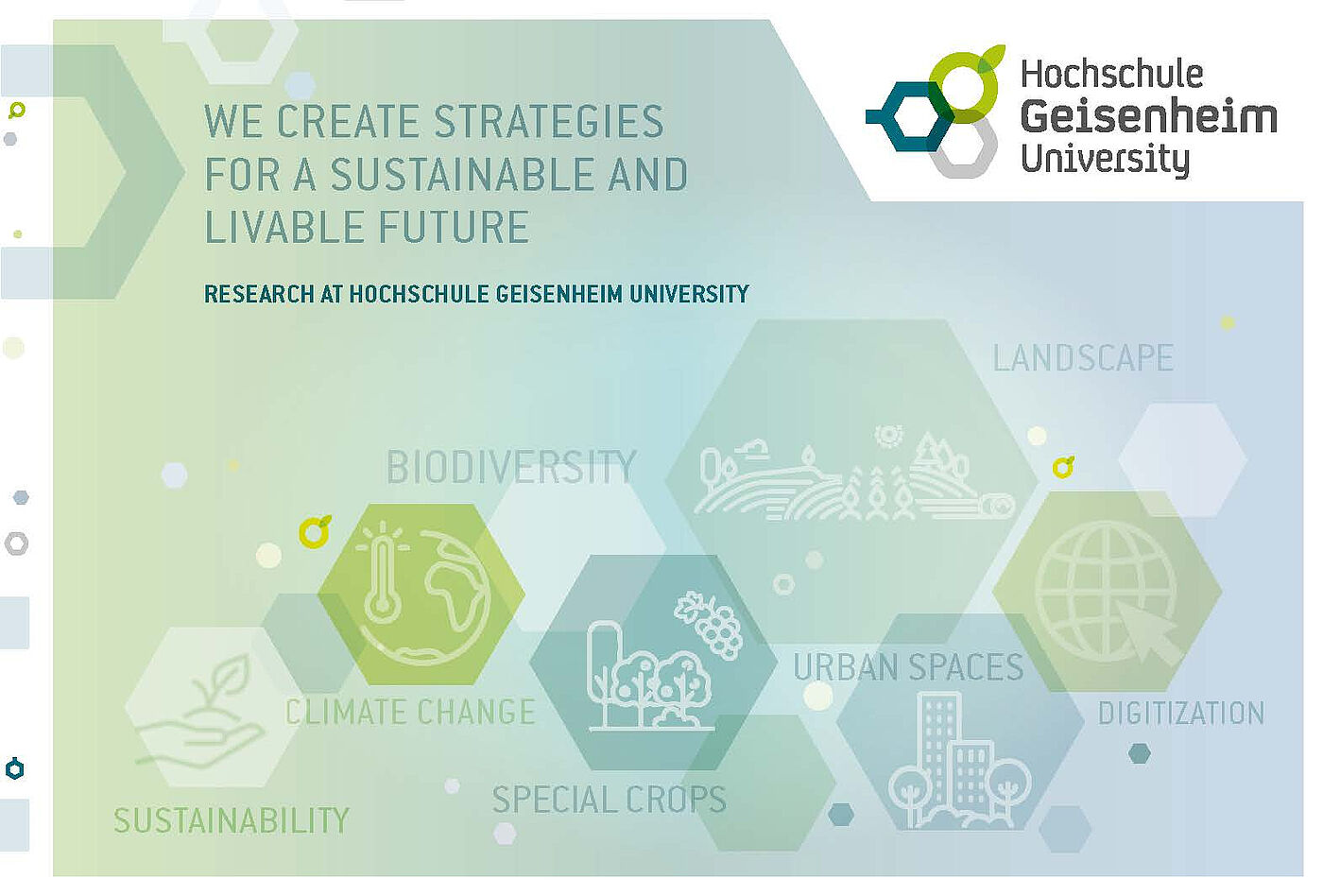
Research brochure (click to enlarge)

Our University has unique opportunities to conduct scientifically recognized and applied research along the entire value chain of special crops. In doing so, we benefit both from a strong network of national and international partners and our own excellent research infrastructure at Geisenheim. Vice-President of Research Professor Annette Reineke