Department of Fresh Produce Logistics

PACKAN: NEW PLATFORM FOR SUSTAINABLE PACKAGING PRESENTED BY DR. PATHAK AT FACHPACK 2025

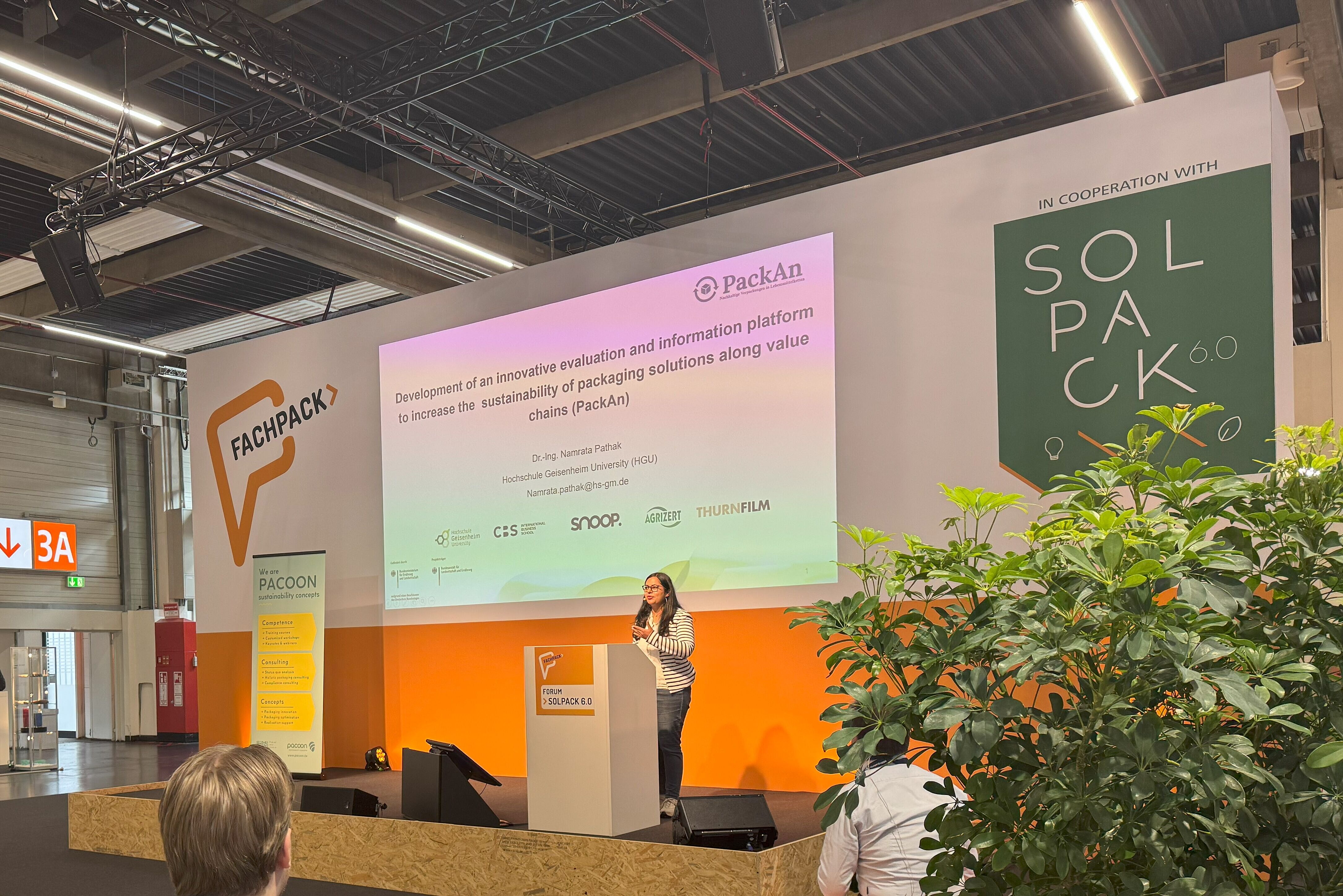
Presentation of the PackAn project at Solpack 6.0 by Dr. Pathak

The PackAn research focus was presented to a broad audience at SOLPACK, which was organized by pacoon Sustainability Concepts GmbH as part of FACHPACK 2025 (September 23–25, Nuremberg). FACHPACK is one of the leading European trade fairs for packaging, technology and processes.
On September 25, 2025, Dr. Pathak, a scientific Assistant at the Institute for Fresh Product Logistics at Geisenheim University, presented the PackAn platform. She presented the tool developed in the project to a large audience. It enables a holistic assessment of packaging sustainability, taking into account the packaging material, the supply chain, and the properties of the food. She also demonstrated how the platform supports consumers in identifying sustainable packaging and thus making informed purchasing decisions for resource-efficient packaging. 
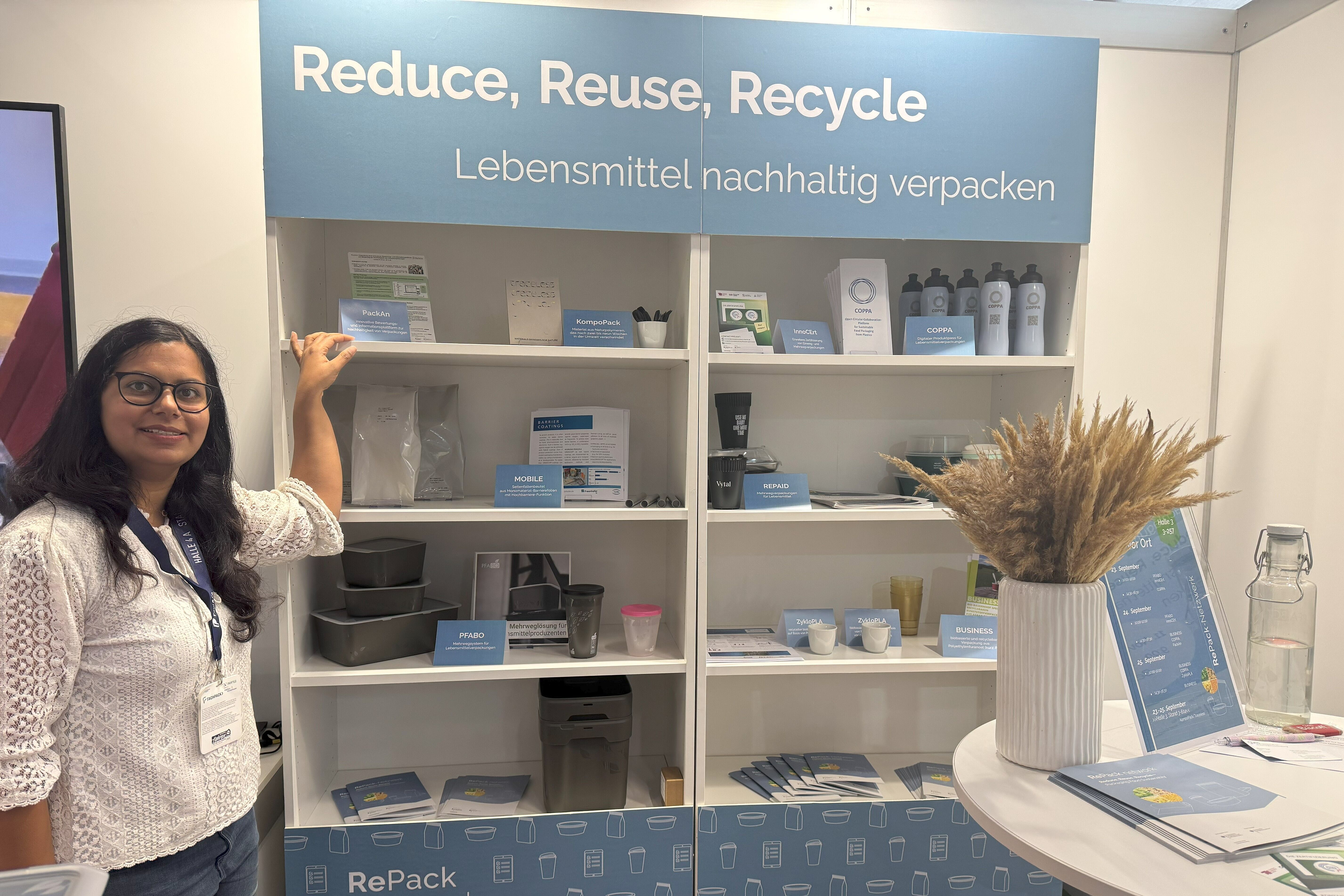
Additional information about PackAn was available at the Repack Network booth at the trade fair on all three days, so that interested parties could discuss the topic directly with the project team. 
More information about the project can be found at: www.packan-plattform.de

Images

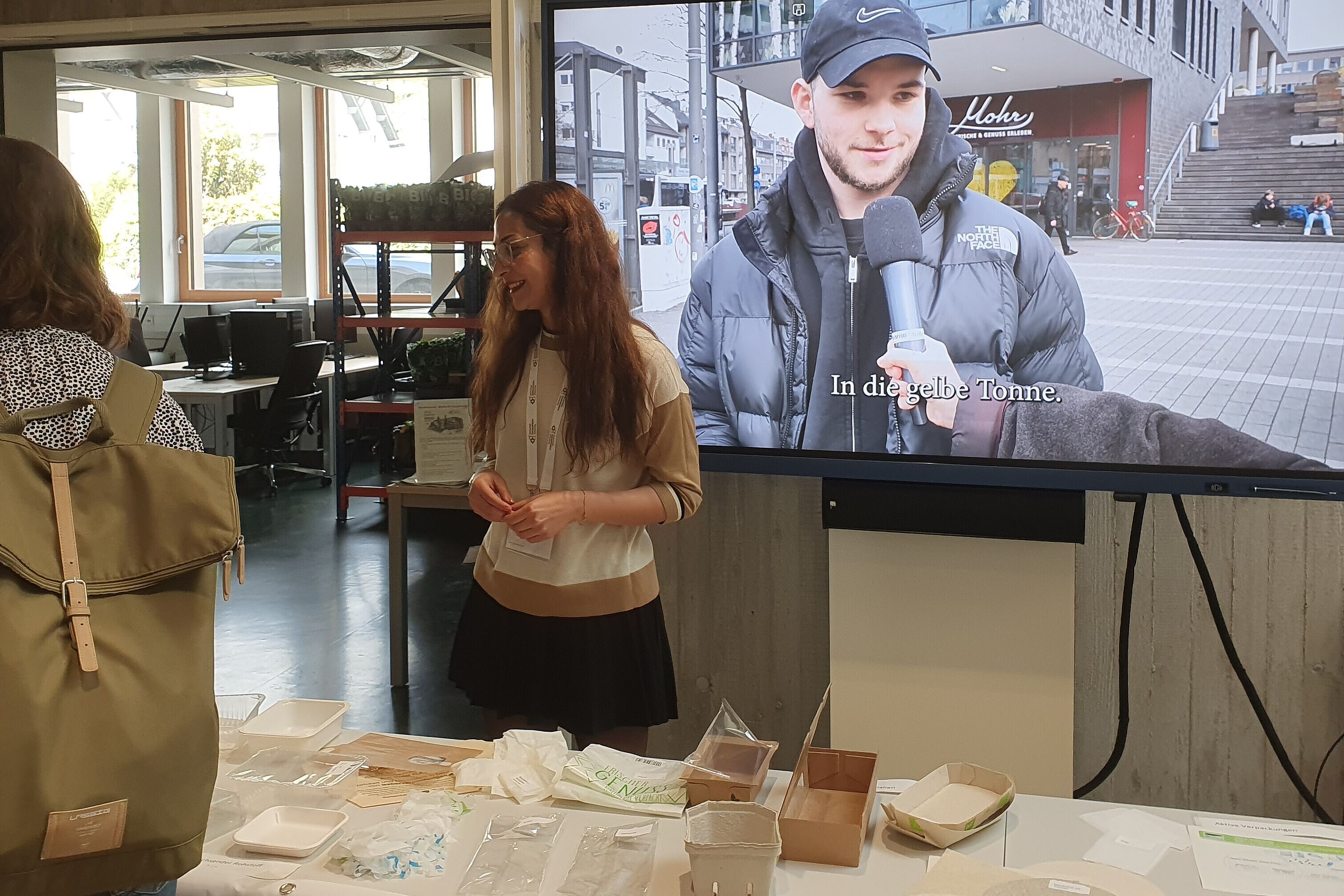
RePack network booth at FACHPACK and presentation of the PackAn project

PackAn research project

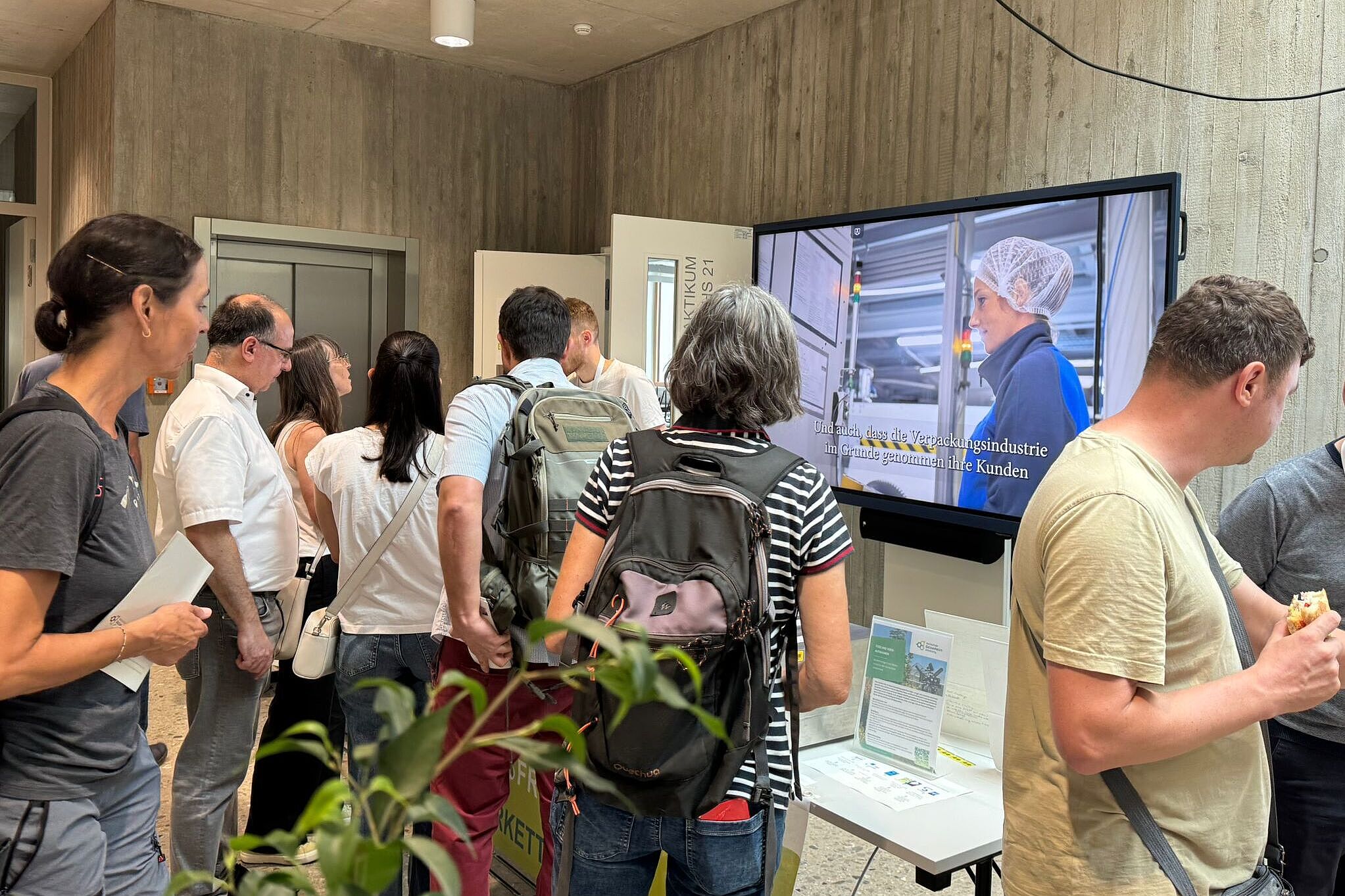
Interested visitors at the Institute for Fresh Product Logistics during the OpenCampus Days 2025

The research project PackAn was presented at the Open Campus and attracted considerable interest. The project aims to develop an evaluation and information platform for companies and consumers that will help establish sustainable packaging in the market and reduce fossil-based raw materials in the long term. Visitors were explained how packaging can help reduce waste in supply chains in specific areas. The high demand underscores how important packaging is to consumers.

Images

Stand at the Institute for Fresh Product Logistics during the OpenCampus Days 2025

News

Inaugural Lectures

Eine Person läuft über eine Wiese mit hohem Gras. © Hochschule Geisenheim

Fascinating insights into the previous and future research and teaching focal points of three new professors

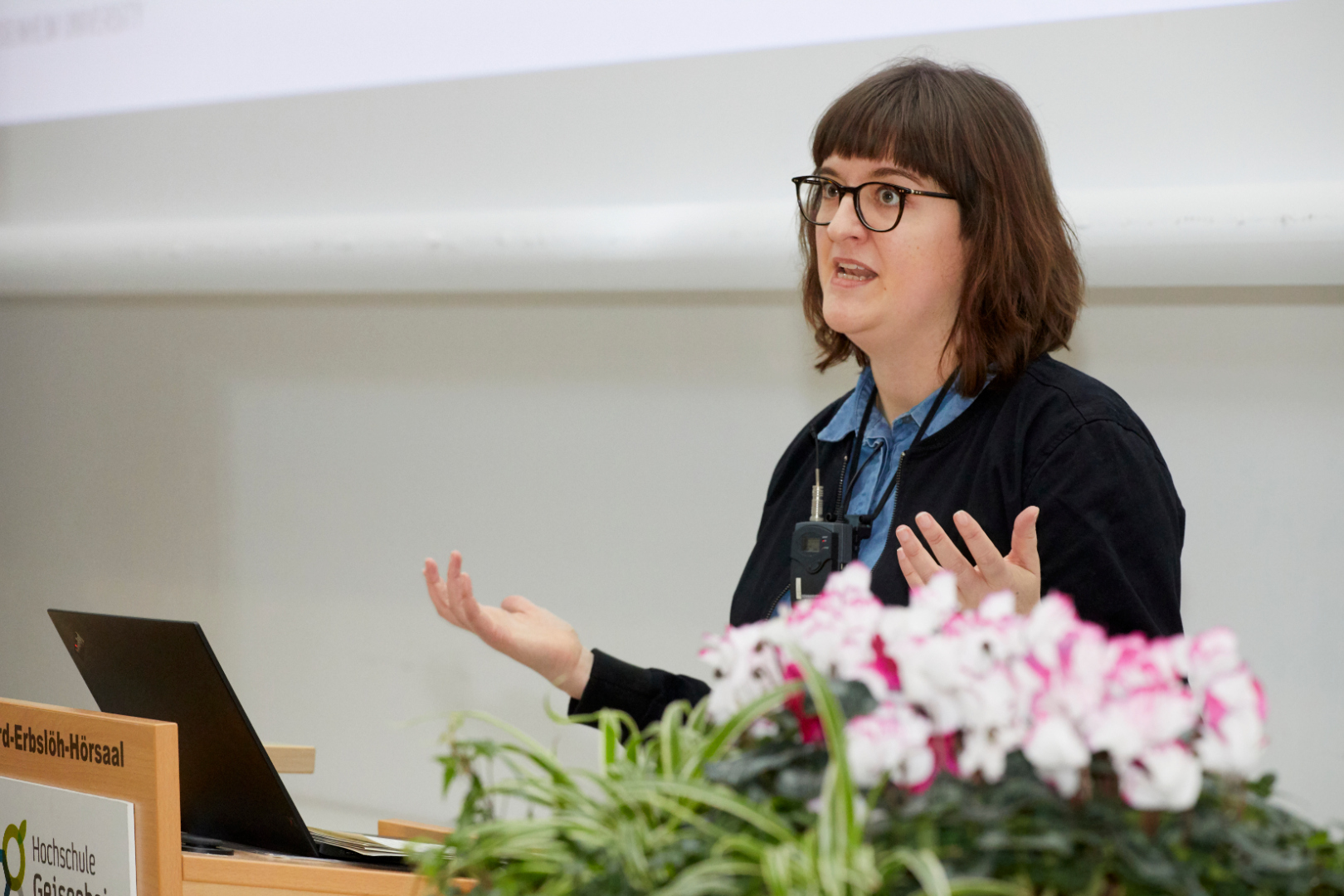
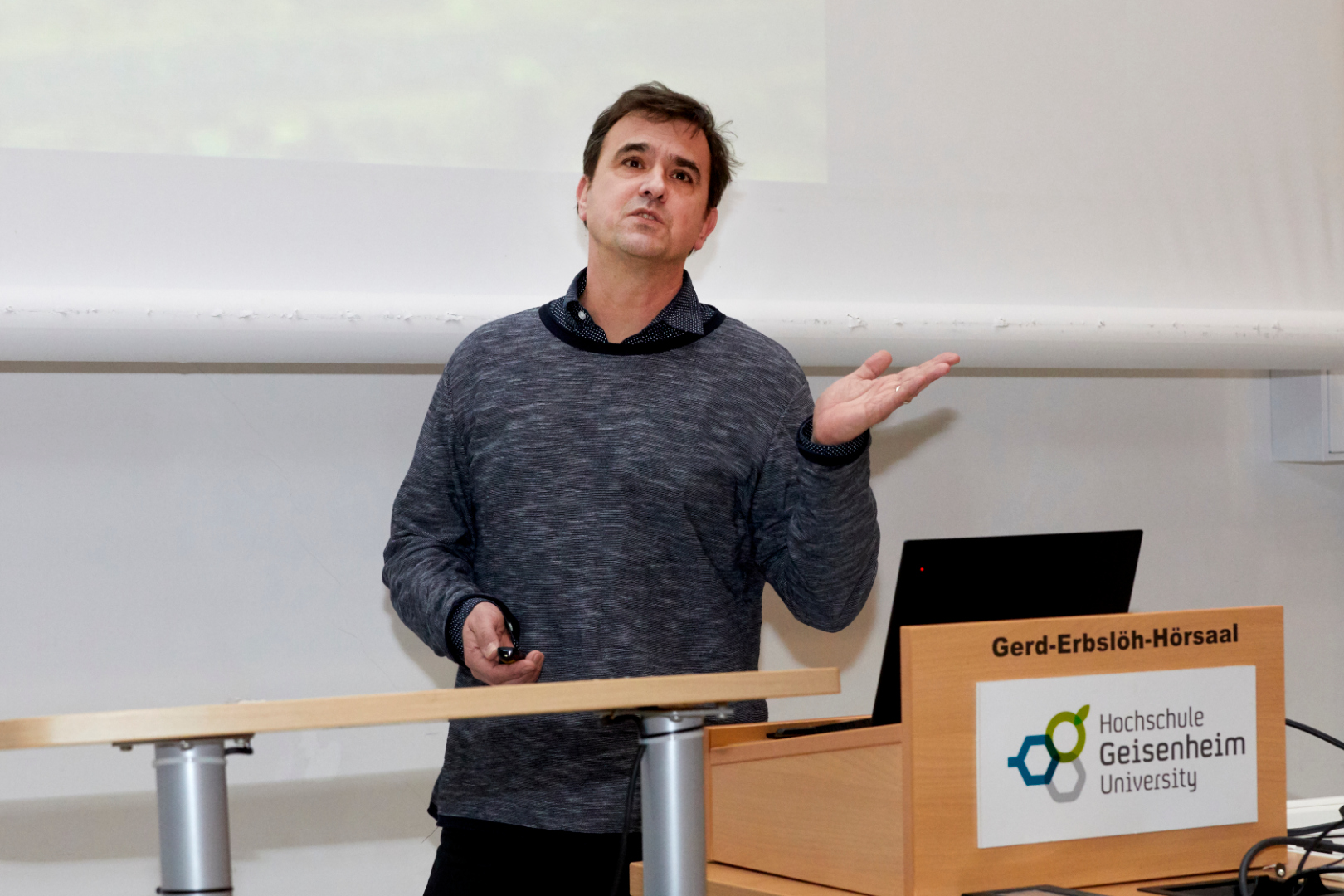
Professor Annette Reineke, Vice-President of Research at Hochschule Geisenheim University, presented the colorful event on January 21, 2020 in the Gerd Erbslöh auditorium and expressed her pleasure that so many employees and students had "availed of this wonderful opportunity to gain an insight into the work carried out at our University outside of lectures, committees and the like."

Professor Rieke Hansen, who holds Hochschule Geisenheim University's first tenure-track professorship for open space and ecological urban design, kicked things off with her lecture entitled, "Welcome to the Anthropocene - open space design in an era of major acceleration".  Given that cities account for a mere two percent of the earth's surface, but 55 percent of the world's population, a number of issues have to be radically questioned and it is essential to understand what a complex system a city actually is. In this context, she addressed the major challenges involved in finding solutions: "where do we do what and at whose expense do we do it, so that we can not only live in a safe, but also fair world?" She aims to demonstrate possibilities for a new urban design culture and also to become involved at regional level in order to play a part in the sustainable development of cities, because "open spaces are as equally important as our transport system."

In his fascinating lecture entitled, "Where do we land? - everyday spaces now", Professor Jan Dieterle, who holds the Professorship for Landscape Architecture Design, gave a range of insights into his previous fields of activity around the globe. "If we all lived as we do in Germany, we would need three planets," he warned, referring to the sustainable design of urban spaces. Whether we are dealing with a scarcity of water or streets flooded during the monsoon season, for example, Dieterle says it is important to find creative solutions for "tricky problems". "Design as creative forward-thinking" is his motto, which he would like to pass on to his students.  

In the final lecture, Professor Jürgen Wendland also addressed a type of open-space development, namely fungi. The Professor for Beverage Microbiology, took a closer look at humans as holobionts, i.e. "a mosaic of microbes", in his inaugural lecture entitled, "Yeasts - a clash of cultures". Wendland presented research findings on yeast strains, some of which are more than 120 years old, as well as insights into the vineyards of the future, where pesticide use could be reduced using beneficial microbes.
Categories: Veranstaltungen, STUDIUM, Weinbau, Önologie und Weinwirtschaft (M.Sc.), VITIS-VINUM (M.Sc.), Vinifera EuroMaster (M.Sc.), UMSB (M.Eng.), Landschaftsarchitektur (M.Sc.), Weinwirtschaft (M.Sc.), Oenologie (M.Sc.), Getränketechnologie (M.Sc.), Gartenbauwissenschaft (M.Sc.), International Wine Business (B.Sc.), Internationale Weinwirtschaft (B.Sc.), Logistik und Management Frischprodukte (B.Sc.), Gartenbau (B.Sc.), Getränketechnologie (B.Sc.), Lebensmittelsicherheit (B.Sc.), Landschaftsarchitektur (B.Eng.), International, Weinbau und Oenologie (B.Sc.), Deutsch-Italienischer Doppel-Bachelor, Presse und Kommunikation, FORSCHUNG, Tenure Track, Wein- und Getränkewirtschaft, Urbanen Gartenbau, Technik, Rebenzüchtung, Phytomedizin, Oenologie, Obstbau, Molekulare Pflanzenwissenschaften, Modellierung und Systemanalyse, Mikrobiologie und Biochemie, Lebensmittelsicherheit, Landschaftsplanung und Naturschutz, Landschaftsbau und Vegetationstechnik, Getränkeforschung, Gemüsebau, Frischproduktlogistik, Freiraumplanung, Bodenkunde und Pflanzenernährung, Angewandte Ökologie, Allgemeiner und ökologischer Weinbau, Nachrichten

Images

Professor Rieke Hansen
Professor Jan Dieterle
Professor Jürgen Wendland