
Dr. Christine Becker
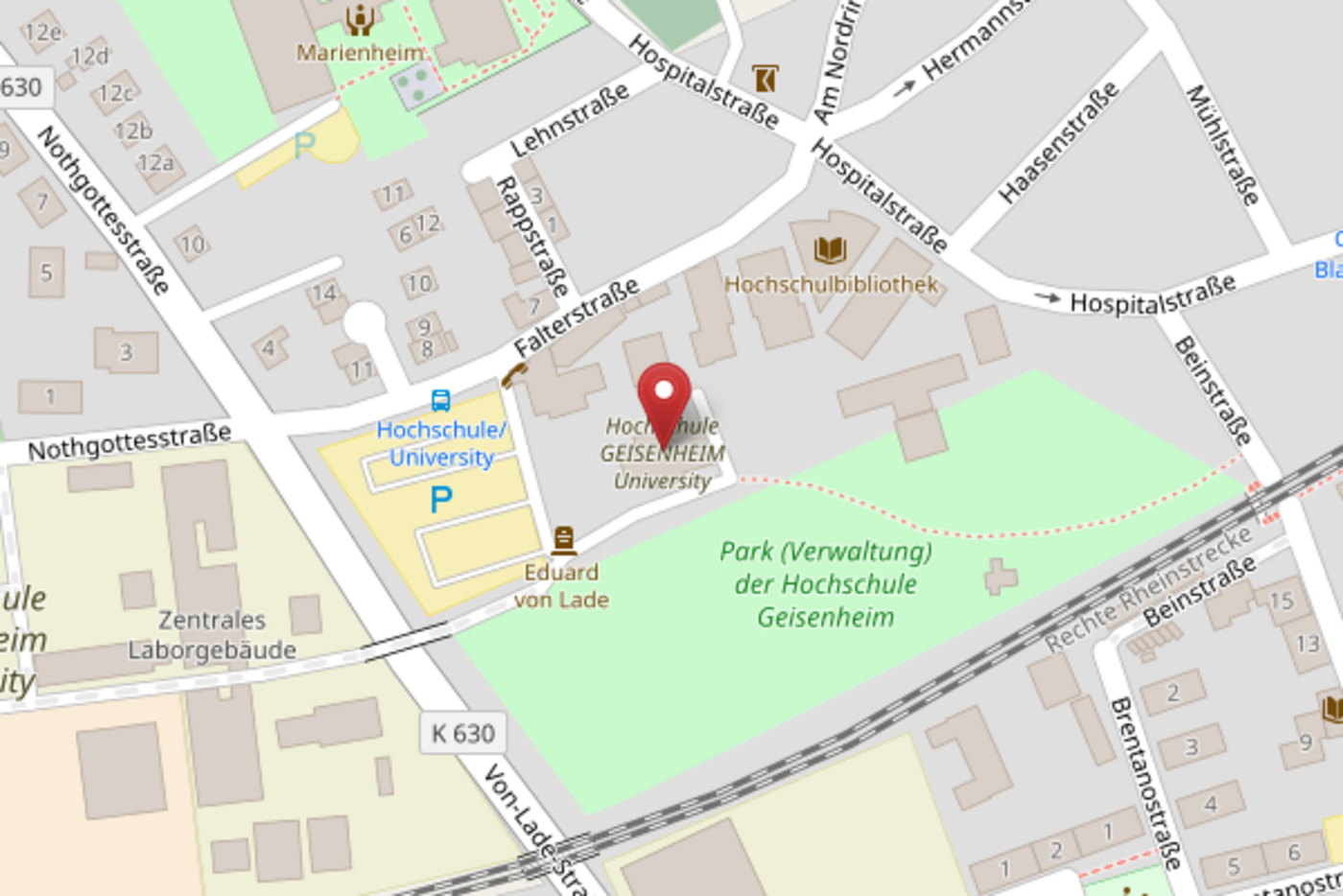
D-65366 Geisenheim
Room 01.55
Von-Lade-Straße 2
65366 Geisenheim
Project start: 15.05.2025
Project end: 14.03.2029
Sponsor: Federal Ministry of Education and Research
The overall aim of the POMORROW project is to enhance the sustainability and resilience of potato by developing all components required for an efficient exploitation of potato genetic resources ensuring future breeding gain. Potato collections of the German Federal Ex situ Gene Bank (GLKS) will be completely genotyped and up to 10 unique accessions will additionally be long-read sequenced to contribute phased genome assemblies to the international Petota pan-genome. A POMORROW core collection of 600 entries will be established and half of the PCC entries immediately accessible as clones will be extensively phenotyped for emerging and underexplored traits that are of particular relevance for potato production. With this approach, conventional and new breeding techniques will be applied for potato germplasm enhancement, which enables potato breeding to improve the resistance/tolerance against abiotic and biotic stressors, nutritional value as well as productivity and resource use efficiency of potato. One of the biotic stressors extensively studied in POMORROW is the plant hopper Pentastiridius leporinus that has recently expanded its host range to potato and efficiently transmits the gamma-proteobacterium Candidatus Arsenophonus phytopathogenicus and the stolbur phytoplasma Candidatus Phytoplasma solani, posing a severe threat to future potato cultivation. However, to date germplasm with resistance to these diseases has not been identified in potato varieties, which severely impairs resistance breeding. Reduced plant damage by plant hoppers and/or the transmitted pathogens can be based on antixenosis, antibiosis, or tolerance, affecting the pest‘s preference and/or performance or the plant‘s ability to withstand their negative impact. Accordingly, plant responses, host plant preferences of P. leporinus as well as life history traits on different potato genotypes will be studied with the aim to identify putative resistance mechanisms and much needed trait donors for these biotic stressors within the GLKS.
Project start: 01.01.2024
Project end: 31.12.2027
Sponsor: Hessen State Ministry of Higher Education, Research and the Arts
Adapting to climate change with increasing drought is currently one of the greatest challenges for agriculture. With the integration of deep-rooted plants or perennial taproot plants into crop rotations, mixed crops can use resources more efficiently, and greater drought stress tolerance can therefore be expected. At the same time, plant health, climate protection through carbon storage in the soil, and biodiversity should increase. The project “TRIO: Transformative Mixed Crop Systems for One Health", a joint project between Geisenheim University and the Universities of Kassel and Giessen funded within the LOEWE priority program, is testing these hypotheses by cultivation of the medicinal and aromatic plants fennel, caraway, and coriander in intercropping with wheat. At the department of Crop Protection, Geisenheim University the sub-project “Diversity, food webs, and migratory movements of arthropods in mixed cropping systems” is studied. Arthropods provide important ecosystem services that are relevant for plant health and yield. According to the hypothesis of biotic resistance, biological diversity in a cultivation system can reduce the damage caused by pests and increase productivity at the same time. This is investigated in this subproject via a comparative analysis of arthropod diversity and their ecosystem services in intercropping systems compared to the corresponding monocultures. In addition, migratory movements of beneficial arthropods between cropping partners as well as the volatile plant compounds of the partner plants are evaluated with regard to their attractiveness for selected beneficial insects and pests in choice experiments.
Project start: 01.11.2021
Project end: 31.10.2024
Sponsor: Federal Ministry of Food and Agriculture, European Union
The main objective of the ResBerry project is to provide the necessary knowledge and demonstrate the effectiveness of tools to enhance above- and belowground biodiversity in European organic berry orchards in order to increase resilience of berries against major pests and diseases. Accordingly, ResBerry will apply the most recent advances in: a) Implementation of preventive pest control measures through management of habitats for natural enemies in organic berry orchards by including companion plants in the form of flower strips, trap plants and/or cover crops supported with an optimized crop canopy structure; b) Deciphering the soil microbial community in organic berry orchards, how communities are shaped by companion plants, and which measurements can be applied to favour beneficial soil microorganisms as a preventive measurement against soil-borne pathogens and for overall increased resilience; c) Raising awareness among farmers for using direct innovative pest control strategies, such as entomopathogenic nematodes for control of spotted wing drosophila and entomovectoring for control of grey mould; d) Evaluating the implications of the proposed measures on yield and nutritional quality of berries and tackling the consumers’ expectations regarding these measures; e) Disseminating and communicating the results to stakeholders, growers, market organizations, research scientists, academia, technical services and consumers. With a wide geographical coverage in five European countries, the project will focus on strawberries and raspberries but will also consider other small fruits as well.
Project start: 15.08.2018
Project end: 14.10.2021
Sponsor: Federal Ministry of Food and Agriculture
Will mating disruption be an effective method to control the European grapevine moth (Lobesia botrana) in the future or will it be hindered by elevated atmospheric carbon dioxide (CO2) concentrations? L. botrana, the major pest insect in vineyards, is currently well-controlled in Germany, resulting in a massive decrease of applied insecticides. Yet, it is unclear if this success will persist in a changing climate.
Male European grapevine moths find females in the vineyard by following the trace of sex pheromones they emit. In order to prevent successful location of females, artificial pheromones are dispensed all over the vineyard, concealing the real traces (mating disruption method) and hence reducing the number of mating events. Elevated CO2 concentrations can affect insect physiology. We therefore study if (1) the composition of female sex pheromones and/or (2) the perception of these pheromones by males as well as their behavior changes under future CO2 concentrations.
“KlimaKom” is a joint research project of the Applied Chemical Ecology lab at the Julius Kühn Institute and the Department of Crop Protection at the HGU, funded by the German Federal Ministry of Food and Agriculture. Using the vineyard Free Air Carbon dioxide Enrichment (FACE) facility in Geisenheim as well as the wind tunnels and gas chromatography-electroantennography equipment in Dossenheim, we are combining field and laboratory experiments. Additionally, we are studying the impact of elevated atmospheric ozone concentrations.
Project start: 01.03.2018
Project end: 28.02.2021
Sponsor: Hessen State Ministry of Higher Education, Research and the Arts
The aim of this project is to assess the effects of abiotic stressors (in particular increased atmospheric CO2 concentration) on the interactions between grapevines and the two grape berry moth species (Lobesia botrana and Eupoecilia ambiguella). For this purpose, experiments will be carried under controlled conditions in greenhouse chambers as well as in the Geisenheim VineyardFACE facility. Parameters of development of both moth species under different CO2 concentrations are recorded, as well as changes in the expression pattern of relevant genes during the larval development on grapevines in the field under elevated and ambient CO2 concentration. For this purpose, investigations of the larval transcriptome will be carried out by RNAseq.
Date: 21.02.2023
Location: Bolzano (Italien)
Speaker: Becker, Christine
Date: 15.09.2022
Location: Quedlinburg (Deutschland)
Speaker: Becker, Christine
Date: 21.07.2022
Location: Helsinki (Finnland)
Speaker: Becker, Christine
Date: 27.04.2022
Location: online (Deutschland)
Speaker: Becker, Christine
Date: 22.10.2018
Location: Rennes (Frankreich)
Speaker: Becker, Christine
Date: 25.09.2018
Location: Volos (Griechenland)
Speaker: Becker, Christine
Date: 02.07.2018
Location: Neapel (Italien)
Speaker: Becker, Christine