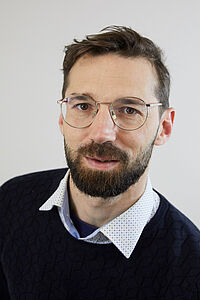
Dr. Matthias Friedel
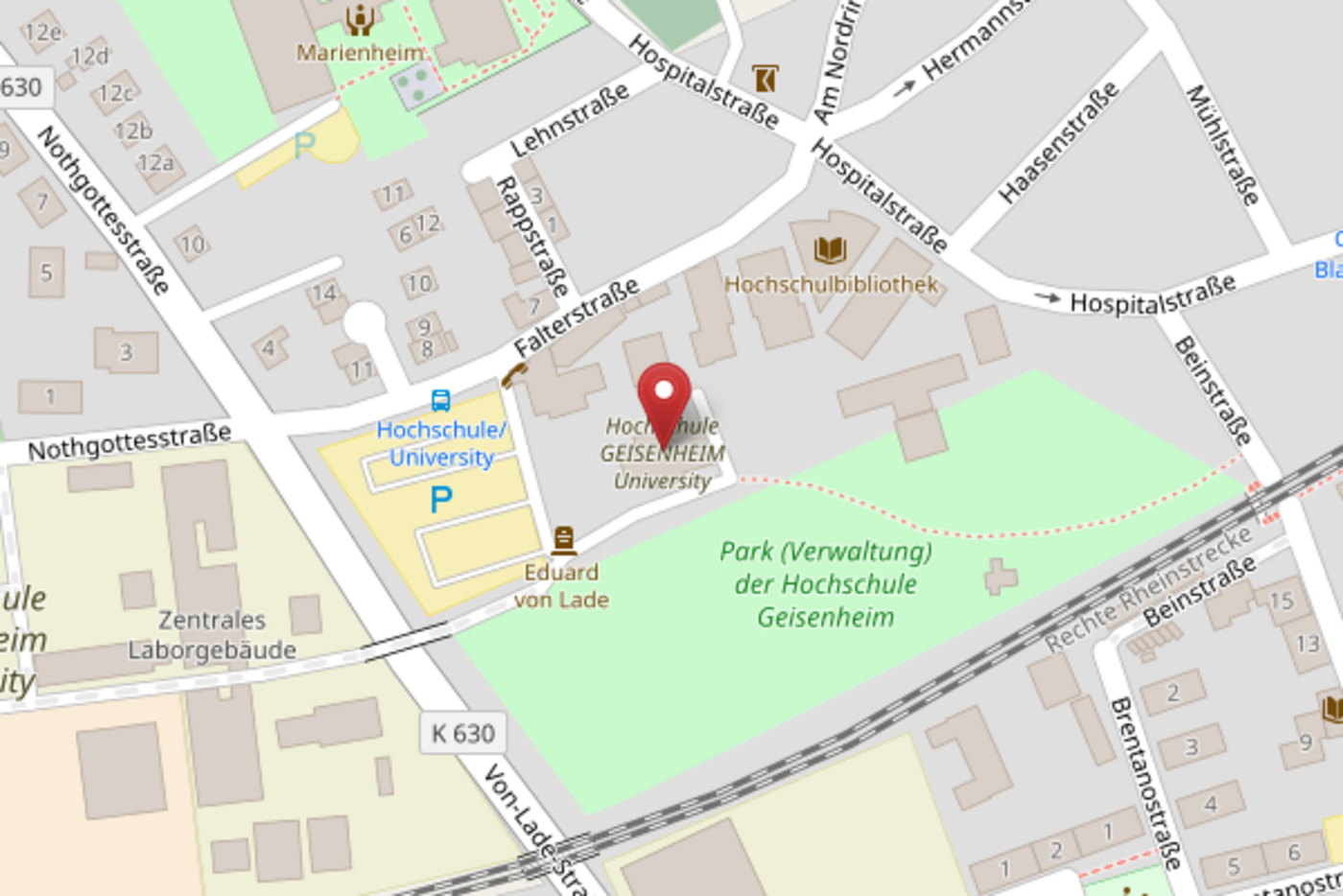
D-65366 Geisenheim
Room 304
Blaubachstraße 19
65366 Geisenheim
Project start: 01.09.2025
Project end: 31.08.2028
Sponsor: Federal Ministry of Food and Agriculture
The aim of the iSoBeD project is to develop new, digital and AI-supported approaches for sustainable,
efficient and practical irrigation solutions in vegetables and viticulture. In view of rising water consumption
and increasing climatic challenges, digital technologies are to be used to define the water requirements of
crops on a site-specific basis and to precisely control irrigation. The project focuses on the following areas:
(i) Development of digital tools to model and optimize irrigation requirements in vegetable crops and
viticulture on a site-specific basis. By integrating networked sensors, digital reconstructions of crop
parameters or data-driven and AI models, respectively, these solutions should enable a more precise
determination of needs and thus save water resources.
(ii) Optimization and automation of irrigation methods for vegetable cultivation to enable variable rate
control. Implementation using standardized protocols is supposed to simplify application accuracy and
irrigation management across the process chain.
(iii) Implementation of automated, plot- and site-specific irrigation for viticulture, primarily to ensure the
long-term productivity and preservation of steep slopes characterizing entire landscapes.
The developed methods are validated in field trials over several years and their suitability for practical
application is tested on cooperating farms. In addition, the project promotes the strong involvement of
practitioners and the transfer of knowledge to vegetable and wine farms through intensive dissemination,
networking and transfer activities. This will lay the foundations for sustainable, digitally supported cultivation
of specialty crops.
Project start: 01.07.2025
Project end: 30.06.2029
Sponsor: European Union
Project start: 21.10.2024
Project end: 31.12.2027
Sponsor: Regierungspräsidium Gießen
Project start: 01.11.2020
Project end: 31.10.2023
Sponsor: German Research Foundation
Project start: 01.05.2020
Project end: 30.04.2023
Sponsor: Forschungsring des Deutschen Weinbaus
Sunburn damage to grapes is a frequently recurring phenomenon, especially in hot winegrowing regions. However, sunburn is also occurring more frequently in wine-growing regions with a temperate or Mediterranean climate as a result of climate change and is increasingly becoming a problem. As weather extremes such as prolonged drought and heat waves are expected to increase with climate change, sunburn is expected to become increasingly important economically for European viticulture. The effects of water shortage and heat may reinforce each other here, as weaker growth exposes a higher number of grapes to solar radiation, thus increasing the potential for sunburn damage. Vineyards are often inadequately prepared for the increasing risks of sunburn, as little scientific attention has been paid to the subject in recent years. In practice, therefore, defoliation practices are often carried out without taking into account weather conditions, grape development or varietal susceptibility, thus risking major damage.
Project start: 28.02.2020
Project end: 31.08.2025
Sponsor: Federal Ministry of Food and Agriculture
Project start: 01.02.2015
Project end: 31.01.2020
Sponsor: Federal Ministry of Education and Research
Growing resistant cultivars with the novel cultivation method of the minimal pruning of trellis trained grapevines (SMPH) enables to combine (1) environmental friendly and (2) economically beneficial as well as (3) climate change adapted grapevine production. To analyze new resistant grapevine cultivars in such an advanced production system, we evaluate the behavior of plants, crop, biodiversity, and resulting wines in comparison to the most common vertical shoot positioning system (VSP). We intend to unravel the cause of ripening delay upon viticultural treatments, and to develop the technological basis for a broad introduction of the new cultivation system into viticultural practice. Our comprehensive investigation will empirically and functionally address field studies where new cultivars are raised in a new cultivation concept.
Date: 12.04.2022
Location: Stuttgart / online (Deutschland)
Speaker: Friedel, Matthias
Date: 18.03.2022
Location: Tulln (Österreich)
Speaker: Friedel, Matthias
Date: 04.03.2022
Location: Digital (Deutschland)
Speaker: Friedel, Matthias
Date: 11.11.2019
Location: Bötzingen (Deutschland)
Speaker: Friedel, Matthias