
Dr. Nikolaos Tsoulias
D-65366 Geisenheim
Room 213
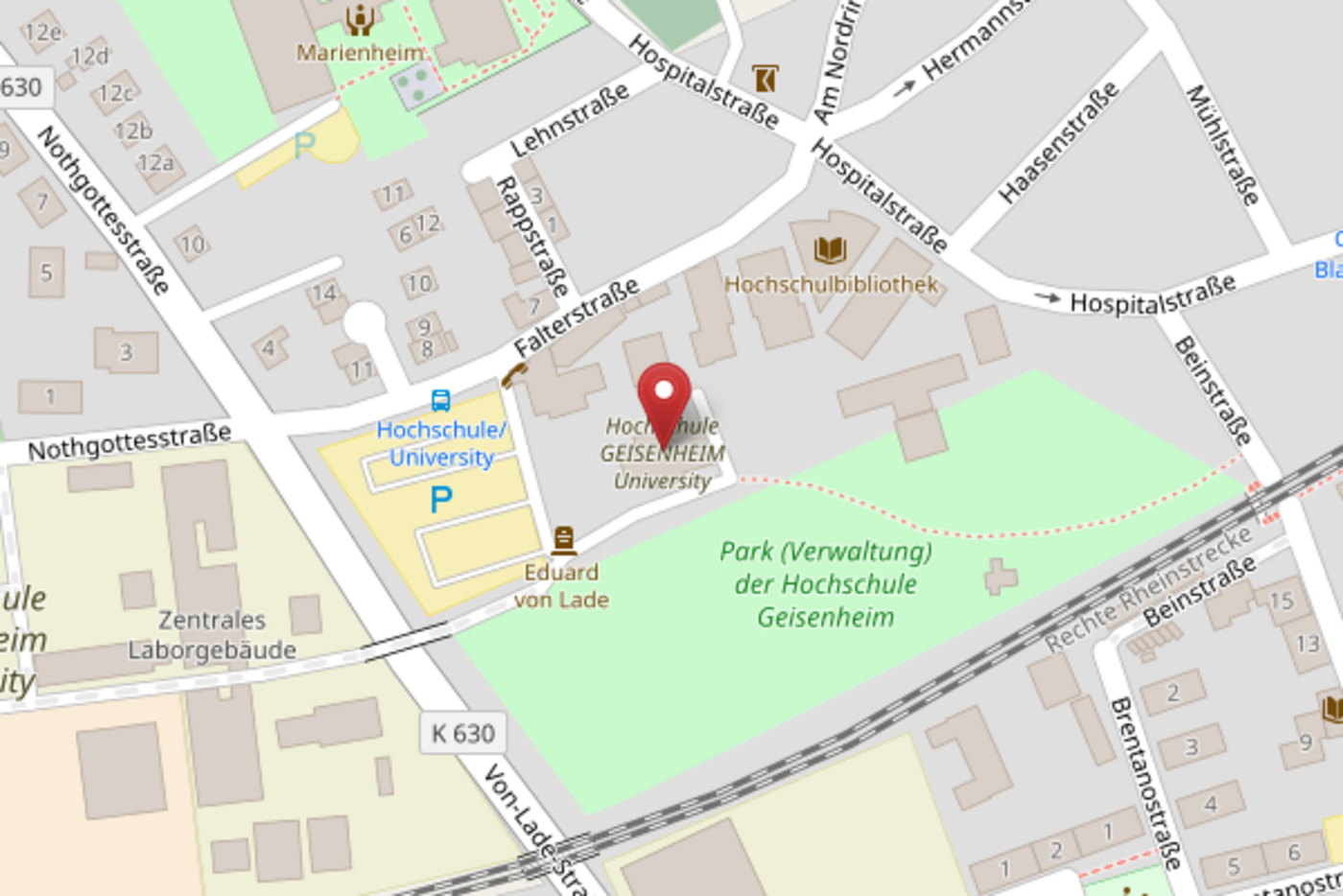
Brentanostraße 9
65366 Geisenheim
Nikos Tsoulias, Senior researcher and lecturer at Hochschule Geisenheim University. Dr. Nikos Tsoulias holds a PhD in Agricultural Engineering from the Agricultural University of Athens (Greece) since 2021. He received his M.Sc. in Precision Farming (2016) at Harper Adams University (United Kingdom) fully funded by CNH Industrial, while he holds a BSc is in Agriculture with an integrated M.Sc. in Agricultural Engineering from Agricultural University of Athens (Greece).
Currently, he works at the Department of Agricultural Engineering at Hochschule Geisenheim University, where he gives lectures on precision agriculture, phenotyping, digital twins, agricultural machines and robotics in horticulture and viticulture. From the beginning of his professional career, he worked as a researcher, and has focused on strong cooperation with the industry and research. He is an expert in machine vision and optical sensors in the agri and food sector.
Dr. Nikos Tsoulias, is the author of over 30 peer-reviewed scientific articles. Whereas, he gave a keynote titled "Bridging Digital Shadows with Physiological Models and Field Applications" at EHC 24 in Bucharest, organized by ISHS. He specialises in conceiving techniques for real-time detection in the field of machine vision and plant sensing. His research interests include fruit and tree phenotyping, 3D data, photonics in agriculture, IoT systems, unmanned ground and aerial vehicles, machinery automation, precision horticulture/viticulture and digital twins. Recently, he has been involved as in several European projects such as the Oenotrace and SHEET projects funded by ICT-AGRI-FOOD Co-Fund, while as well as in national projects such as the ISObot, DIWAKOPTER, AquaC+ and Primefruit.
Project start: 01.11.2025
Project end: 01.11.2028
Sponsor: European Union
AI4AgroIoT is an Erasmus+ project that supports the digital transformation of agriculture through the integration of Artificial Intelligence (AI) and Internet of Things (IoT) technologies. It brings together universities and industry partners to develop innovative educational approaches in precision farming.
The project focuses on designing a modern curriculum that equips students with practical skills in AI, IoT, and remote sensing for sustainable agriculture. It combines digital learning materials with hands-on training using real-world farm data and smart technologies such as sensors and drones.
A key outcome is the SmartAgriEdu platform, an open-access digital environment that supports interactive learning, virtual field experiences, and knowledge exchange among students, educators, and practitioners.
Through workshops and collaboration with industry and policymakers, the project ensures strong links between education, innovation, and real-world agricultural challenges.
By aligning with European strategies for sustainability and digitalisation, AI4AgroIoT contributes to climate-smart agriculture and strengthens the digital skills of the future agricultural workforce.
Project start: 01.09.2025
Project end: 31.08.2028
Sponsor: Federal Ministry of Food and Agriculture
The aim of the iSoBeD project is to develop new, digital and AI-supported approaches for sustainable,
efficient and practical irrigation solutions in vegetables and viticulture. In view of rising water consumption
and increasing climatic challenges, digital technologies are to be used to define the water requirements of
crops on a site-specific basis and to precisely control irrigation. The project focuses on the following areas:
(i) Development of digital tools to model and optimize irrigation requirements in vegetable crops and
viticulture on a site-specific basis. By integrating networked sensors, digital reconstructions of crop
parameters or data-driven and AI models, respectively, these solutions should enable a more precise
determination of needs and thus save water resources.
(ii) Optimization and automation of irrigation methods for vegetable cultivation to enable variable rate
control. Implementation using standardized protocols is supposed to simplify application accuracy and
irrigation management across the process chain.
(iii) Implementation of automated, plot- and site-specific irrigation for viticulture, primarily to ensure the
long-term productivity and preservation of steep slopes characterizing entire landscapes.
The developed methods are validated in field trials over several years and their suitability for practical
application is tested on cooperating farms. In addition, the project promotes the strong involvement of
practitioners and the transfer of knowledge to vegetable and wine farms through intensive dissemination,
networking and transfer activities. This will lay the foundations for sustainable, digitally supported cultivation
of specialty crops.
Project start: 01.11.2024
Project end: 31.10.2027
Sponsor: Federal Ministry of Food and Agriculture
Autonomous field robots have enormous potential for ecologizing crop production and mitigating labor
shortage. Although these systems are now ready for market, there are still major challenges, particularly
with regard to their interaction with machine management, process control and the interaction between
robot and implement. The aim of ISObot is to develop an integrated system for optimizing the operational
management of field robots through improved interoperability at different levels, as well as automated
process control. The starting point are commercial robot-implement combinations and a web-based
machine management system. A process controller is being developed for weed management in viticulture,
which uses sensors and intelligent algorithms to monitor and actively control the work process and
document the quality of work. Another use case in arable farming will focus on monitoring the hoeing
process and recording process parameters. In both cases, the robots will be linked to the machine
management system via an IoT system in order to visualize process-relevant information via user-friendly
interfaces and make it available for further agronomic use. Finally, approaches are being developed to bring
communication between the subsystems involved into an automated, machine-readable form, primarily on
the basis of the ISO 11783 (ISOBUS) standard, thus ensuring maximum interoperability at different levels
without additional manual effort. Dissemination and transfer activities will be leveraged in the project to
establish an exchange with agricultural practice. Eventually, another aim is to derive recommendations for
further standardization efforts to improve the interoperability of electronic communication in agricultural
machinery.