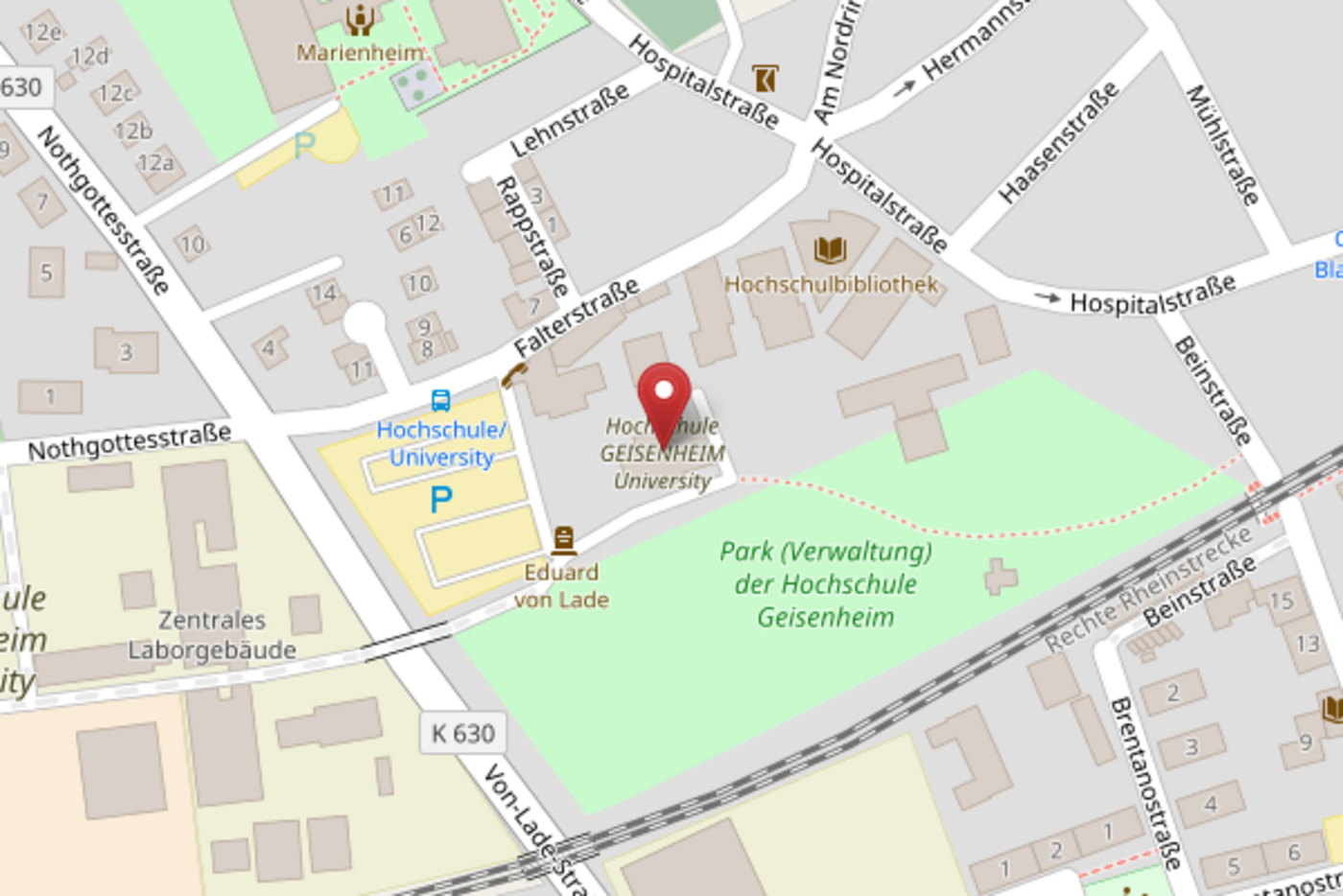
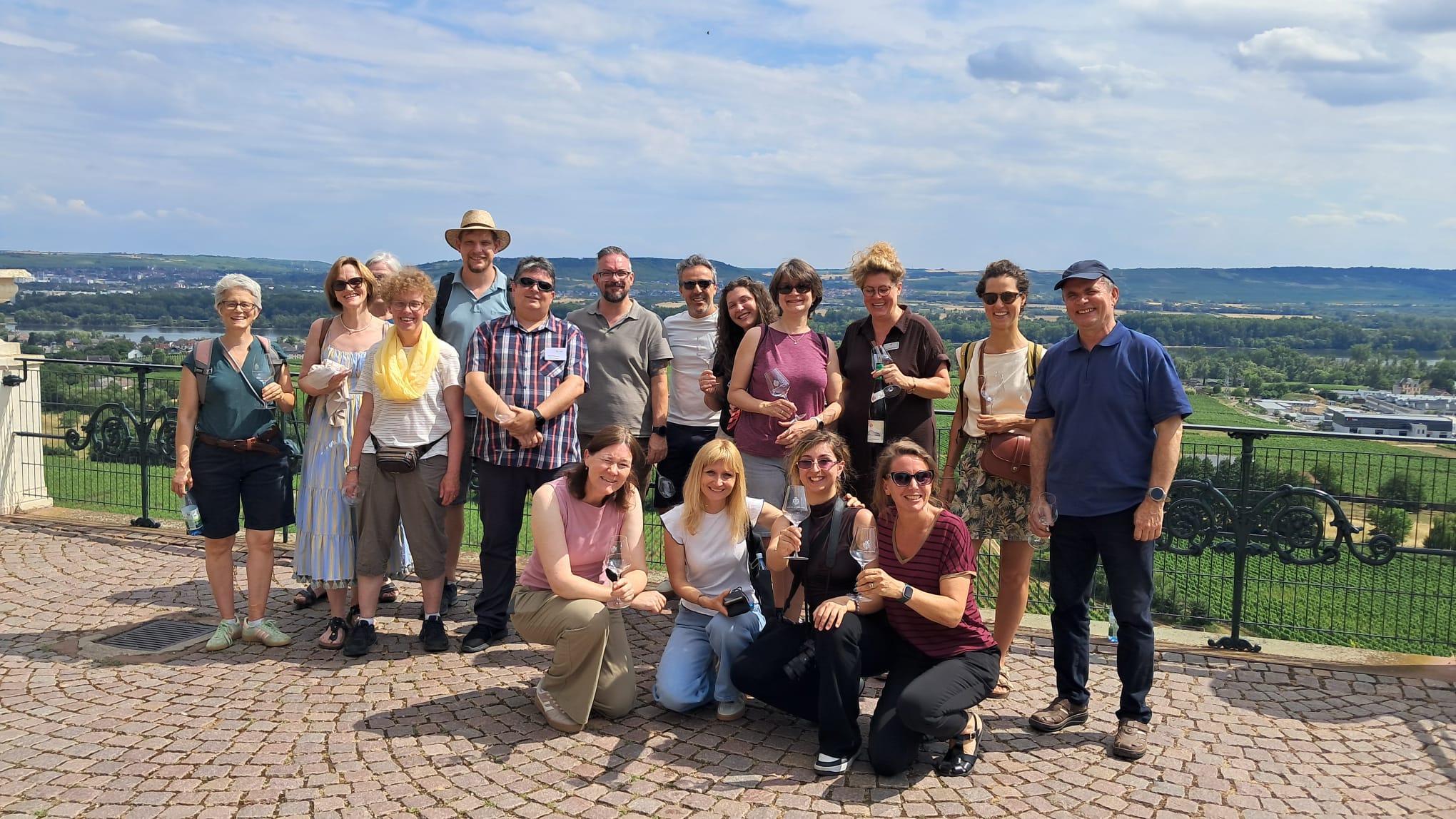
In the first week of July, Hochschule Geisenheim University hosted the EU-Gift Staff Week, bringing together 10 colleagues from the European partner universities of Bordeaux, Verona, Eger, Cluj-Napoca and Trás-os-Montes /Alto Douro. Key topics included expanding direct and virtual collaboration, reviewing support services for international students, and developing joint micro-credentials. The Staff Week is part of the project work of the EU-GIFT University Alliance (European University for Geographical Identity as a Driver for Food Systems Transition to Sustainability). As a founding member of the alliance, Hochschule Geisenheim University is entitled to use the branding “European University”.
"International Collaboration Is Built on Communication and Sharing Experiences”
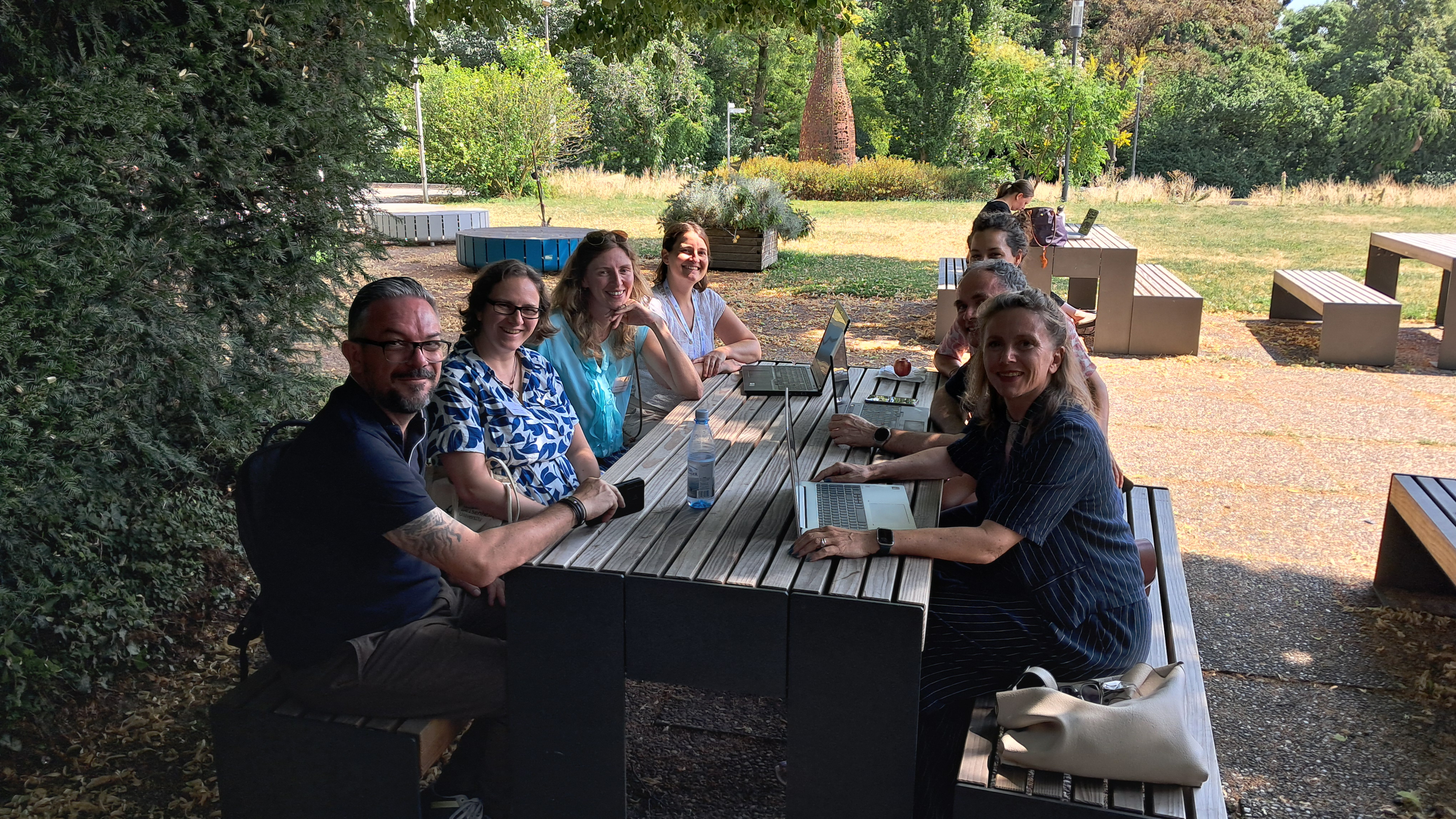
When the guests were asked what they gained this week, they mentioned 'new friends', and some even said 'a new family’. Another key conclusion was: “For an efficient collaboration built on trust, you need to know the faces behind the email addresses, and an ongoing exchange”. The Staff Week was organized by Rita Broschek, Sarah Rau and Sonja Thielemann who are very pleased about the positive feedback. “Smaller groups, in particular, provide the perfect framework for intensive, open, and constructive exchange”, explains the organization team.
The Staff Week brought together guests and colleagues from Student Advisory Services, Career Services, Examination Offices, Research Services and International Offices. Throughout the week, participants engaged in workshops and discussions on enhancing services for international students, promoting mobility and developing new collaborative learning and certification formats in Europe.
In an online presentation, Julia-Sophie Rothmann from Fulda University of Applied Sciences shared her experiences with the European university alliance, providing an important impetus for the week: “Without an international mindset among all members of the university community, the transition to a university that is both connected across Europe and firmly rooted in the region cannot be achieved – everyone must be on board”, she emphasized.
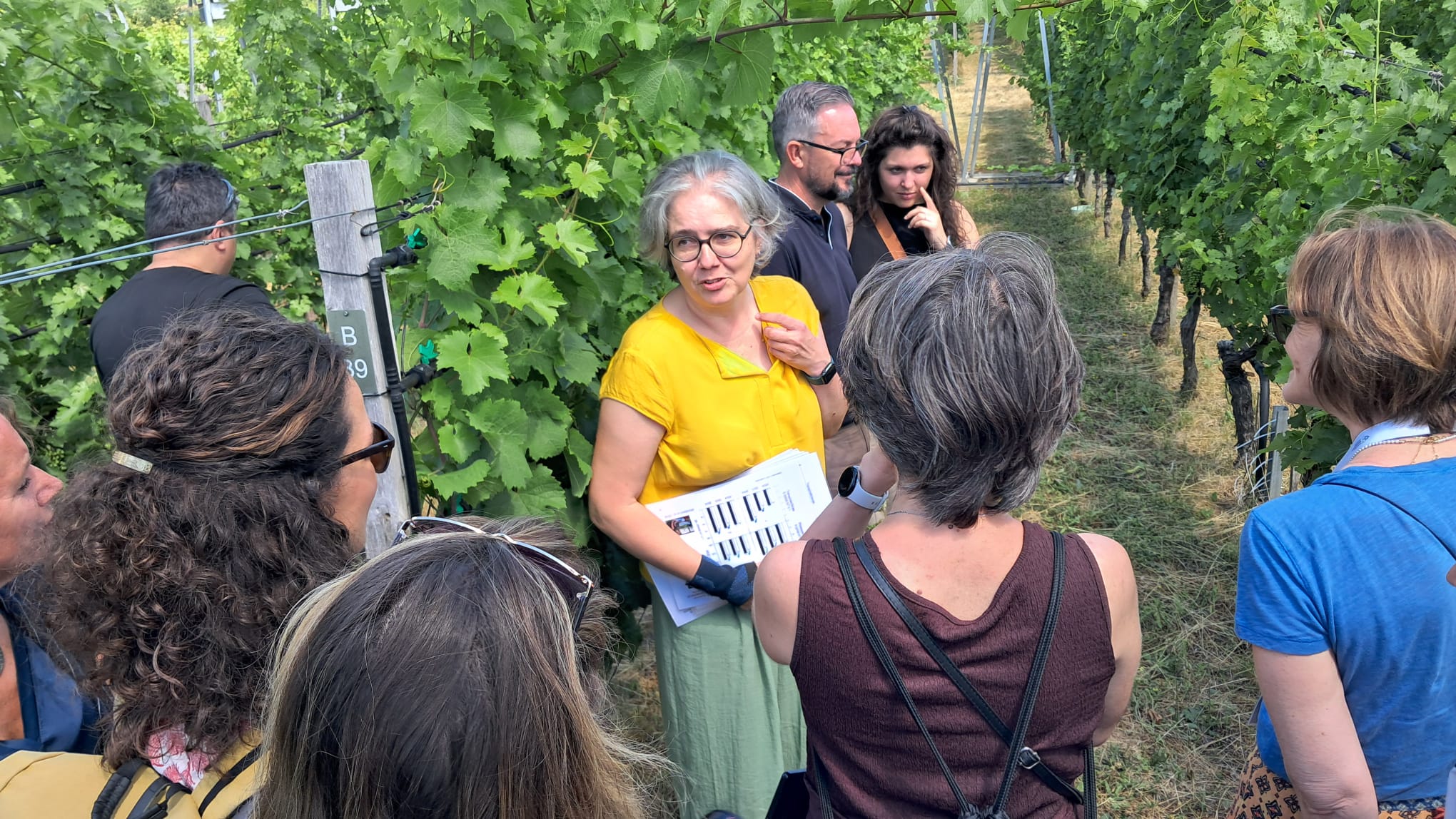
Alongside the working sessions, the program included trips to the region – for example to the Middle Rhine Valley, the university winery or Schloss Johannisberg – enabling participants to experience European collaboration not only from a professional but also from a cultural point of view.
At the end of the week, all participants agreed: “International cooperation thrives on communication, shared experiences, and personal encounters”.
Read more: EU-GIFT website