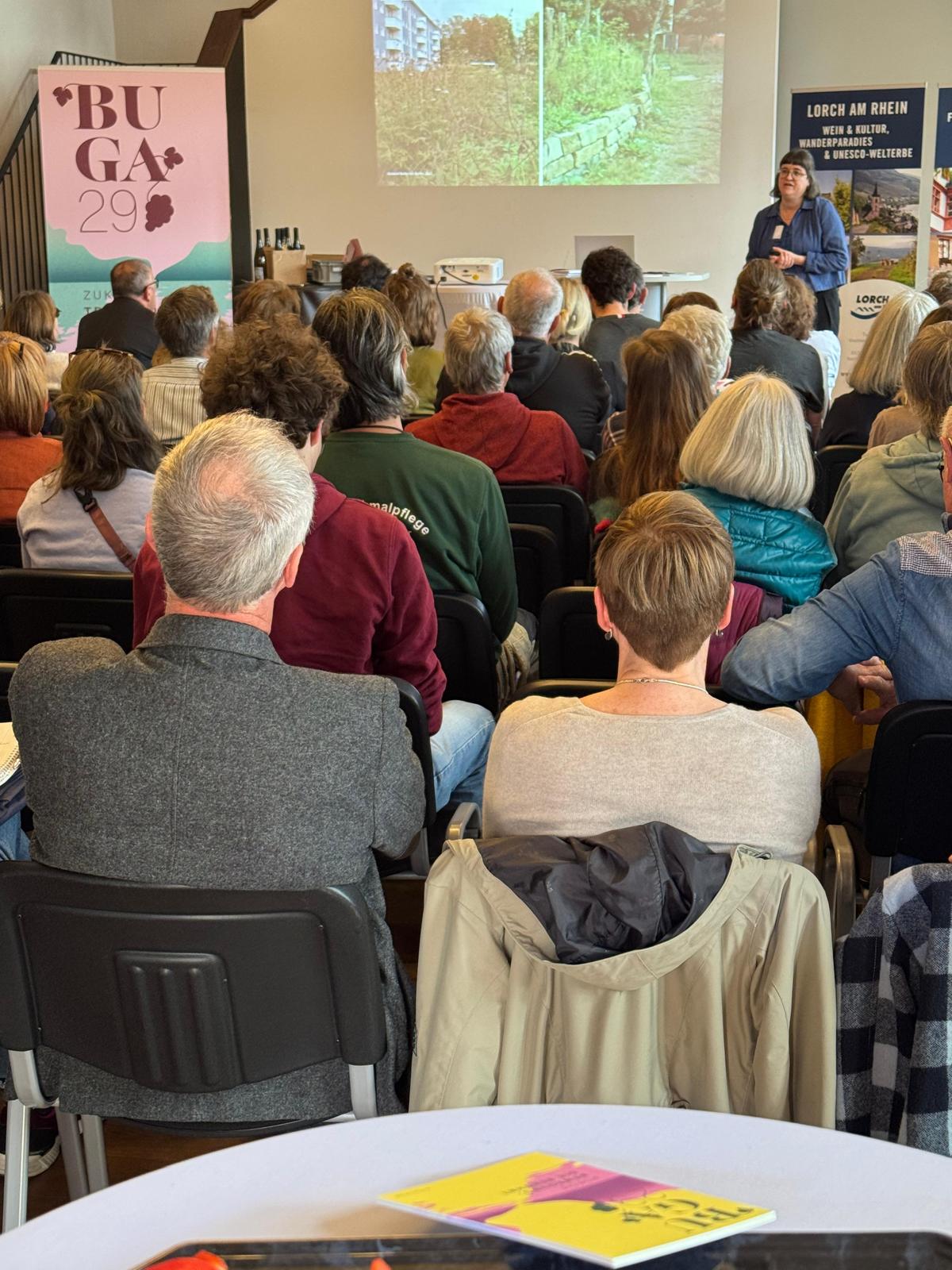
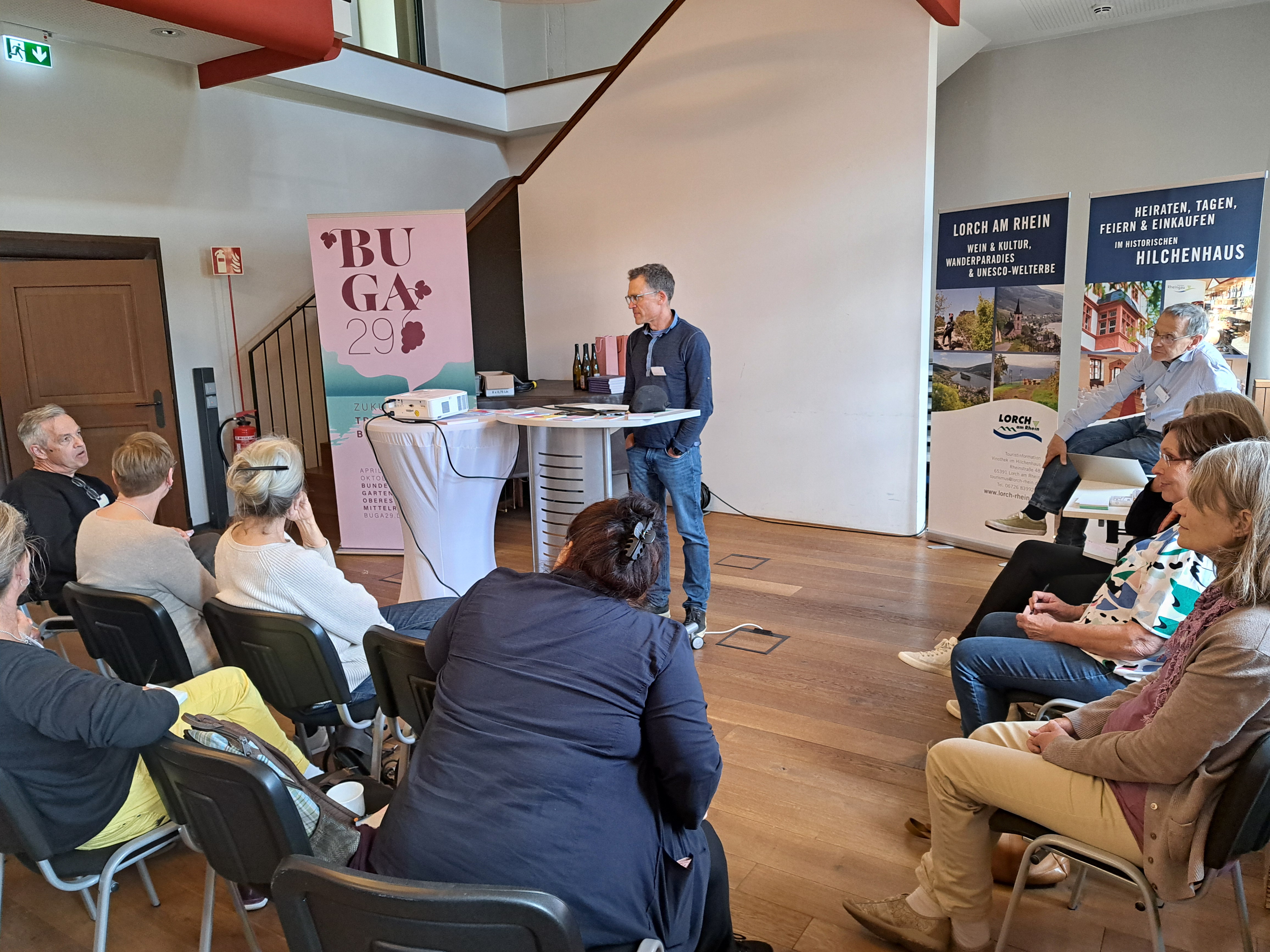
With over 70 participants from the world of politics, academia, and administration in attendance – all eager to get involved in helping protect biodiversity – the event was fully booked. The high level of active participation underscored the strong interest in, and urgency of, the topic at hand. Sandra Linz of BUGA GmbH and Professor Ilona Leyer of Hochschule Geisenheim University's Department of Biodiversity and Functions of Ecosystems were pleased with the overwhelmingly postive response to the event, viewing it as an encouraging sign for future efforts to promote biodiversity in the region.
The goal of this BUGA-Dialog was to develop concrete measures to conserve biodiversity and promote the sustainable use of natural resources, with the thematic scope of the event ranging from private gardens and public green spaces to the open landscape of the Middle Rhine Valley.
In her introduction Ilona Leyer highlighted the central role that nature plays in the welfare of human beings and outline the factors currently leading to a dramatic loss of biodiversity. She emphasized that understanding key biological processes is vital for developing suitable measures to support biodiversity itself, as well as the ecosystem services it provides, including flood protection, water retention, and the preservation of soil fertility. However, any proposed measures must be practical to implement and economically viable, making real-world partnerships with individuals, associations, and communities essential to their success.
After these opening remarks, scientists from Hochschule Geisenheim University shared their best practices for promoting biodiversity. Dr. Karsten Mody from the Department of Applied Ecology highlighted the often understimated potential of Germany's 17 million gardens and 30 million balconies in terms of supporting biodiversity. In the process, he offered useful tips for selecting suitable plants and creating versatile structures that could help bolster insect populations.
In her presentation, Professor of Open Space Planning and Ecological Urban Development Rieke Hansen illustrated how ecologically designed areas and unsealing surfaces can boost the attractiveness of public green spaces. Dr. Vera Wersebeckmann then turned the focus to the open landscape of the Middle Rhine Valley, presenting cross-terracing in steep-slope viticulture as a promising approach. Cross-terracing is associated with many advantages, including easier cultivation, healthier vines, erosion protection, water retention and the promotion of biodiversity.
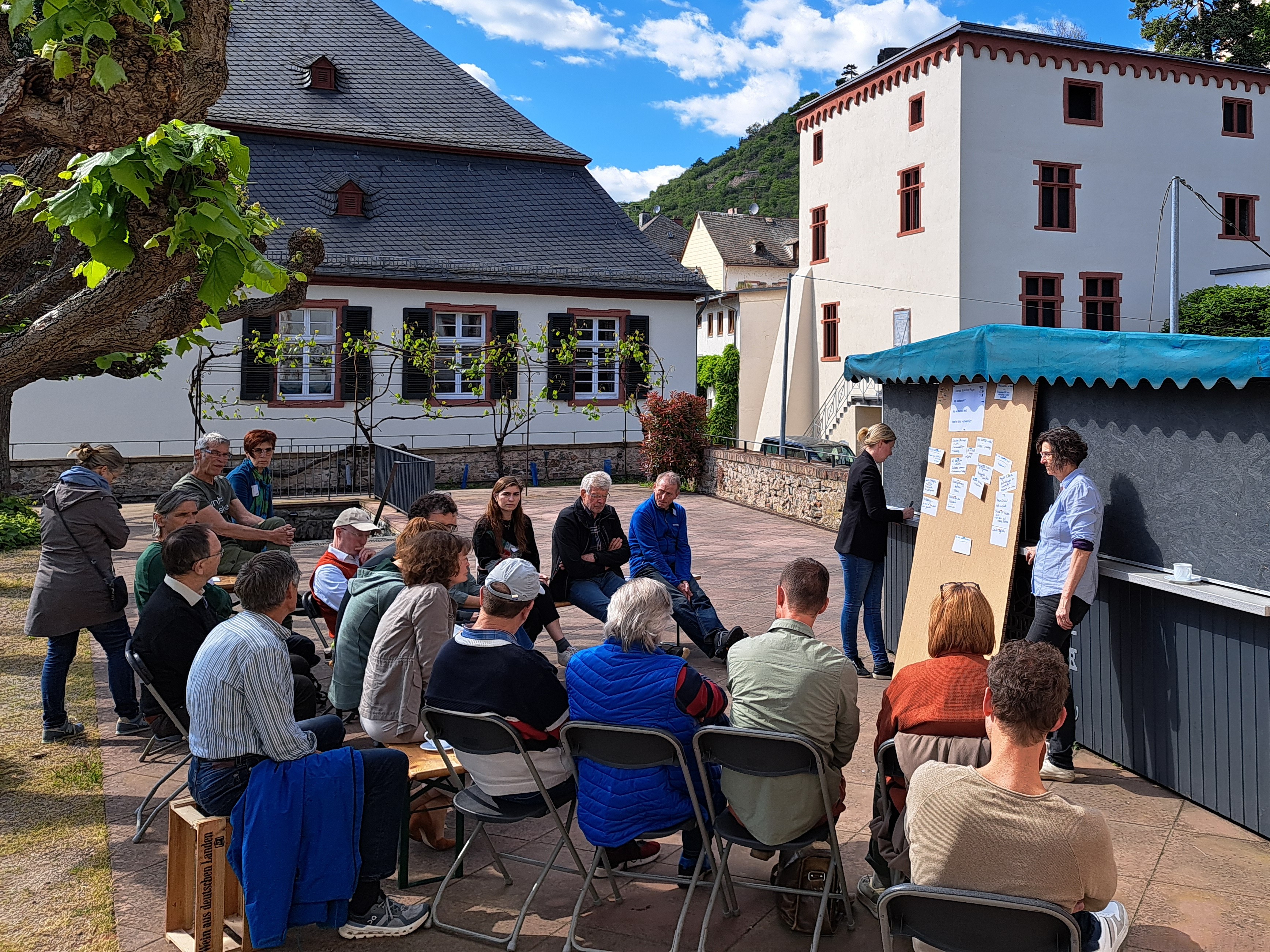
After a short coffee break, participants split off into smaller working groups to dive deeper into the topics of private gardens, public green spaces, and cultural landscapes. These lively discussions generated a wealth of valuable insights, which were then shared and further developed at the concluding plenary session. In particular, attendees highlighted the relevance of networking events like the BUGA-Dialog and expressed their optimism that the Germany’s Federal Horticulture Show (Bundesgartenschau) being hosted in the Middle Rhine Valley in 2029 could potentially play an important role in driving regional development in the area.