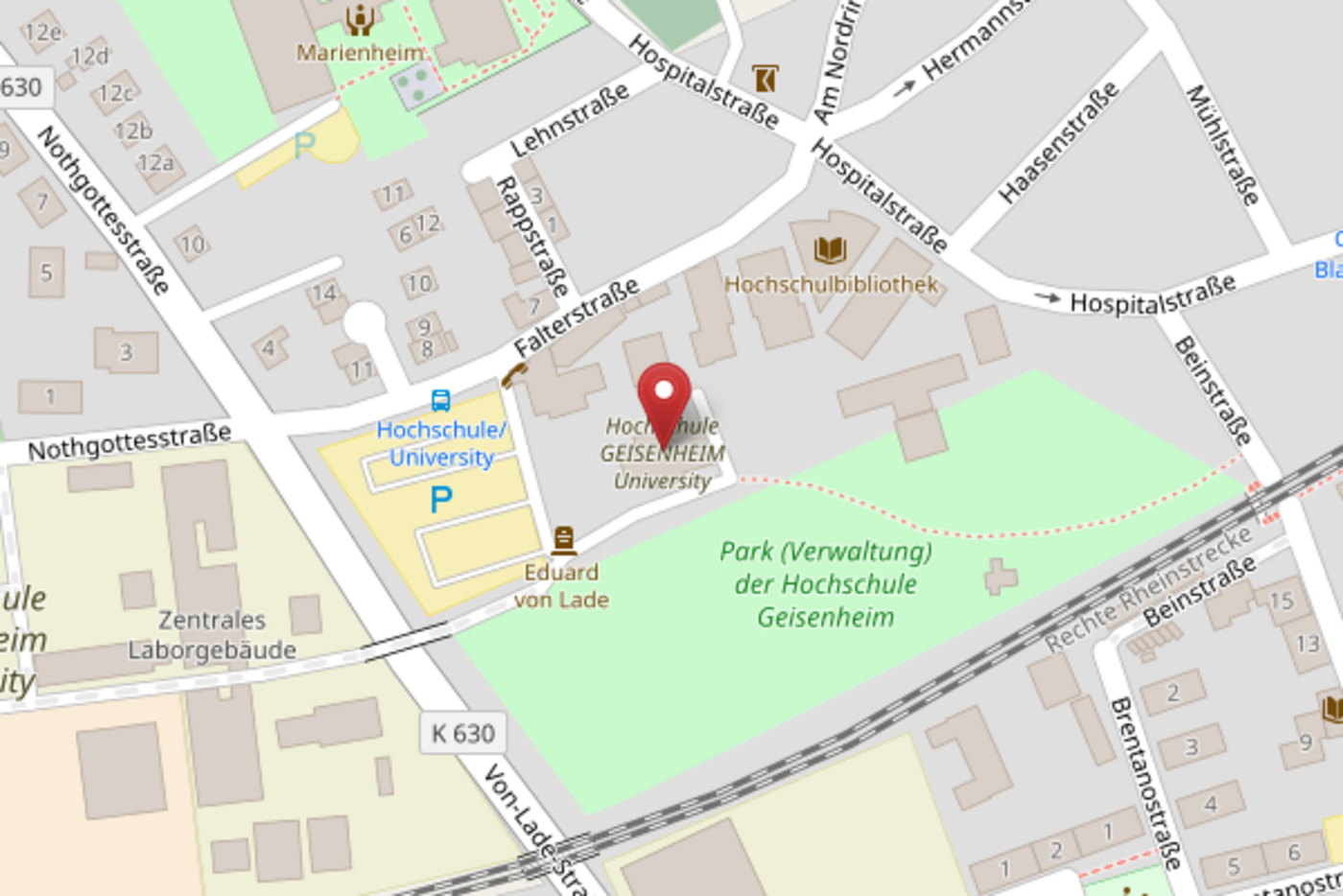

The goal of the event was to generate fresh impetus, share innovative approaches, and lay the foundations for concrete, cross-university cooperation. The event was moderated by Ronja Hallerbach, who guided participants through the day with a keen sense for dynamics and dialogue.
Inspiring Impulses
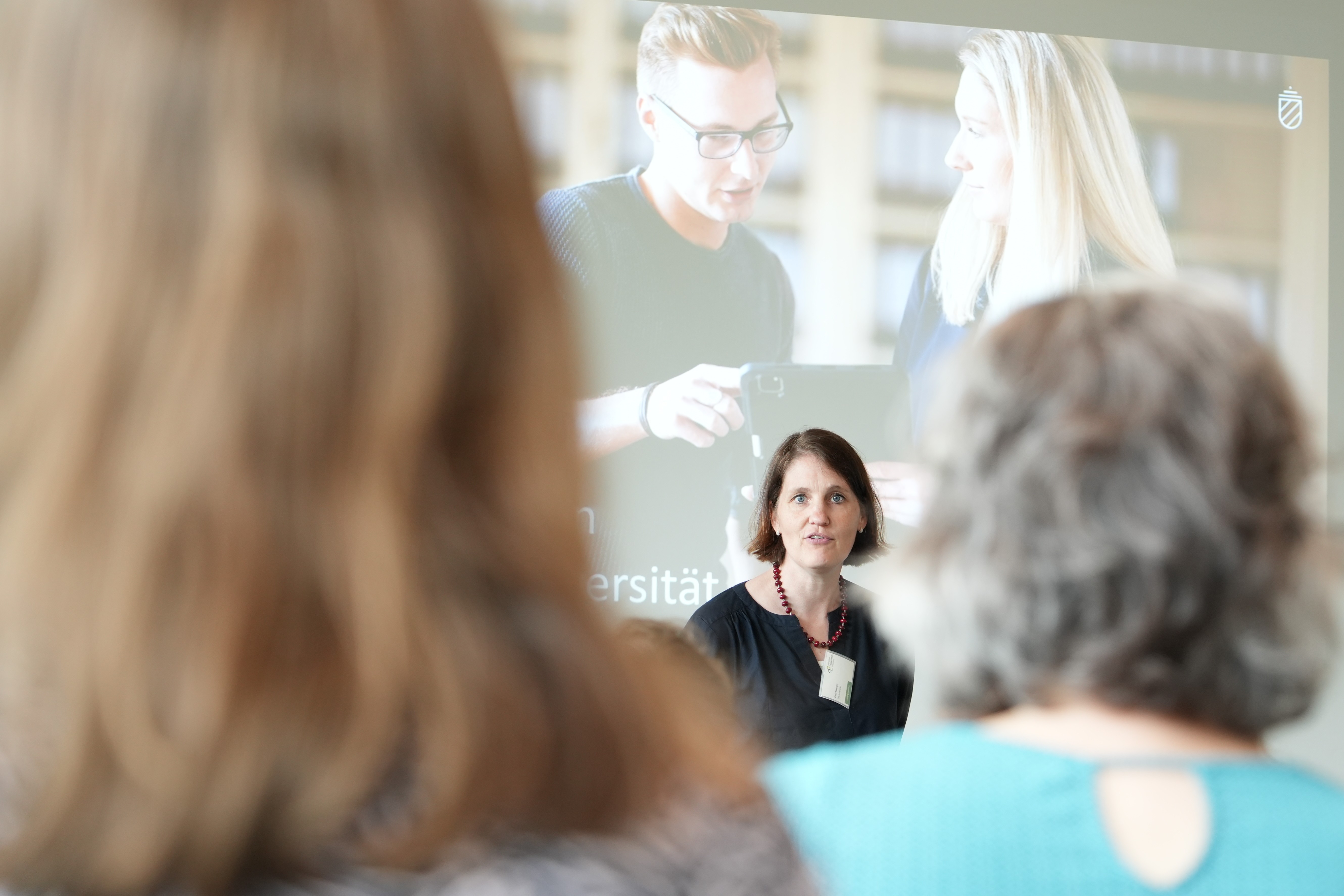
After a welcome address by Professor Annette Reineke (Hochschule Geisenheim University), Professor Dörte Frieten (TH Bingen), Professor Karin Kreutzer (EBS University), and Professor Reineke presented the key research focuses of their respective institutions. The morning session was dedicated to getting to know one another, sharing inspiring insights, and sparking creative impulses.
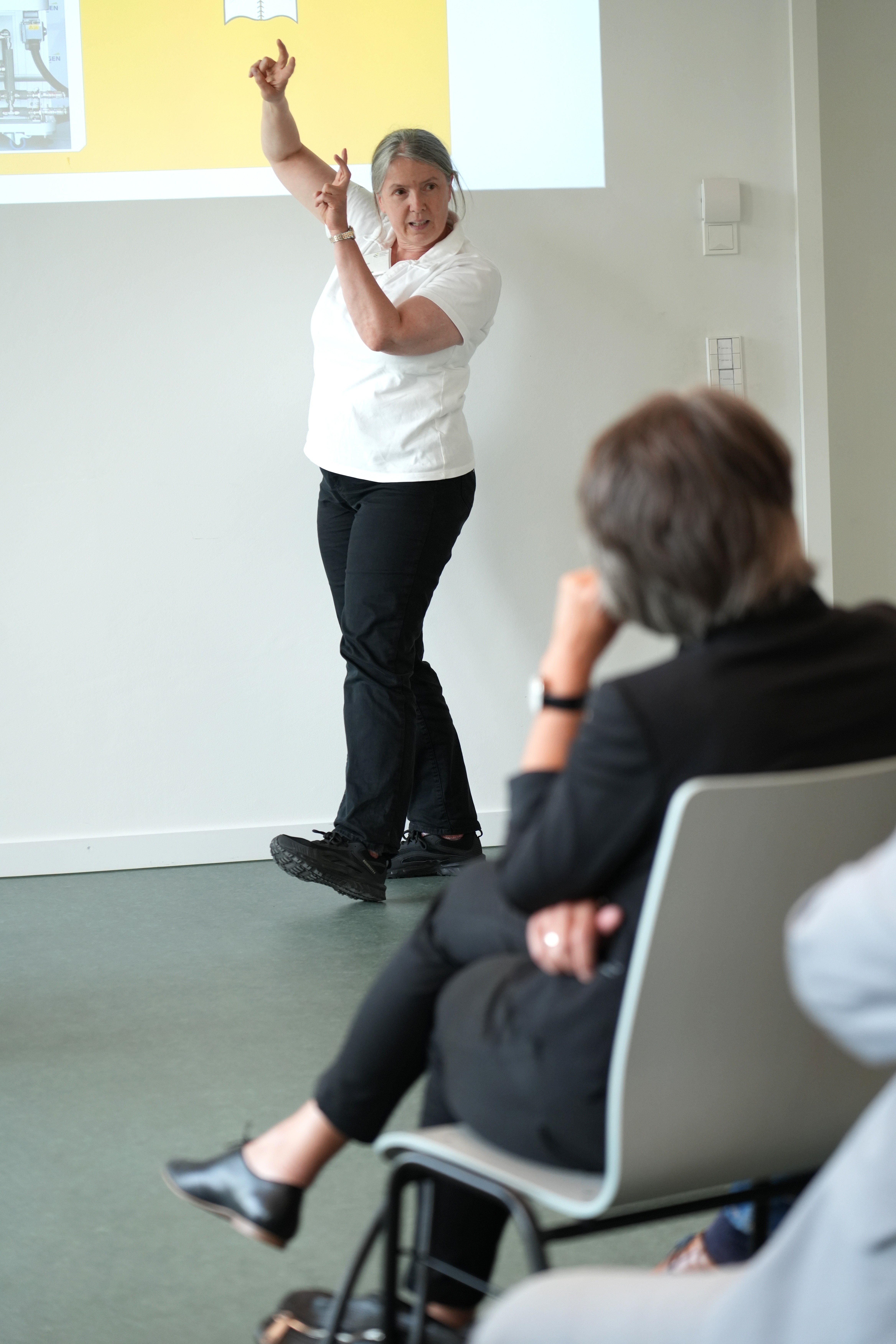
A particular highlight was the speed pitch format, where 12 researchers presented their sustainability-related projects – each in just three minutes. The result was a lively, accessible, and idea-rich session that showcased the breadth of expertise across the three universities:
- Katrin Kahlen (HGU) introduced ‘Virtual Plants’, an innovative modeling approach to optimize crop production.
- Elisabeth Busch (EBS) presented ‘Decoding the Feed’, a toolkit for the strategic analysis of social media.
- Jörn Schultheiß (HGU) demonstrated how cultural landscapes can be sustainably developed through presenting the activities of KULT.
- Laura Turrini (EBS) used quantitive research to show that social investment and enabling participation from surrounding communities can also benefit companies economically by increasing social acceptance and trust.
- Ingrid Porschewski (THB) introduced the ‘Binger Model Factory’ – a digitally networked pilot plant enabling SMEs and students to develop sustainable production processes and conduct practical research at an Industry 4.0 level.
- Eva Mosner (HGU) presented WiZiK, exploring the potential of wild and ornamental plants for insect-friendly, climate-resilient urban greening.
- Marianne Darbi (HGU) shared her work in the networks NeFo and BioFrankfurt – both dedicated to protecting biodiversity.
- Tarek Baraghith (EBS) discussed his research on ‘External succession in the skilled crafts sector’, addressing challenges arising from a lack of family-run business continuation.
- Nora Mehnen (HGU) presented AmBiTo, a modular toolkit designed to enhance biodiversity in viticulture.
- Christian von Wallbrunn (HGU) showcased Aroma-NoAlc, which uses microbial techniques to optimize the flavor of non-alcoholic wines.
- Dörte Frieten (THB) emphasized the ethical responsibility of animal care in her presentation ‘Caring for Farm Animals’, highlighting that every farm animal deserves good treatment.
- Eckhard Jedicke (HGU) concluded the session with the ‘Rheingau & Upper Middle Rhine Valley Reallabor’ as a co-creative platform at the Innovation Center for Agricultural System Transformation (IAT).
All of the presentations clearly demonstrated how deeply and passionately sustainable research is already embedded at the three universities – and how much untapped potential lies in closer collaboration.
From Inspiration to Implementation: Interactive Afternoon Sessions
Following lunch, participants received valuable insights into key support services, including research funding and the coordination activities of the nRNA.
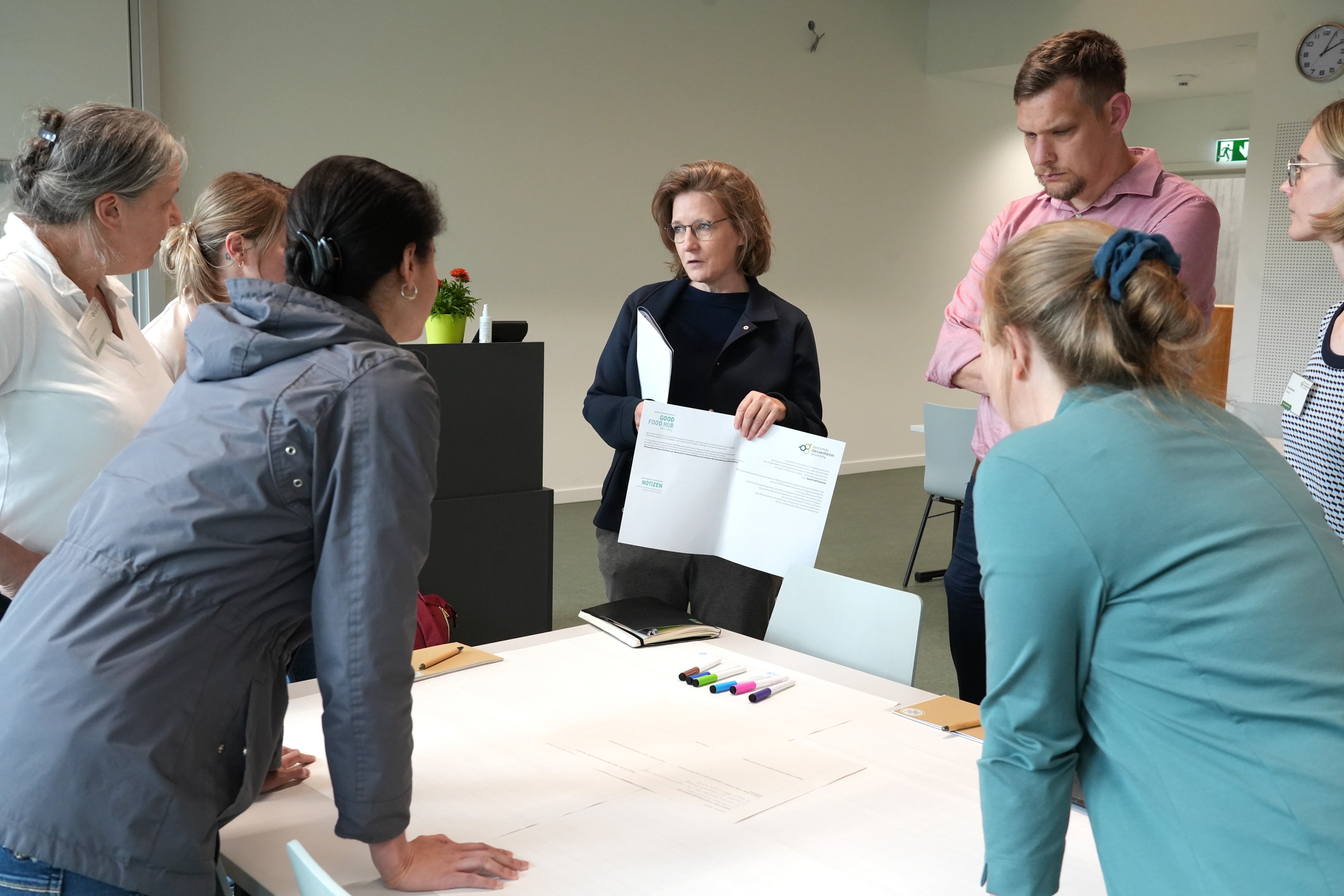
In the subsequent BarCamp session, participants collaboratively developed new project ideas, identified potential funding sources, and defined concrete next steps. They discussed existing expertise at each university and explored how collaboration could help bridge any gaps. The newly developed project ideas were then presented in concise pitches.
Conclusion: Sustainable Research Requires Shared Spaces
In the concluding discussion, the importance of creating spaces for exchange, inspiration, and interdisciplinary collaboration was once again strongly emphasized. Several participants expressed surprise at the promising starting points for joint research, especially since many had questioned whether the universities' distinct profiles would allow for meaningful cooperation at all.
This first research-oriented nRNA-TRILOG convincingly demonstrated how synergies can emerge between diverse institutions through mutual inspiration, open dialogue, and a shared vision for a sustainable future.
The nRNA-TRILOG is an event of the nachhaltigkeitsRhein-Nahe-Allianz,an alliance of Hochschule Geisenheim University, Bingen University of Applied Sciences and EBS University, aimed at fostering collaboration in the field of sustainability.
The nRNA-TRILOG events are full-day sessions designed to strengthen interdisciplinary exchange and initiate new collaborative projects. Each TRILOG is dedicated to a different sustainability theme aligned with the action areas of the Whole Institution Approach, including governance, operations, teaching, research, and knowledge transfer. Beyond inter-university collaboration, the nRNA also aims to enhance regional networking and raise public awareness of sustainability in cooperation with stakeholders from politics, business, and society.