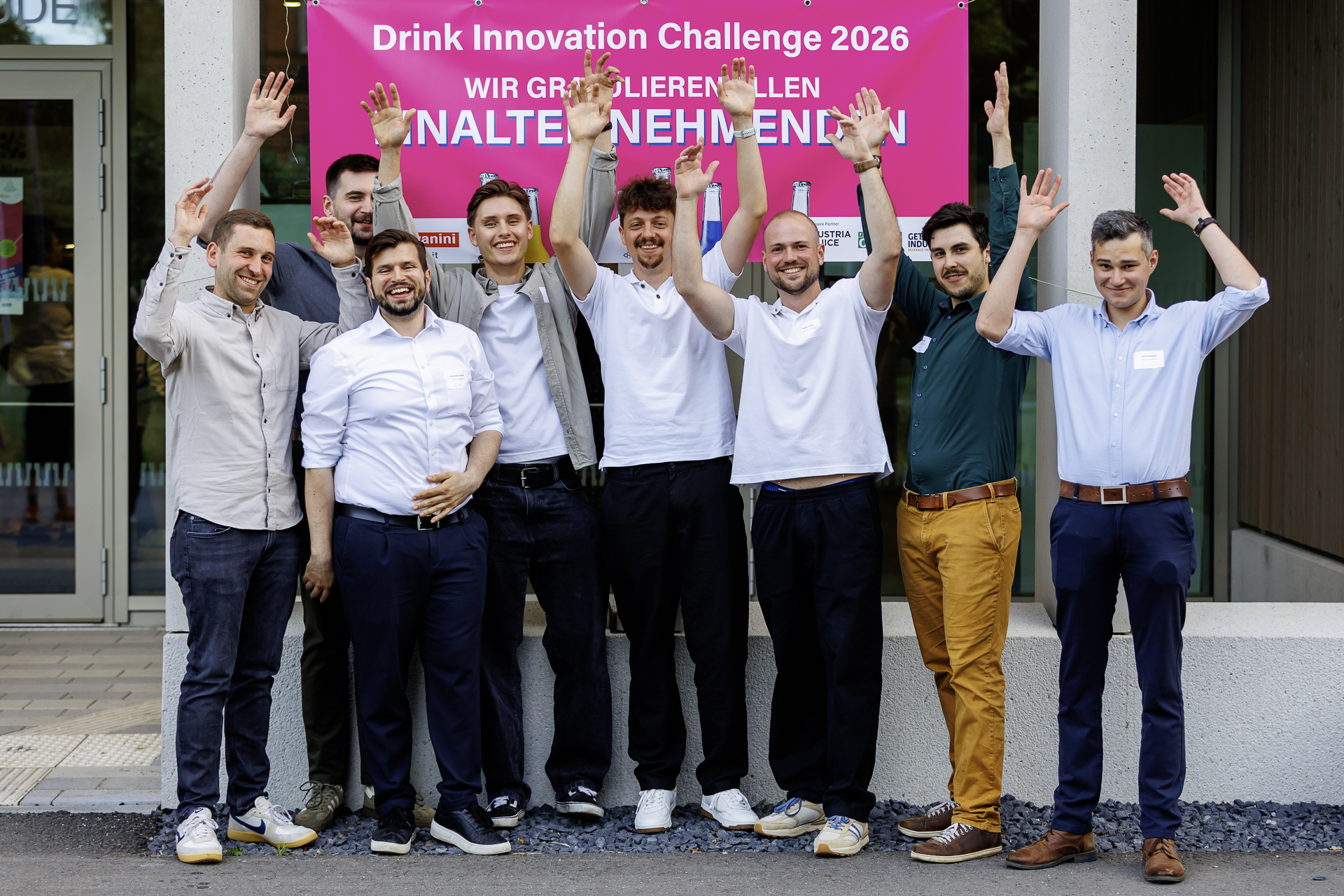


For the fifth time, the Gründungsfabrik Rheingau, the joint start-up incubator of Hochschule Geisenheim University and EBS University, called for innovative ideas for visionary beverages. In total, 20 concepts were submitted from across Germany – with five making it to the final round where they competed for cash prizes totaling EUR 4,500 and the chance to produce a prototype at Hochschule Geisenheim University’s Beverage Technology Center.
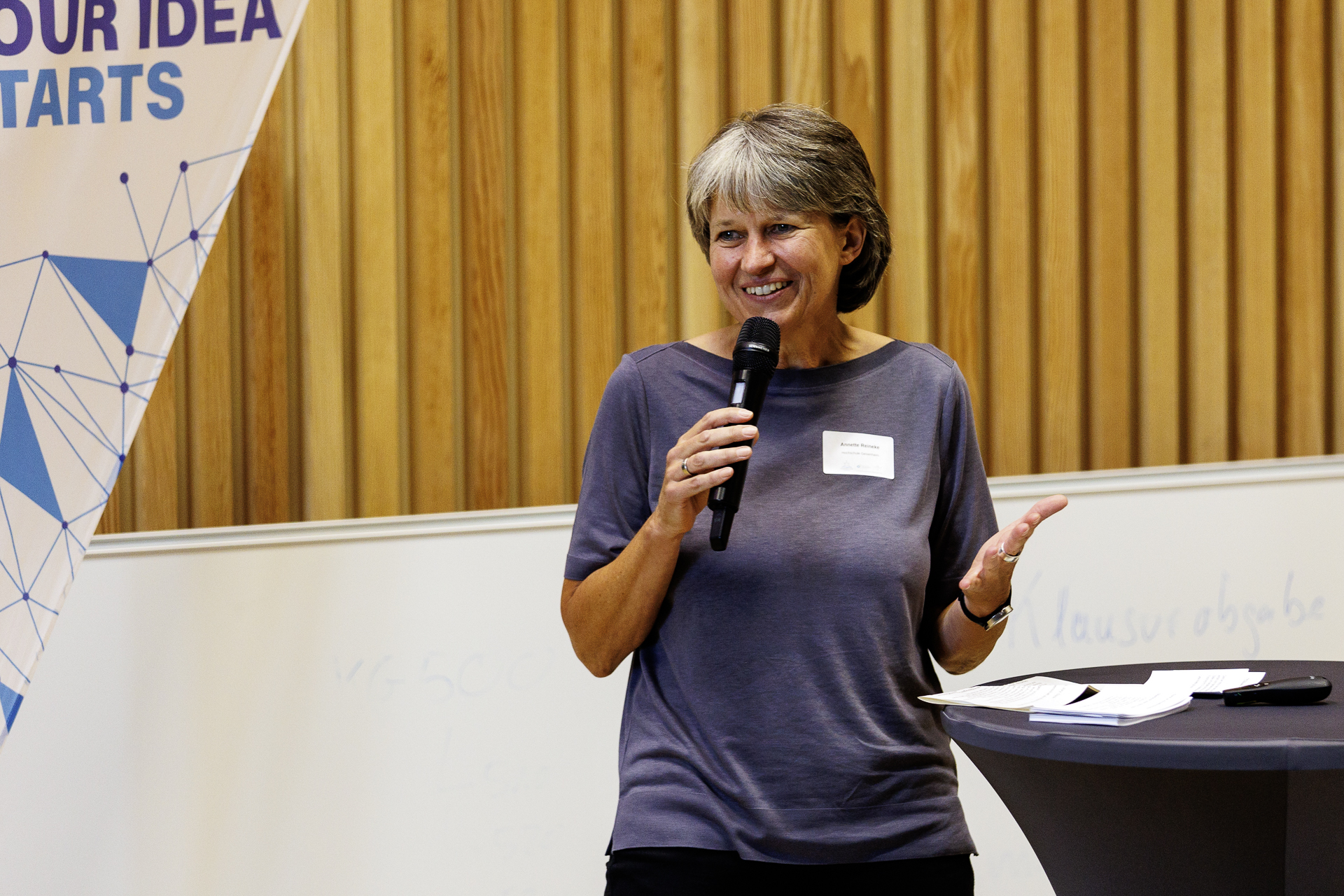
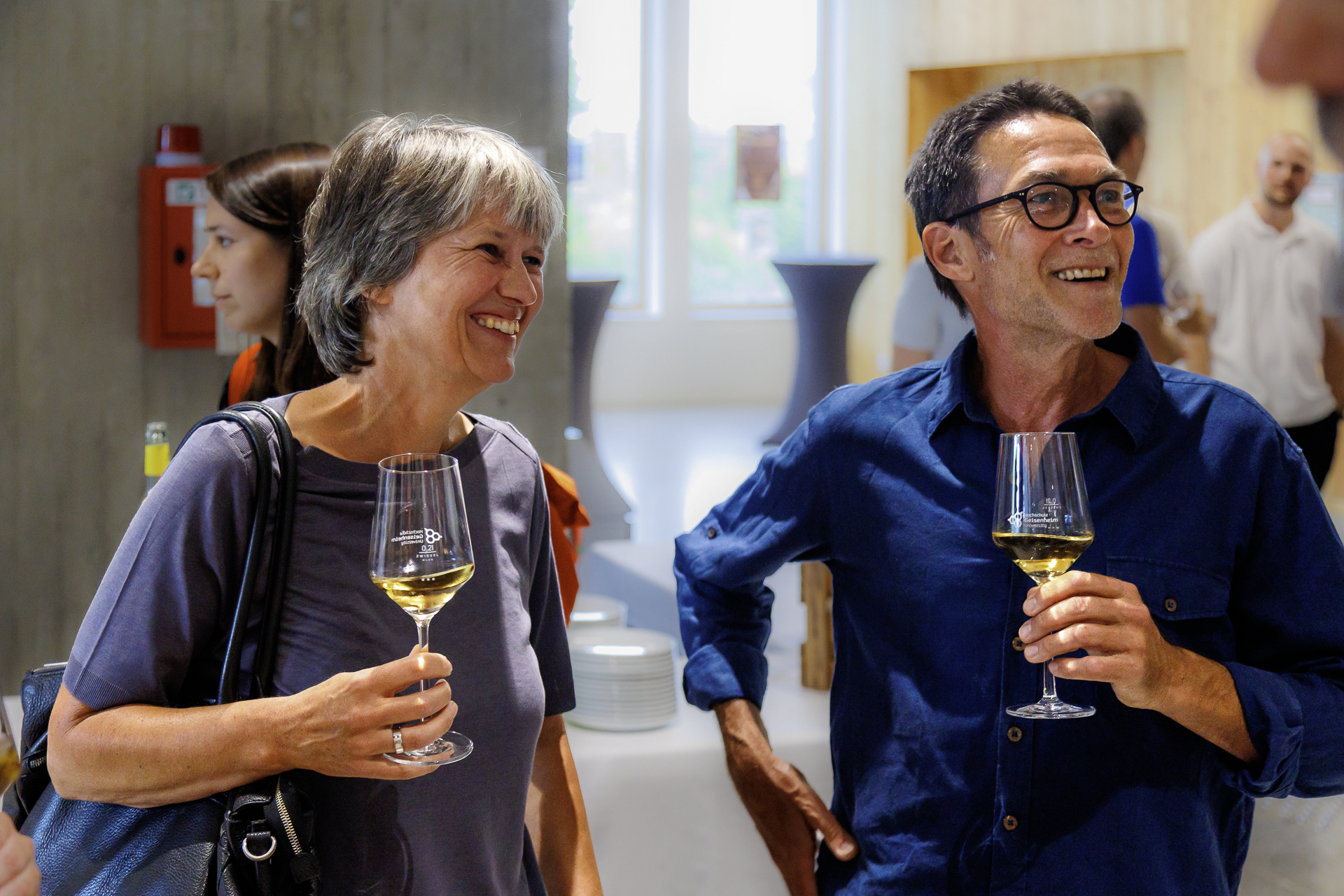
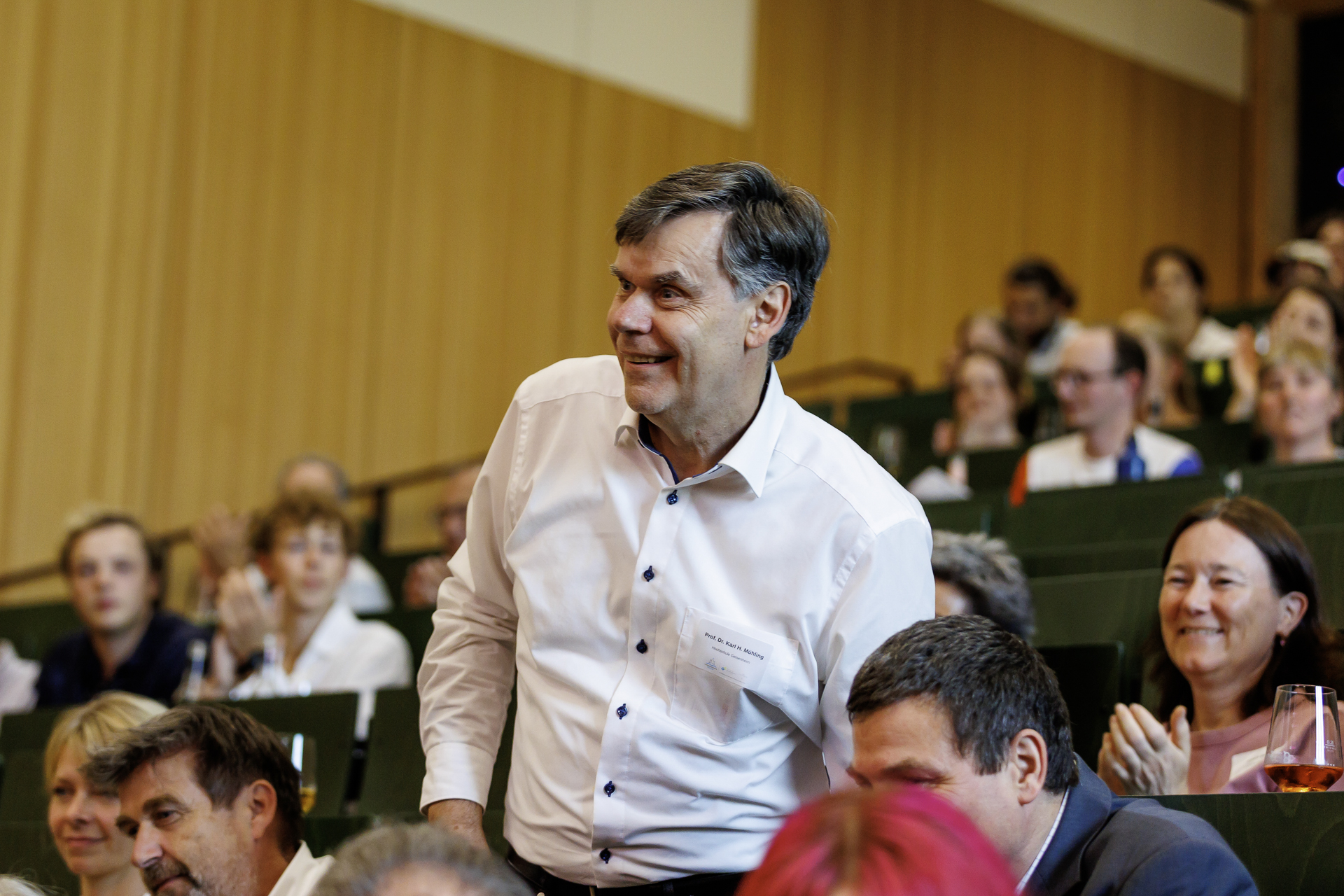
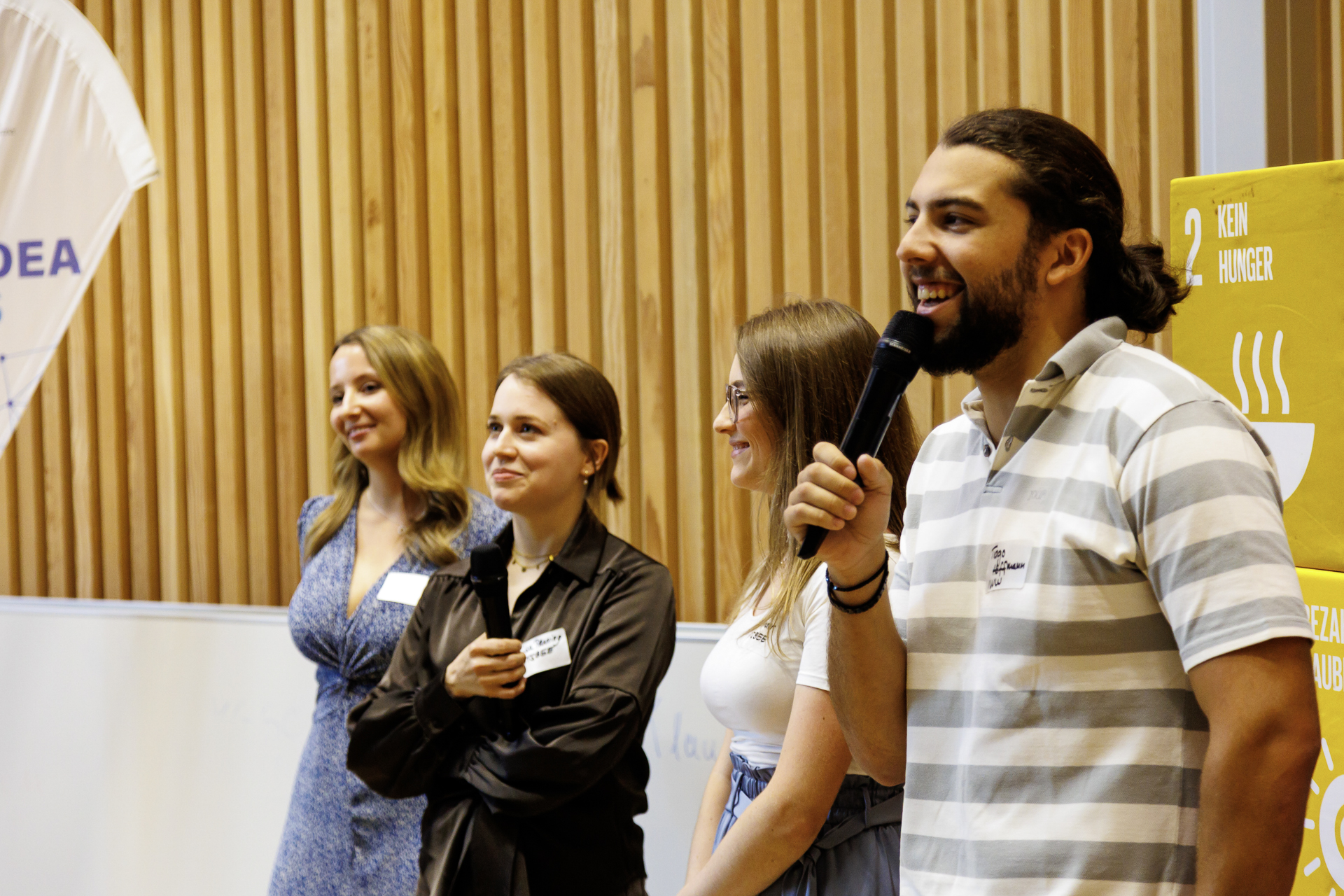
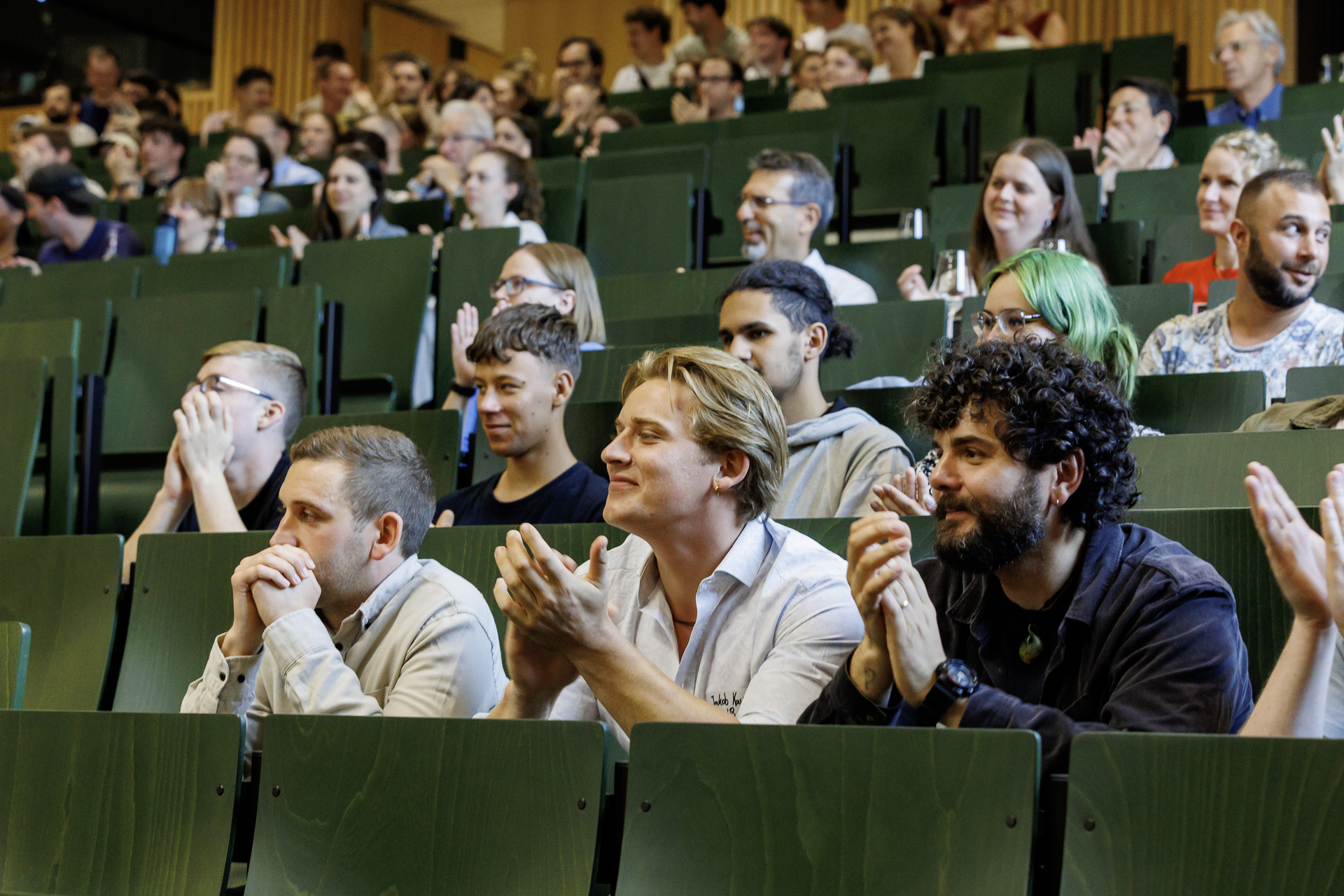
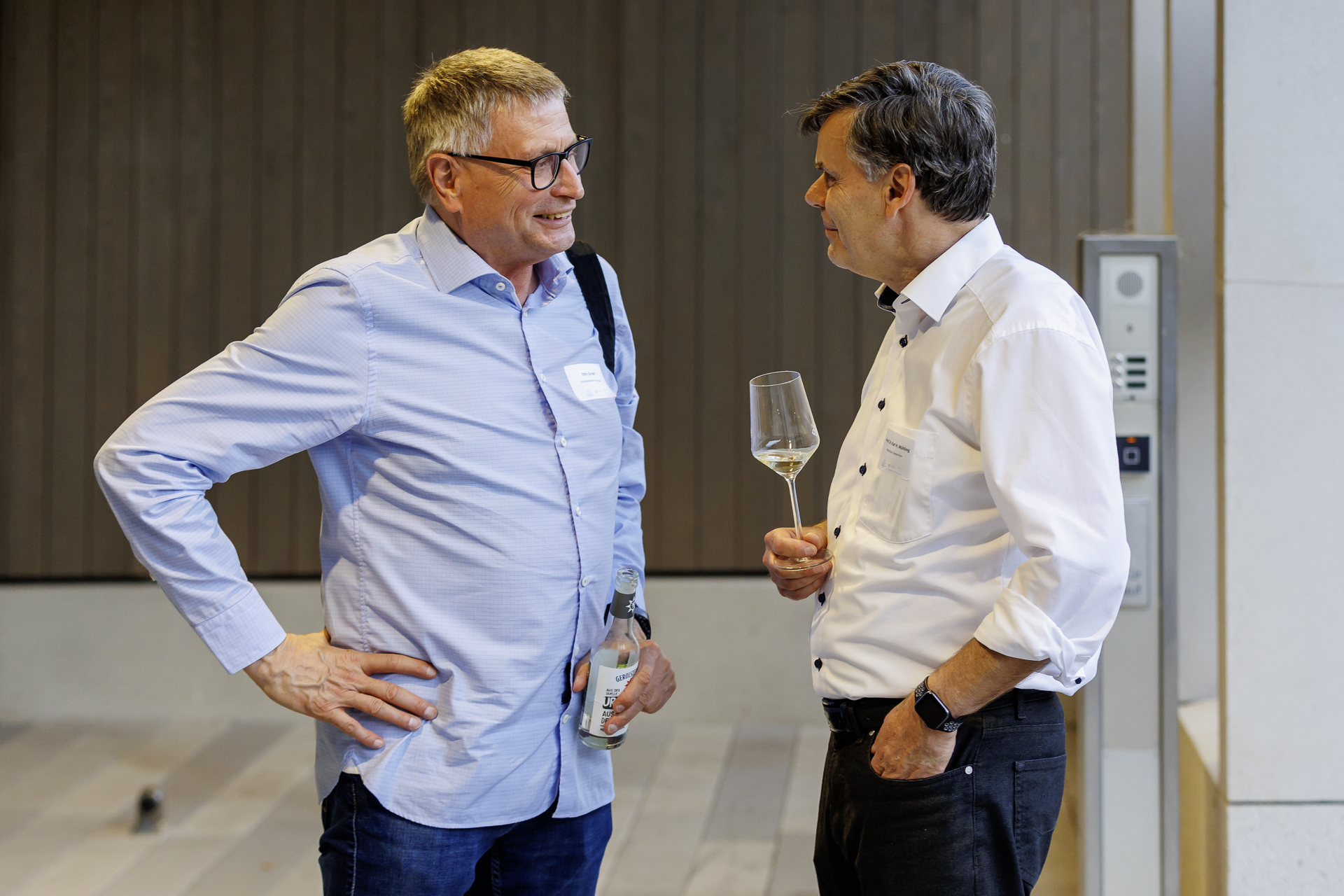
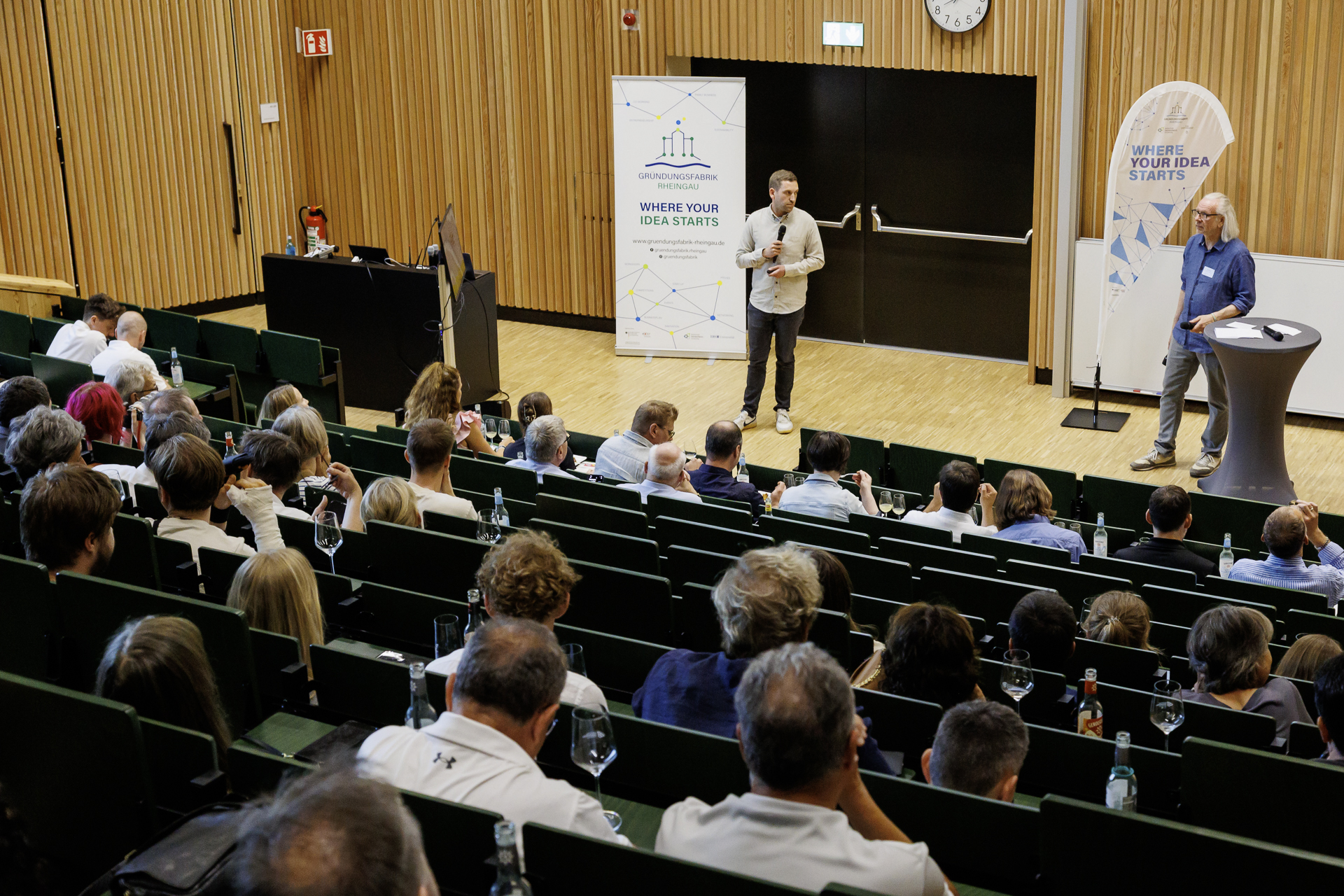
Around 130 guests gathered in Hochschule Geisenheim University's large lecture hall alongside a ten-member jury made up of representatives from industry, media, and academia to see the finalists’ ideas up close. As a little “warm-up session”, host and founders’ coach Dirk Klinner invited the guests to a panel discussion. Lisa Pfenning, winner of the 2025 DIC and her co-founder Julia Binder, as well as Tiago Hofmann who won second place last year, and Marie Kaiser from “Hessen Ideen” start-up support service shared exciting insights on what ideas contests are all about: inspiring founders to start their own company. Both panel teams have their eyes set on their own businesses. While Tiago Hofmann has already taken the plunge with “DeVerjus”, Lisa Pfenning und Julia Binder will begin the “Hessen Ideen” scholarship program in July to take their first major steps with “Gutsbee”.
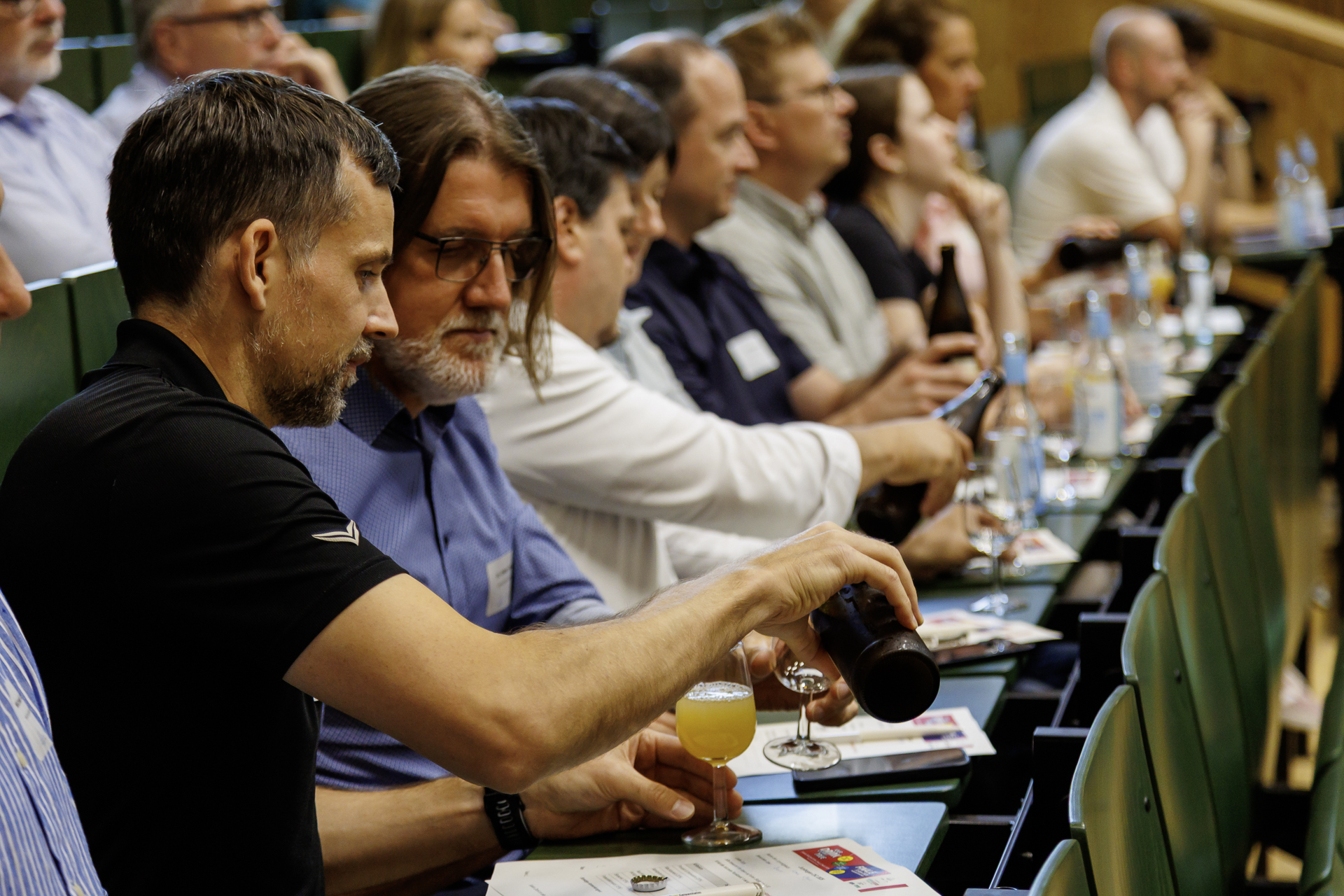
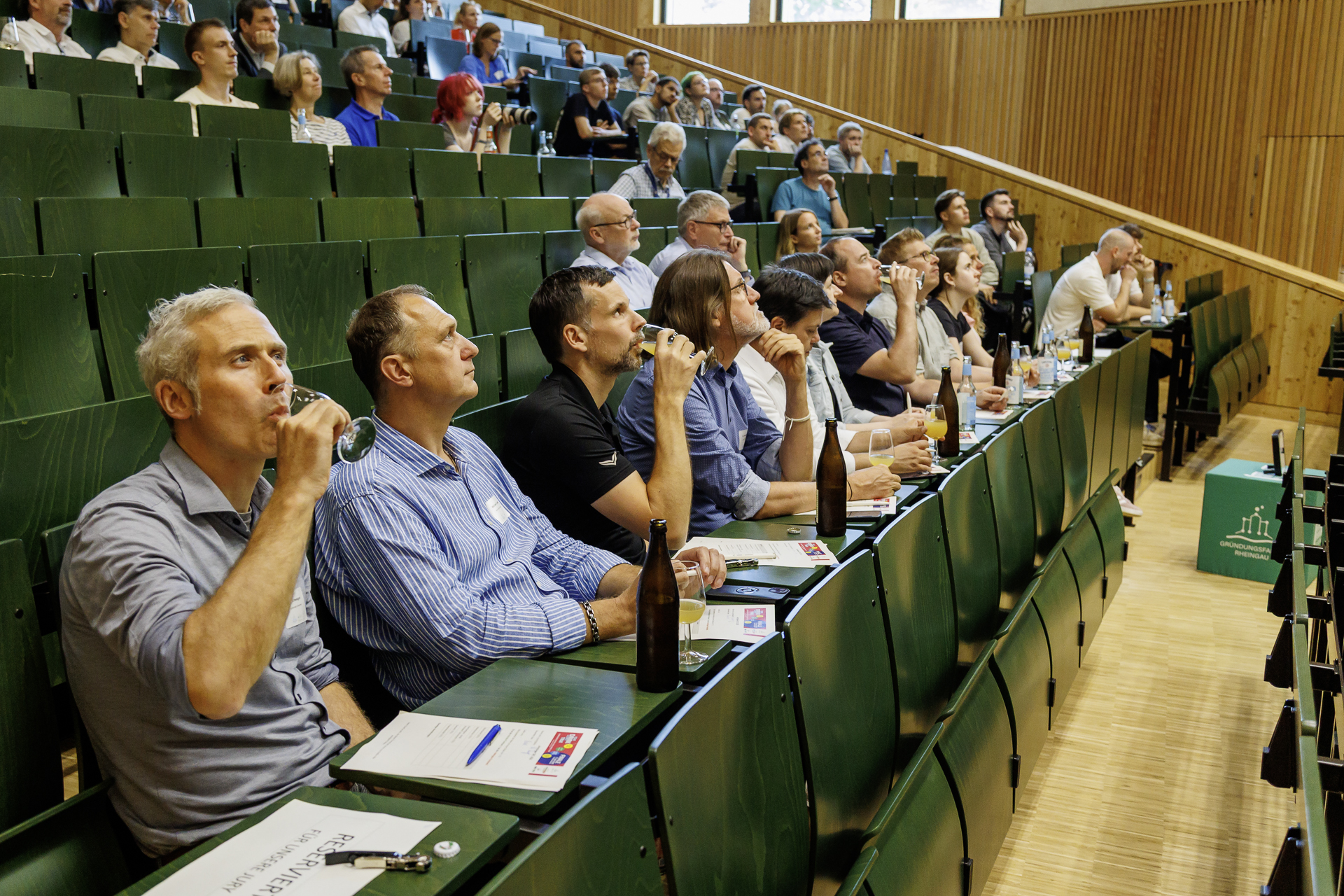
After this inspiring start, the jury and audience were eager to see the new ideas close up. Alongside the jury made up of representatives from industry, media and academia, the audience was also invited to evaluate each creation based on various criteria. In addition to the concept itself, factors such as sustainability, market potential, and level of innovation were taken into account. The jury also had the chance to taste each beverage to assess their sensory appeal. Each team had five minutes to pitch their idea, followed by a three-minute Q & A session, during which the jury and the audience were able to grill the presenters on the product as well as its production, marketing, and other details of the idea.
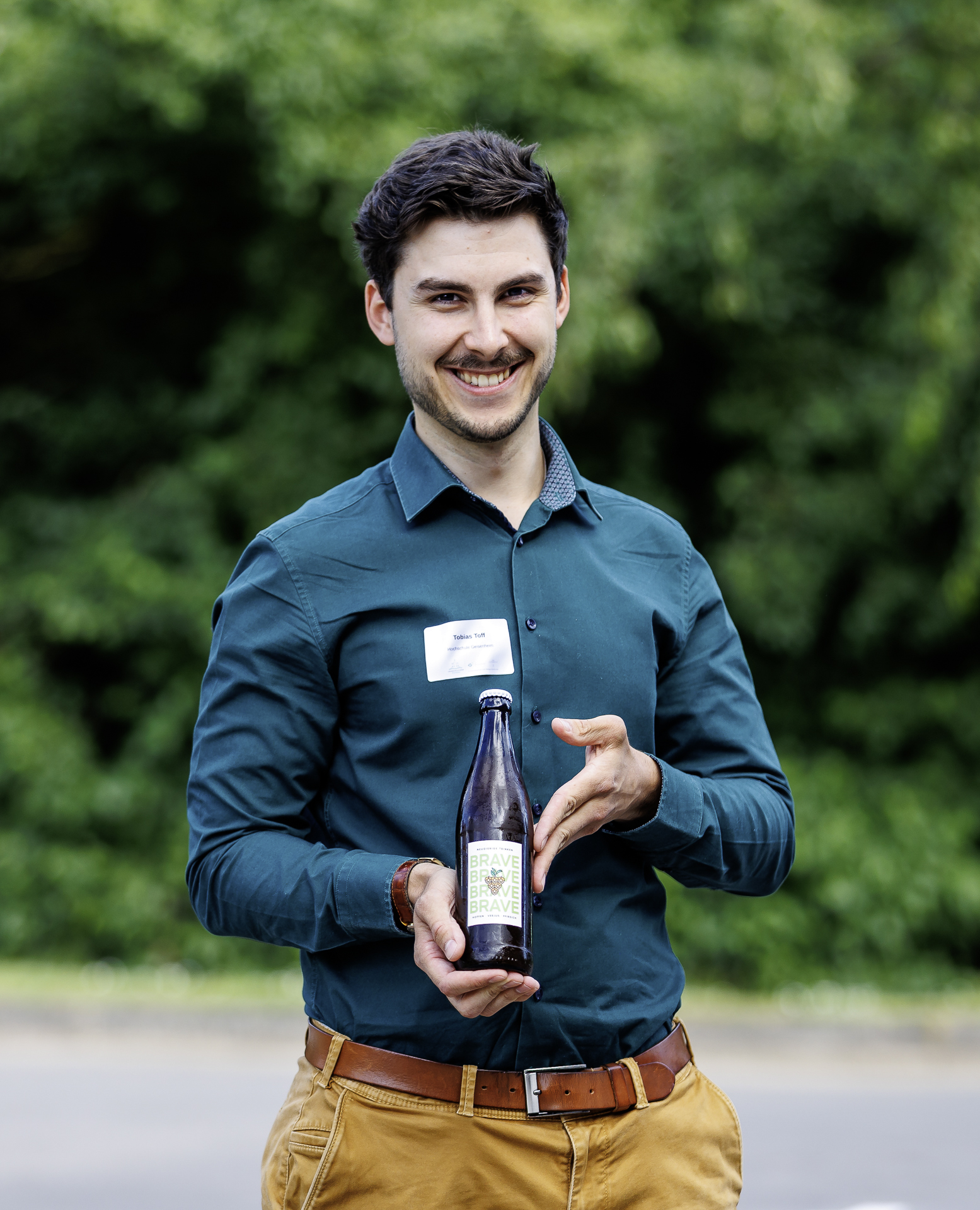
As the first presenter, Tobias Toff, a Beverage Technology master’s student, took the stage to present his visionary drink called “Brave”. The name symbolizes the courage to combine unusual ingredients into a premium non-alcoholic beverage for the hospitality industry. His drink is based on Verjus, a juice from unripe grapes, which provides a fresh acidity that is balanced by the sweetness of peaches. To create greater complexity, Toff added hops to his formula, which also results in a subtle hint of bitterness.
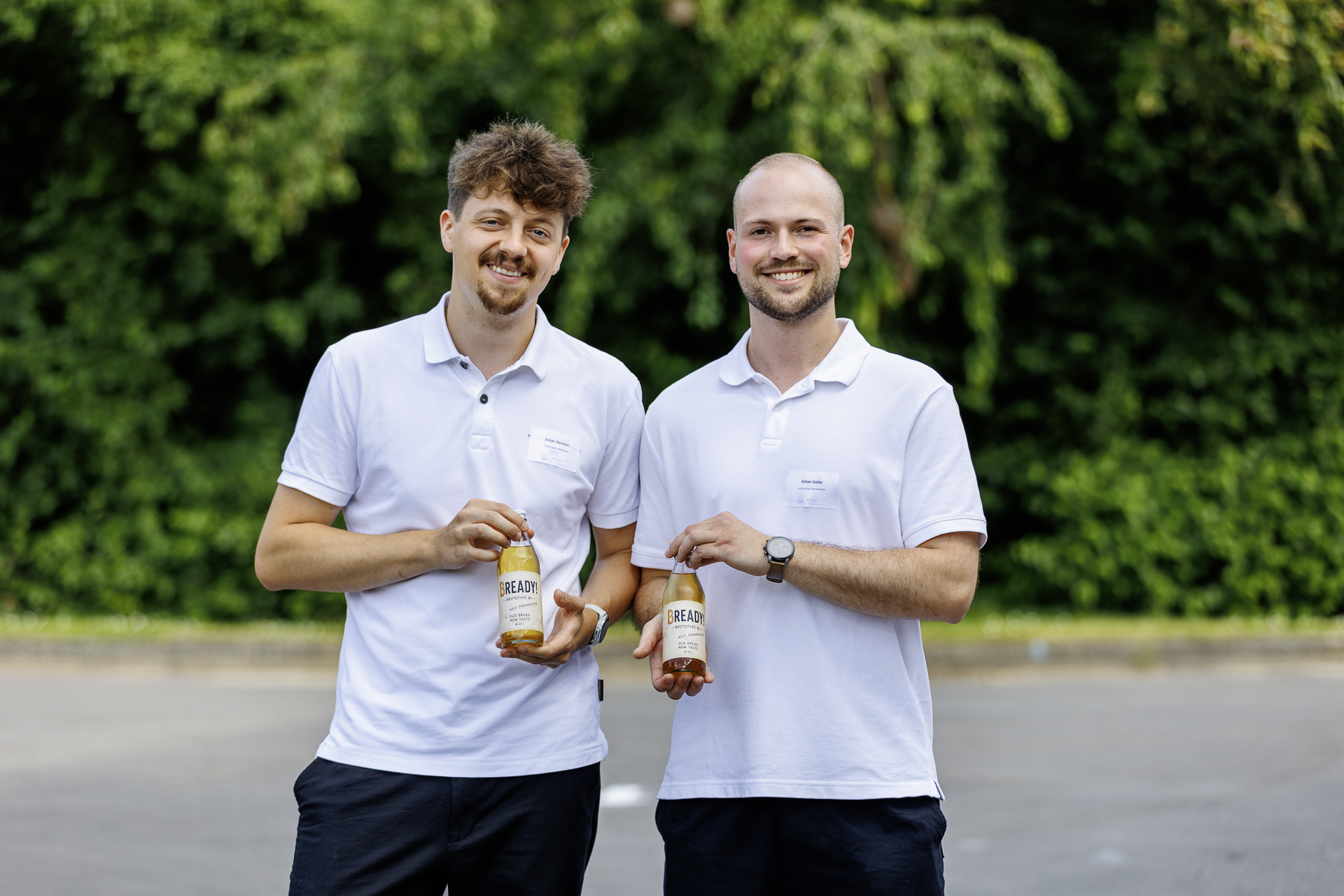
Julian Reuther, Food Chemistry student at Hohenheim University, and Kilian Götte, Beverage Technology student at Hochschule Geisenheim University, pursued a different approach with their concept. The two students met in Baiersbronn while training together to become chefs. That’s where their love of food and their aversion to wasting it comes from. This was the cornerstone of their idea for “Bready” – a protein-rich lemonade based on bread scraps that are fermented with koji mold.
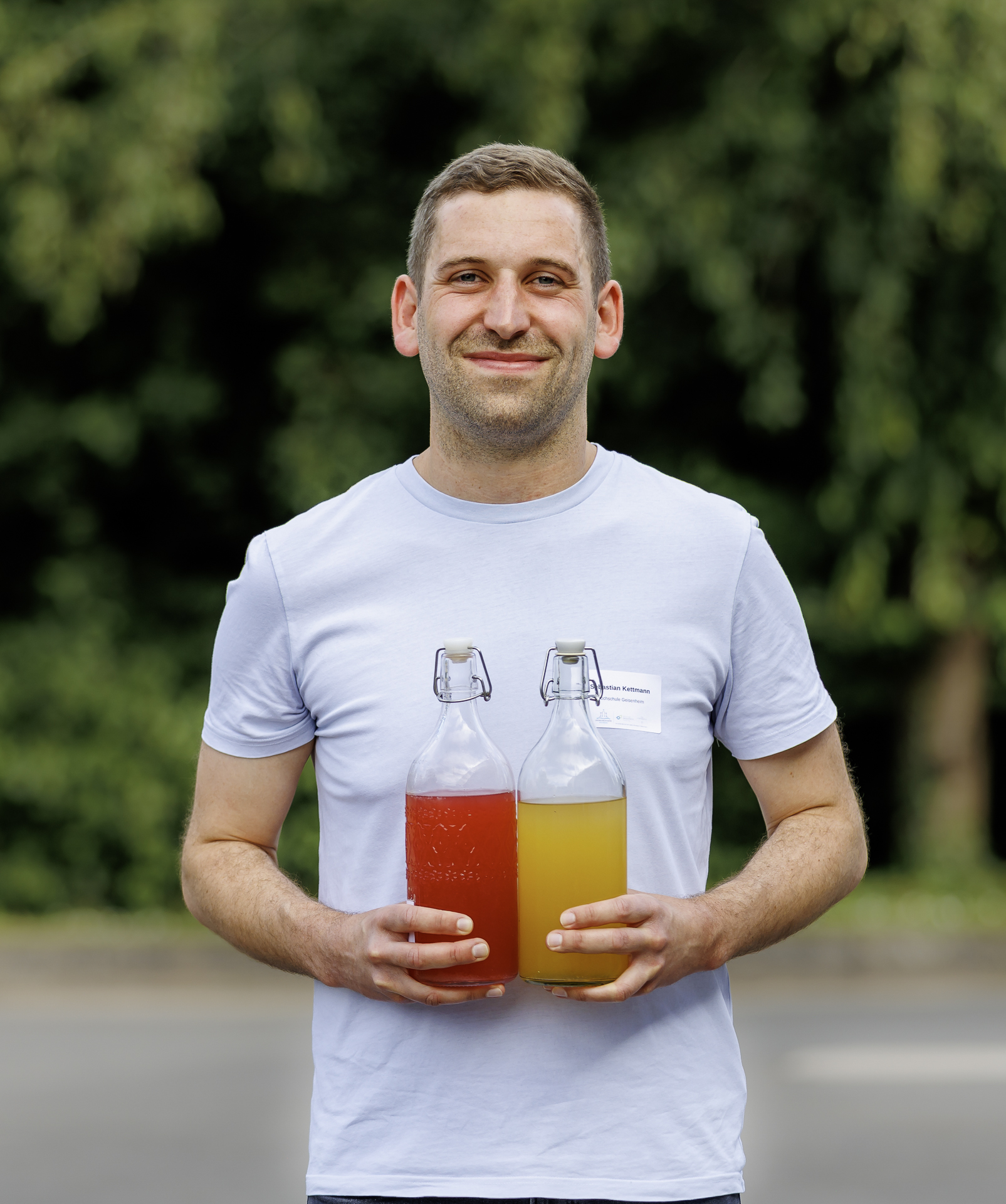
Next up was Beverage Technology student Sebastian Kettmann who presented his concept for “KeFizz”. The lemonade, which comes in different flavors, is also fermented, but this time with water kefir. The twist: A zero-waste approach achieved by reusing dried fruit from the production of a fruit spread and water kefir from the production of a meat substitute. The jury members had the chance to taste both products.
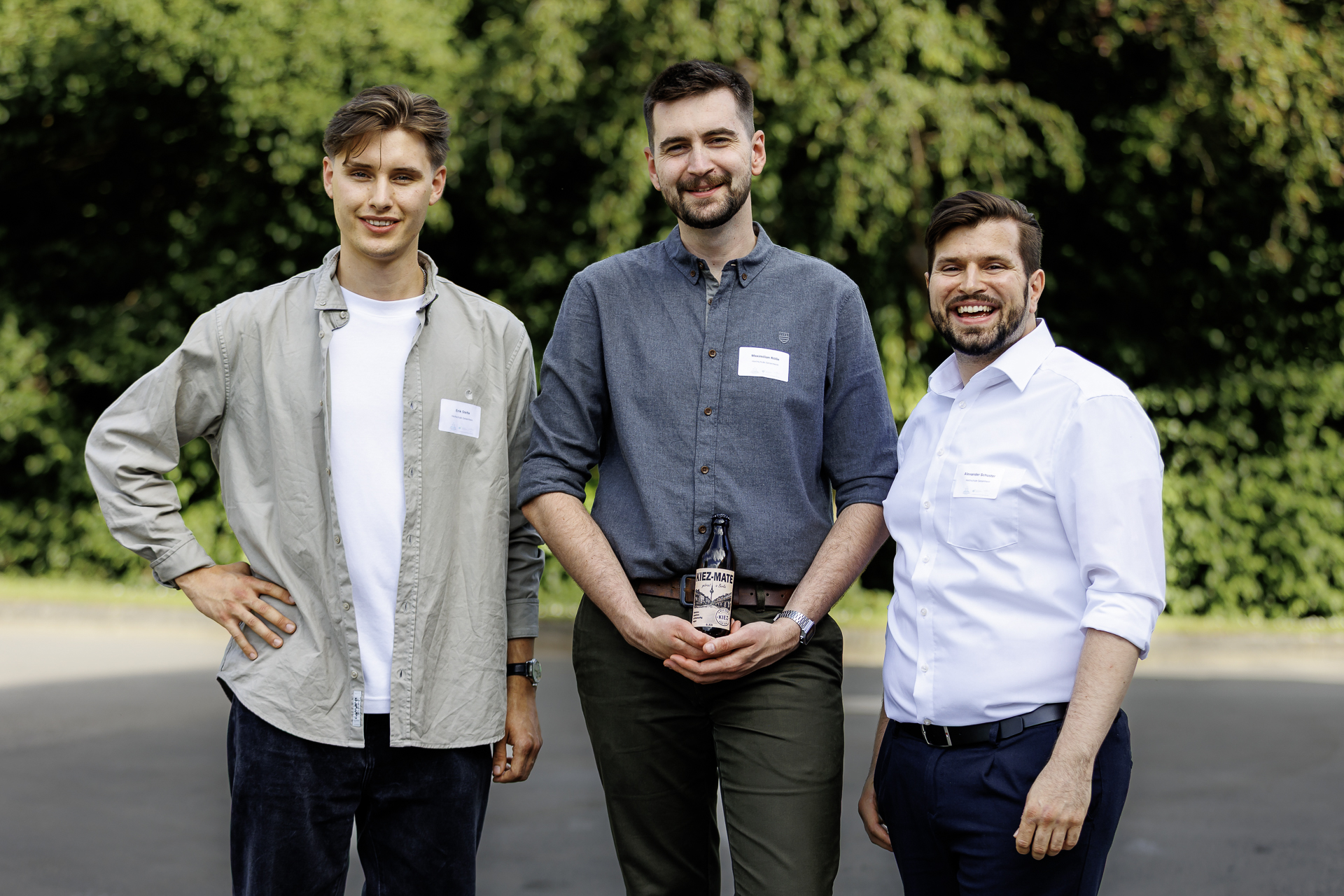
The fourth product to be presented was Kiez Mate, created by the Geisenheim students Erik Stelte, Alexander Schuster and Maximilian Rölle. In addition to offering a delicious beverage made from mate tea, rosemary, and lime, the students also aimed to win over customers by producing it at regional breweries affected by declining sales. The idea is to utilize existing production capacity through a kind of franchise system while simultaneously marketing the product in the region with a healthy dose of local pride.
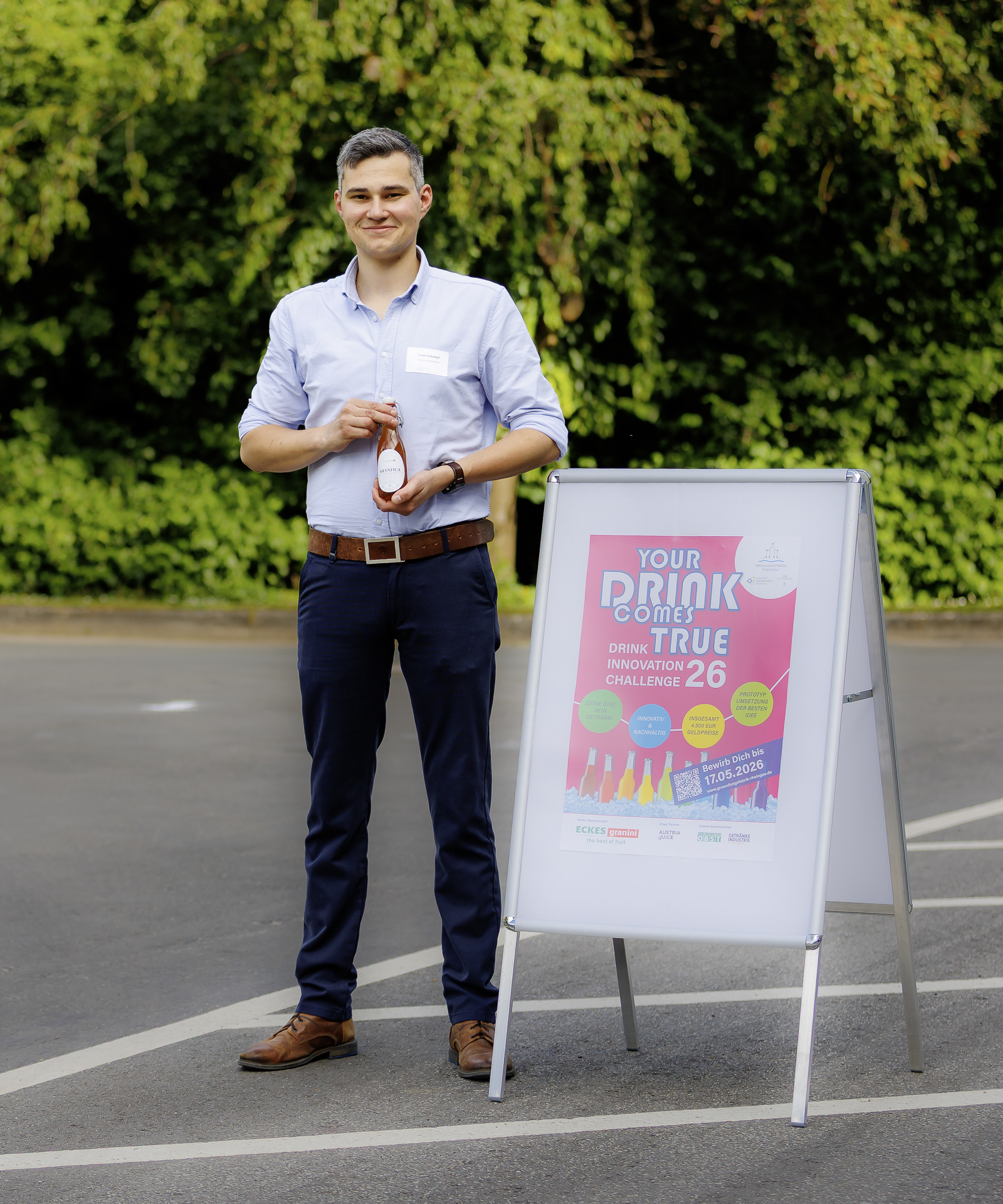
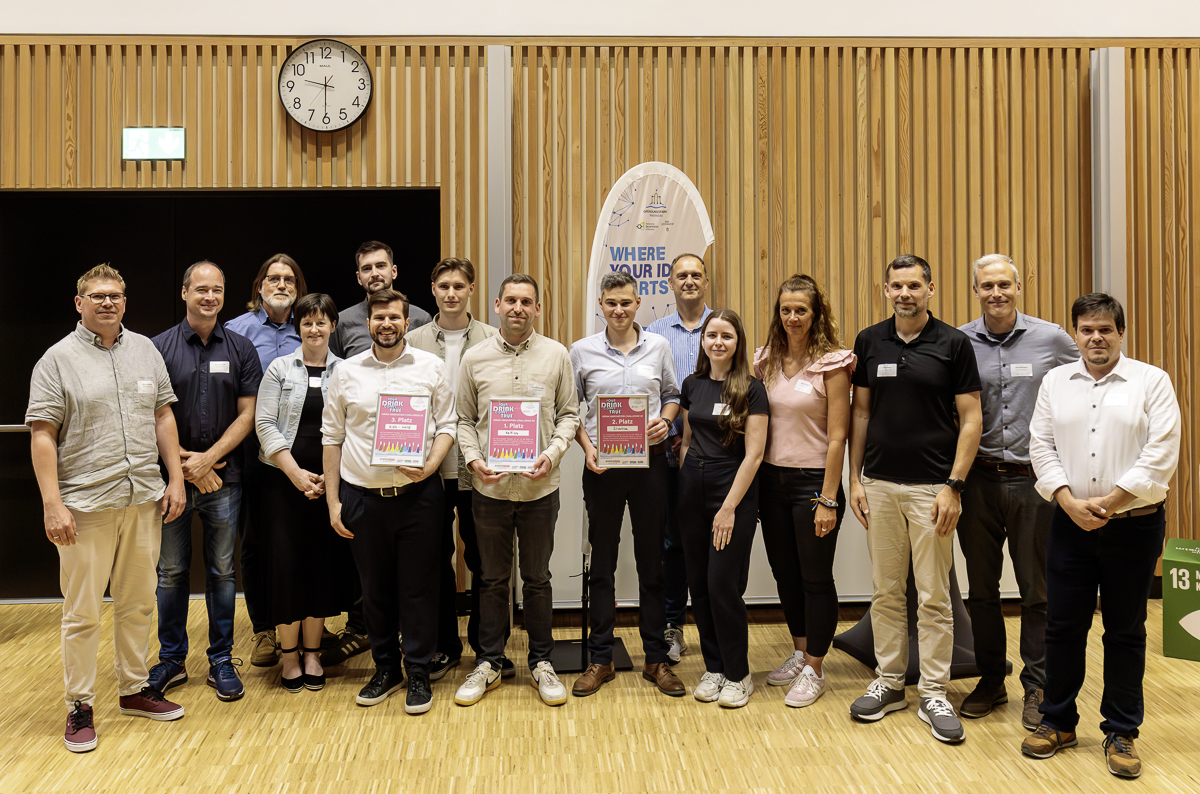
In the final pitch, Louis Schempf presented his love for nature with his drink called “Silvatica“ – a tonic made of spruce needles and rose hips. In addition to using natural, healthy, and certified organic ingredients, he wanted to impress the jury with short supply chains and the use of regional raw materials. In the end, the strategy resonated with a significant portion of the jury and the audience, earning him second place ahead of the trio from Kiez Mate, who won third place. The prizes were presented by Sabine Reggel and Cansel Kiyak from the publishing house W. Sachon as well as Christian Friedel und Marco Brennich from Confructa Medien.
At the end of the competition, one participant clearly stood out. Sebastian Kettmann impressed both jury and audience by presenting what was perhaps the most well-balanced package of product concept, market relevance, sustainable thinking and a compelling pitch according to the jury member Dr. Volker Herdegen from Eckes-Granini, who presented Kettmann with a certificate for first place as a symbol of the EUR 2,000 cash prize and the prototype production at Hochschule Geisenheim University’s Beverage Technology Center.
More information:
Dirk Klinner
Gründungsfabrik Rheingau
Hochschule Geisenheim – Von-Lade-Straße 1 – 65366 Geisenheim
Email: dirk.klinner(at)hs-gm.de
Phone: 0170.9874972