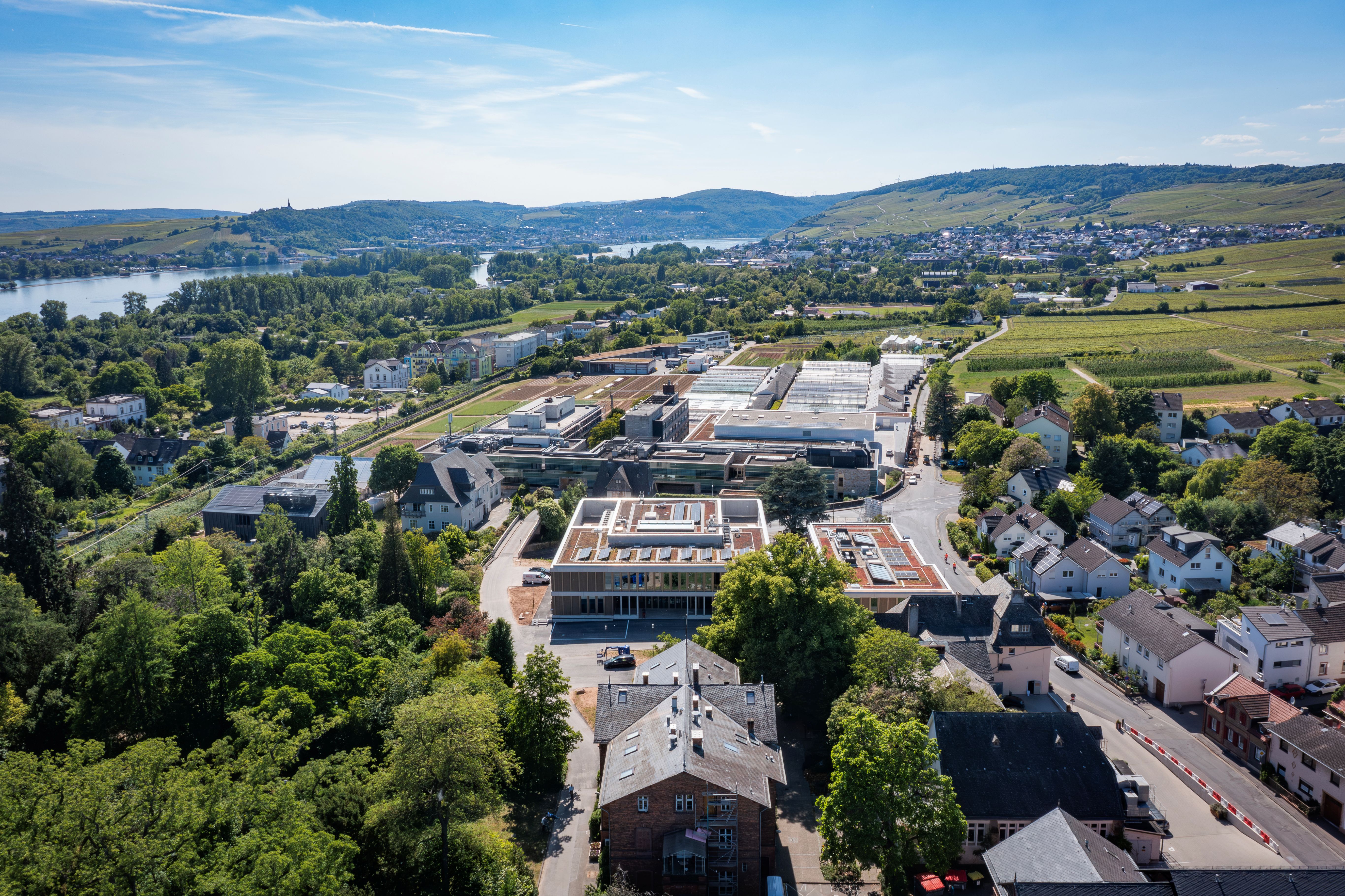
From September 22-25, 2026, Hochschule Geisenheim University will host its first theme week on sustainable food systems – the Agri Food Week. A special focus is on geographical identity and cultural heritage. In between vineyards and fields, the theme week aims to transform the university into a meeting place for prospective students, the university community, researchers, industry professionals, and anyone interested in the future of food, agriculture, and landscape development. The program offers a wide range of activities and presentations and invites everyone to join in. The Agri Food Week is organized as part of Hochschule Geisenheim University’s involvement in the EU-GIFT Alliance.
- The Agri Food Week kicks off on September 22, 2026 at 4:00 pm with a Kinderuni session on fruit juice production (more) and a new introductory program for interested adults on: What can be made from malt, hops, and yeast? – an introduction to brewing, followed by a tasting (more).
- On September 23, the next edition of our newly created lecture format for school students (grades 10 -13) will take place at 1:45 pm, discussing the question “One apple a day keeps the doctor away – What’s inside our favorite fruit?” (more).
- Two conferences will also be held during the Agri-Food Week: From September 22 -24, the EUVRIN Fertilization & Irrigation Group – an organization of European research institutes specialized in vegetable production – will come together for their next meeting (more). On September 24-25, the Rhine Main Conference on Municipal Tree Care will take place (more).
- The European Researchers‘ Night will wrap up the Agri Food Week, inviting the public to explore the future of food, landscape and landscape development close up.
About the EU-GIFT Alliance
Hochschule Geisenheim University is part of the EU GIFT Alliance, a consortium of seven higher education institutions from Spain, Italy, France, Portugal, Hungary, Romania, and Germany, and more than 30 partner organizations. EU-GIFT stands for "European University for Geographical Identity as a driver for Food Systems Transition to Sustainability. The alliance fosters European cooperation in teaching, research, and innovation, with a particular focus on sustainable food and beverage systems and regional value chains. Key areas include viticulture, agriculture, food production, and sustainability. By participating in the alliance, the university is strengthening its international profile and establishing itself as a European university.
More details: EU-GIFT