
Research at Hochschule Geisenheim University

Creating Strategies for a Sustainable and Livable Future

Climate Change, Biodiversity Loss, Sustainability Targets – We're Meeting the Planet's Most Urgent Challenges

Our mission is to develop resource-efficient, innovative, and sustainable solutions in the area of agriculture and food. Our work spans a broad range of key issues: advancing organic, climate-resilient cultivation strategies for specialty crops, developing sustainable production and marketing methods, and designing livable cultural landscapes and urban regions. By uniting ecology, profitability, and a focus on quality of life, we aim to create a sustainable future in which society and nature can flourish together.

Our Focus Areas

Sustainable Cultivation Systems for Specialty Crops

Cultivating grapevines, fruit, vegetables, and ornamentals is particularly resource intensive – as such, a careful balance between producing the highest quality products possible and ensuring sustainable practices needs to be struck.

Through our research, we are developing innovative, ecofriendly strategies that ensure healthy harvests and preserve resources. We breed varieties and growth forms that are optimally adapted to climate change, environmental factors, and potential pests and pathogens. Modern sensor systems help control water and nutrient supply with pinpoint accuracy, alternative plant protection strategies – such as the use of antagonists – strengthen plants and their environments, and new digital techniques make precise management measures possible. Together with our partners, we are establishing diverse cultivation strategies that promote biodiversity and preserve ecosystem functions, creating an economically and ecologically sustainable future for viticulture and horticulture.

Innovative and Safe Processing and Marketing for Plant Products

Sustainability in food production spans the entire journey, from cultivation and processing to the moment the product reaches the customer. At every stage, product quality and safety needs to be guaranteed. The bioeconomy plays a key role in this context, enabling the more efficient use of resources, processes, and systems, while supporting the livelihood of the businesses that produce them. 

Through our research, we develop energy and resource-efficient methodologies for processing plant products and extracting valuable ingredients from crops and by-products. We examine microorganisms as natural protective cultures, evaluate the health effects of plant-based ingredients, and conduct sensory tests with our university panel. Market research, consumer behavior analyses, and industry data deliver essential insights for sustainable marketing strategies, particularly in the wine industry. We also analyze the logistical processes, from packing to distribution, and boost the efficiency and sustainability of the entire value chain with the help of modern, digital technologies.

Livable Cultural Landscapes and Urban Regions

Intensified land use has reduced valuable landscape features and biodiversity in many areas. Urban regions are also under pressure to maintain quality of life through green infrastructure such as parks and green belts.

Through our research, we develop methods to optimize and assess urban open spaces and enhance their social sustainability. We create techniques for greening sites with limited soil and for using plants in urban areas in a targeted manner, particularly in the context of climate change. For viticultural landscapes, we design strategies to adapt to climate change and preserve rare species. Additionally, we develop concepts for multifunctional, ecologically valuable, and attractive landscapes that enable new, sustainable production scenarios.

Questions about Our Research?

Please get in touch!

Christiane Jost
Dr. Christiane Jost
Building 5924
Room 01.01
Phone +49 6722 502 6334
Christiane.Jost(at)hs-gm.de Details

News & Latest Projects

German Council of Science and Humanities Recommends Funding of "Viticulture Adaptation Center for Sustainability and Climate Change (VITA)" at Hochschule Geisenheim University

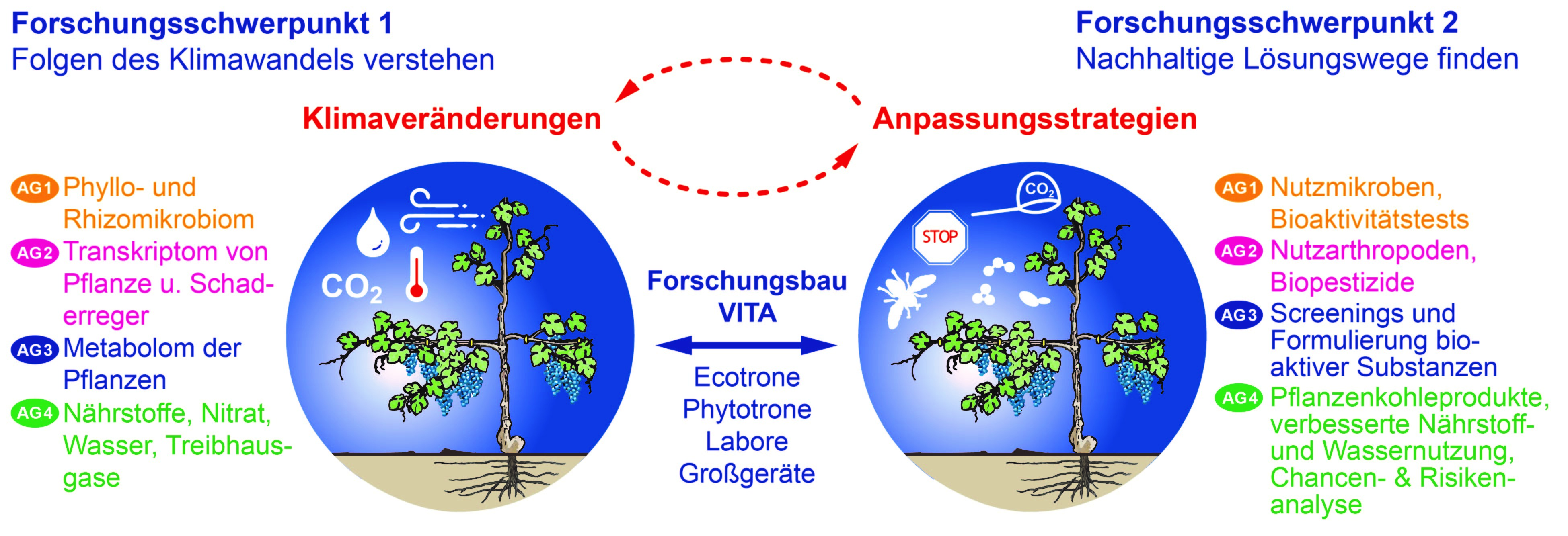
The planned research program of the VITA science building. © Hochschule Geisenheim

About 32.6 million euros for a new science building for viticulture, sustainability and climate change – the German Council of Science and Humanities has recommended funding the application of Hochschule Geisenheim University

Climate change, sustainability goals, loss of biodiversity – the world is facing many challenges that also affect special crops. Cultivating grapevines in Germany and Europe, for instance, requires a very high use of pesticides. Without appropriate counteractions, the problem is likely to get worse due to climate change, new pests that will colonize as a consequence or the rising pressure on existing pests. Additionally, strategies for the supply of nutrients and water must be adapted to changing climatic conditions. Scientists at Hochschule Geisenheim University will soon have a new center dedicated to address those issues. On April 23, 2021, the German Council of Science and Humanities recommended the funding of the Viticulture Adaptation Center for Sustainability and Climate Change (VITA). Subject to the final decision of the Joint Science Conference (GWK), the building will be funded with 32.5 million euros, equally provided by the Federal Government and the State of Hesse.

Science Center with a one-of-a-kind infrastructure 

The center will provide excellent infrastructure for scientists to analyze the effects of climate change on plant metabolism, interactions between grapevines and associated organisms, ecosystem functions, and on water and nutrient flows in vineyards. Based on the results, sustainable plant-based or microbial-based products to improve plant and soil health and the resilience of grapevines towards climate-related stressors are to be produced and tested. Safeguarding and promoting biodiversity in the vineyard is the key target. Simultaneously, scientists will assess potential risks and unwanted side-effects when applying the products, for instance with regard to increased amounts of nitrate leaching into groundwater or greenhouse gas emission. As key components for all planned research activities, the VITA science building features phytotrons (walk-in-size greenhouse chambers) and vineyard ecotrons (research units to manipulate and measure complex ecological interactions in the vineyard ecosystem), which enable scientists to cultivate grapevines and their related organisms that live above and below ground under precisely defined and reproducible climatic conditions. Additionally, the new building is planned to house six new large-scale research facilities, which are indispensable for the prospective research program. 

The research program of the VITA science building will integrate and decisively strengthen the research focal points that sharpen the university’s profile: “developing productive, quality-oriented and sustainable cultivation systems for special crops” and “assessing the risks of climate change- developing strategies for adaptation and mitigation”.

VITA – another unique feature of Hochschule Geisenheim University

Research in the VITA science building aims to find sustainable and efficient solutions to address the impact of climate change and the consequences of a future characterized by higher levels of CO2 concentration and extreme weather conditions. “With the VITA science building, we will pursue a unique research approach, both in terms of the questions we want to address and the planned technical infrastructure. As another unique feature of our university, VITA will make research on grapevines and associated organisms more visible on a national and international level, thus providing the ground for further studies on these topics”, explains Prof. Dr. Annette Reineke, Vice-President of Research and spokeswoman of the group of applicants. University President Prof. Dr. Hans Reiner Schultz is equally pleased: „This is a huge success for our university given the financial volume and the huge number of applicants competing for this type of funding – in most cases, technical and medical science buildings are more likely to receive financial support. I take pride in the fact that our small institution and compete against the “big players” and that the new center will provide unique resources to conduct research into future forms of viticulture. The entire industry will benefit – both nationally and internationally.“

Science Building to be part of the Central Campus

The new VITA science building with a total area of approximately 1,500 square meters will be in the direct vicinity of the ZIG laboratory building and the university’s greenhouses and vineyards, including the vineyard FACE Facility (Free Air Carbon Dioxide Enrichment), a one-of-a-kind outdoor research infrastructure to study future form of viticulture with elevated CO2 concentration. The central location of the research building provides perfect conditions for interdisciplinary and transdisciplinary cooperation, which will be the basis for developing new concepts. Simultaneously, the central location demonstrates the importance of the center’s research goals for the university. Construction must be completed within a period of five years after the forthcoming approval by the Joint Science Conference.


 For further information on the Viticulture Adaptation Center for Sustainability and Climate Change (VITA), please contact Prof. Dr. Annette Reineke, Professor for Crop Protection in Viticulture and Horticulture, by calling +49 6722 502 413 or send an e-mail to  annette.reineke(at)hs-gm.de. The Communication Department of Hochschule Geisenheim University is also happy to take your questions: Kommunikation(at)hs-gm.de


Categories: Weinwissenschaften, Oenologie, Biowissenschaften, Getränkewissenschaften, STUDIUM, Weinbau, Önologie und Weinwirtschaft (M.Sc.), VITIS-VINUM (M.Sc.), Vinifera EuroMaster (M.Sc.), Weinwirtschaft (M.Sc.), Oenologie (M.Sc.), Getränketechnologie (M.Sc.), International Wine Business (B.Sc.), Internationale Weinwirtschaft (B.Sc.), Getränketechnologie (B.Sc.), Lebensmittelsicherheit (B.Sc.), International, Weinbau und Oenologie (B.Sc.), HOCHSCHULE, Presse und Kommunikation, Campus (er)leben, G-Plant, FORSCHUNG, Projekte, Vitifit, Face, AromaPlus, Wein- und Getränkewirtschaft, Professur für Marktforschung, Urbanen Gartenbau, Technik, Rebenzüchtung, Phytomedizin, Oenologie, Obstbau, Molekulare Pflanzenwissenschaften, Modellierung und Systemanalyse, Mikrobiologie und Biochemie, Lebensmittelsicherheit, Landschaftsplanung und Naturschutz, Landschaftsbau und Vegetationstechnik, Getränkeforschung, Gemüsebau, Frischproduktlogistik, Freiraumplanung, Bodenkunde und Pflanzenernährung, Angewandte Ökologie, Allgemeiner und ökologischer Weinbau, Nachrichten

Images

© pps-studios.com/Hochschule Geisenheim

Related Links

  • Die ausführliche Empfehlung des Wissenschaftsrates:

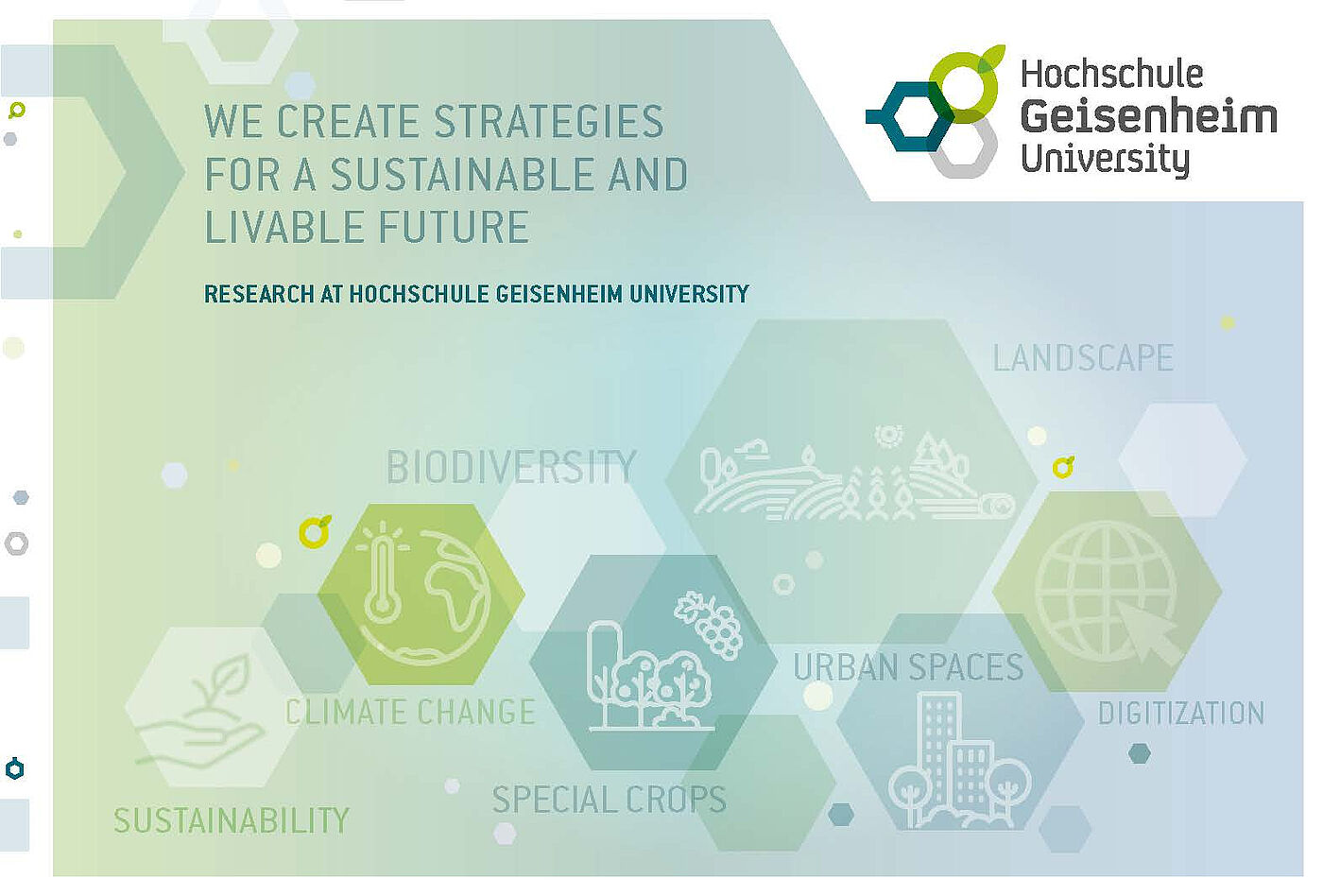
Research brochure (click to enlarge)

Our University has unique opportunities to conduct scientifically recognized and applied research along the entire value chain of special crops. In doing so, we benefit both from a strong network of national and international partners and our own excellent research infrastructure at Geisenheim. Vice-President of Research Professor Annette Reineke