
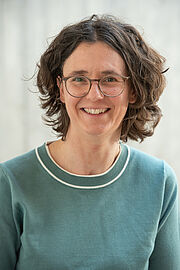

On August 1, 2026, Prof. Dr. Jochen Vestner took on the Professorship for Enology at Hochschule Geisenheim University. Vestner, who holds a PhD in chemistry and enology, combines international research experience with many years of practical experience in the wine industry. His research focuses on wine quality, modern analytics and sensory evaluation and the development of sustainable winemaking methods.
“With Prof. Vestner, the university gains a renowned scientist, who combines top-class research with a strong practical focus. His international experience, outstanding expertise in quality research, and his focus on future-oriented topics such as digital transformation and sustainable process development will greatly benefit our Department of Enology”, says University President Prof. Dr. Karl H. Mühling.
From Geisenheim to Bordeaux and Back
Vestner studied Viticulture and Beverage Technology in Geisenheim. He then earned a Master’s degree in Chemistry from Stellenbosch University in South Africa, followed by a summa cum laude doctoral degree, jointly awarded by Hochschule Geisenheim University and Université de Bordeaux. Raised in a family winery in the Nahe winegrowing region, he gained hands-on experience in winemaking from a young age.
After earning his doctoral degree, he began his research and teaching at DLR Wine Campus Neustadt, Germany, where he led the Wine Aroma Research Group. His research focused primarily on the molecular basis of wine quality, sensory analysis, and the relationships between winemaking, aroma development, and wine quality.
Now, Vestner’s new role in Geisenheim takes him back to the place where he started his academic career. He explains:
“Coming back to Geisenheim feels very special. The mix of top-class research and a strong practical focus provides excellent conditions to set new standards for quality and authenticity in enology, and helps drive the successful development forward with fresh momentum. I’m looking forward to shaping the future of enology with our students, colleagues and the industry.”
Research for the Future of Winemaking
In the future, Vestner aims to align his research even more closely with the industry's current challenges. The focus will be on intelligent and sustainable process strategies, modern analytics for quality improvement, and innovative technologies that offer concrete solutions for real-world applications.
In this context, digital transformation, artificial intelligence, and automation are becoming increasingly important. Data-driven systems and modern analytical methods can help control winemaking processes with greater precision, use resources more efficiently and improve wine quality. Vestner aims to provide scientific support for these developments and translate them into practical solutions together with the industry.
“The wine industry is facing a major turning point. Climate change, social developments and technological innovations are presenting new challenges. My goal is to shape research and teaching in a way that equips our students with the skills to make scientifically sound decisions and develop innovative solutions for real-world applications. In the future, Geisenheim should remain a place where new ideas are created and developed in close cooperation with industry partners”, says Vestner.
Training Students for Tomorrow’s Wine Industry
In his teaching, Vestner will also focus on a close integration of science and practical application. Students should understand the entire winemaking process – from grape to bottle – apply modern techniques, and be able to put new scientific findings into practice.
In addition to teaching the fundamentals of enology and natural sciences, future-oriented topics such as digitalization, AI, process automation, sustainability, sensor technology, and quality management are becoming increasingly important. The goal is to equip students with the skills to develop new ways of thinking and actively help shape the rapid transformation of the wine industry.
Research with Practical Relevance
Hochschule Geisenheim University’s Department of Enology provides a unique scientific environment. Research activities range from the development and optimization of oenological processes to innovative process technology and the evaluation of new machinery, materials, and treatment methods. In this context, the department focuses on issues related to climate adaptation, food safety, sustainability, cost-effectiveness, quality, and consumer orientation.
Scientific findings are directly applied in practice thanks to the close cooperation with wineries, wine producers, associations, authorities and international research institutions.
Building on a Strong Scientific Basis
In his new role, Vestner succeeds Prof. Dr. Monika Christmann, who has retired after more than three decades in research and teaching. Her internationally recognized research on innovative winemaking processes, alcohol management, and allergenic wine treatment agents has shaped the enology department in Geisenheim ad beyond.
Now, Prof. Dr. Jochen Vestner is starting a new chapter with the goal of combining academic excellence, practical relevance and innovation, and developing solutions for a changing wine industry.