

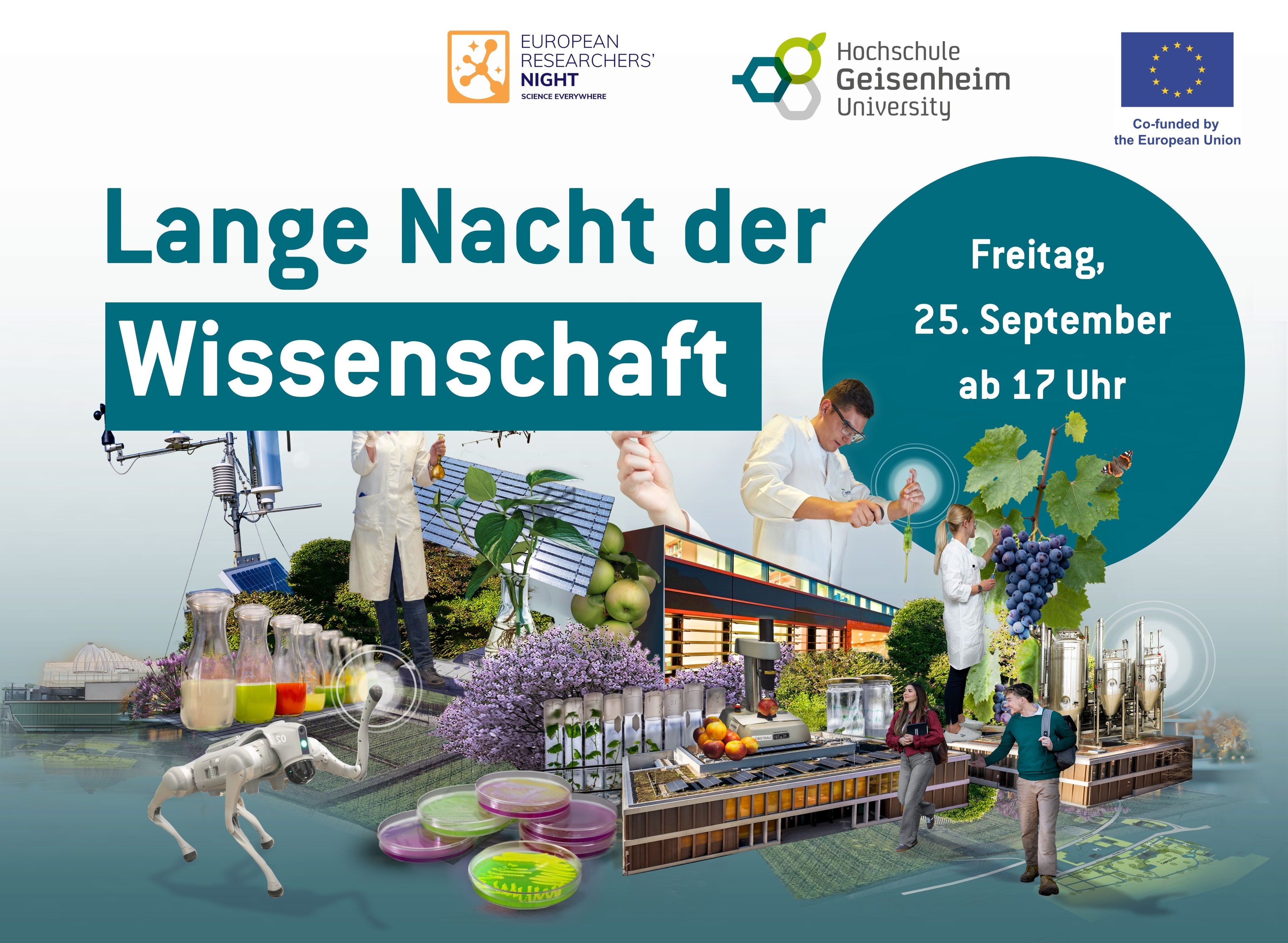
What will next-generation agriculture look like? What’s in our food and beverages? How are digital technologies used in viticulture and horticulture? And why are there robotic assistance dogs on a construction site? These questions – and many more – will be addressed on Friday, September 25 from 5:00 – 10:00 pm. As part of the Researchers’ Night, the university will open its lecture halls, laboratories, greenhouses and research facilities. Visitors of all ages are invited to experience science firsthand – admission is free.
The European Researchers' Night will take place in more than 460 cities across 40 countries. For the first time, Hochschule Geisenheim University will be participating in the event, turning into a place of fascinating insights into the world of science.
Colorful Program
More than 50 interactive activities, info stands, tours and presentations will provide exciting insights into the university’s diverse research projects. The program covers topics such as food and beverages, viticulture and horticulture, digitalization and sustainability as well as landscape architecture and development. But the Researchers’ Night is not just about presenting scientific findings. Instead, visitors have the chance to experience science close up and chat with researchers
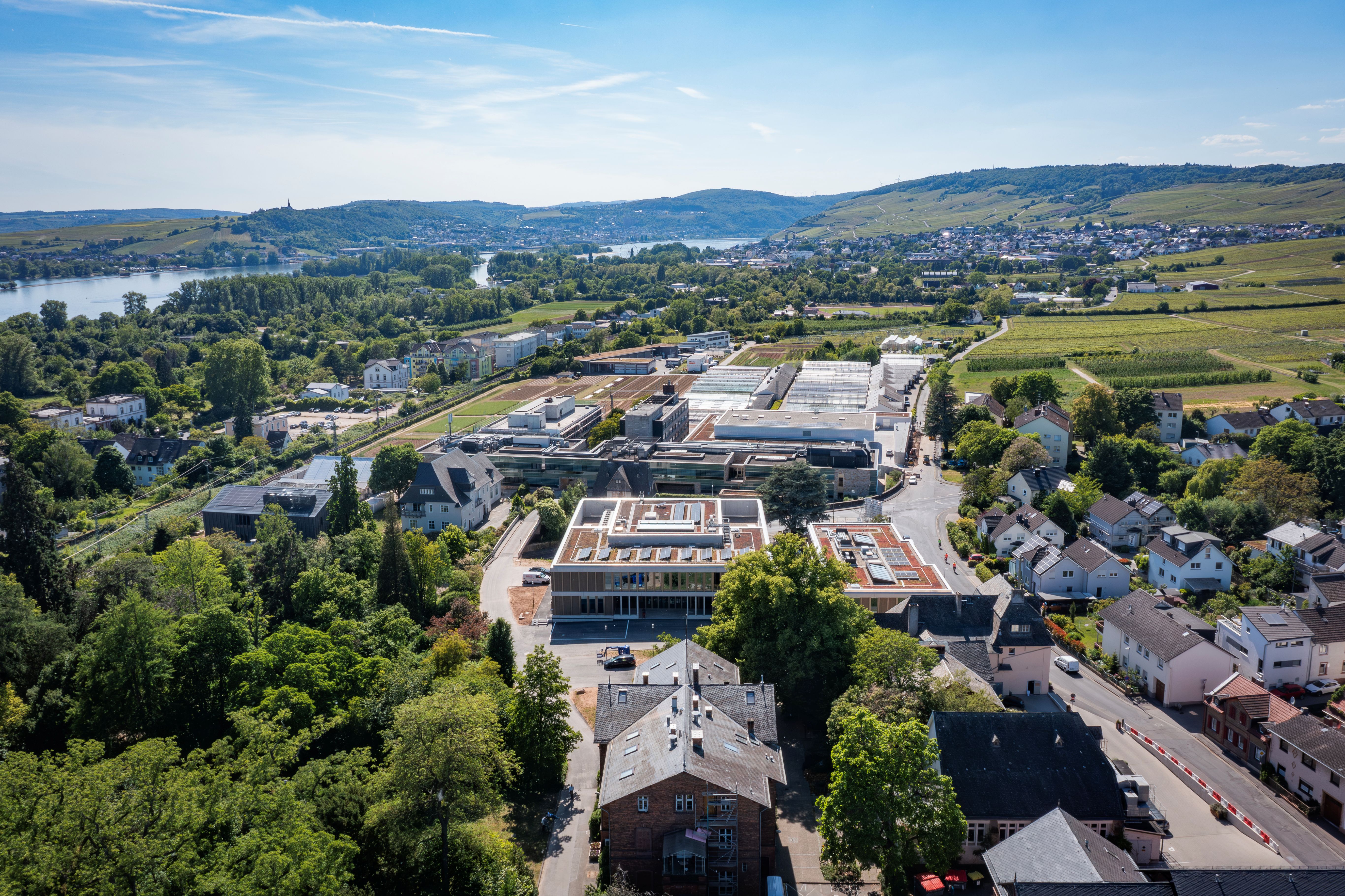
The program features campus tours, digital grapevines, presentations of robotic assistance dogs on the construction site, DIY juice kits, and much more. Live demonstrations, presentations and guided tours offer visitors a rare look behind the scenes of laboratories and research facilities normally closed to the public. The program stretches over the entire campus – from the central campus, over to the Logistics and Sustainability Building, the Beverage Technology Center, the university’s greenhouses, fruit packing facility and research trail. Throughout the evening, the herb greenhouse operated by the Hessian State Agricultural Agency will also open its doors for the interested public.
European collaboration will play a key role during the evening. In the European Corner, Hochschule Geisenheim University will showcase projects that connect Geisenheim with other regions across Europe, showing visitors how international research collaborations help address common challenges in areas such as food, agriculture, climate adaptation, and sustainable development.
Besides the fascinating program, the campus itself will also charm visitors with its special atmosphere: Situated between vineyards and research fields, university buildings and greenhouses will be illuminated, combining scientific insights with a cozy autumn feeling on campus Geisenheim.
European Researchers‘ Night to Wrap Up Agri-Food Week
The European Researchers‘ Night marks the public highlight of an entire week dedicated to sustainable food systems – the Agri-Food Week from September 22 – 25, 2026. This new theme week was created as part of Hochschule Geisenheim University’s involvement in the EU-GIFT Alliance. A special focus is on geographical identity and cultural heritage. In between vineyards and fields, the theme week aims to transform the university into a meeting place for prospective students, the university community, researchers, industry professionals, and anyone interested in the future of food, agriculture, and landscape development. The program offers a wide range of activities and presentations and invites everyone to join in.
- The Agri-Food Week kicks off on September 22 with a Kinderuni session on fruit juice production (more) and a new introductory program for interested adults on: What can be made from malt, hops, and yeast? – an introduction to brewing, followed by a tasting (more).
- On September 23, the next edition of our newly created lecture format for school students (grades 10 -13) will take place at 1:45 pm, discussing the question “One apple a day keeps the doctor away – What’s inside our favorite fruit?” (more).
- Two conferences will also be held during the Agri-Food Week: From September 22 -24, the EUVRIN Fertilization & Irrigation Group – an organization of European research institutes specialized in vegetable production – will come together for their next meeting (more). On September 24-25, the Rhine Main Conference on Municipal Tree Care will take place (more).
- The European Researchers‘ Night will wrap up the Agri-Food Week, inviting the public to explore the future of food, landscape and landscape development close up.
About the European Researchers‘ Night:
The event is supported by the EU project “ReNourish” (Research and Education to Nourish Society).
Event Details:
Friday, September 25, 2026
5:00 - 10:00 pm
Hochschule Geisenheim University
Admission is free
Note for our international guests: The guided tours, presentations and activities will bein German, but everyone is warmly invited to join the discovery!
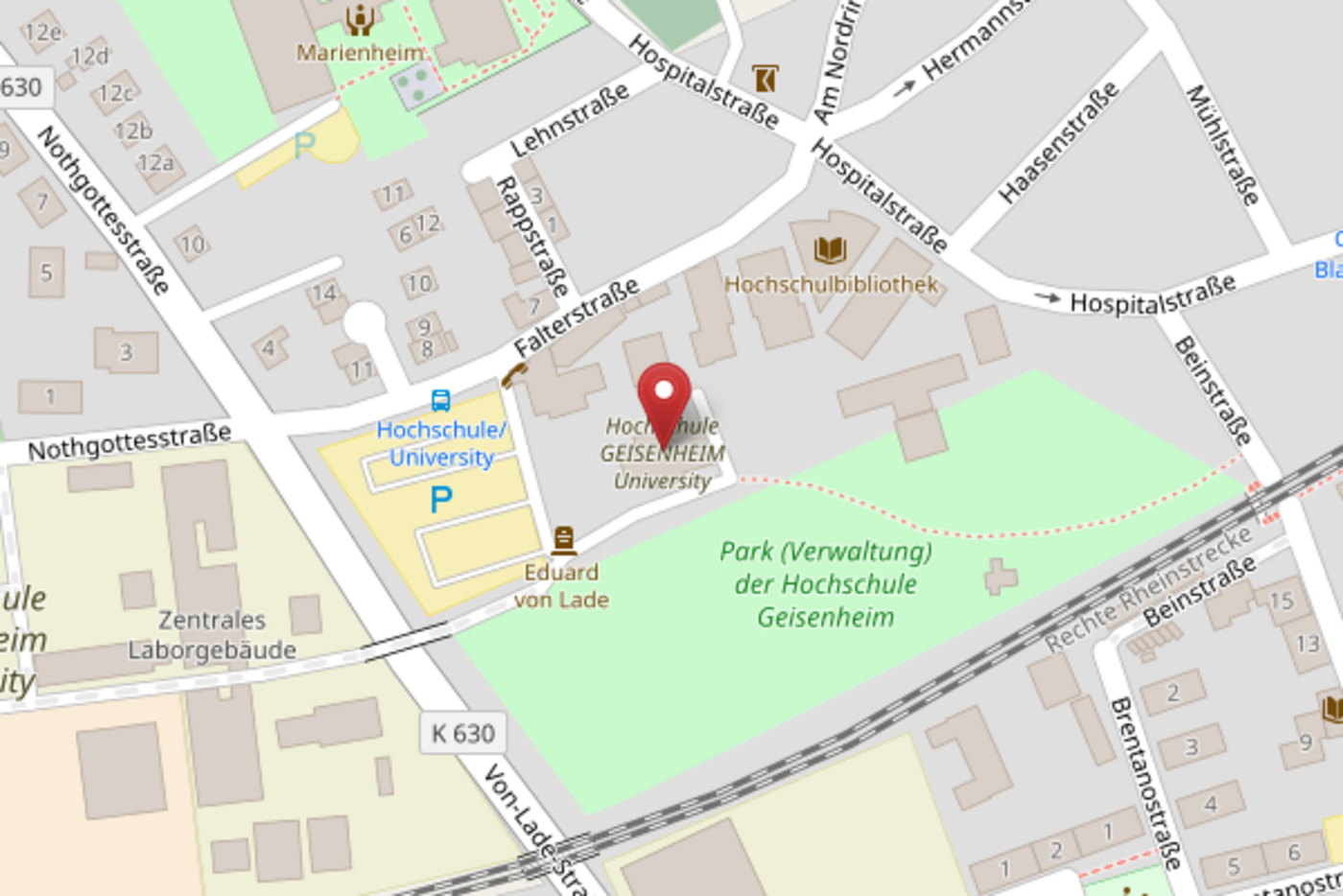
The complete program (in German) and a campus map are available at: www.hs-geisenheim.de/nacht-der-wissenschaft
About the EU GIFT Alliance:
Hochschule Geisenheim University is part of the EU GIFT Alliance, a consortium of seven higher education institutions from Spain, Italy, France, Portugal, Hungary, Romania, and Germany, and more than 30 partner organizations. EU-GIFT stands for "European University for Geographical Identity as a driver for Food Systems Transition to Sustainability. The alliance fosters European cooperation in teaching, research, and innovation, with a particular focus on sustainable food and beverage systems and regional value chains. Key areas include viticulture, agriculture, food production, and sustainability. By participating in the alliance, the university is strengthening its international profile and establishing itself as aEuropean university.
More details: EU-GIFT