Research at Hochschule Geisenheim University

Creating Strategies for a Sustainable and Livable Future

Climate Change, Biodiversity Loss, Sustainability Targets – We're Meeting the Planet's Most Urgent Challenges

Our mission is to develop resource-efficient, innovative, and sustainable solutions in the area of agriculture and food. Our work spans a broad range of key issues: advancing organic, climate-resilient cultivation strategies for specialty crops, developing sustainable production and marketing methods, and designing livable cultural landscapes and urban regions. By uniting ecology, profitability, and a focus on quality of life, we aim to create a sustainable future in which society and nature can flourish together.

Our Focus Areas

Sustainable Cultivation Systems for Specialty Crops

Cultivating grapevines, fruit, vegetables, and ornamentals is particularly resource intensive – as such, a careful balance between producing the highest quality products possible and ensuring sustainable practices needs to be struck.

Through our research, we are developing innovative, ecofriendly strategies that ensure healthy harvests and preserve resources. We breed varieties and growth forms that are optimally adapted to climate change, environmental factors, and potential pests and pathogens. Modern sensor systems help control water and nutrient supply with pinpoint accuracy, alternative plant protection strategies – such as the use of antagonists – strengthen plants and their environments, and new digital techniques make precise management measures possible. Together with our partners, we are establishing diverse cultivation strategies that promote biodiversity and preserve ecosystem functions, creating an economically and ecologically sustainable future for viticulture and horticulture.

Innovative and Safe Processing and Marketing for Plant Products

Sustainability in food production spans the entire journey, from cultivation and processing to the moment the product reaches the customer. At every stage, product quality and safety needs to be guaranteed. The bioeconomy plays a key role in this context, enabling the more efficient use of resources, processes, and systems, while supporting the livelihood of the businesses that produce them. 

Through our research, we develop energy and resource-efficient methodologies for processing plant products and extracting valuable ingredients from crops and by-products. We examine microorganisms as natural protective cultures, evaluate the health effects of plant-based ingredients, and conduct sensory tests with our university panel. Market research, consumer behavior analyses, and industry data deliver essential insights for sustainable marketing strategies, particularly in the wine industry. We also analyze the logistical processes, from packing to distribution, and boost the efficiency and sustainability of the entire value chain with the help of modern, digital technologies.

Livable Cultural Landscapes and Urban Regions

Intensified land use has reduced valuable landscape features and biodiversity in many areas. Urban regions are also under pressure to maintain quality of life through green infrastructure such as parks and green belts.

Through our research, we develop methods to optimize and assess urban open spaces and enhance their social sustainability. We create techniques for greening sites with limited soil and for using plants in urban areas in a targeted manner, particularly in the context of climate change. For viticultural landscapes, we design strategies to adapt to climate change and preserve rare species. Additionally, we develop concepts for multifunctional, ecologically valuable, and attractive landscapes that enable new, sustainable production scenarios.

Questions about Our Research?

Please get in touch!

Christiane Jost
Dr. Christiane Jost
Building 5924
Room 01.01
Phone +49 6722 502 6334
Christiane.Jost(at)hs-gm.de Details

News & Latest Projects

Green Interiors – Smart and Sustainable

Photo: Hochschule RheinMain

Cross-university project successfully completed


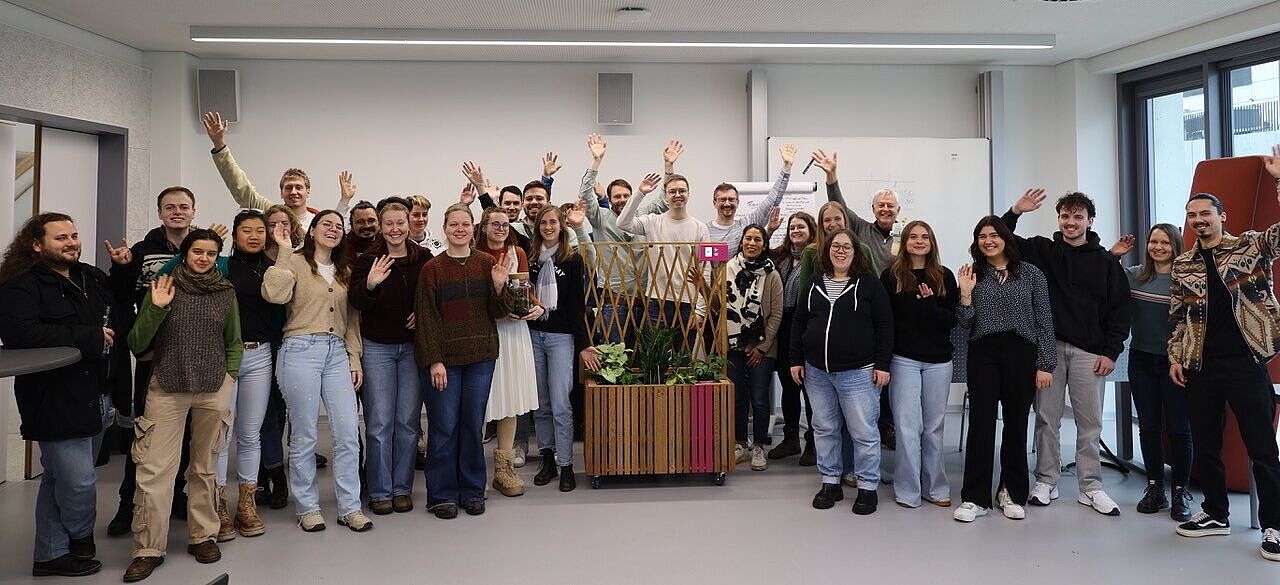
Three programs, two universities, one goal: smart, sustainable, AI-supported indoor greening. The SNIB project – a collaboration between the Media Management and Business Informatics programs (Hochschule RheinMain) and Geisenheim's Crop and Horticultural Science and Horticulture programs – has been successfully concluded after two semesters. The results were presented in a workshop held at the TeachingLearningCenter (LLZ) of Hochschule RheinMain (HSRM). As part of the workshop, students from Hochschule Geisenheim University presented future concepts for indoor greening.

“In the first project semester, selected plants from Hochschule Geisenheim University were installed in large containers in the informatics building on Hochschule RheinMain’s Unter den Eichen campus. Equipped with a camera and sensors, the project’s aim was to record environmental parameters such as soil moisture, light and temperature, and use this information to develop a data-based irrigation and care concept”, explains Dr. Maren Stollberg from Hochschule Geisenheim University. The collected data was processed using a data management system that was specifically designed for this purpose, and formed the basis for a smart plant installation. A microcontroller recorded the sensor data and transmitted it to the HSRM server. For better visualization, all information was displayed on an e-paper and on a project website developed by Media Management students. 

In a next step, the sustainable plant container was fine-tuned both conceptually and technically. "The sensor data flows into an AI model based on open-source technology that evaluates the plants’ condition and recommends necessary steps," outlines Professor Holger Hünemohr from HSRM’s Business Informatics program. 

Meanwhile, the plant container is installed in the L Building on Kurt-Schumacher-Ring Campus, where it improves the microclimate and quality of time spent in the building. The Media Management students are responsible for project communication, developing a project website with live data and AI visualization, and documenting the project on film and social media with the aim to spark interest in sustainable, technology-driven solutions that align with global sustainability goals.

Smart division of tasks for joint success 


Throughout project, the two universities have cooperated closely, with each adding its individual strengths to the project: Hochschule Geisenheim University was responsible for developing horticultural concepts while Computer Science students took care of the IT infrastructure for data collection and analysis. The Media Management students designed the communication and multimedia presentation of the project. “This project is a prime example of how technological solutions and scientific analysis can be combined with creative communication to develop sustainable studying and working environments”, explains Prof. Dr. Johannes Luderschmidt from the Media Management program. 


Future of the project in interior architecture


In the upcoming summer semester, the results of the SNIB project will be taken up in the living materials lab of HSRM’s Interior Architecture program and integrated into an experiential materials library for regenerative interior design. In this context, material and plant systems will be optimized with sensor technology and AI-powered monitoring systems with the aim to measure the quality of indoor areas and to use the plant system as a basis for green design approaches. 


More information: snib-hsrm-hgu.de
Categories: MyHGU-App, Mein-Netzwerk, STUDIUM, Gartenbauwissenschaft (M.Sc.), Gartenbau (B.Sc.), Presse und Kommunikation, FORSCHUNG, Urbanen Gartenbau, Nachrichten

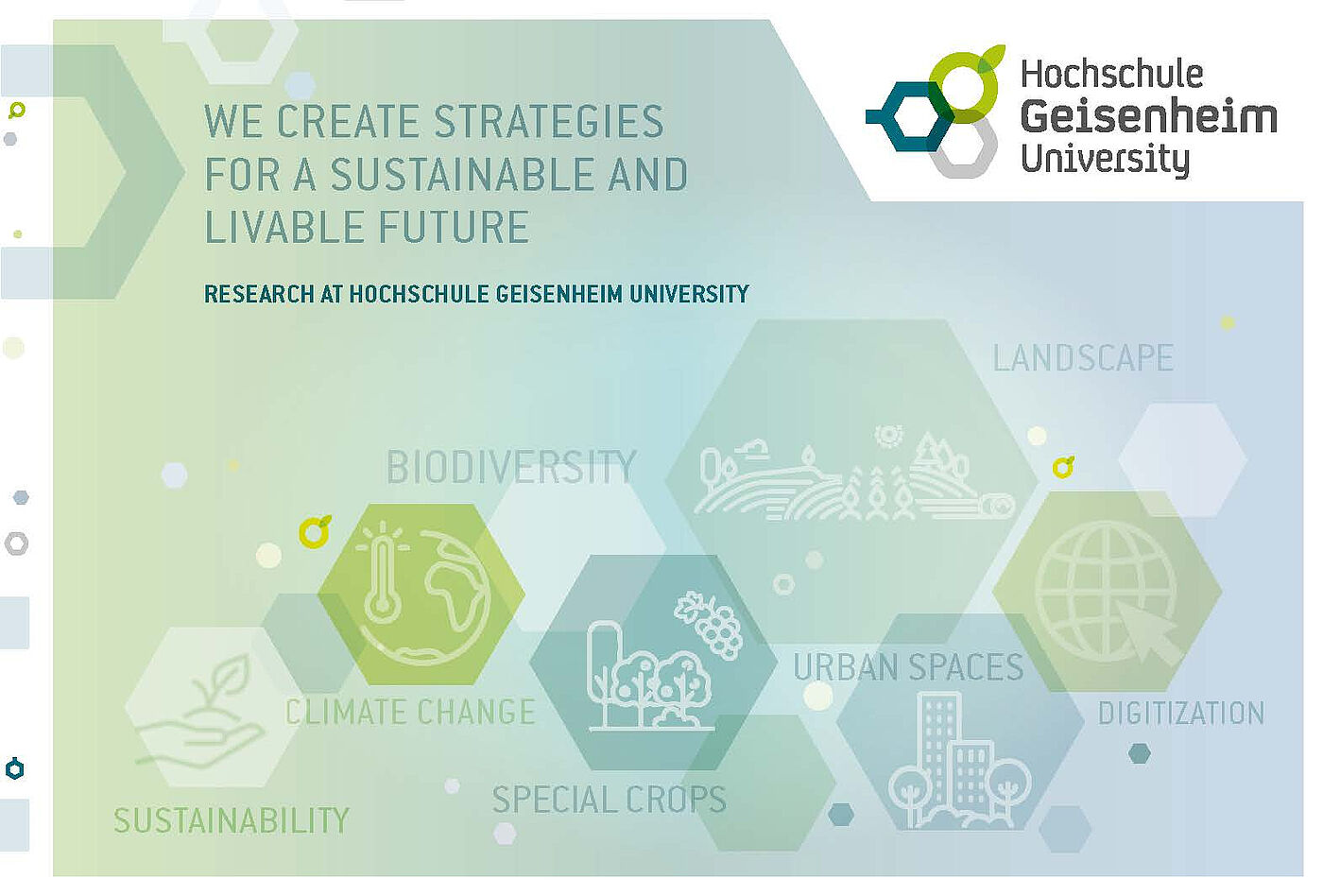
Research brochure (click to enlarge)

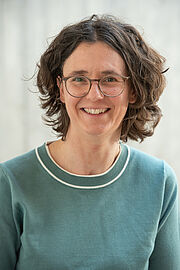
Our University has unique opportunities to conduct scientifically recognized and applied research along the entire value chain of special crops. In doing so, we benefit both from a strong network of national and international partners and our own excellent research infrastructure at Geisenheim. Vice-President of Research Professor Annette Reineke