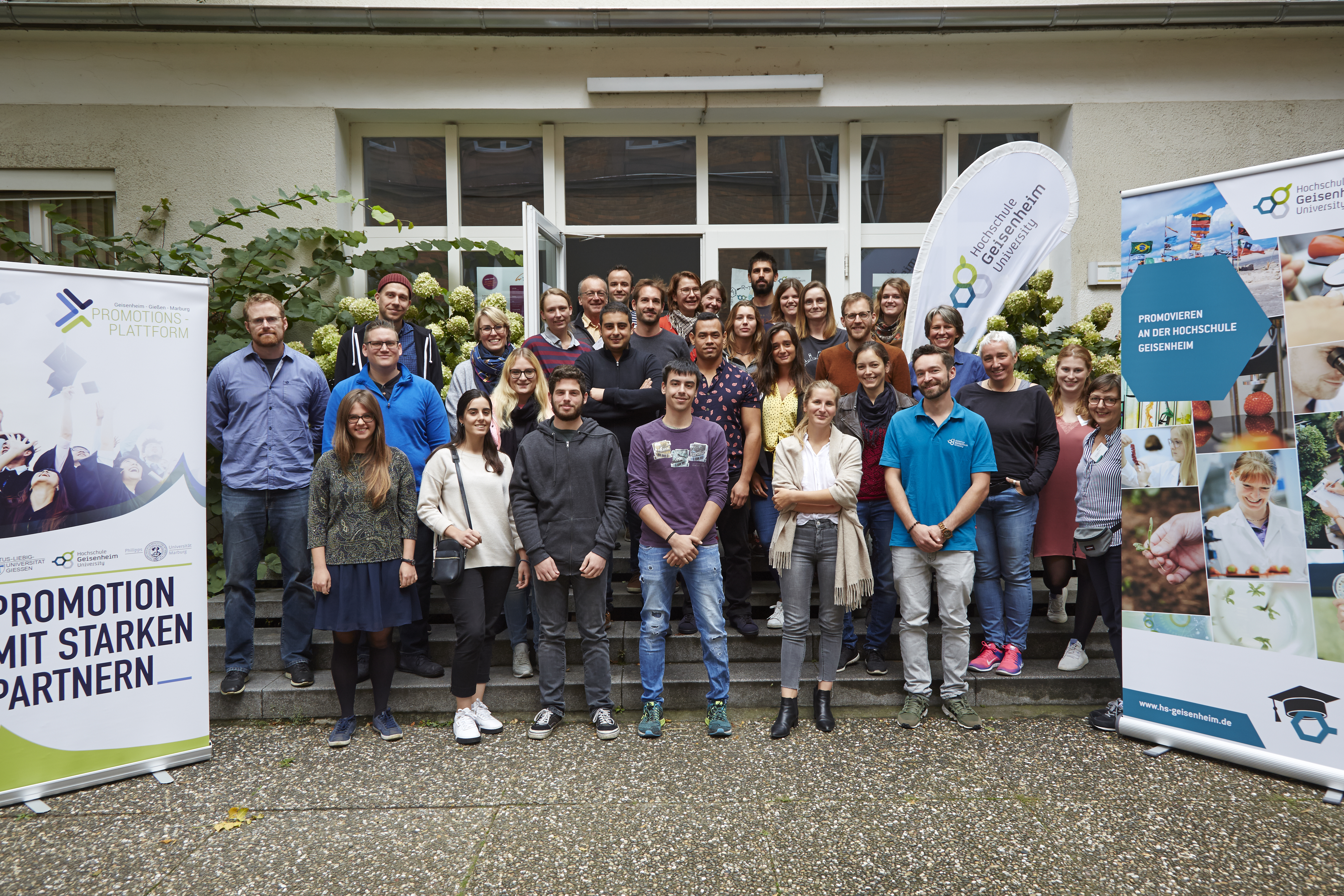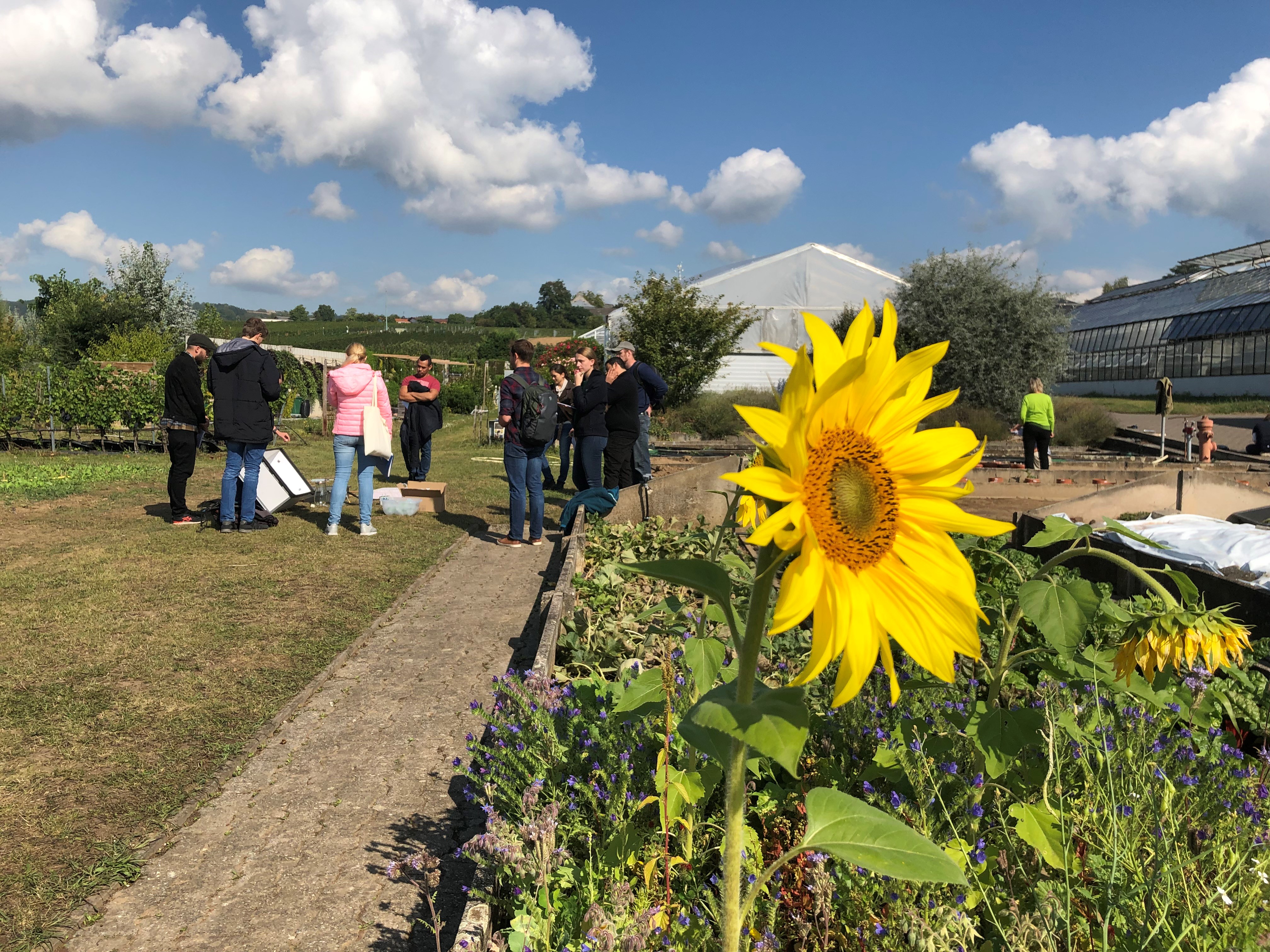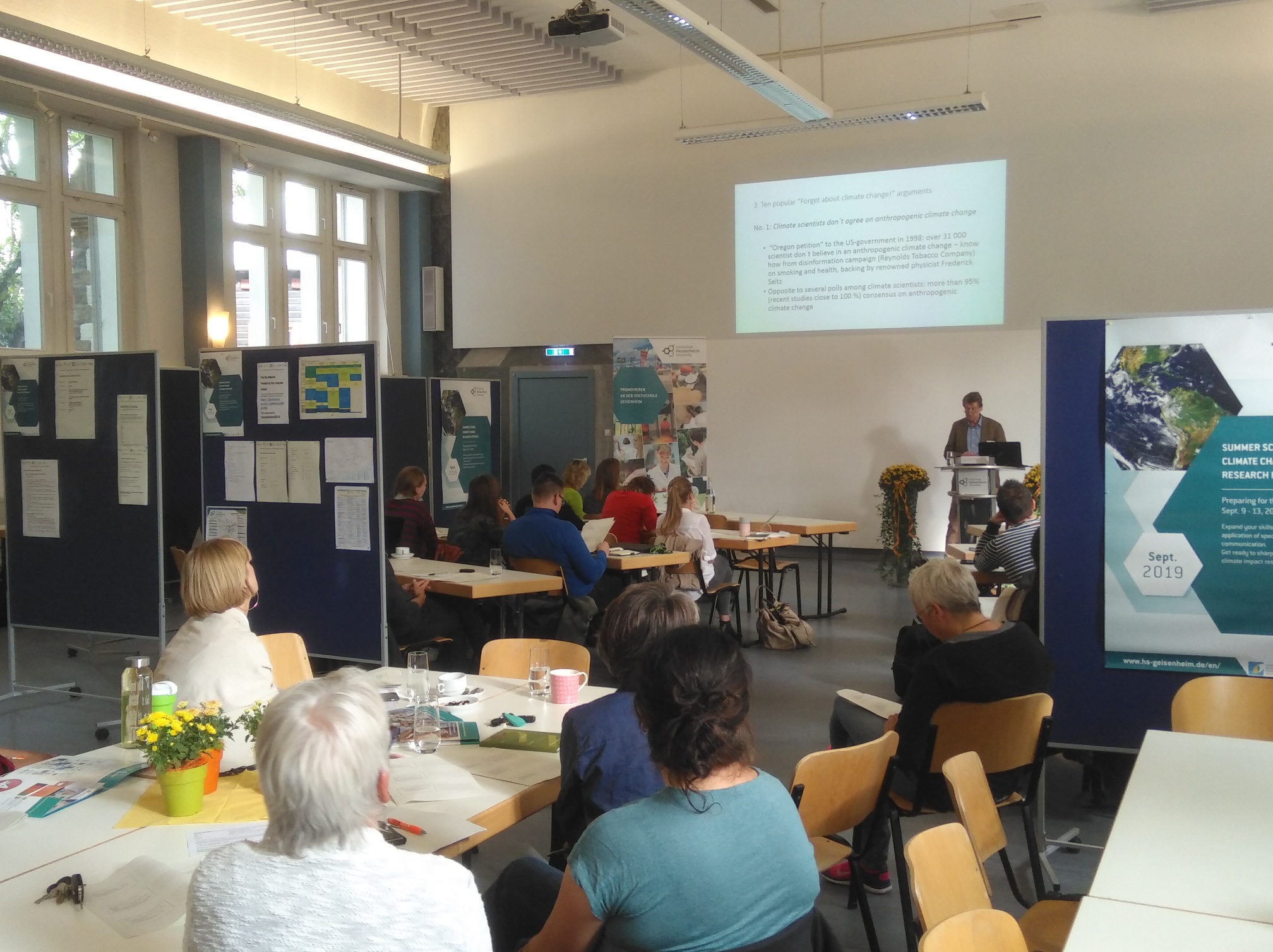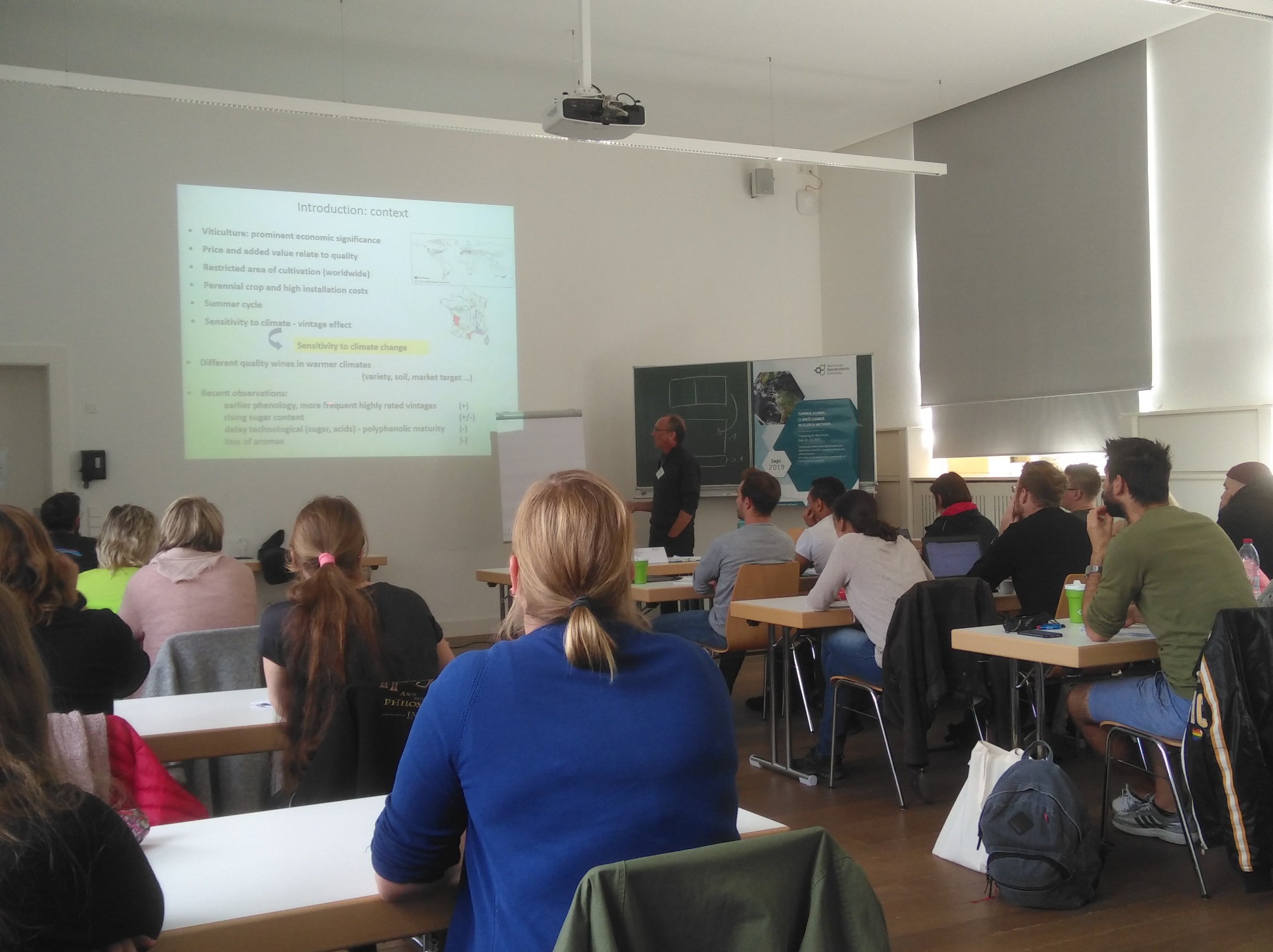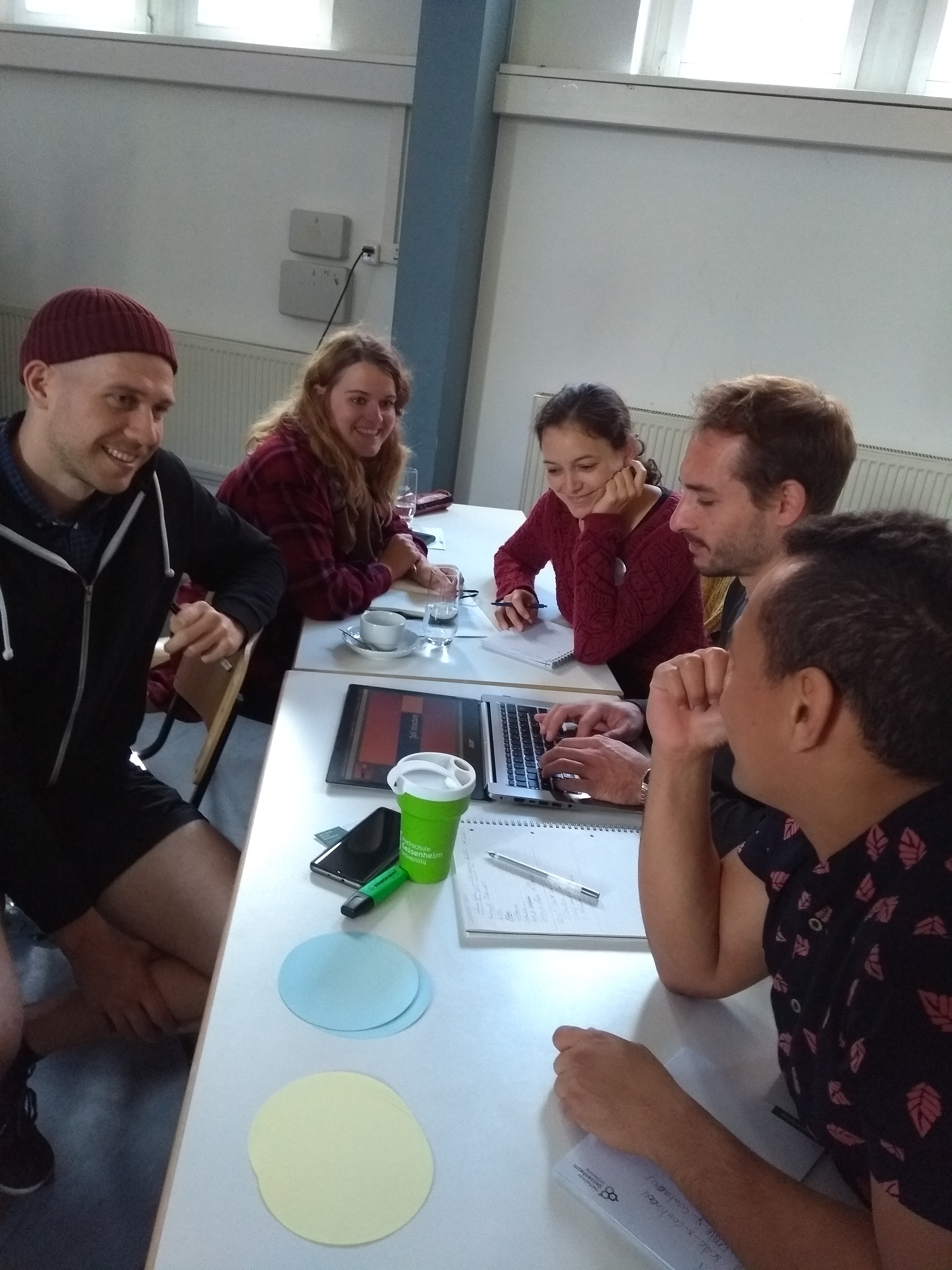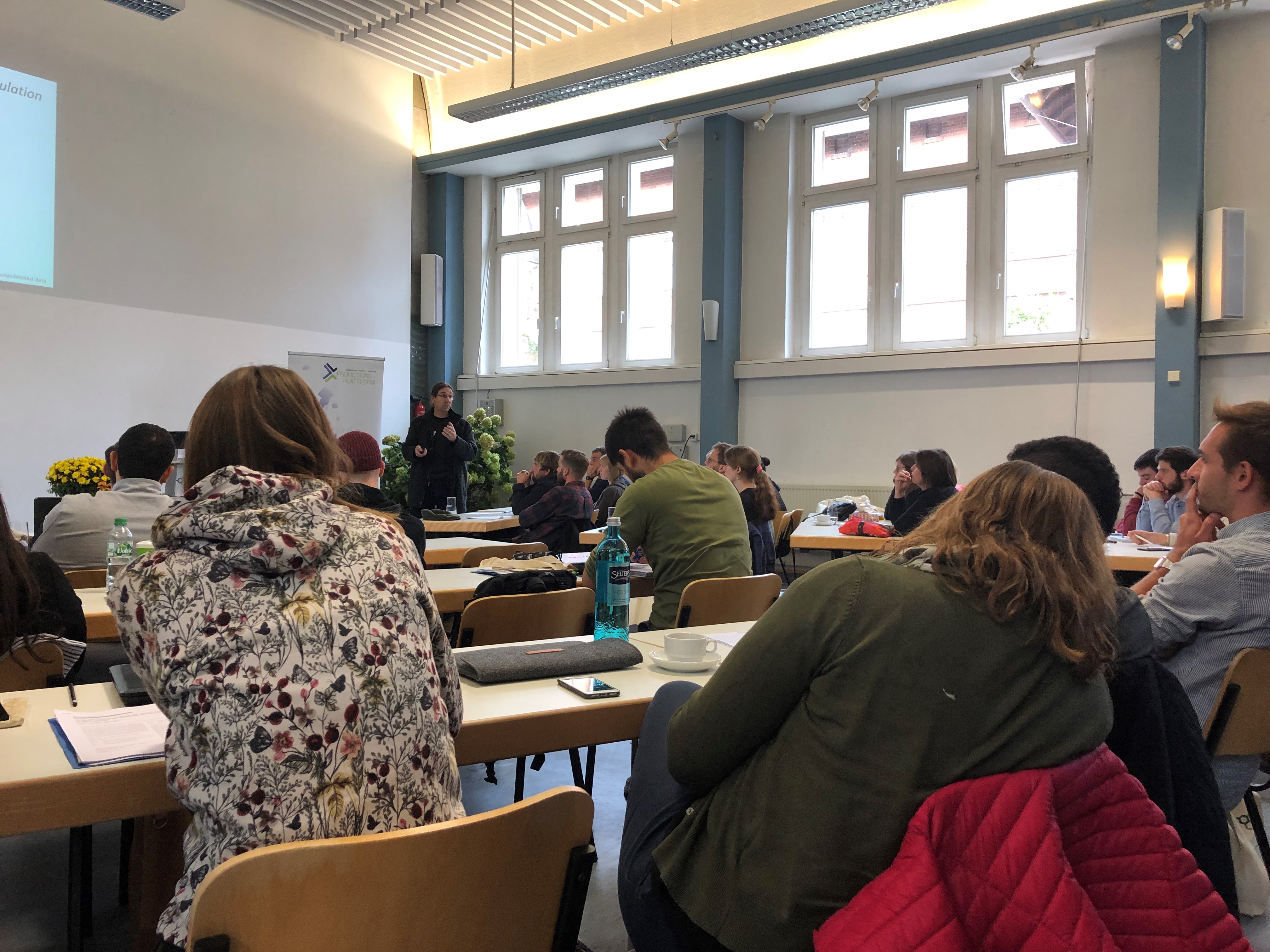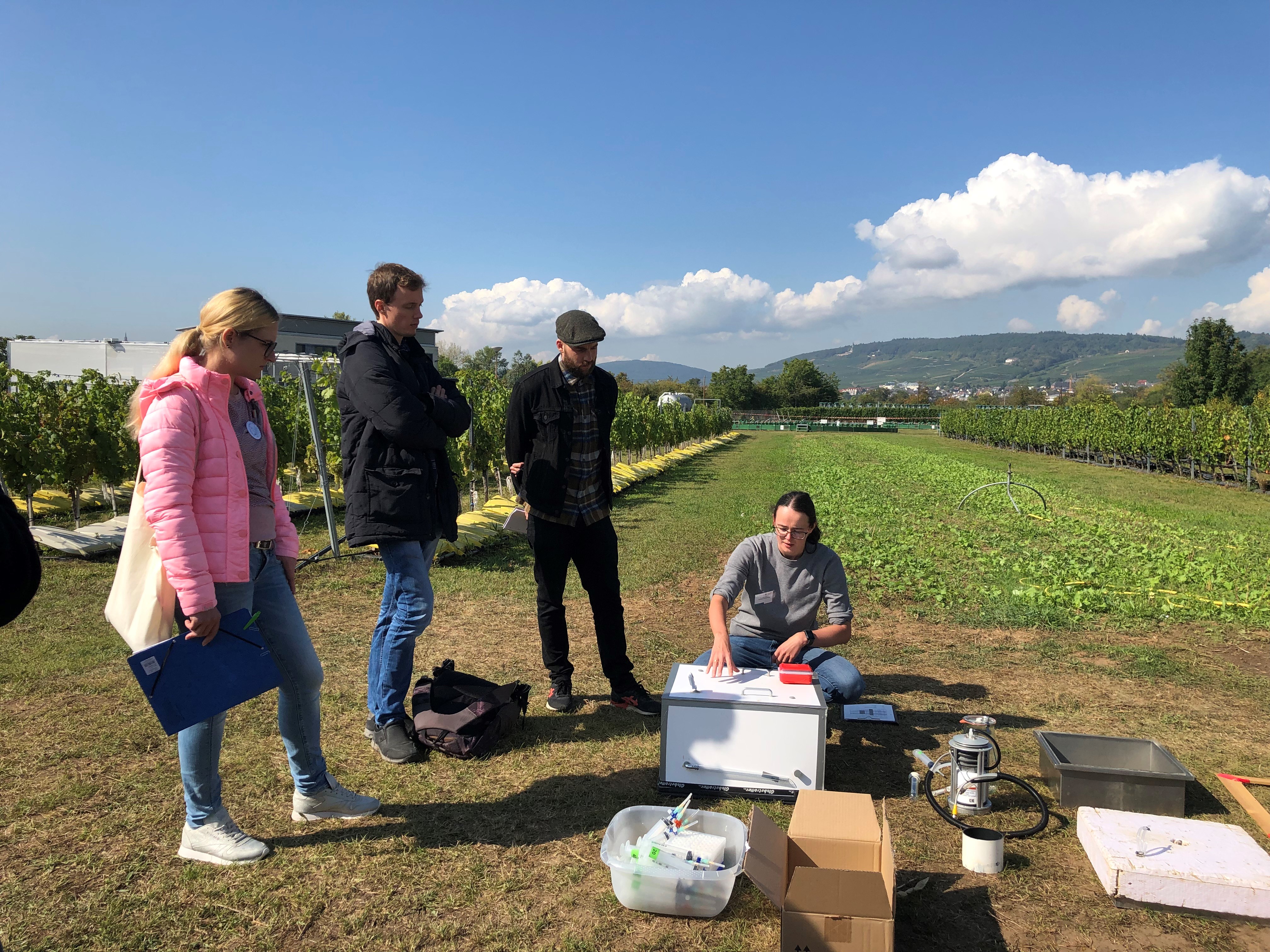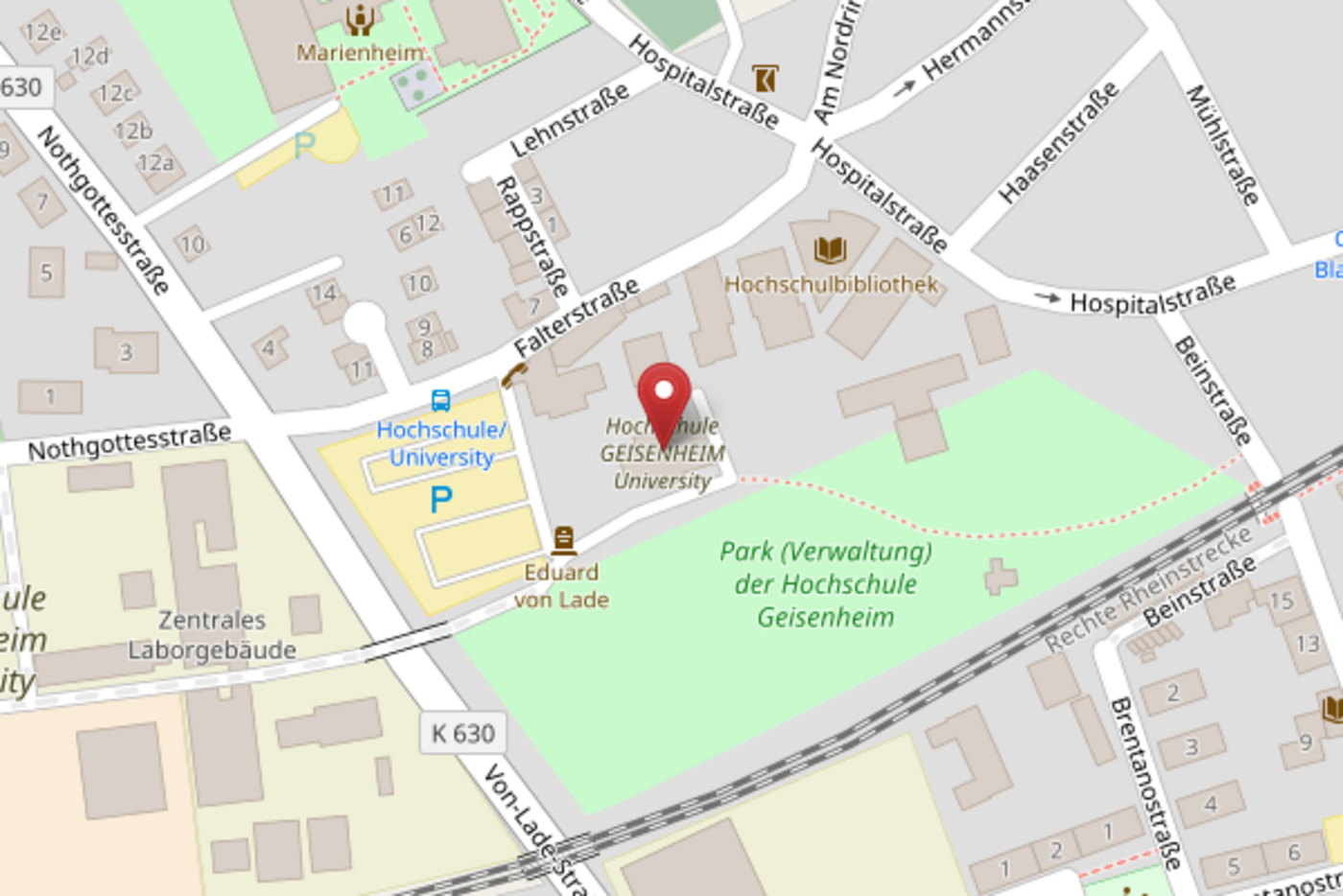
From the lecture hall to the vineyard, followed by a brief foray into the lab, before returning quickly to the main auditorium for the final lecture: the varied program of the "Climate Change Research Methods: Preparing for the Future" Summer School held in Geisenheim between September 9 to 13, 2019 kept the 27 participants on their toes. The Graduate School of Hochschule Geisenheim University organized the one-week summer school in cooperation with the Doctoral Platform Geisenheim - Gießen - Marburg and Bordeaux University.
The doctoral students of Hochschule Geisenheim University chose the focus of the summer school - climate change - and the method-oriented approach last year. "One of the strengths of Hochschule Geisenheim University is the direct application of research findings", said Professor Annette Reineke, Vice-president of Research at Hochschule Geisenheim University. "This approach was also important to us when we were working on the concept for the summer school."
Participants from eight countries attended the international summer school. The program, which included joint lunch breaks and recreational activities such as a cookery course on "sustainable cooking", game evenings and a trip to an open-air cinema, provided the participants with lots of time to get know each other better. An important objective of the summer school was to provide the participants and researchers from Hesse and Bordeaux University in its partner region Aquitaine with an opportunity to meet and engage in networking.
External speakers from Germany and France together with lecturers from Hochschule Geisenheim University contributed to the program. This enabled the participants to become more familiar with Geisenheim's researchers and the methods they use, while also observing the correlations and causes of climate change from a range of different perspectives. Workshops on topics such as "Gas Exchange Measurements", "Chlorophyllfluorescence Measurements using a Pulse Amplitude Modulation (PAM) Method", "Digitizing Plant Architecture" helped as well, as did additional workshops on the graphical representation of data records using the R, SigmaPlot, MATLAB and Origin/Mathematica programs.
In one of the workshops, Professor Achim Bubenzer, former president of the University of Applied Sciences in Ulm, put forward arguments to counter climate change denial, while Dr. Michael Schirrmann from the Leibniz Institute for Agricultural Engineering and Bioeconomy (ATB) provided profound insights into the performance of meta-analyses. The summer school's interdisciplinary approach was clearly obvious in Sven-Daniel Getty's workshop by Science-Slam.com, which provided the participants with key tools on communicating in the field of science that they could put into practice right away. As viticulture experts, Professor Gregory Gambetta and Dr. Philippe Pieri from the Institut des Sciences de la Vigne et du Vin (ISVV) in Bordeaux provided the Rheingau summer school participants with a French point of view on the impacts of climate change.
A report by Franziska Külbel, coordinator of the Doctoral Platform Geisenheim - Gießen - Marburg