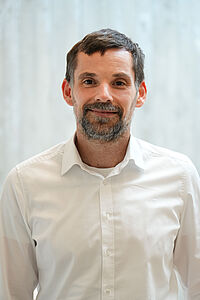
Prof. Dr. Moritz Wagner
D-65366 Geisenheim
Room 01.14
Von-Lade-Straße 1
65366 Geisenheim
Project start: 01.04.2026
Project end: 31.03.2029
Sponsor: Federal Ministry of Education and Research
Pyrogenic carbon capture and storage (PyCCS) is based on atmospheric carbon dioxide removal (CDR) by photosynthesis, biomass pyrolysis and on the non-oxidative use of the three products biochar (solid), bio-oil (liquid) and/or pyrogas. The pyrolysis industry grows exponentially due to the demand for (1) BC in agriculture/urban areas, (2) climate neutral energy and (3) sustainable recycling of biogenic wastes. Prerequisites for continued PyCCS scaling are that (i) technical/regulatory hurdles regarding feedstock supply and PyCCS product development are overcome, (ii) biomass C-conversion efficiency is increased via material use of bio-oil/pyrogas, (iii) sound MRV schemes are aligned with DE/EU regulations and (iv) biogeochemical co-benefits of BC soil use are understood sufficiently so that (i)–(iv) can feed into global assessment models. We will employ basic & technical R&D combined with LCA and MRV assessments to foster industrial CDR scaling via PyCCS, focusing on the near future (2050). We investigate options for sustainable industrial PyCCS upscaling and communicate results via fact sheets for policy makers and industry (WP1). We explore the condensation of bio-oil for the production of basic chemicals, the processing of pyrogas for the Haber-Bosch process or CDR based on mineral C-fixation using thermal energy and pyrogas-derived CO2 (WP2). To enable BC use at industrial scale, we research the variability of BC properties across different production sites, feedstocks, pyrolysis technologies to obtain reproducible material properties. BC fertiliser products ready for industrial scaling are tested for field applicability with agricultural machinery and investigated for co-benefits under future eCO2 concentrations (WP3). We assess the current state of MRV schemes towards their potential impacts on, and conformity with, SDG goals and their harmonisation with German and EU regulations and evaluate novel CDR pathways via LCA to ensure net CDR (WP4).