
Research at Hochschule Geisenheim University

Creating Strategies for a Sustainable and Livable Future

Climate Change, Biodiversity Loss, Sustainability Targets – We're Meeting the Planet's Most Urgent Challenges

Our mission is to develop resource-efficient, innovative, and sustainable solutions in the area of agriculture and food. Our work spans a broad range of key issues: advancing organic, climate-resilient cultivation strategies for specialty crops, developing sustainable production and marketing methods, and designing livable cultural landscapes and urban regions. By uniting ecology, profitability, and a focus on quality of life, we aim to create a sustainable future in which society and nature can flourish together.

Our Focus Areas

Sustainable Cultivation Systems for Specialty Crops

Cultivating grapevines, fruit, vegetables, and ornamentals is particularly resource intensive – as such, a careful balance between producing the highest quality products possible and ensuring sustainable practices needs to be struck.

Through our research, we are developing innovative, ecofriendly strategies that ensure healthy harvests and preserve resources. We breed varieties and growth forms that are optimally adapted to climate change, environmental factors, and potential pests and pathogens. Modern sensor systems help control water and nutrient supply with pinpoint accuracy, alternative plant protection strategies – such as the use of antagonists – strengthen plants and their environments, and new digital techniques make precise management measures possible. Together with our partners, we are establishing diverse cultivation strategies that promote biodiversity and preserve ecosystem functions, creating an economically and ecologically sustainable future for viticulture and horticulture.

Innovative and Safe Processing and Marketing for Plant Products

Sustainability in food production spans the entire journey, from cultivation and processing to the moment the product reaches the customer. At every stage, product quality and safety needs to be guaranteed. The bioeconomy plays a key role in this context, enabling the more efficient use of resources, processes, and systems, while supporting the livelihood of the businesses that produce them. 

Through our research, we develop energy and resource-efficient methodologies for processing plant products and extracting valuable ingredients from crops and by-products. We examine microorganisms as natural protective cultures, evaluate the health effects of plant-based ingredients, and conduct sensory tests with our university panel. Market research, consumer behavior analyses, and industry data deliver essential insights for sustainable marketing strategies, particularly in the wine industry. We also analyze the logistical processes, from packing to distribution, and boost the efficiency and sustainability of the entire value chain with the help of modern, digital technologies.

Livable Cultural Landscapes and Urban Regions

Intensified land use has reduced valuable landscape features and biodiversity in many areas. Urban regions are also under pressure to maintain quality of life through green infrastructure such as parks and green belts.

Through our research, we develop methods to optimize and assess urban open spaces and enhance their social sustainability. We create techniques for greening sites with limited soil and for using plants in urban areas in a targeted manner, particularly in the context of climate change. For viticultural landscapes, we design strategies to adapt to climate change and preserve rare species. Additionally, we develop concepts for multifunctional, ecologically valuable, and attractive landscapes that enable new, sustainable production scenarios.

Questions about Our Research?

Please get in touch!

Christiane Jost
Dr. Christiane Jost
Building 5924
Room 01.01
Phone +49 6722 502 6334
Christiane.Jost(at)hs-gm.de Details

News & Latest Projects

Joint Statement: Hessian Universities Criticize Proposed Amendments to Hessian Climate Act

HGU campus. Photo: Torsten Silz

Major restructuring of independent scientific advisory board would lead to its de facto abolition

DARMSTADT/FRANKFURT/MARBURG. Hessian universities, universities of applied sciences and art academies are criticizing planned changes to the Hessian Climate Act. In a joint statement to the Hessian Ministry of Agriculture and Environment and the Hessian Ministry of Science, they warn against the proposed amendments, which would weaken binding environmental targets and affect universities. The planned de facto abolition of the independent scientific climate advisory board has also raised concerns.

Universities view the planned shift from “must” to “should” requirements as a deliberate weakening of the Hessian climate protection targets, which are based upon scientific data and the Paris Agreement of December 12, 2015. These changes would compromise Hesse’s position as a role model. Additionally, they emphasize that climate policy in Hesse must continue to be guided by scientific research, which also includes contributions from Hessian universities. 

Independent scientific advisory board must remain unchanged
Hessian universities also express concerns about plans to replace the independent, impartial scientific advisory board. They note that while the current members have specialized climate expertise, the new board would be appointed by ministers using their own undefined criteria for expertise. The universities consider this an unacceptable violation of Hesse’s Climate Act. They demand that the advisory board in its current form remain in place. Additionally, they emphasize that the regular, scientifically supported monitoring of climate action should continue, alongside mandatory measures to meet targets and the transparent publication of results.

According to the universities, it is also crucial that the scientifically based Hessian Climate Plan continues to provide a reliable basis for long-term investment planning and renovation decisions. In order to meet existing plans to operate greenhouse gas neutral by 2030, universities need both planning certainty and the necessary instruments to achieve this deadline. Unavoidable greenhouse gas emissions should continue to be offset at the state level through measures with high climate protection benefits.

Particularly in view of the extensive renovation backlog in many of their buildings, Hessian universities need sufficient resources and a reliable policy framework. In order to protect university operations from the consequences of climate change, the structural and technical resilience of university buildings must be enhanced. Therefore, it is essential to climate-proof state-owned buildings and their infrastructure to make sure that universities can continue to fulfill their educational and research mission without compromising academic quality. 

Hessian universities call upon the state government to assess the arguments and concerns presented and give them due consideration in the ongoing legislative process. They emphasize that they are always available for constructive discussions to continue to drive scientifically based climate targets. 


Read the full statement (in German):

chrome-extension://efaidnbmnnnibpcajpcglclefindmkaj/https://h-da.de/fileadmin/Einrichtungen/INE/h_da_NACHHALTIG/Kompetenzzentrum_Nachhaltige_Entwicklung/Klimaschutz/Stellungnahme_Gesetzesentwurf_HKlimaG_Hessische_Hochschulen_final_gez.pdf


Press Contact:

For universities of applied sciences:
Simon Colin
Press Contact
Hochschule Darmstadt
Telefon: 06151 533-68036
E-Mail: simon.colin(at)h-da.de


For Hessian universities:
Dr. Gabriele Neumann
Press Contact
Philipps-Universität Marburg
Phone: 06421 28-23010, Mobil: 0160 97389440
Email: gabriele.neumann(at)uni-marburg.de


For Hessian art academies:
Lorna Lüers, Head of Public Relations and Communication 
Hochschule für Musik und Darstellende Kunst Frankfurt
Phone: 069 154007-333, Mobil: 0160 97539687
Email: lorna.lueers(at)hfmdk-frankfurt.de


About HAW Hesse

HAW Hesse is the joint alliance of the five state-run universities of applied sciences and the church-run Evangelische Hochschule Hessen. It represents the interests of its members and collaborates with the Hessian Ministry of Science and Research, Art, and Culture, as well as with other universities in Hesse on important strategic issues. In May 2023, the Hochschule für öffentliches Management und Sicherheit joined the alliance. 
Categories: MyHGU-App, Mein-Netzwerk, FORSCHUNG, Nachrichten

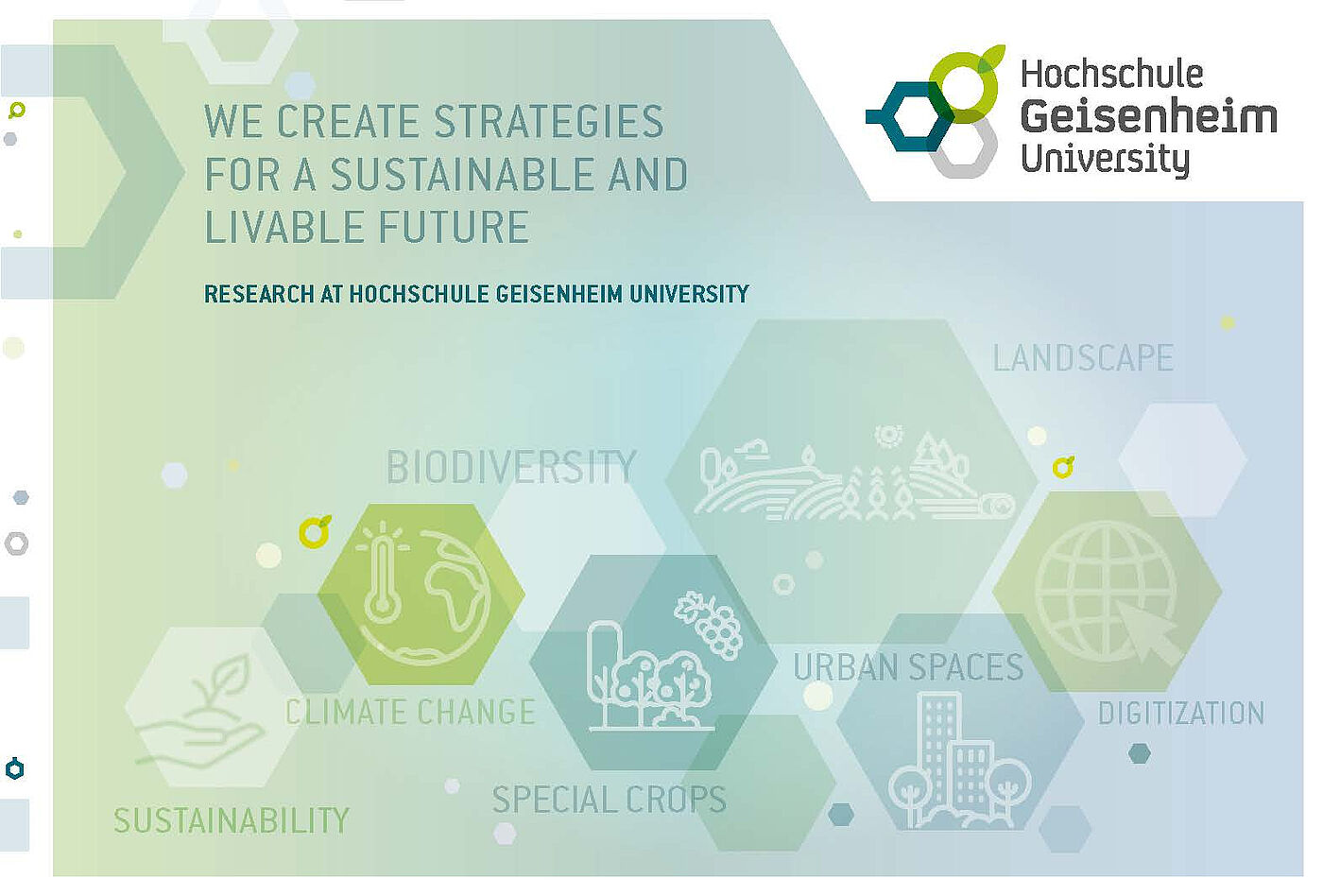
Research brochure (click to enlarge)

Our University has unique opportunities to conduct scientifically recognized and applied research along the entire value chain of special crops. In doing so, we benefit both from a strong network of national and international partners and our own excellent research infrastructure at Geisenheim. Vice-President of Research Professor Annette Reineke