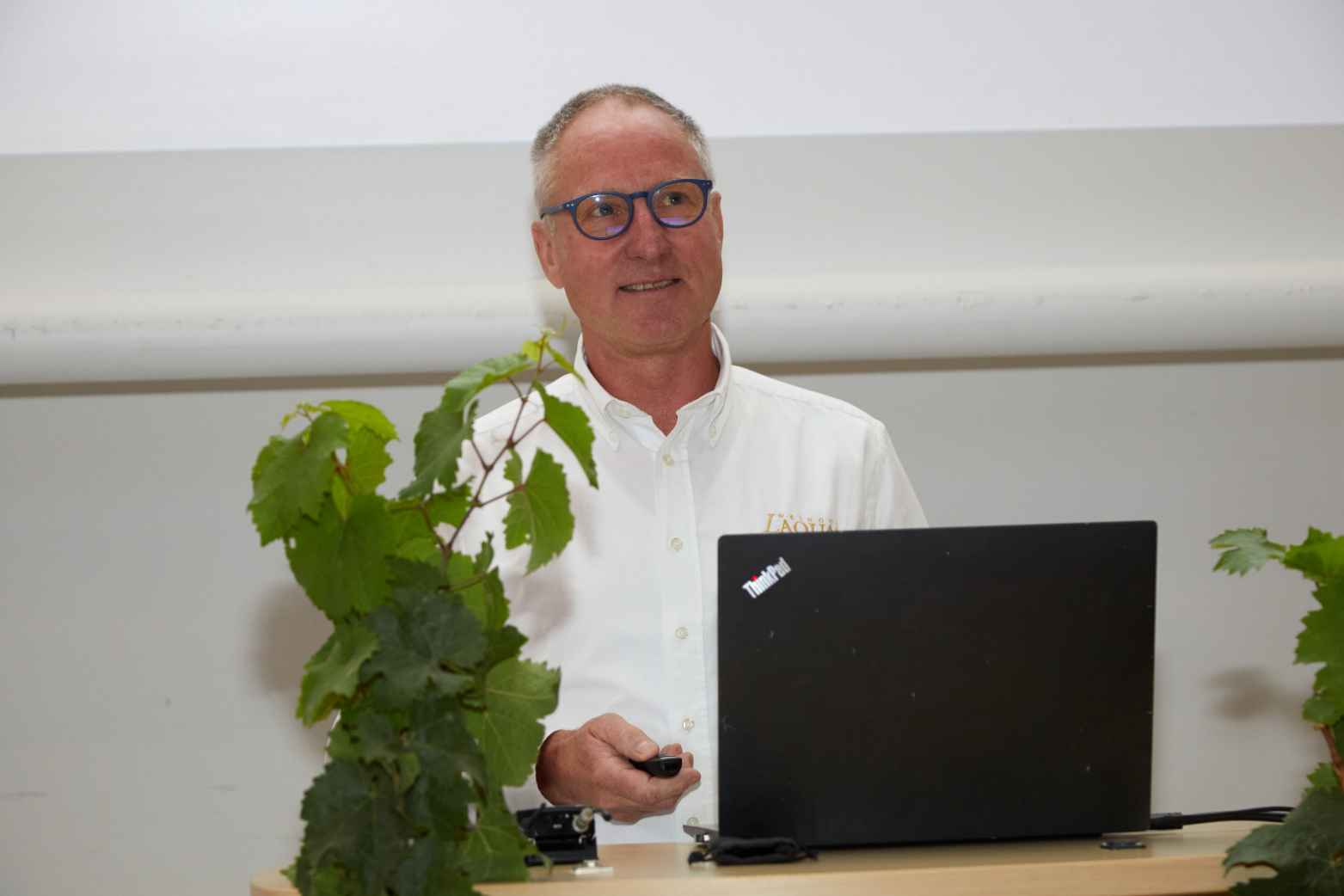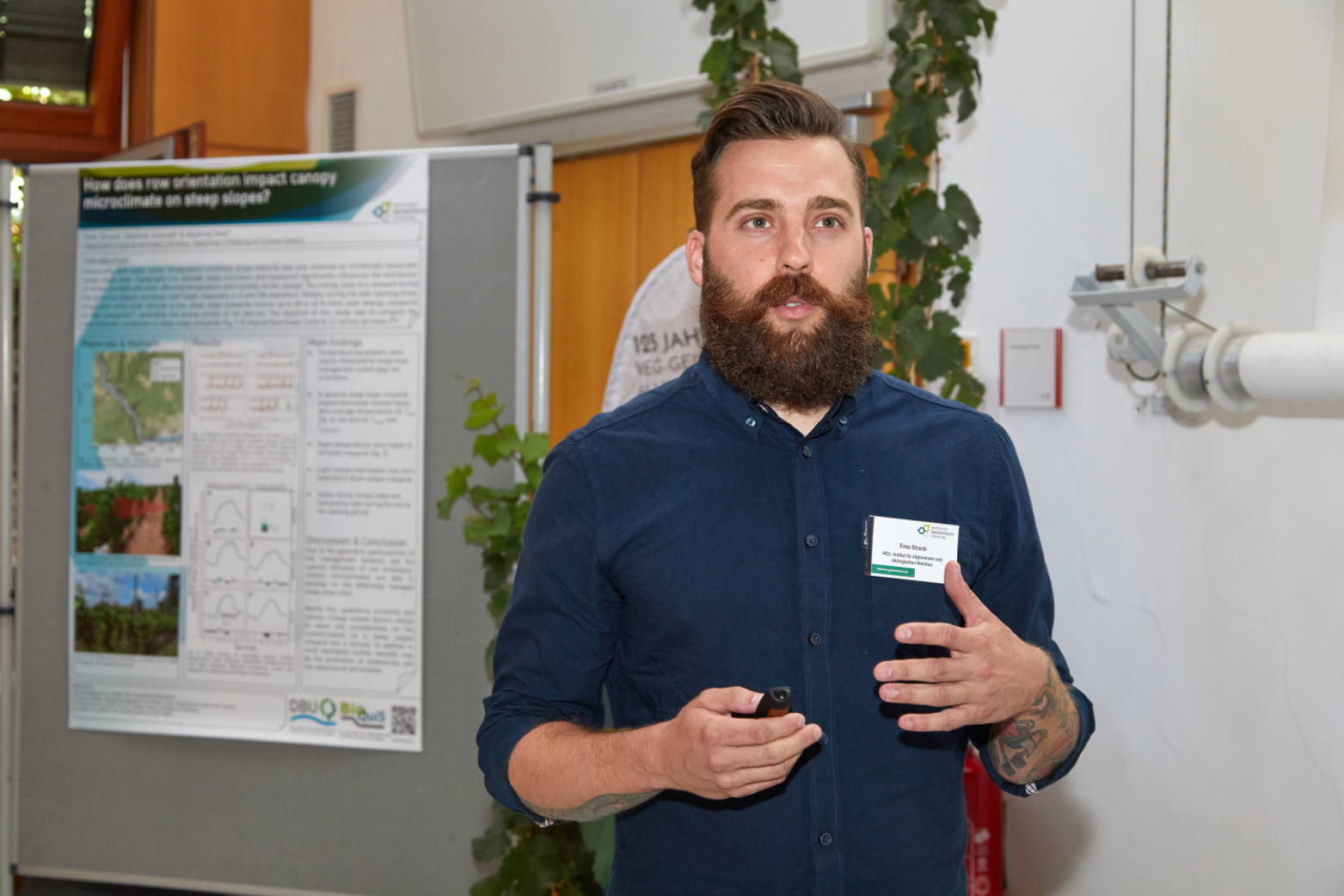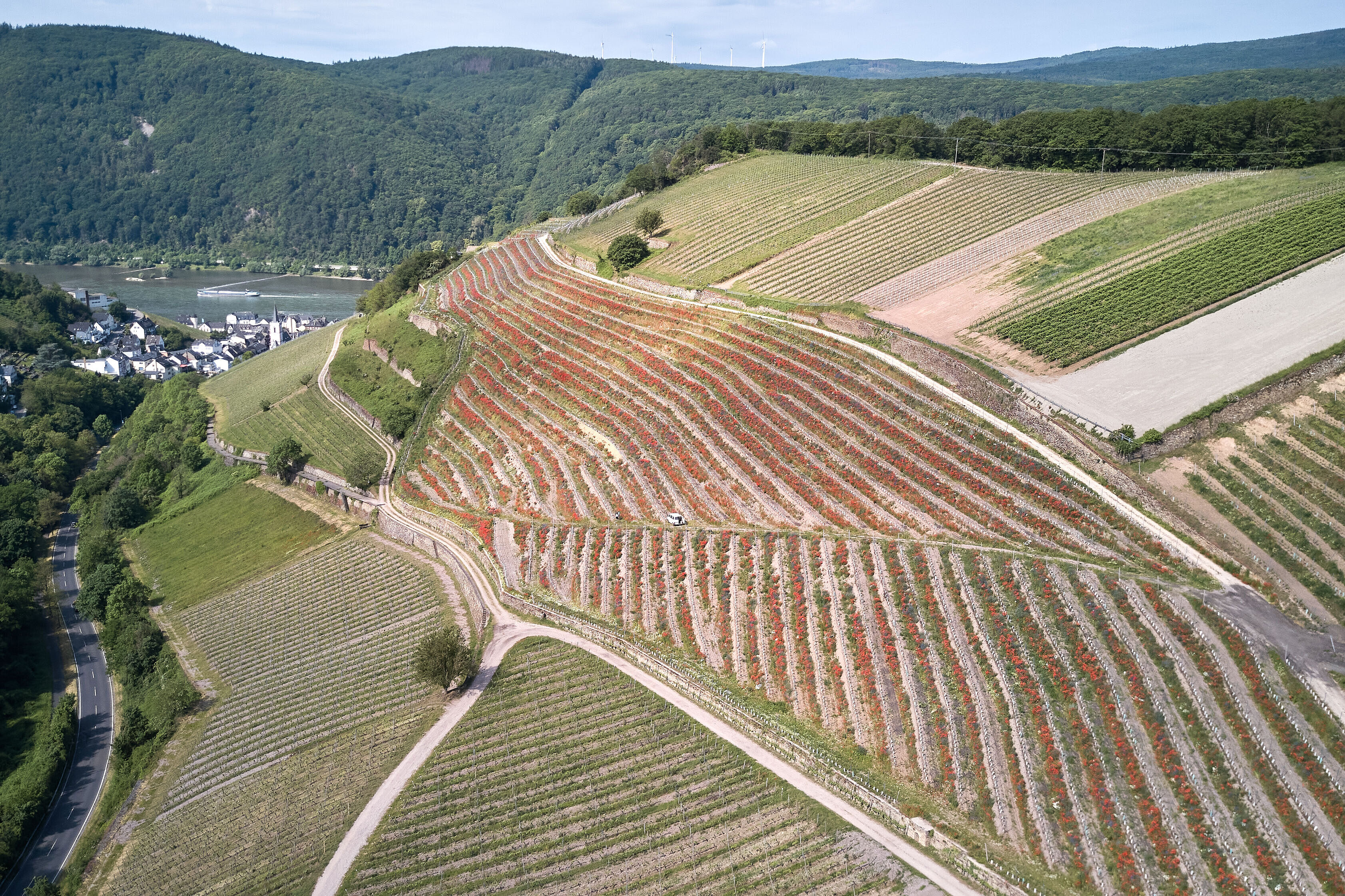

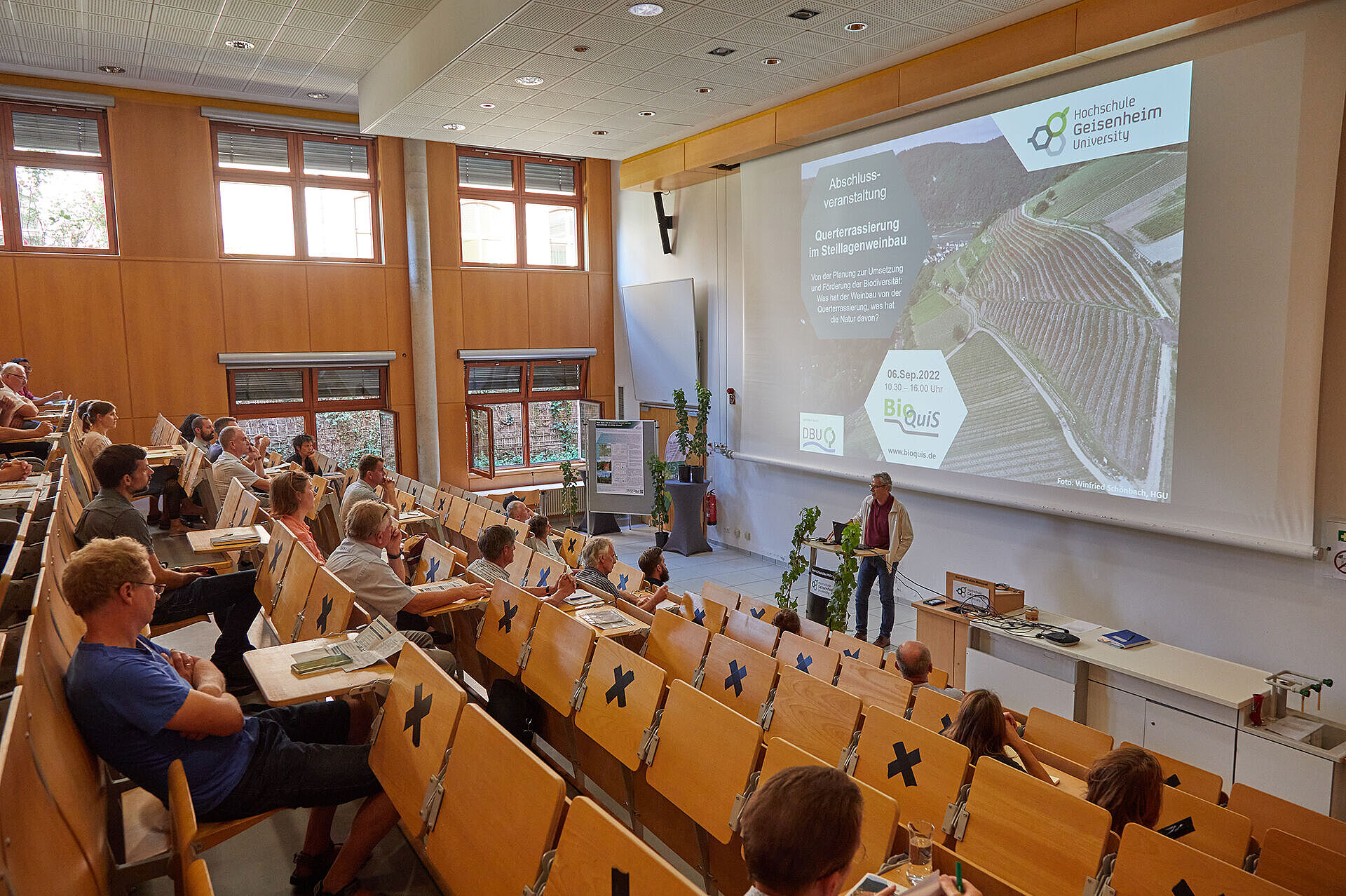
“First of all, terraced vineyards are easier to manage which can be a huge economic advantage”, explained Manfred Stoll, Professor for General Viticulture at Hochschule Geisenheim University, at the joint event to mark the closing of the BioQuiS project funded by the German Federal Environmental Foundation (Deutsche Bundesstiftung Umwelt). In addition to being easier to manage, “terraces offer a better protection against soil erosion even in case of heavy rainfalls”, said Stoll. Doctoral student Timo Strack studied the effects on microclimate, berry composition and the health of the vines and identified remarkable differences. For example, the risk of sunburn for berries is significantly lower in terraced vineyards.
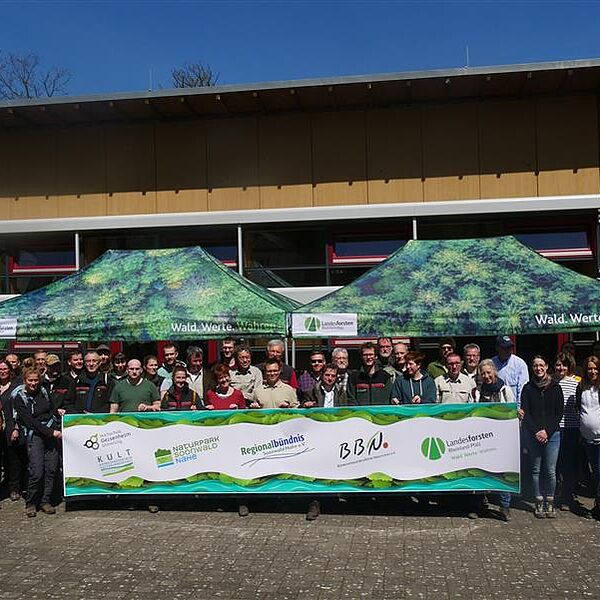
In addition to the presentation of scientific results, the three project partners from the regional wine industry – the Hessian State Wineries with the famous vineyard site “Domäne Assmannshausen” as well as Laquai Winery in Lorch and Ratzenberger Winery in Bacharach – shared their experience. Gilbert Laquai, who was the first winegrower in the Middle Rhine Valley to plant large-scale terraced vineyards back in 2008, offered specific recommendations for planning and cultivating terraced vineyards and explained under which conditions they pay off. State funding and integration into land consolidation procedures are important cornerstones, he said. Experts from the Hessian State Office for Land Management and the Department of Viticulture of the Darmstadt Regional Council provided further information on these topics.
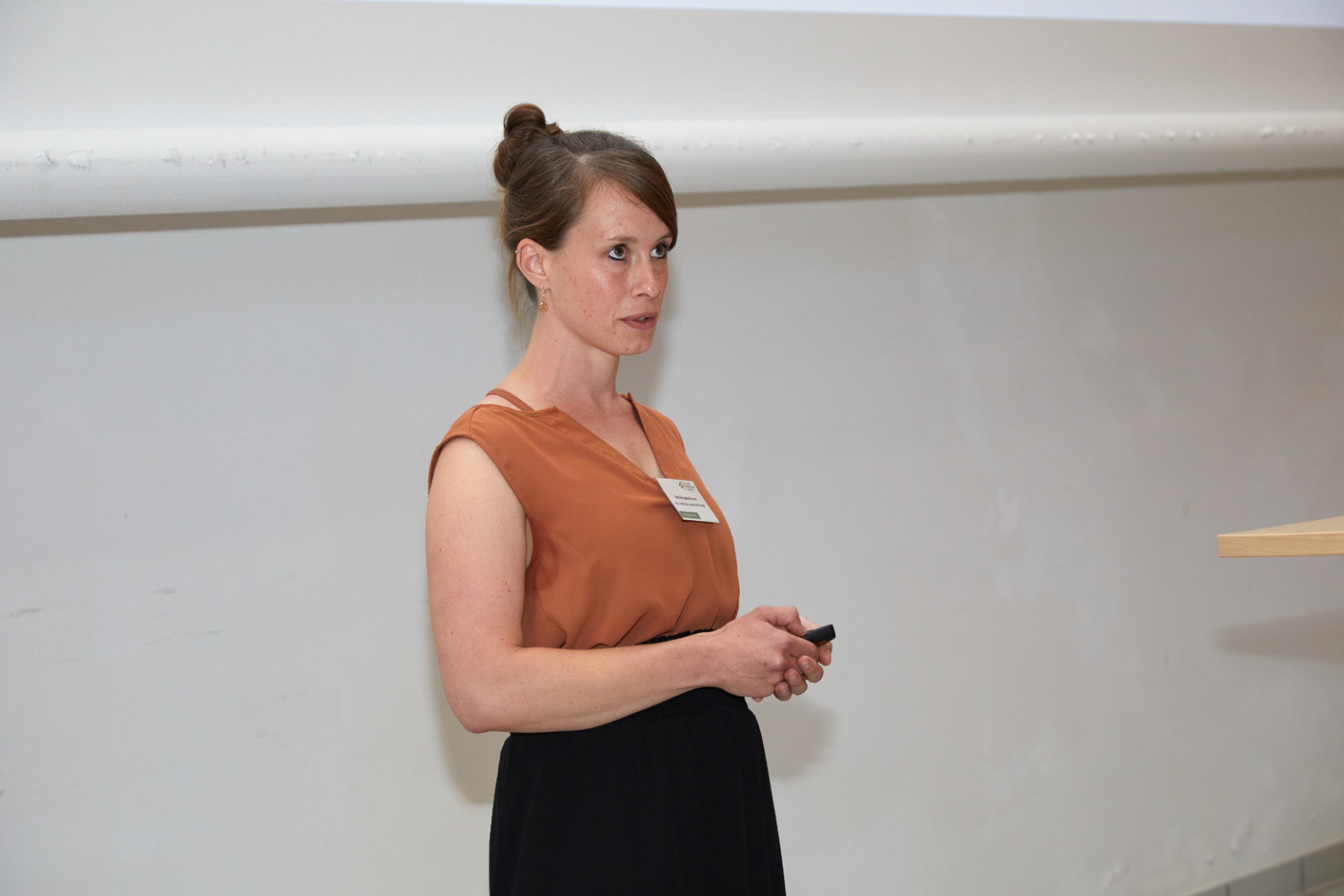
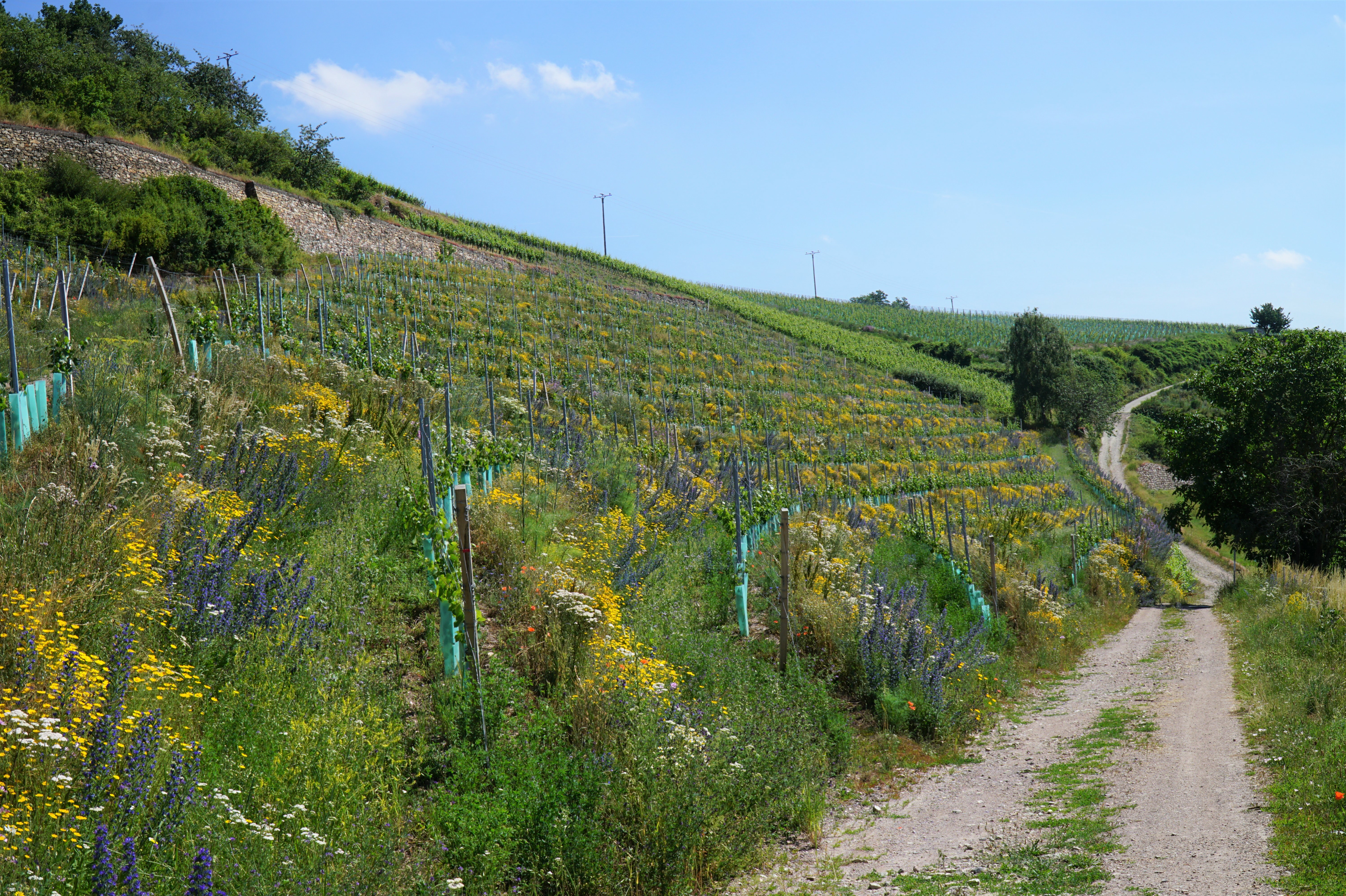
As part of the BioQuiS project, Geisenheim researchers also identified a huge potential to safeguard and promote biodiversity. If the slopes at the edge of terraced vineyards are seeded with regional plants and managed professionally, they offer important habitats for insects. “In this context, hydroseeding with regional seeds has proved particularly successful”, said doctoral student Vera Wersebeckmann.
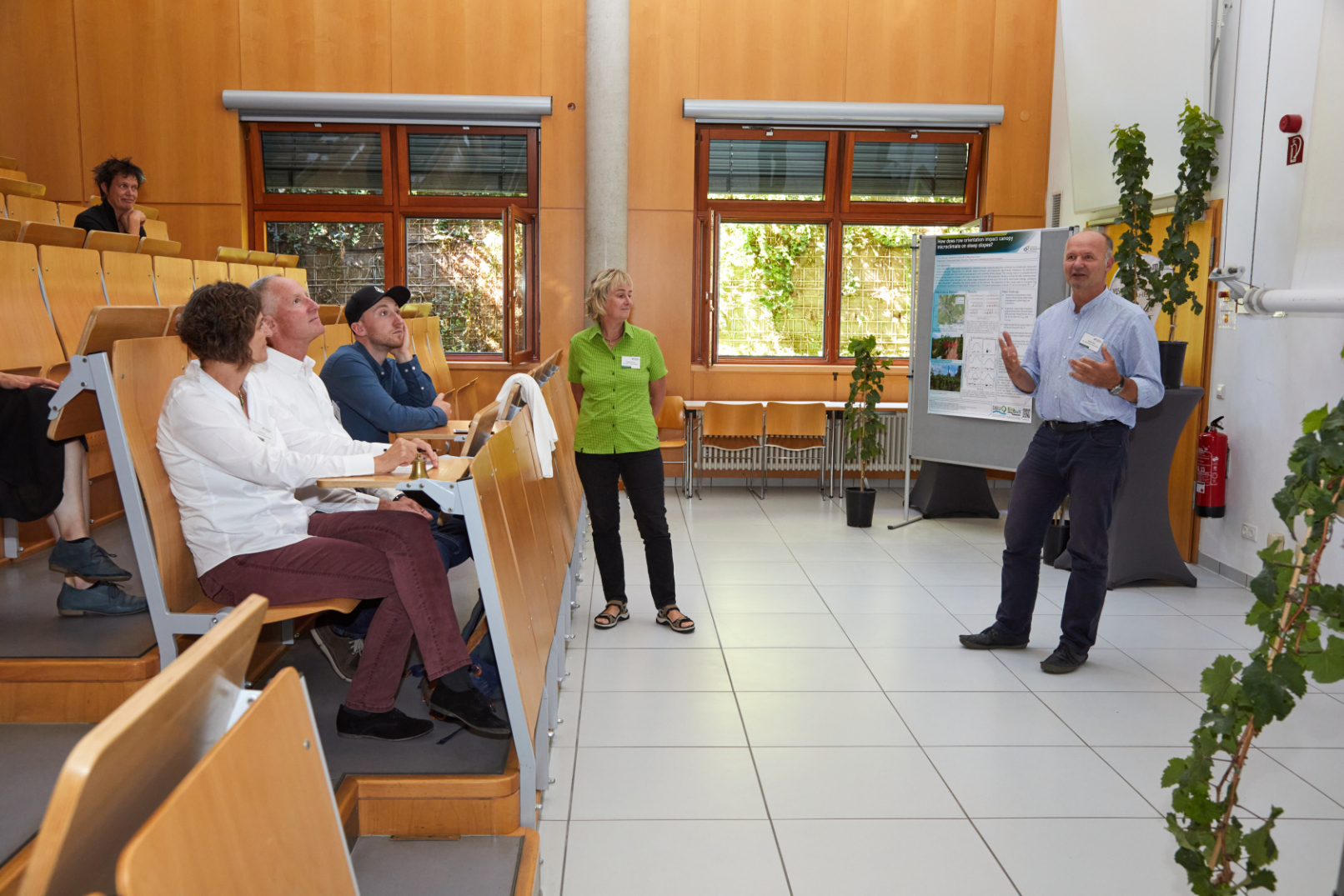
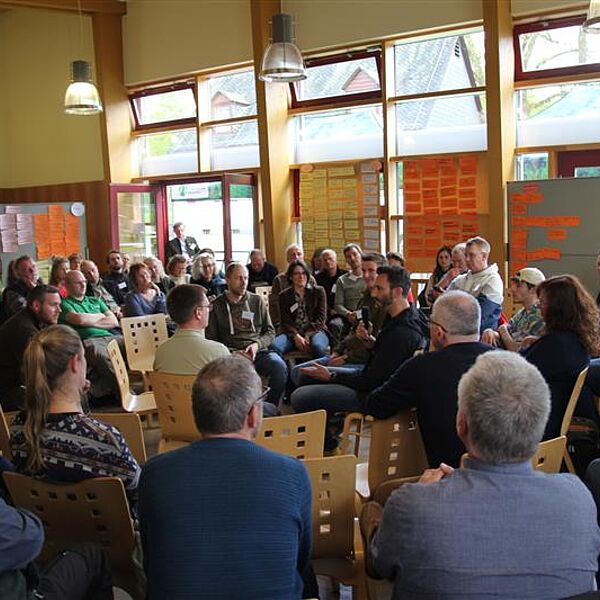
At the event, the topic of water was debated intensively. The participants agreed that drought stress caused by increasingly hot and dry summers will be the greatest future challenge in steep slope viticulture – no matter if the vineyard is planted vertically or horizontally. Another topic focused on economic yields: So far, the greater efforts to manage steep slopes are not reflected in sales revenues. Participants engaged in a lively discussion if raising consumer awareness and adopting improved marketing strategies could make a difference in this context.
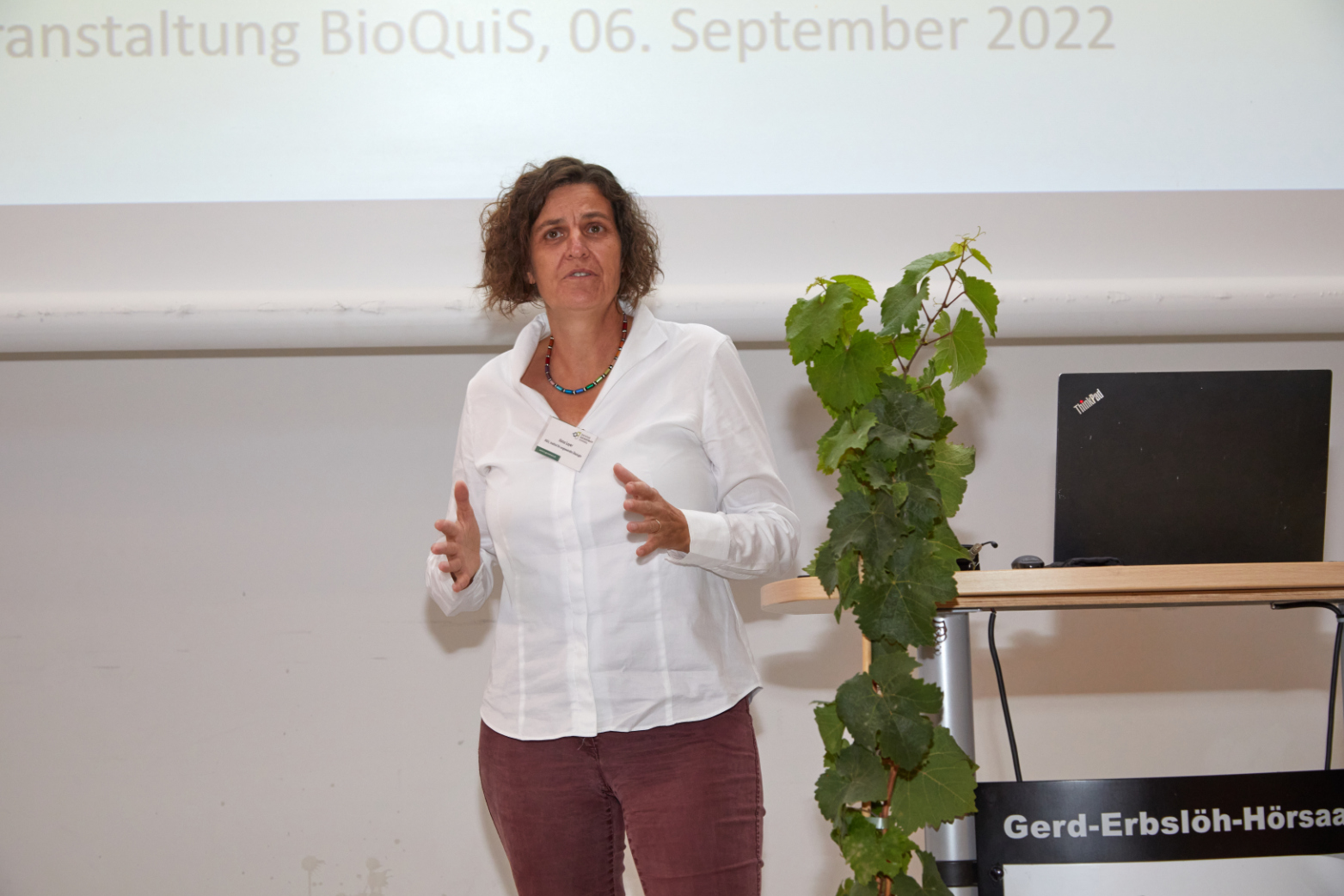
To sum up the most important project findings, Ilona Leyer, Professor for Biodiversity and Ecosystem Functions at Hochschule Geisenheim University explained that terraced vineyards perfectly combine economic and ecological advantages which helps to rethink steep slope viticulture and make it fit for the future. However, there are still some problems and obstacles that have to be addressed.
“In order to make regional viticulture and the cultivated landscape fit for the challenges of the future, we will continue to cooperate with local winegrowers, municipalities and regional nature conservation associations even after the end of the project”, emphasized Ilona Leyer and Manfred Stoll.