
Christoph Kiefer, M.Sc.
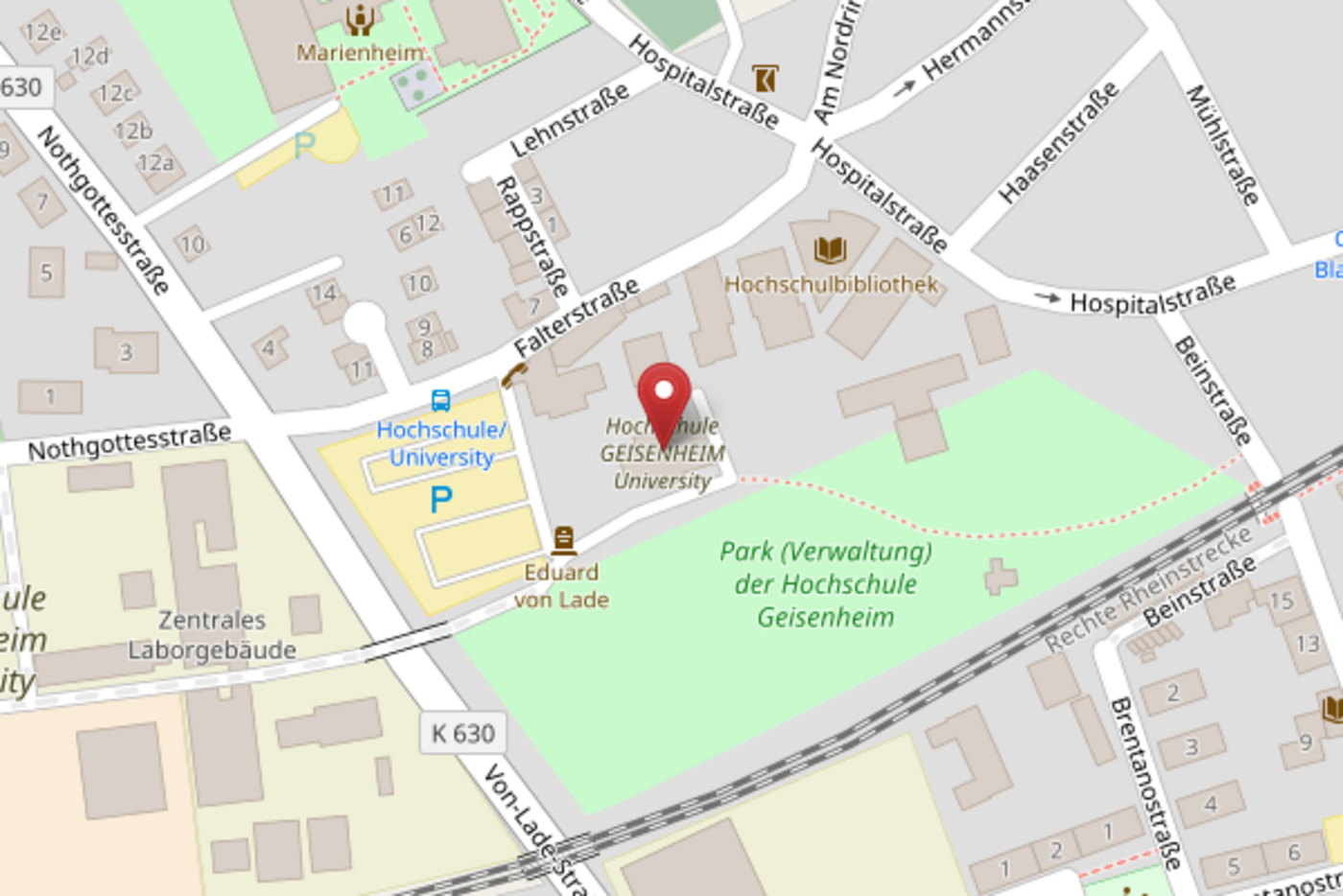
D-65366 Geisenheim
Room 1.1
Kreuzweg 25
65366 Geisenheim
Project start: 01.08.2024
Project end: 31.12.2028
Sponsor: Wines of Germany
Project start: 01.05.2024
Project end: 31.12.2028
Sponsor: Ministerium für Wirtschaft, Verkehr, Landwirtschaft und Weinbau Rheinland-Pfalz
The EFRE project in Rhineland-Palatinate aims to further develop and optimize digital sales analysis to provide the wine industry with representatively weighted sales data. This includes the development of a methodology for realistic data weighting and a quarterly reporting system that regularly delivers up-to-date market analyses for wine producers, industry associations, and policymakers. These improvements enhance strategic planning and increase market transparency in the Rhineland-Palatinate wine sector.
Project start: 01.04.2024
Project end: 31.12.2028
Sponsor: Wines of Germany , Ministerium für Wirtschaft, Verkehr, Landwirtschaft und Weinbau Rheinland-Pfalz, European Union
EFRE Project: Digital Infrastructure for a Sustainable Wine Industry
The EFRE project is developing a digital infrastructure for collecting and analyzing key financial indicators and sales data to strengthen the economic sustainability of the German wine industry. It consists of two main components: 1) Digital Business Analysis, which enables the automated integration of financial data. 2) Digital Sales Analysis, which leverages Big Data Automation to provide regular, up-to-date, and decision-relevant market insights. This ensures a continuous knowledge transfer among stakeholders in the wine industry and enhances strategic decision-making.
Project start: 17.06.2019
Project end: 31.12.2025
Sponsor: Federal Ministry of Food and Agriculture
The control of downy mildew, caused by Plasmopara viticola, is one of the major challenges in viticulture,
especially in organic viticulture. Due to the ban of copper-containing pesticides and massive impacts of
climate change, organic viticulture is increasingly entering an economic crisis. Therefore, the aim of the
proposed joint project "VITIFIT" is to develop a catalogue of measures with practicable strategies for
maintaining grapevine health. In this way, cultivation conditions are improved, the production security is
consolidated and thus economic viability is guaranteed. Crop protection strategies will mainly be based on
copper minimisation (microencapsulated copper salts) and copper substitutes (plant extracts, UVC
technology) and their combination. Associated cultivation and cultural measures should reduce the
inoculum potential of P. viticola. Molecular biological analyses will address the mycobiome of the vine leaf
under these conditions. Particular attention should be paid to the plant protection agent potassium
phosphonate. Existing and newly bred fungus tolerant grape varieties (in German: PIWIs) should play a
central role in the developed action plans. Aims here are the improvement of the enological wine style, the
market acceptance of PIWIs and their introduction into practice. The identification of new resistance loci
against P. viticola and their integration into current breeding lines will support the development of novel
PIWIs. Another focus of the project is the adaptation of the forecast model "VitiMeteo Rebenperonospora"
to PIWIs. In the sector of knowledge and technology transfer, communication, the flow of information and
networking between research and practice are to be optimised. The VITIFIT project should make a
significant contribution to achieving the "20% goal" (national sustainability goal concerning the percentage
of organic agriculture area).
Date: 10.06.2026
Location: Triest (Italien)
Speaker: Kiefer, Christoph
Date: 24.03.2026
Location: Heilbronn (Deutschland)
Speaker: Kiefer, Christoph
Date: 24.03.2026
Location: Heilbronn (Deutschland)
Speaker: Kiefer, Christoph
Date: 03.12.2025
Location: Mainz (Deutschland)
Speaker: Kiefer, Christoph
Date: 04.06.2025
Location: Nackenheim (Deutschland)
Speaker: Kiefer, Christoph
Date: 15.05.2025
Location: Oppenheim (Deutschland)
Speaker: Kiefer, Christoph
Date: 02.04.2025
Location: Freiburg (Deutschland)
Speaker: Kiefer, Christoph
Date: 11.07.2024
Location: Verona (Italien)
Speaker: Kiefer, Christoph
Date: 11.07.2024
Location: Verona (Italien)
Speaker: Kiefer, Christoph
Date: 26.06.2024
Location: Neustadt a.d.W. (Deutschland)
Speaker: Kiefer, Christoph
Date: 09.01.2024
Location: Eltville am Rhein (Deutschland)
Speaker: Kiefer, Christoph
Date: 30.11.2023
Location: Bozen (Italien)
Speaker: Kiefer, Christoph
Date: 21.11.2023
Location: Mainz (Deutschland)
Speaker: Kiefer, Christoph
Date: 03.11.2023
Location: Oppenheim (Deutschland)
Speaker: Kiefer, Christoph
Date: 03.05.2023
Location: Veitshöchheim (Deutschland)
Speaker: Kiefer, Christoph
Date: 03.05.2023
Location: Veitshöchheim (Deutschland)
Speaker: Kiefer, Christoph
Date: 24.04.2023
Location: Geisenheim (Deutschland)
Speaker: Kiefer, Christoph
Date: 20.03.2023
Location: Heilbronn (Deutschland)
Speaker: Kiefer, Christoph
Date: 11.03.2023
Location: Worms (Deutschland)
Speaker: Kiefer, Christoph
Date: 06.02.2023
Location: Online (Deutschland)
Speaker: Kiefer, Christoph
Date: 23.11.2022
Location: Freiburg (Deutschland)
Speaker: Kiefer, Christoph
Date: 14.11.2022
Location: Ingelheim am Rhein (Deutschland)
Speaker: Kiefer, Christoph
Date: 10.11.2022
Location: Neustadt. a.d.W. (Deutschland)
Speaker: Kiefer, Christoph
Date: 10.11.2022
Location: Neustadt a.d.W. (Deutschland)
Speaker: Kiefer, Christoph
Date: 11.10.2022
Location: Athen (Griechenland)
Speaker: Kiefer, Christoph
Date: 01.09.2022
Location: Mainz (Deutschland)
Speaker: Kiefer, Christoph
Date: 26.08.2022
Location: Neustadt a.d.W. (Deutschland)
Speaker: Kiefer, Christoph
Date: 24.08.2022
Location: Neustadt a.d.W. (Deutschland)
Speaker: Kiefer, Christoph
Date: 06.07.2022
Location: Dijon (Frankreich)
Speaker: Kiefer, Christoph
Date: 19.05.2022
Location: Freiburg (Deutschland)
Speaker: Kiefer, Christoph
Date: 03.05.2022
Location: Mühlhofen (Deutschland)
Speaker: Kiefer, Christoph
Date: 11.04.2022
Location: Stuttgart / online (Deutschland)
Speaker: Kiefer, Christoph
Date: 25.11.2021
Location: Montpellier (Frankreich)
Speaker: Kiefer, Christoph
Date: 27.10.2021
Location: Siebeldingen (Deutschland)
Speaker: Kiefer, Christoph
Date: 30.09.2021
Location: Geisenheim (Deutschland)
Speaker: Kiefer, Christoph
Date: 07.07.2021
Location: Dijon / online (Frankreich)
Speaker: Kiefer, Christoph
Date: 29.04.2021
Location: Online (Deutschland)
Speaker: Kiefer, Christoph
Date: 17.02.2021
Location: Online (Deutschland)
Speaker: Kiefer, Christoph
Date: 15.12.2020
Location: Online (Deutschland)
Speaker: Kiefer, Christoph
Date: 19.11.2020
Location: Online (Deutschland)
Speaker: Kiefer, Christoph
Date: 30.10.2020
Location: Neustadt/Weinstraße (Deutschland)
Speaker: Kiefer, Christoph
Date: 26.02.2020
Location: Siebeldingen (Deutschland)
Speaker: Kiefer, Christoph