
Dr. Jörn Schultheiß
Assignment: Competence Center Cultural Landscape (KULT)
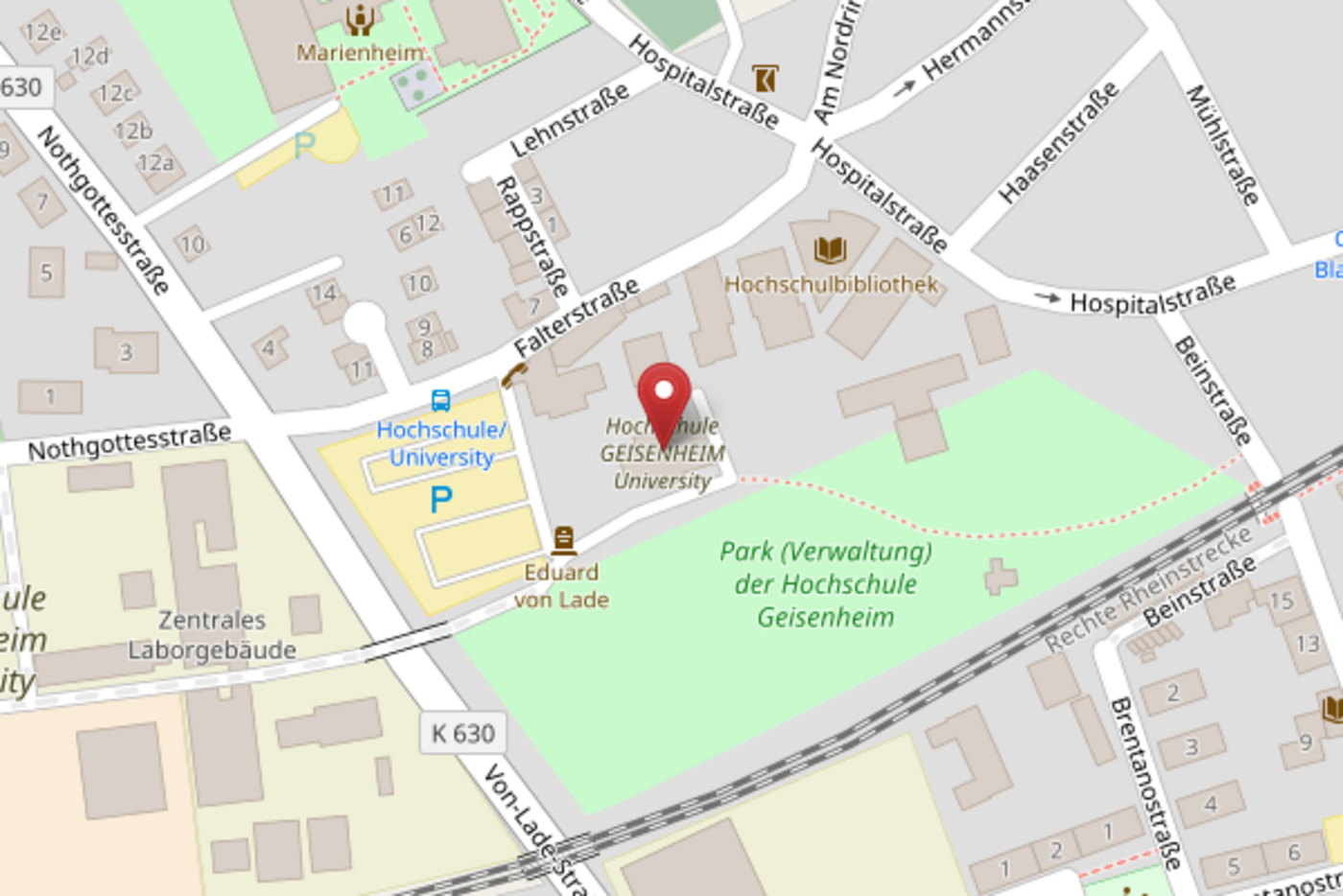
D-65366 Geisenheim
Room 01.06
Rüdesheimerstraße 18
65366 Geisenheim
Project start: 01.10.2023
Project end: 31.03.2026
Sponsor: Federal Agency for Nature Conservation
Historic cultural landscape elements (HLE) characterize the diversity, uniqueness and beauty of nature and landscape, biodiversity, cultural-historical value and the sustainability of landscape areas. Using a "bottom-up" approach, the project aims to show whether and how cultural landscapes can be differentiated from one another on the basis of the element level. The following objectives are pursued:
(1) Development of a nationwide applicable selection method of value-giving, space-constituting element types;
(2) Further methodological development of the recording and evaluation of significant historical cultural landscapes using an element-based approach;
(3) Analysis of the need for protection, possible instruments for legal protection and opportunities for historic cultural landscape elements in sustainable landscapes;
(4) Further development of planning methods for analysis and evaluation;
(5) Public relations work.
These objectives will be worked on using examples of landscape sections in the three federal states of Brandenburg, Hesse and Thuringia.
Project start: 01.07.2023
Project end: 30.06.2026
Sponsor: Bundesministerium für Umwelt, Naturschutz und nukleare Sicherheit
The preservation and planting of urban green, especially trees, play a crucial role in the adaptation of cities to global heating, as they provide natural cooling. Larger trees transpire up to 500 litres of water per day. Shade and evaporative cooling reduce the effect of urban heat islands. However, road salt, soil compaction and pollutants stress urban trees. Heat and drought intensify, so that new plantings often fail to grow and existing trees increasingly die before they reach a size that has an impact on the city's climate. Alternative tree substrates could provide a remedy, and also improve the infiltration of water from heavy rainfall events. One promising approach are biochar macadam substrates (PMS), i.e. defined mixtures of rock gravel, plant charcoal and compost. After compaction, the crushed stone results in a passable but pore-rich structure that creates space and aaeration for root growth and which are capable of absorbing high levels of precipitation. The production of the biochar also locks up biomass carbon over decades to millennia (=carbon sinks, i.e. carbon (dioxide) removal). PMS were developed in Stockholm and are so far only used in Sweden, Austria and Switzerland. The goal of "Black2GoGreen" is to create a network of municipalities, municipal enterprises, associations as well as manufacturers of biochar and biochar (tree, green-roof) substrates to transfer knowledge about already implemented solutions to Germany.
Project start: 01.11.2021
Project end: 31.12.2023
Sponsor: Regionalpark Ballungsraum RheinMain GmbH, Stiftung Natur und Umwelt Rheinland-Pfalz
The unique terrace-shaped landscape along the Upper Middle Rhine Valley, characterized by vineyards and orchards, is experiencing a profound transformation due to changes in land use and ecological succession. Against this background, the projects assesses objectives and opportunities for society associated with the development of a mosaic-like and diverse steep slope landscape, determines obstacles and conducive conditions, and starts to reactivate areas for a sustainable use. Existing large-scale objectives and recommendations are broken down to a local level with the aim to provide a vision for a sustainable development of the landscape that takes into account ecological, economic and social objectives and is backed by local communities. At the same time, a follow-up project for large-scale implementation is currently being set up.
Project start: 01.08.2019
Project end: 30.12.2020
Sponsor: Entwicklungsagentur RHEINLAND-PFALZ E. V.
In a collaborative project, the universities of Koblenz, Bingen and Geisenheim are developing a framework concept for local climate adaptation in the Upper Middle Rhine Valley World Heritage. The project identifies climate change in the world heritage area, and describes the current state of knowledge and the developments to be expected from global trends and existing spatial conditions. Furthermore, the project outlines possible prevention measures as well as possibilities to avoid and mitigate negative impacts of climate changes on a local level.
Date: 19.06.2026
Location: Chișinău (Moldau, Republik)
Speaker: Schultheiß, Jörn
Date: 29.05.2026
Location: Cottbus-Branitz (Deutschland)
Speaker: Schultheiß, Jörn
Date: 05.05.2026
Location: Lorch am Rhein (Deutschland)
Speaker: Schultheiß, Jörn
Date: 17.03.2026
Location: Lorch (Deutschland)
Speaker: Schultheiß, Jörn
Date: 09.02.2026
Location: Bad Sobernheim (Deutschland)
Speaker: Schultheiß, Jörn
Date: 03.12.2025
Location: Münster (Deutschland)
Speaker: Schultheiß, Jörn
Date: 22.11.2025
Location: Hannover (Deutschland)
Speaker: Schultheiß, Jörn
Date: 12.11.2025
Location: St. Goar (Deutschland)
Speaker: Schultheiß, Jörn
Date: 29.10.2025
Location: Göttingen (Deutschland)
Speaker: Schultheiß, Jörn
Date: 23.10.2025
Location: Dörrebach (Deutschland)
Speaker: Schultheiß, Jörn
Date: 08.10.2025
Location: Ingelheim (Deutschland)
Speaker: Schultheiß, Jörn
Date: 26.09.2025
Location: Heerlen (Niederlande)
Speaker: Schultheiß, Jörn
Date: 15.09.2025
Location: Lindlar (Deutschland)
Speaker: Schultheiß, Jörn
Date: 25.06.2025
Location: Hoppstädten-Weiersbach (Deutschland)
Speaker: Schultheiß, Jörn
Date: 05.06.2025
Location: Geisenheim (Deutschland)
Speaker: Schultheiß, Jörn
Date: 22.04.2025
Location: Bad Kreuznach (Deutschland)
Speaker: Schultheiß, Jörn
Date: 13.02.2025
Location: Schöneberg (Deutschland)
Speaker: Schultheiß, Jörn
Date: 07.02.2025
Location: Morbach (Deutschland)
Speaker: Schultheiß, Jörn
Date: 21.11.2024
Location: Rheinböllen (Deutschland)
Speaker: Schultheiß, Jörn
Date: 18.04.2024
Location: Wolfsburg (Deutschland)
Speaker: Schultheiß, Jörn
Date: 26.10.2023
Location: Berlin (Deutschland)
Speaker: Schultheiß, Jörn
Date: 21.09.2023
Location: Freiburg (Deutschland)
Speaker: Schultheiß, Jörn
Date: 06.09.2023
Location: Bad Kreuznach (Deutschland)
Speaker: Schultheiß, Jörn
Date: 25.01.2023
Location: Mainz (Deutschland)
Speaker: Schultheiß, Jörn
Date: 01.12.2022
Location: Kempfeld (Deutschland)
Speaker: Schultheiß, Jörn
Date: 27.10.2022
Location: Boppard (Deutschland)
Speaker: Schultheiß, Jörn
Date: 22.09.2022
Location: Koblenz (Deutschland)
Speaker: Schultheiß, Jörn
Date: 26.05.2022
Location: Belgrad (Serbien)
Speaker: Schultheiß, Jörn
Date: 24.05.2022
Location: Belgrad (Serbien)
Speaker: Schultheiß, Jörn
Date: 28.04.2022
Location: Geisenheim (Deutschland)
Speaker: Schultheiß, Jörn
Date: 26.11.2021
Location: Lwiw (Ukraine)
Speaker: Schultheiß, Jörn
Date: 13.02.2020
Location: Slawske (Ukraine)
Speaker: Schultheiß, Jörn
Date: 12.05.2019
Location: Cochem (Deutschland)
Speaker: Schultheiß, Jörn
Date: 01.04.2019
Location: Trier (Deutschland)
Speaker: Schultheiß, Jörn
Date: 25.03.2019
Location: Hoppstädten-Weiersbach (Deutschland)
Speaker: Schultheiß, Jörn
Date: 22.09.2017
Location: Wien (Österreich)
Speaker: Schultheiß, Jörn
Date: 07.09.2017
Location: Geisenheim (Deutschland)
Speaker: Schultheiß, Jörn
Date: 04.05.2017
Location: Dörrebach (Deutschland)
Speaker: Schultheiß, Jörn
Date: 09.03.2017
Location: Würzburg (Deutschland)
Speaker: Schultheiß, Jörn
Date: 23.11.2016
Location: Mainz (Deutschland)
Speaker: Schultheiß, Jörn
Date: 24.04.2016
Location: Neuhütten-Muhl (Deutschland)
Speaker: Schultheiß, Jörn
Date: 12.02.2016
Location: Bamberg (Deutschland)
Speaker: Schultheiß, Jörn
Date: 26.11.2015
Location: Birkenfeld (Deutschland)
Speaker: Schultheiß, Jörn
Date: 25.09.2015
Location: Köln (Deutschland)
Speaker: Schultheiß, Jörn