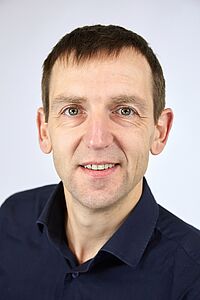
Dipl.-Physiker Marco Hofmann
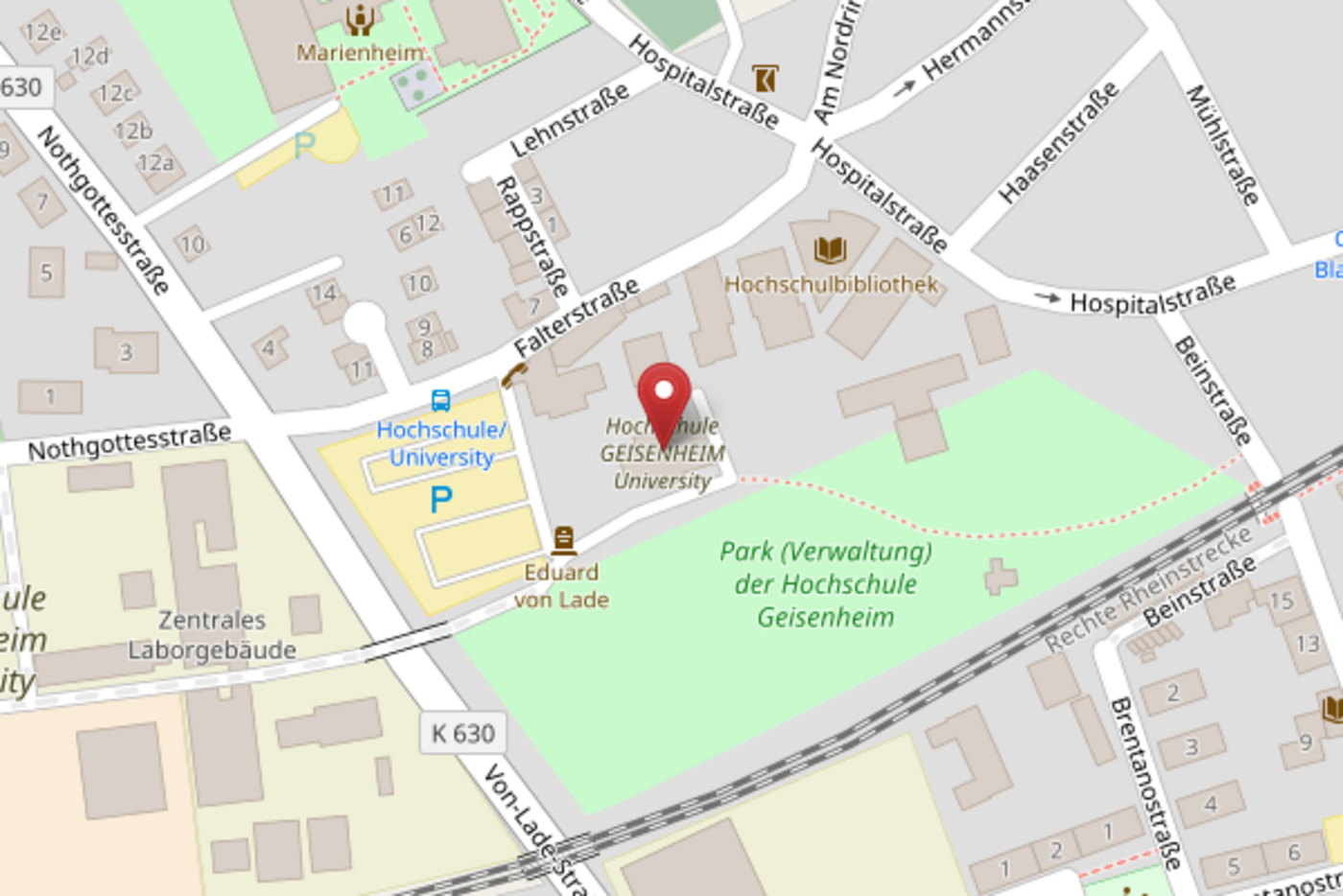
D-65366 Geisenheim
Room 402
Blaubachstraße 19
65366 Geisenheim
Project start: 01.01.2026
Project end: 31.12.2029
Sponsor: European Union
The BluWine project will encompass the entire wine production chain through a Blue Economy approach, where the vineyard, winemaking process, winery, and its residuals will be interactively linked and strengthened as part of a sustainable strategy. The wine industry is an important sector contributing to the economies of many countries, especially in Europe, which has a long history of wine production, as well as in emerging wine-producing regions in Africa, Asia, South America, and Oceania. From a global perspective, the collaboration of productive forces from different countries can be mutually beneficial. With a strong focus on environmental respect and sustainability, the BluWine project will be a collective effort to drive innovation in viticulture, winemaking, and winery operations, as well as in the management of its residuals. This will include improving grape resistance, managing wine ethanol content, recovering carbon dioxide, optimizing water usage, and recycling grape pomace, among other initiatives. The project will evaluate both the economic and environmental impacts, conducting a thorough analysis of barriers and socioeconomic drivers for successful implementation. The ultimate goal of the BluWine project is to ensure the control and maintenance of wine quality, which will be achieved by creating a new network dedicated to applying the Blue Economy in the wine industry. This will be supported through a strategic staff exchange program, bringing together both early-career and experienced researchers with expertise relevant to the BluWine project. Through this exchange, skills and knowledge will be shared across the Consortium. The project is organized into nine work packages, to be completed over four years, involving 13 ESRs (8 ESRs to be enrolled) and 50 ERs, for a total of 140 months of staff secondments. This will provide training in an international setting, further enhancing the skills and expertise of the participants.
Project start: 01.09.2025
Project end: 31.08.2028
Sponsor: Federal Ministry of Food and Agriculture
The aim of the iSoBeD project is to develop new, digital and AI-supported approaches for sustainable,
efficient and practical irrigation solutions in vegetables and viticulture. In view of rising water consumption
and increasing climatic challenges, digital technologies are to be used to define the water requirements of
crops on a site-specific basis and to precisely control irrigation. The project focuses on the following areas:
(i) Development of digital tools to model and optimize irrigation requirements in vegetable crops and
viticulture on a site-specific basis. By integrating networked sensors, digital reconstructions of crop
parameters or data-driven and AI models, respectively, these solutions should enable a more precise
determination of needs and thus save water resources.
(ii) Optimization and automation of irrigation methods for vegetable cultivation to enable variable rate
control. Implementation using standardized protocols is supposed to simplify application accuracy and
irrigation management across the process chain.
(iii) Implementation of automated, plot- and site-specific irrigation for viticulture, primarily to ensure the
long-term productivity and preservation of steep slopes characterizing entire landscapes.
The developed methods are validated in field trials over several years and their suitability for practical
application is tested on cooperating farms. In addition, the project promotes the strong involvement of
practitioners and the transfer of knowledge to vegetable and wine farms through intensive dissemination,
networking and transfer activities. This will lay the foundations for sustainable, digitally supported cultivation
of specialty crops.
Project start: 28.02.2020
Project end: 31.08.2025
Sponsor: Federal Ministry of Food and Agriculture
Date: 05.03.2026
Location: Bildungshaus Kloster St. Ulrich, 79283 Bollschweil (Deutschland)
Speaker: Hofmann, Marco
Date: 25.02.2026
Location: Online (Deutschland)
Speaker: Hofmann, Marco
Date: 02.12.2025
Location: Mainz (Deutschland)
Speaker: Hofmann, Marco
Date: 28.07.2025
Location: Geisenheim (Deutschland)
Speaker: Hofmann, Marco
Date: 03.09.2024
Location: Berlin (Deutschland)
Speaker: Hofmann, Marco
Date: 12.06.2024
Location: Belvaux (Luxemburg)
Speaker: Hofmann, Marco
Date: 14.11.2023
Location: Blenheim (Neuseeland)
Speaker: Hofmann, Marco
Date: 02.05.2023
Location: Veitshöchheim (Deutschland)
Speaker: Hofmann, Marco
Date: 15.03.2023
Location: Hochheim (Deutschland)
Speaker: Hofmann, Marco
Date: 07.03.2023
Location: Veitshöchheim (Deutschland)
Speaker: Hofmann, Marco
Date: 08.02.2023
Location: Bensheim (Deutschland)
Speaker: Hofmann, Marco
Date: 26.01.2023
Location: Mainz (Deutschland)
Speaker: Hofmann, Marco
Date: 22.11.2022
Location: Lichtenstern am Ritten (bei Bozen) (Italien)
Speaker: Hofmann, Marco
Date: 12.04.2022
Location: Stuttgart / online (Deutschland)
Speaker: Hofmann, Marco
Date: 06.10.2021
Location: Geisenheim (Deutschland)
Speaker: Hofmann, Marco
Date: 06.10.2021
Location: Geisenheim (Deutschland)
Speaker: Hofmann, Marco
Date: 13.01.2021
Location: Online / Digital (Deutschland)
Speaker: Hofmann, Marco
Date: 02.12.2020
Location: digital (Deutschland)
Speaker: Hofmann, Marco
Date: 25.11.2020
Location: digital (Deutschland)
Speaker: Hofmann, Marco
Date: 12.12.2019
Location: Eltville (Deutschland)
Speaker: Hofmann, Marco
Date: 27.11.2019
Location: 66706 Perl-Borg (Deutschland)
Speaker: Hofmann, Marco
Date: 19.08.2019
Location: Geisenheim (Deutschland)
Speaker: Hofmann, Marco
Date: 15.07.2019
Location: Geisenheim (Deutschland)
Speaker: Hofmann, Marco
Date: 17.01.2019
Location: Eltville (Deutschland)
Speaker: Hofmann, Marco
Date: 17.01.2019
Location: Eltville (Deutschland)
Speaker: Hofmann, Marco
Date: 21.07.2017
Location: Höxter (Deutschland)
Speaker: Hofmann, Marco
Date: 26.04.2017
Location: Geisenheim (Deutschland)
Speaker: Hofmann, Marco
Date: 08.02.2017
Location: Offenbach (Deutschland)
Speaker: Hofmann, Marco
Date: 15.06.2016
Location: Potsdam (Deutschland)
Speaker: Hofmann, Marco
Date: 19.04.2016
Location: Oppenheim (Deutschland)
Speaker: Hofmann, Marco
Date: 11.04.2016
Location: Bordeaux (Frankreich)
Speaker: Hofmann, Marco
Date: 05.04.2016
Location: Offenbach (Deutschland)
Speaker: Hofmann, Marco
Date: 04.03.2016
Location: Radebeul (Deutschland)
Speaker: Hofmann, Marco
Date: 15.01.2016
Location: Oestrich-Winkel (Deutschland)
Speaker: Hofmann, Marco
Date: 01.06.2015
Location: Pech Rouge-Montpellier (Frankreich)
Speaker: Hofmann, Marco
Date: 28.04.2015
Location: Weinsberg (Deutschland)
Speaker: Hofmann, Marco
Date: 01.12.2014
Location: Bern (Schweiz)
Speaker: Hofmann, Marco
Date: 28.05.2013
Location: Wiesbaden (Deutschland)
Speaker: Hofmann, Marco