
Prof. Dr. Marianne Darbi
Organizational Unit(s):Department of Landscape Planning & Nature ConservationChair of Landscape Planning and Impact Mitigation
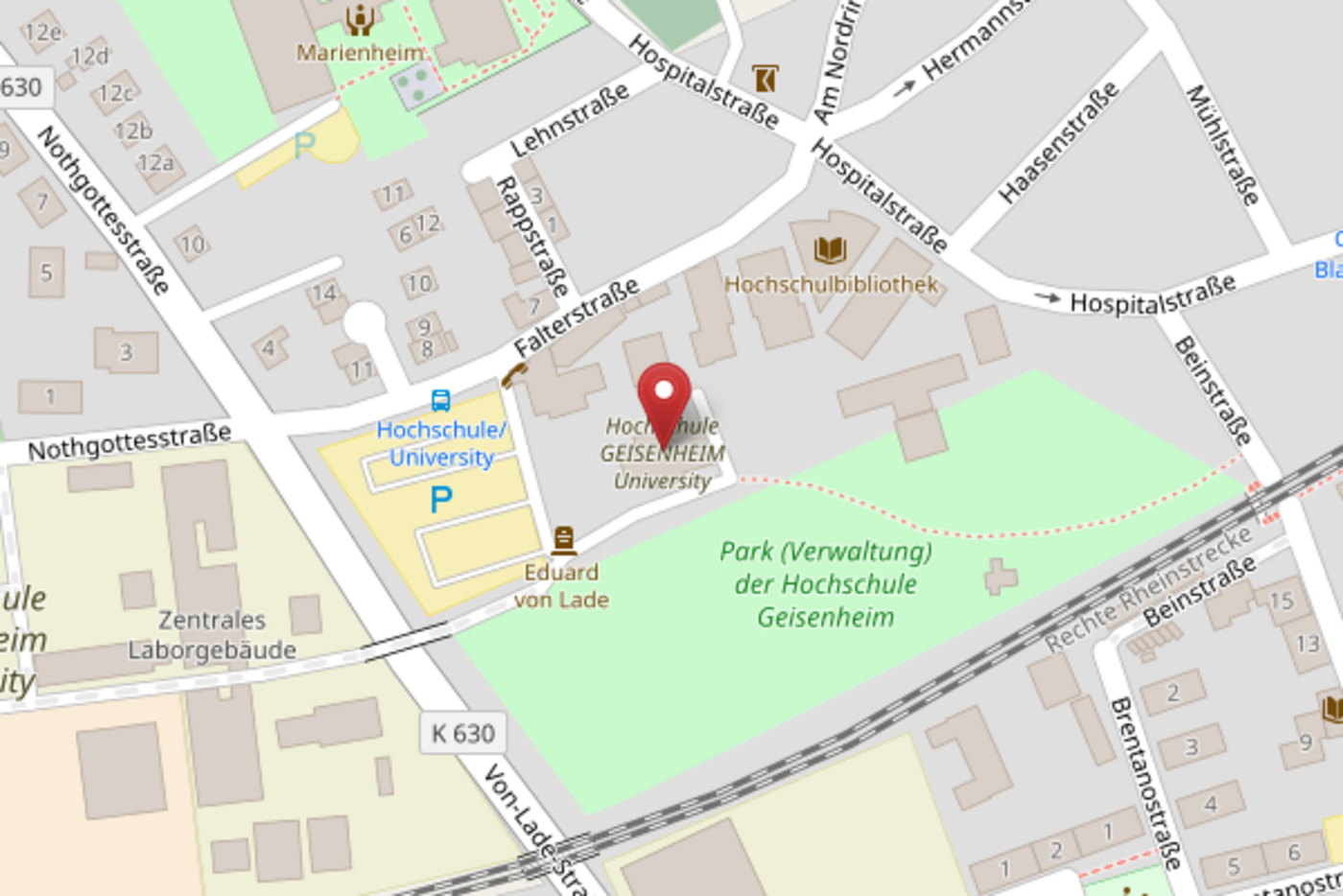
D-65366 Geisenheim
Room 00.02
Rüdesheimerstraße 18
65366 Geisenheim
Marianne Darbi is an environmental planner and researcher with many years of experience in landscape and spatial planning. Her research focuses on biodiversity conservation and management as well as impact mititgation in national and international contexts, sustainable land use, green economy and market-based instruments. She is particularly interested in policy and societal advice, as well as the practical and international relevance of research. She also wants to convey this to the students at HGU.
Marianne Darbi studied at Technische Universität Dresden (Germany) and École d'Architecture et de Paysage de Bordeaux (Frannce). She holds a diploma in landscape architecture and a PhD in engeneering (Dr.-Ing.), both from Technische Universität Dresden (Germany).
Prior to joining the Hochschule Geisenheim University as professor for landscape planning and impact mitigation in June 2020, she worked at the Leibniz Institute for Ecological Urban and Regional Development in Dresden (Germany) from 2007 to 2016. In 2017-2020, she worked at the Helmholtz Centre for Environmental Research in Leipzig at the interface of science, politics and society in the field of nature and biodiversity conservation and coordinated, among others, the German Network Forum on Biodiversity Research (NeFo).
In her research work, Marianne Darbi has focused on biodiversity offsets. This term refers to measures that are intended to compensate for the negative impacts of interventions in the environment, for example through construction or infrastructure projects. Her doctorate on the topic of Voluntary Biodiversity Offsets was awarded the Study Prize of the German Society for Environmental Impact Assessment in 2016.
Project start: 01.01.2027
Project end: 31.12.2029
Sponsor: Federal Ministry of Education and Research
Biodiversity loss has so far not been halted by traditional, conservation-based nature protection and is being further intensified by additional global crises, above all the climate crisis. Seven of the nine planetary boundaries have already been exceeded – threatening the stability of the Earth system and, with it, the very foundations of human civilisation. The concept of Survival Ecology offers an innovative approach, but requires further concretisation and operationalisation. It calls for a new understanding of change, as well as a forward-looking, pragmatic approach to nature conservation combined with active intervention – as a basis for the survival of humankind.
The SURVIVE project applies these innovative and transformative ideas to the German and European nature conservation context, developing a new conservation strategy suited to the conditions of the climate emergency – conceptually grounded and geared towards practical implementation.
The overarching goal is to develop a future strategy based on the principles of Survival Ecology, in order to halt and reverse the loss of biodiversity and ecosystem services under the conditions of the climate crisis. Three sub-objectives are pursued:
1. Concretisation of the concept, using the implementation of the EU Nature Restoration Regulation (NRR) for forest and agricultural ecosystems as an example;
2. Development of criteria and indicators for ecosystem assessment, including in relation to the NRR and the use of land as a resource;
3. Recommendations for implementation with regard to the legal framework and policy advice.
Project start: 01.05.2025
Project end: 31.12.2028
Sponsor: European Union
DANUBE_lifelines supports the Mission “Restore our Ocean and Waters” to protect and restore marine and freshwater ecosystems and biodiversity. Key elements are knowledge creation, demonstrating effective solutions, and co-creation with stakeholders.
The project generates new insights and perspectives on fish migration, habitat quality and migration corridors, improving the status of migratory fish species in the Danube River Basin. It demonstrates measures for protecting and restoring habitat availability, accessibility and connectivity through removing barriers and pressures, combined with nature-based solutions. Engagement with local actors and national stakeholder groups, training and communication activities, and the development of an action plan and roadmap for replication and scale-up are integral.
DANUBE_lifelines applies a transboundary, multi-scale and multi-actor approach, covering several relevant migratory fish species. A basin-wide perspective highlights the restoration and conservation needs of migratory fish and their habitats across the Danube, including tributaries. Solutions are tailored to local needs in the Upper Danube, the Middle Danube and the Lower Danube/Delta. Integrated approaches are pursued, demonstration activities are learned from and applied, and conservation of species such as Danube salmon, Pontic shad and sturgeons is improved. Key outputs include the Danube Fish Migration and Connectivity Atlas, identification of hotspot and strict conservation areas, efficiency of restoration measures, mapping the contribution of the Danube Basin to the 25,000 km free-flowing rivers target, an action plan for habitat restoration and conservation, and guidelines and recommendations for replicability.
Project start: 01.11.2024
Project end: 31.10.2027
Sponsor: European Union